

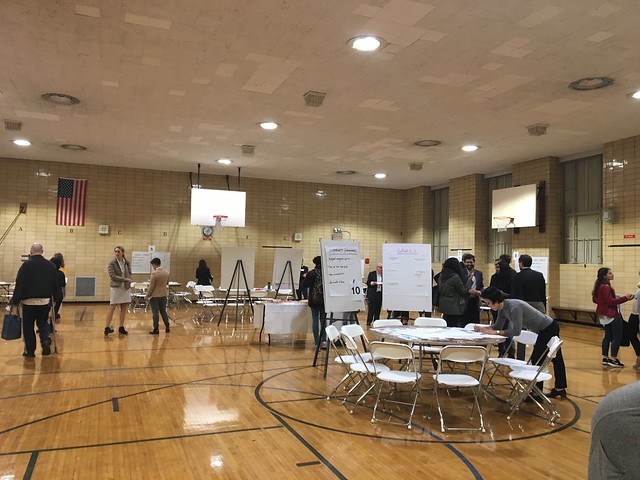
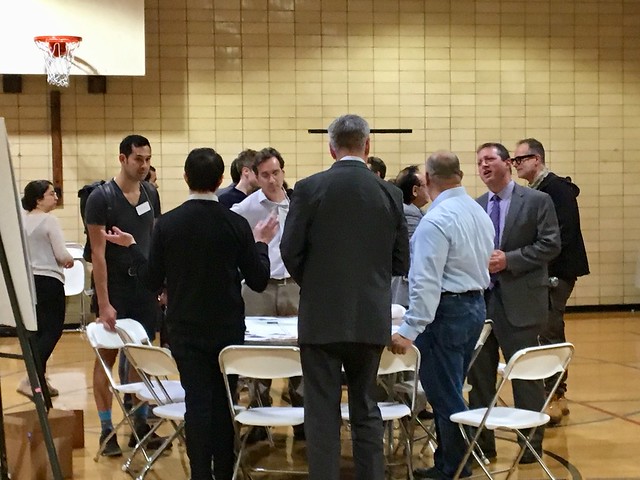
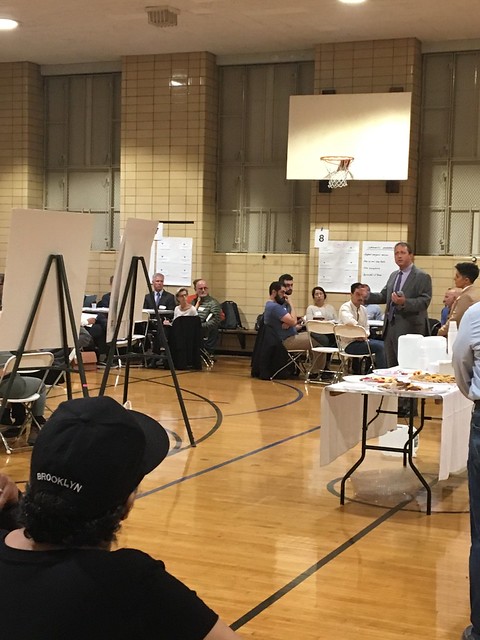
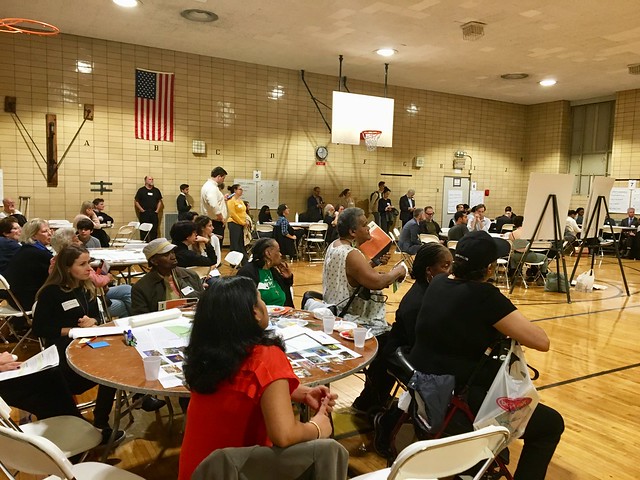
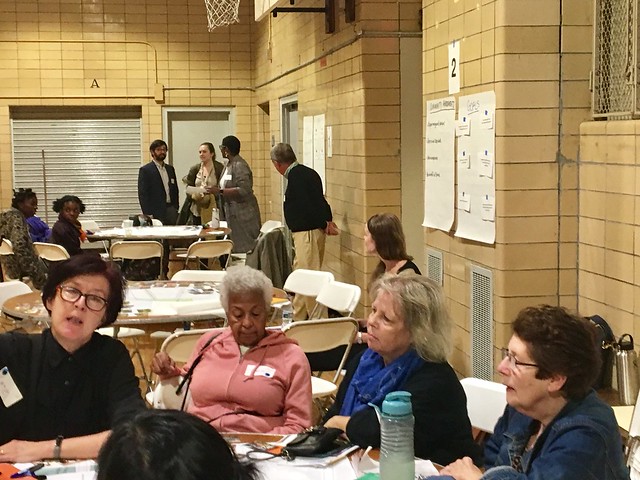

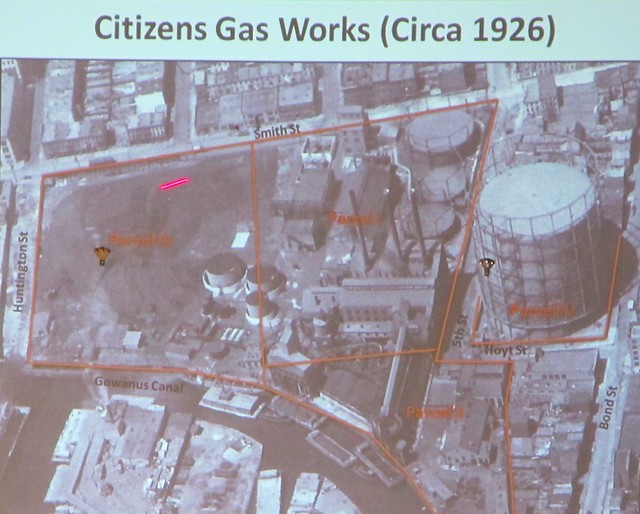
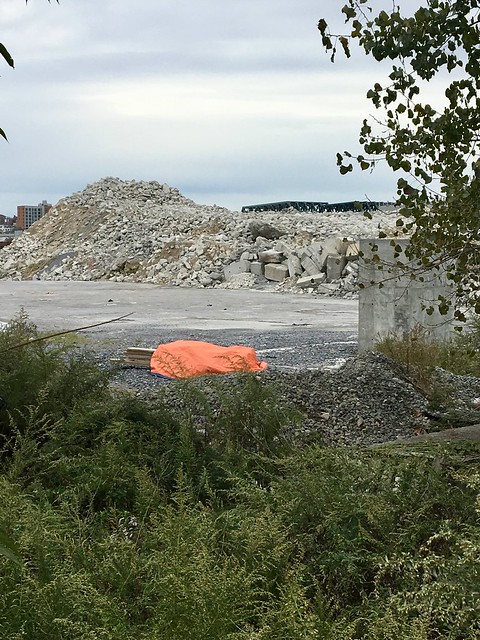
Neither Councilmember Brad Lander, nor representatives of NYC Department of Housing Preservation and Development or NYC Department of City Planning, who jointly hosted the workshop at PS32, mentioned to the public last night that coal tar on Public Place has been found at depths of 150 feet, that it can never be removed entirely, that recovery wells will be needed long after remediation to continue to collect the oozing tar, and that the groundwater has been proven to be contaminated.
Yes, the public has certainly become more informed about environmental issues in the Gowanus area in the past few years, but Public Place has the distinction of being one of, if not the most polluted site in the entire area. That certainly deserves a mention, one would think.
The responsibility for the clean-up falls on National Grid. Work will be done under the supervision of NYS Department of Environmental Conservation.
Since some of the coal tar has been found to ooze from the site into the Gowanus Canal, the US Environmental Protection Agency, which declared the canal a Superfund site in 2010, is also involved.
The workshop was part of an effort by the City of New York to revive the 2008 "'Gowanus Green'" development project for Public Place. You may remember that in 2008, Hudson Companies, Jonathan Rose, Fifth Avenue Committee, and the Bluestone Organization were selected to develop the site for affordable housing with retail space, community facilities and open space. Their proposal included 770 units of housing, 75% of which were slated to be affordable. To move forward, the site needed to go through a rezoning from manufacturing to residential, which never moved forward after the Environmental Protection Agency declared the Gowanus Canal a Superfund Site.
However, the NYC Department of City Planning has now wrapped Public Place into the framework of the agency's Gowanus Neighborhood Planning Study. The rezoning is likely going to move forward early next year as it goes through the Uniform Land Use Process (ULURP).
Councilman Brad Lander explained last night that Hudson Companies, Jonathan Rose, Fifth Avenue Committee, and the Bluestone Organization are still on board. However, the City is now planning to make all units on Public Place affordable. The project, he told local residents, will include 2 1/2 acres of open space. The plans also call for a new school. The workshop, Lander felt, was "an exciting opportunity to think together about how we can make this a really great place in the center of the Gowanus neighborhood."
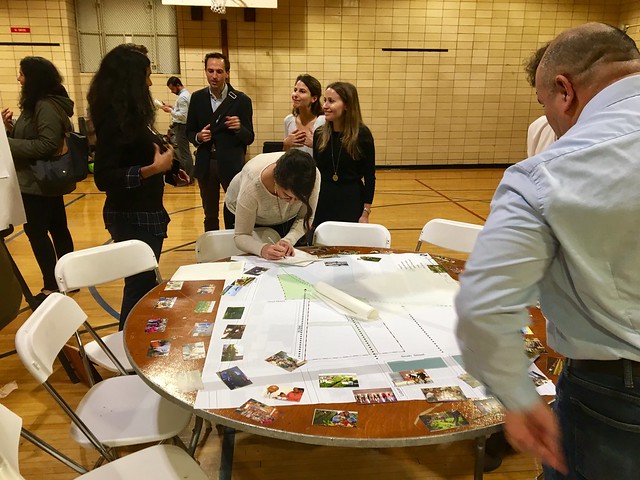
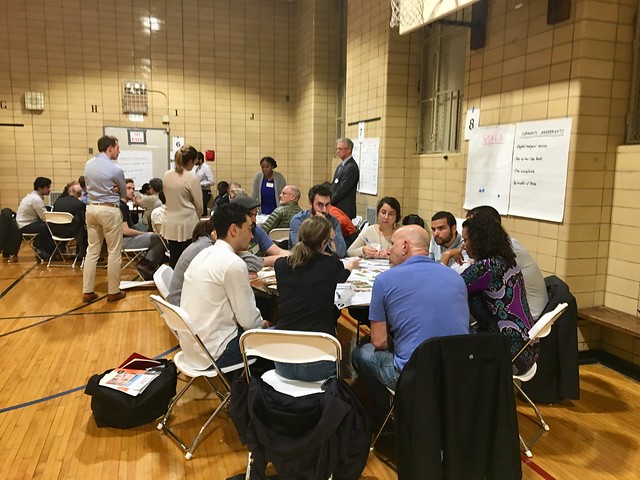
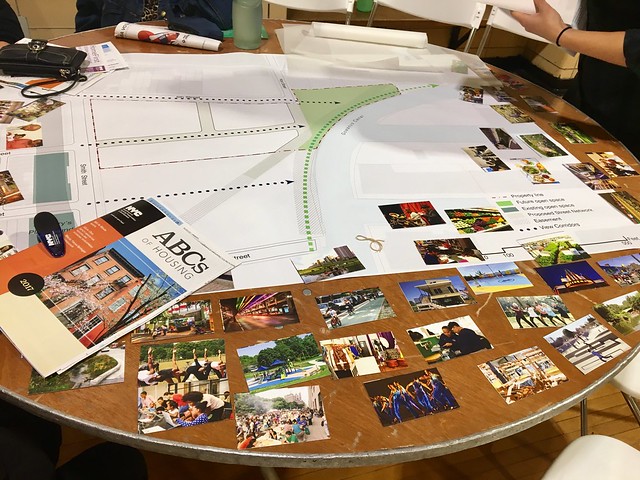
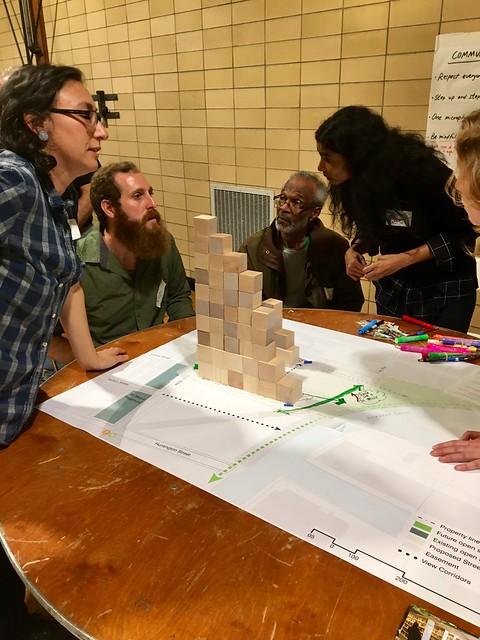
At about a dozen tables, local residents were then prompted to create that vision, with photos of happy families, nice plantings, schools, performance spaces and playgrounds, which they placed around the footprint of Public Place. Then, as if on cue, representatives from NYC Department of Housing Preservation and Development and NYC Department of City Planning placed wooden blocks on each table. Each block represented 6 stories of a building. Members of the public were encouraged to stack them up to indicate the building height and density with which they felt comfortable.
At one table, participants envisioned a 60 story building, while at another, participants felt that they just did not have enough information to make that decision. "What if we don't want any housing on the site, " someone at table #4 said. "Is that even an option?"
Of course that is or should be an option. Those 6 acres are our public land. EVERYTHING should be on the table, from the original community wish to turn Public Place into ball fields, to restoring it to wetlands to mitigate flooding in the area, to building affordable housing.
However, if the community decides that housing is the way to go, it is imperative that we understand the environmental challenges associated with Public Place. That means we need to have National Grid and EPA in the room to explain what we can expect after a clean-up. We need to know who will be liable if people living on the site do get exposed to toxins in the future.
Those are far more important discussions to have now. Stacking blocks and moving pretty photos around a map is premature if our politicians and city agencies refuse to even acknowledge that Public Place may just be too dangerous for housing.
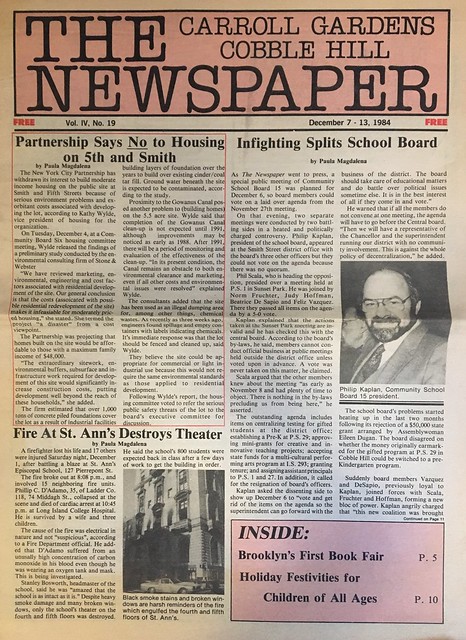
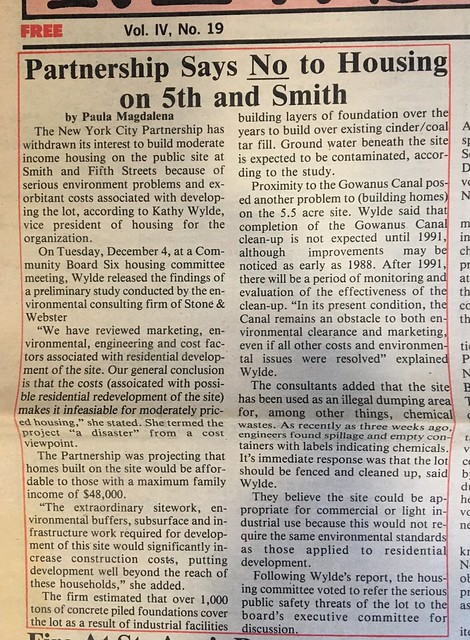
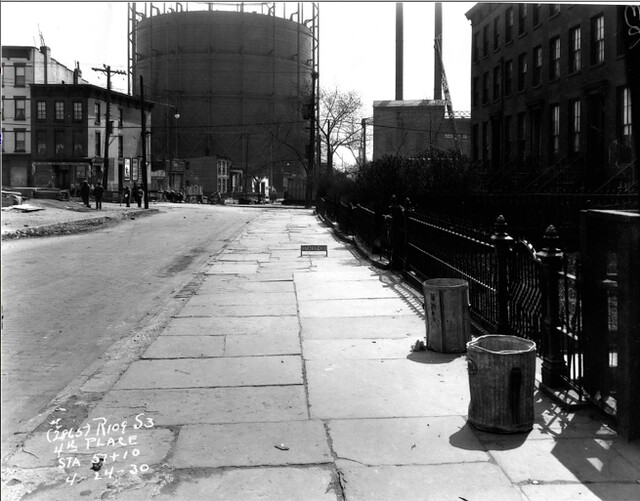
Perhaps they would do well to reach back into the past. In 1984, a New York City Partnership withdrew its proposal to build moderate income housing on the site "because of serious environmental problems and exorbitant costs associated with developing the lot."
See below:




.JPG)


