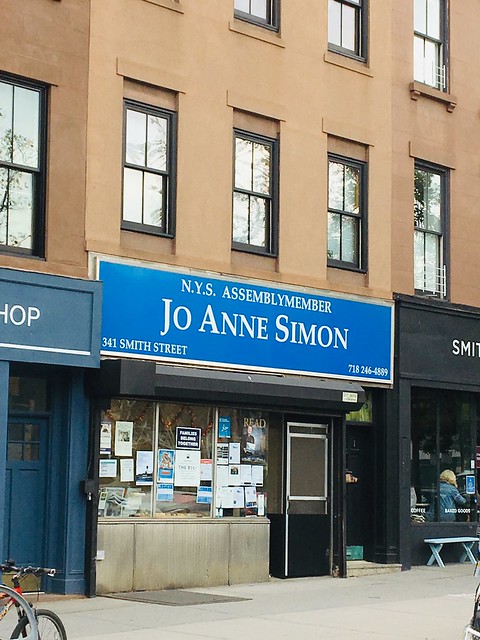
We would like to applaud NY State Assemblymember Jo Anne Simon for standing with her Gowanus area constituents by expressing serious concerns about New York City's proposed Gowanus rezoning. In a detailed and strongly worded letter to NYC Department of City Planning, the Assemblymember asks for a revised draft scope of work and a hydrology study to assess the risks of building in a floodzone with the reality of sea level rise looming.
Thank you, Assemblymember Simon. We feel very fortunate to have you by our side in this fight for a clean environment and a better future for Gowanus than the one currently being proposed by Mayor deBlasio and Councilmember Lander.
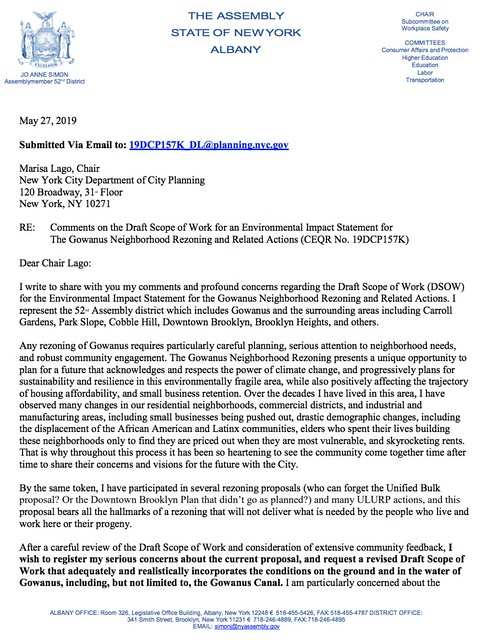
Here is Simon's letter:
May 27, 2019
Submitted Via Email to: 19DCP157K_DL@planning.nyc.gov
Marisa Lago,
Chair New York City Department of City Planning
120 Broadway, 31st Floor
New York, NY 10271
RE: Comments on the Draft Scope of Work for an Environmental Impact Statement for
The Gowanus Neighborhood Rezoning and Related Actions (CEQR No. 19DCP157K)
Dear Chair Lago:
I write to share with you my comments and profound concerns regarding the Draft Scope of Work (DSOW) for the Environmental Impact Statement for the Gowanus Neighborhood Rezoning and Related Actions. I represent the 52nd Assembly district which includes Gowanus and the surrounding areas including Carroll Gardens, Park Slope, Cobble Hill, Downtown Brooklyn, Brooklyn Heights, and others.
Any rezoning of Gowanus requires particularly careful planning, serious attention to neighborhood needs, and robust community engagement. The Gowanus Neighborhood Rezoning presents a unique opportunity to plan for a future that acknowledges and respects the power of climate change, and progressively plans for sustainability and resilience in this environmentally fragile area, while also positively affecting the trajectory of housing affordability, and small business retention. Over the decades I have lived in this area, I have observed many changes in our residential neighborhoods, commercial districts, and industrial and manufacturing areas, including small businesses being pushed out, drastic demographic changes, including the displacement of the African American and Latinx communities, elders who spent their lives building these neighborhoods only to find they are priced out when they are most vulnerable, and skyrocketing rents. That is why throughout this process it has been so heartening to see the community come together time after time to share their concerns and visions for the future with the City.
By the same token, I have participated in several rezoning proposals (who can forget the Unified Bulk proposal? Or the Downtown Brooklyn Plan that didn’t go as planned?) and many ULURP actions, and this proposal bears all the hallmarks of a rezoning that will not deliver what is needed by the people who live and work here or their progeny.
After a careful review of the Draft Scope of Work and consideration of extensive community feedback, I wish to register my serious concerns about the current proposal, and request a revised Draft Scope of Work that adequately and realistically incorporates the conditions on the ground and in the water of Gowanus, including, but not limited to, the Gowanus Canal. I am particularly concerned about the geographic spread of the Project Area to encompass 80 blocks, including areas far beyond the boundaries of the Gowanus area and the proposed density, leaving one to draw no other conclusion than that DCP has succumbed to influences given to overreaching for their own benefit and not the benefit of the residential and small business communities. This is particularly true with regard to the myriad unaddressed environmental impacts on this ecologically vulnerable neighborhood, and the contribution to those environmental impacts of the contemplated development. I urge the City to take far more seriously than is demonstrated in the DSOW its moral and legal obligations as a steward of the environment in this rezoning process.
My concerns include, but are not limited to:
1. The proposal’s sheer disregard for the environmental impacts of both construction and increases in population in light of the Gowanus Canal’s Superfund status and the effects of climate change;
2. The deliberate mischaracterization of the Gowanus neighborhood to include an area of Boerum Hill, which appears to contemplate inclusion in the ever-expanding mischaracterization of surrounding neighborhoods as part of Downtown Brooklyn, and areas of Park Slope with similar effect;
3. The DSOW’s lack of attention to traffic and transportation impacts, including overwhelming the
already far too crowded subway routes through the area;
4. The proposal’s gratuitous demand for an unprecedented and unwelcome doubling or tripling of
current Floor Area Ratio (FAR);
5. The vast reduction in manufacturing and industrial square footage in a neighborhood that has stressed the importance of its industrial past and maintaining a robust mix of uses;
6. The exacerbation of inadequate open space available to residents of Gowanus;
7. The disregard for community input provided through the Bridging Gowanus and Gowanus Lowlands exercises;
8. The lack of real affordability, and the lack of investment provided for affordable housing including
investment in NYCHA. The City cannot build its way out of the current housing crisis which is ever more dire with increased development, gentrification and “affordable” housing which is unaffordable.
The biggest contributors to the homelessness crisis are rising rents and rezoning proposals such as this contribute heavily to that picture.
Environmental Impacts
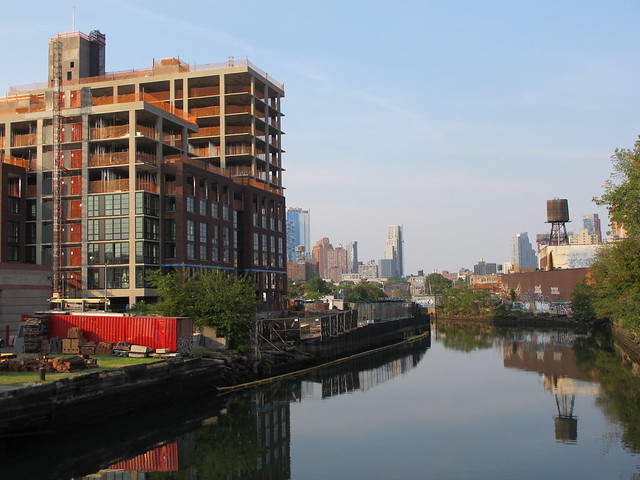
Throughout this process sustainability and resiliency has been a primary concern for residents, which isn’t surprising considering they live next to one of the most polluted waterways in the country. In the draft scope, DCP states that “becoming a model green neighborhood means creating a livable, safe, and productive neighborhood for generations to come,” but how does the city expect Gowanus to become a model green neighborhood without taking into account the Combined Sewage Overflow (CSO) problems plaguing the Gowanus and surrounding areas, especially in light of large development and population increases that will result from this rezoning? How does the City propose the Gowanus become a model green neighborhood by building tall towers on the banks of a narrow canal that is highly susceptible to flooding and storm surge – both of which conditions will worsen with climate change? How does the City propose the Gowanus become a model green neighborhood by underbuilding the needed infrastructure? How does the City propose the Gowanus become a model green neighborhood when it has not done a hydrology study to assess the underground streams and flow of water that affect the spreading plumes of toxins beneath the surface? We need a hydrology study. How does the City propose the Gowanus become a model green neighborhood by planning for construction before necessary data is known and understood so that fully informed decisions can be made?
Current EPA Superfund plans for the CSO tanks will be able to contain 12 million gallons of overflow, which will reduce the volume of sewage flowing into the canal to 20% of current values. Reducing overflow is necessary to ensure that the Superfund process was not for naught and that after the planned dredging and capping, the canal is no longer inundated with sewage. The CSO facilities planned have no accommodation for an increase in population such as is proposed and their associated wastewater.
As a responsible party of large tracts of the Superfund site, it is alarming that the City would not take the CSO output seriously during this planning process. As a site that will be revised by the EPA every 5 years after completion, the Gowanus Canal clean up should take into account the future of the neighborhood’s overall environment, not just the prescribed remediations. It is promising that DEP is looking into other, more modern CSO solutions by investigating a tunnel option, but that must also go beyond the current requirements and look to the future. Cities across the world have built hundreds of miles of CSO tunnels to protect their waterways, and while DEP touts the benefit of a tunnel being scalable, there is no reason to start small. The current idea for a tunnel would reduce the volume of sewage flowing into the canal to 16% of current values, only a 4% improvement from the proposed tanks. A tunnel could be much longer than the half mile proposed and would make a much bigger dent in current and future CSO levels. If this plan is built out to the fullest extent, there will be approximately 18,000 new residents who, along with the current residents of Gowanus, will be living next to what would amount to an open sewer if future CSOs are not properly addressed.
Land Use and Zoning
The density proposed in this draft scope of work is far beyond anything brought up in the many meetings the community has engaged in over the past years. When the City was engaging with the community as recently as 2018, the canal corridor was only intended to have up to 14 stories (a previous rezoning proposal pegged that at 12 stories in a small section of the Project Area), which just might fit in with recent development without overwhelming the neighborhood character. Nevertheless, the community was not happy about 14 stories, finding that too dense. Heedless of those concerns, the DSOW calls for an increased density to allow for buildings as tall as 22 stories along the canal, a density with which the community is highly uncomfortable and which was never discussed with community in advance of the issuance of the DSOW. Mixed use development around Thomas Greene playground will be a welcome and needed change, but residential housing up to 14 stories will cast shadows over this precious open space and change the feel of it from a rare, open respite to canyon-like.
Similarly, the inclusion of large northern and southern swaths of Fourth Avenue goes too far afield, and overreaches both geographically and in terms of proposed density. The proposed density allowing for 30 stories along Fourth Avenue has raised serious concerns within the community, changing forever the feel and character of Gowanus and compromising water run-off, sewage, subway and bus overcrowding and increased traffic. The study area within 400 feet of the Project Area must be expanded. Case in point: not so far away is the planned reconstruction of the triple cantilevered portion of the Brooklyn-Queens Expressway (BQE) in Brooklyn Heights. Regardless of the final approach to reconstructing the aging highway, construction impacts will bring increased traffic to the area as cars and trucks leave the highway at 39th Street to path find their way north to the Manhattan and Brooklyn Bridges. That the plans for the BQE will attempt to mitigate traffic diversions as much as possible is unavailing as diversions will occur because drivers have their own minds.
Community Facilities
Waterfront access is imperative for the future of the Gowanus Canal; we cannot have sterile esplanades that do not allow for an active waterfront, which has been a consistent request from the community for decades. Access to the water provides for educational and recreational pastimes, and honors the canal’s robust history as a tidal marsh. There should also be space for boat launches, and there must be egress points for both accessing the water and exiting the water. Provision for pedestrian bridges is essential to unite the communities on either bank of the canal and provide new and improved alternate routes of travel. The community also needs to have past promises fulfilled, including the reopening of the Gowanus Houses Community Center. The environmental, economic, and capital needs of NYCHA residents in the area also need to be more seriously considered.
Affordability
Residential, commercial, and manufacturing affordability is imperative in the Gowanus neighborhood, but affordability cannot come at the cost of our neighbors’ health. Affordable housing on some of the most polluted land around the canal, including Public Place, must be adequately remediated, and continuously monitored for safe conditions. Previous remediation sites, such a Lowes and Whole Foods should be re- evaluated to determine how their remediation efforts have held up.
I thank you for this opportunity to comment and look forward to working with the Department and my colleagues in government to improve this proposal.
Very truly yours,
Jo Anne Simon




















.JPG)


