Thursday, May 06, 2021

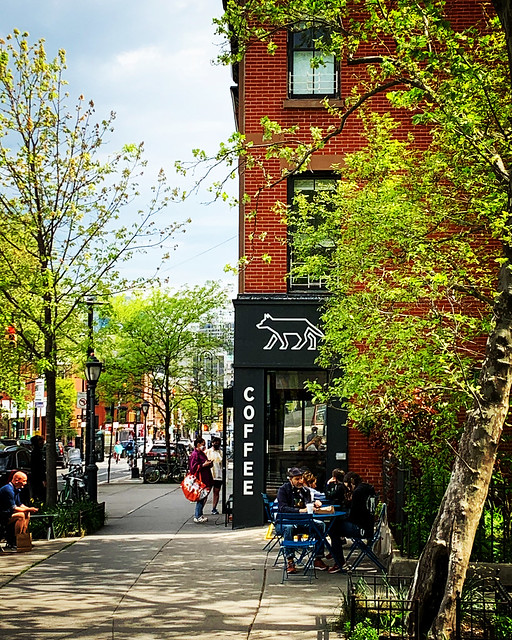
Picture Of The Day: May, Coffee And Smith Street


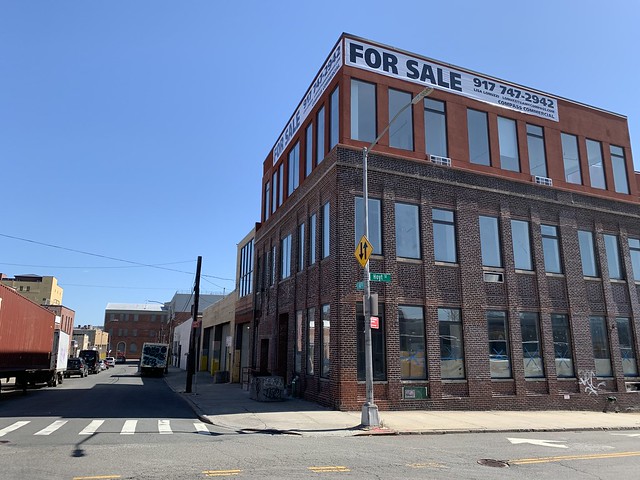
I love the month of May in Carroll Gardens, Brooklyn. After a long year of isolation, it is wonderful to walk along Court and Smith Street and to run into neighborhood friends I have not seen for so long.
Here is to community, here is to beautiful sunny days, and here is to finally coming out of the Covid fog.


Read more

Help A Carroll Gardens HS Senior By Taking A Quick Survey On The Gowanus Rezoning

We were recently contacted by Linnea, a Carroll Gardens High School student, who is currently conducting a survey she created as part of her final senior research paper. She would like local residents to take just a few minutes to provide answers to a few quick questions to allow her to complete the paper. Won't you please help her?

Linnea's assignment focuses on a local issue and the policy surrounding it. It also asks students to conduct a survey.  She chose to center her paper around the proposed rezoning of the Gowanus and, more broadly, on environmental racism in NYC.

Linnea writes:
"I’m one of the leaders of my schools environmental club so I wanted to focus on an environmental issue and the Gowanus seemed like the perfect place to start. It kind of developed from there, broadening to environmental racism in NYC. The goal of the survey is just to gather community opinion on the Gowanus Rezoning and to directly find what change community members want to make a priority."

All answers will be kept anonymous.The survey can be accessed here: https://forms.gle/vRmJCh7zQteTEotv6.

Thanks for helping Linnea out!

*Linnea will take answers till the end of the week, so don't wait to complete survey.

Read more

Wednesday, May 05, 2021

Water, Water Everywhere: Climate Change, Flooding And The Gowanus Rezone


Grassroots community coalition Voice Of Gowanus invited everyone to a Town Hall event next week about the Gowanus rezone. Please read on to learn more, and register for what should be a very informative evening. And please tell your neighbors.

Water, Water Everywhere: Climate Change, Flooding, & the Gowanus Rezone
A Panel Discussion with Flood Risk and Climate Change Experts hosted by Voice of Gowanus
Tuesday May 11, 2021 6:00 pm


Featured panelists:

ADRIAN SANTIAGO TATE, PhD has a background in coastal engineering, hydrodynamic modeling, and uncertainty quantification. Adrian researched nature-based solutions for reducing coastal risk as an undergraduate at Virginia Tech, and later for his PhD at Stanford. He’s published his research in the Proceedings of the National Academy of Sciences. Adrian is conducting sea level rise vulnerability assessments to help state governments prepare for future flooding.

D.J. RASMUSSEN is a climate scientist, engineer, and policy scholar. He studies coastal floods, sea-level rise, and public works strategies for managing their economic and social costs. He is co-author of “Economic Risks of Climate Change: An American Prospectus”. D.J.’s research has informed multiple climate assessment reports from the UN Intergovernmental Panel on Climate Change (IPCC). He completed his PhD at Princeton University.

MAUREEN KOETZ, ESQ. is principal of Planet A+ Strategies. Ms Koetz has served as counsel and advisor to the Senate Committee on Energy and Natural Resources, former Senator Domenici, and the EPA. She has sued to eliminate duplicative real estate LLC donations, has been lead plaintiff in the successful Lefrak/Gateway tenant class action suit, and a strategic advisor in the Two Bridges, Inwood, and South Street Seaport zoning actions.

NOAH DEWAR is a hydrogeophysicist, machine learning expert, and PhD candidate at Stanford university studying environmental geophysics. Noah’s PhD research has focused on the development of methodologies that leverage geophysical surveying systems to study aquifers in the Central Valley of California. His research is part of the Groundwater Architecture Project (GAP) which aims to revolutionize how groundwater models are built.


Read more

Monday, May 03, 2021

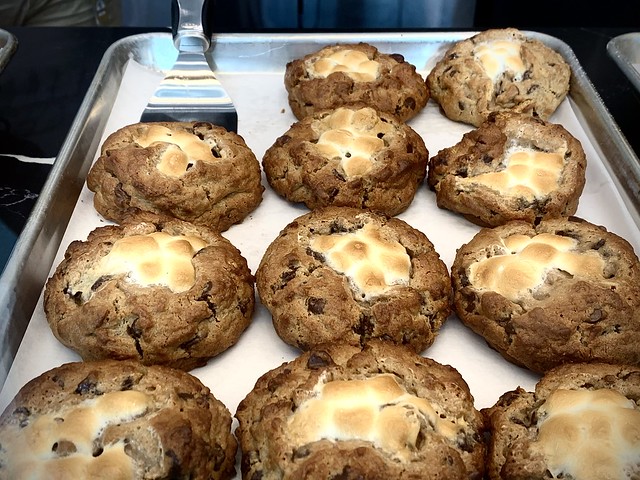
Cookies And Coffee: Chip City Opens On Smith Street

Chip City, a small chain that started in Astoria, Queens, has just opened its seventh New York City store at 361 Smith Street in Carroll Gardens. The store offers freshly baked cookies in four different flavors every day and rotates its menu weekly. Besides classic cookies like chocolate chip, peanut butter chocolate, and white chocolate macadamia, the offerings include more unusual flavors like Nutella Sea Salt and Glazed Pear. 
The price per cookie is $4, or $20 for five.  Customers also have the option to purchase frozen cookie dough bundles that can be baked at home.
Though Chip City also offers coffee to go and is right next to the F train subway station, I wonder if a store selling just cookies will do at this location.  After all, Momofuku Milk Bar, which had a similar menu, decided to close its location right across the street in 2019.
What do you think, dear Reader?


Read more

Tuesday, April 06, 2021

Picture Of The Day: Favorite Magnolia


My favorite magnolia tree is almost in full bloom on the corner of Carroll Street and Smith Street 
here in Carroll Gardens. I love spring!
Read more

Friday, April 02, 2021

On The Passing Of Gowanus Activist And Historic Preservationist Linda Mariano

Linda Mariano at Yesterday's News 2018

Dear Readers,

The news that Gowanus resident Linda Mariano has passed last night after a brief illness was shared amongst those who knew her with infinite sorrow.  This morning, it feels as if a huge empty space has opened up in the neighborhood, which she called home and loved so dearly.

To have known Linda will forever be one of the greatest privileges of my life. She could brighten the cloudiest day with her huge smile and laugh. She was a fearless activist, and passionate advocate for Gowanus. She always spoke truth to power and taught many that one never gives up fighting for what is right.  Over the years, she became a mentor to many of us and we all aspired to become just like her. She was fiercely loyal to her friends and her house was always open for a glass of wine, some food and stimulating discussions. 

Most neighborhood residents might remember her from Yesterday's News, the Court Street vintage store, where she worked on week-ends for many years.

Linda moved to Gowanus with her husband Joseph Mariano and daughter Rachel over 40 years ago from Manhattan. They bought a dilapidated house on President Street in the 1970's, which they lovingly restored into a welcoming home. They displayed a black and white photo of what the building had looked like when they first laid eyes on it, as a reminder of how they had saved this piece of neighborhood history.  In the spring, Linda would plant her window boxes with the brightest fuchsia geraniums, making the house the prettiest on the block.

Linda was one of the founding members of Friends Of Greater Gowanus (F.R.O.G.G.), a group that was founded in 2002 to safe the Green Building on Union Street near the canal when the old brick building was slated for demolition to make way for a high rise.
Together with F.R.O.G.G., Linda became a very vocal supporter of the Environmental Protection Agency's Superfund designation of the Gowanus Canal and was a founding member of the Gowanus Superfund Community Advisory Group after the designation in 2010.

However, as passionate as she was about the environment, it was preservation of the neighborhood that was always her main focus. She tirelessly worked with the NYC Landmarks Preservation Commission (LPC), the Historic Districts Council (HDC), and the NYS Historic Preservation Office (SHPO), to pursue historic designation of the Gowanus Corridor as an Urban Industrial District.
In 2019, because of her perseverance, five important Gowanus buildings were landmarked by New York City.  But of course, she wanted to save many more. It comes at no surprise that she vehemently opposed the massive rezoning for Gowanus which is currently being discussed.

On a personal note, I cannot express the deep sadness I feel at knowing that I will never sit around her kitchen table with other members of FROGG again,  envisioning a better and more sustainable future for the neighborhood than the plan cooked up by developers.  
She will forever be my role model, and I will try, in my way, to continue to make her Gowanus dreams a reality.

My deepest sympathy goes to her daughter, son-in-law and granddaughters, whom she loved passionately.
We share your sorrow.

To hear Linda tell her own story, please visit the Preservation Archive Project

Joseph and Linda Mariano at their home in 2009
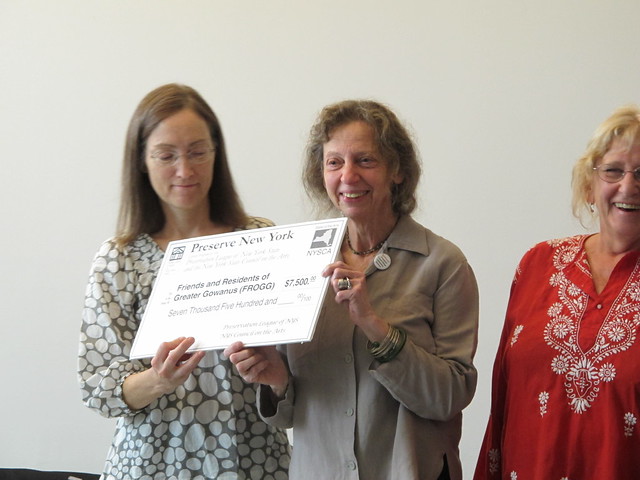
With Marlene Donnelly and Bette Stoltz, receiving a Preservation League grant
A very happy moment with FROGGS in 2019.
from left to right, Margaret Maugenest,  Marlene Donnelly, Linda Mariano and me.


Read more

Tuesday, March 30, 2021

EPA Issues Administrative Order Requiring City to Construct Sewage Retention Tanks for Gowanus Canal Superfund Site Cleanup

The Environmental Protection Agency just issued the press release below,  stating that the Federal Agency has issued an important Administrative Order requiring New York City to construct two sewage retention tanks as part of the Gowanus Canal Superfund Site Cleanup.
This is great news for the Gowanus community, which has long demanded that the City of New York cease the use of the Gowanus Canal as an open sewer.

As part of the EPA Record of Decision for the Gowanus Canal Superfund clean-up, the EPA had mandated that the NYC Department of Environmental Protection construct two retention tanks to control untreated sewage from entering the canal during heavy downpours.

NYC DEP has tried to delay the tank's construction for the past few years. Just recently,  DEP's Commissioner Vincent Sapienza told EPA Region 2 that the completion date for the larger of the two tanks at the head of the canal would have to be pushed back to 2032, citing "the impact of the Covid-19 pandemic on the city's finances and water revenues."

This EPA order legally compels the City to complete the smaller retention tank on the Salt Lot near 2nd Avenue in 2028 and the larger 8 million gallon tank by 2029.  If the City fails to comply to the order, it will face stiff fines.

It is important to note that the two tanks only address CSO discharges into the canal under current conditions. This is significant given the fact that NY City is currently pushing for a massive rezone that would bring about 20,000 new residents into the area. However, the EPA has publicly assured the community that will carefully monitor sewage discharge from any future residential development to insure that the City does not recontaminate the Gowanus Canal.


NEW YORK (March 30, 2021) 
The U.S. Environmental Protection Agency (EPA) ordered the City of New York (city) to construct and operate two Combined Sewer Overflow (CSO) retention tanks to control contaminated solids discharges at the Gowanus Canal Superfund site in Brooklyn, New York, which is a key component of the Gowanus Canal cleanup. The EPA’s order follows previous orders that EPA issued in 2014 and 2016 to require the city to find a location for and design the two tanks. Controls to reduce CSO discharges and prevent other land-based sources of pollution, such as street runoff, from compromising the cleanup are a critical part of the site’s cleanup plan.
“This order will ensure that EPA’s cleanup efforts will not be undermined by uncontrolled combined sewer overflow discharges that have contributed to the chemical contamination of this waterway and impacted this community for the past century and a half,” said EPA Acting Regional Administrator Walter Mugdan. “To ensure the integrity of the dredging work, the retention tanks will control New York City’s sewer outfalls over the long-term.”

The administrative order, issued on March 29, 2021, requires the city to construct one 8-million-gallon tank, located at the head of the canal, and one 4-million-gallon tank, located at a New York City Department of Sanitation Salt Lot near the middle of the canal.

The order also requires the city to, among other things:
• Ensure that developers comply with municipal stormwater regulations within the Gowanus area to prevent additional sewer volume from impairing the effectiveness of the CSO tanks; • Provide treatment for separated stormwater discharges;

• Perform monitoring of sewer solids discharges to ensure protection of the dredging remedy; • Perform associated maintenance dredging, if determined by EPA to be necessary; • Construct a bulkhead on City-owned property to prepare for the second phase of dredging work; and

• Adhere to an overall schedule for remaining tank design work and construction.

The 2013 cleanup plan for the Gowanus Canal Superfund site includes dredging to remove contaminated sediment from the bottom of the canal, which has accumulated because of industrial activity and CSO discharges. More than a dozen contaminants, including polycyclic aromatic hydrocarbons, polychlorinated biphenyls, and heavy metals, including mercury, lead, and copper, are present at high levels in the Gowanus Canal sediments. Dredged sediment that contains high levels of liquid tar will be thermally treated at an off-site facility and disposed. The less contaminated dredged sediment will be processed at an off-site facility to transform it into a beneficial use product, such as landfill cover. Certain areas of the native sediment, below the original canal bottom, that contain mobile liquid tar and are too deep to excavate, will be mixed with cement and solidified to prevent the migration of the tar into the water of the canal. Following dredging and solidification of areas of the native sediment, construction of a multilayer cap in dredged areas will isolate and prevent migration of any dissolved chemicals remaining in the deep native sediments.

To view EPA’s administrative order, as well as other information and documents concerning cleanup activity and EPA’s efforts at the site, please visit www.epa.gov/superfund/gowanus-canal Follow EPA Region 2 on Twitter at http://twitter.com/eparegion2 and visit our Facebook page, http://facebook.com/eparegion2
Read more

Monday, March 29, 2021

National Grid's Own Documents Prove That Contaminants From Public Place In Gowanus Migrated Off-Site


Public Place, the large empty swath of land between Smith Street and the Gowanus Canal in Carroll Gardens, may be one of the most contaminated sites in New York State and there are grave concerns that it may never be fully cleaned up despite current remediation efforts.  How did Public Place get so contaminated?
This is the site of the former Citizens Gas Company's Manufacturing Gas Plant, one of three such MGPs that once operated along the Gowanus Canal.

The Citizens Gas Company began operations in the late 1860's and then passed into the ownership of Brooklyn Union Gas (BUG) in 1895, which demolished the plant in the 1960's, when the MGP ceased operation. In subsequent years, BUG was merged with Keyspan, which was then acquired by National Grid in 2007.

What has been left behind is poisoned land. Coal tar, a highly toxic and carcinogenic by-product of the gas manufacturing process, has been allowed to migrate freely throughout the site and into the Gowanus Canal.  On Public Place, the deepest tar observed extended to approximately 153 feet below the ground surface.

Finally, after decades of exposing local residents to this toxicity, three of the four parcels that made up the former MGP site are currently being remediated by National Grid under the supervision of New York State's Department Of Environmental Conservation (DEC) through the state's Brownfield program.

However, the remediation can hardly be called a clean-up. It would be more appropriate to call it a containment, since most of the coal tar will remain in the soil forever.
Just recently, the Carroll Gardens / Gowanus community learned that DEC had allowed National Grid to significantly alter and degrade the remediation, sparking concerns that future residents would be exposed to the remaining contamination.

A look at National Grid's online repository for the Citizen's Gas Site documents reveals exactly how dangerously contaminated the site is.
According to a Remediation Investigation Report from 2005 by environmental consultant firm GEI, "groundwater moving through the areas of tar-saturated soil and residual tar will dissolve the BTEX components and light molecular weight PAHs (e.g., naphthalene). The resultant groundwater plume will migrate in the direction of groundwater flow. "
The study also revealed that in some spots, soil vapor contained elevated levels of benzene, toluene, and xylenes.

The most concerning information, however, can be found in a document entitled 2005 Final Remedial Investigation for Public Place, which can also be found in National Grid's online repository.
The community has known for a while that coal tar from Public Place has migrated into the adjacent Gowanus Canal. Local residents therefore asked if the contamination could have found its way past the other three boundaries of the site.
If one studies the report carefully, the answer, alarmingly, seems to be "YES".

The 2005 report clearly shows that pockets of coal tar have oozed underneath Smith Street, Huntington Street, as well as 4th Street at Hoyt Street, where it was detected underneath a row of buildings.
Yet, neither National Grid, nor NYC DEC admitted this important fact to local residents, though they were asked at numerous occasions at public meetings.

Below, we will guide you through the documents from the 2005 Final Remedial Investigation to reveal that contamination from the former MGP site at Public Place is no longer confined to its boundaries.
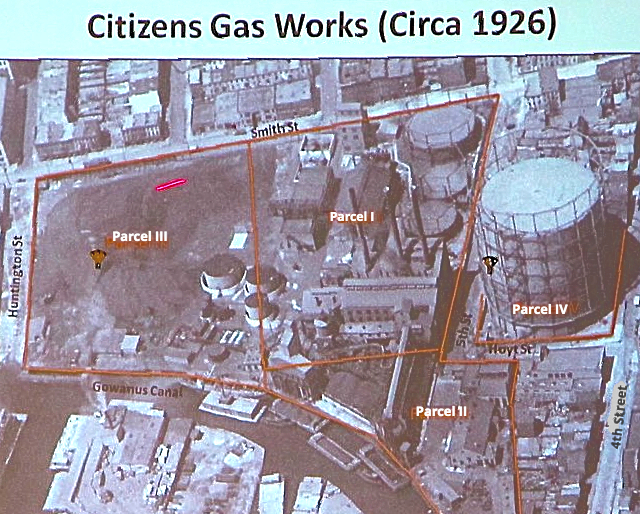
The four parcels that make up the former Citizens Gas Site
Arial view of the MGP site  in 1926, showing the various round gas holders. Parcel I with the three 
holders near Smith and 5th Street apparently holds the most pollution.
This diagram is from page 290 Of the 2005 GEI report
This particular map shows the survey of the site boundaries, as well as the cross sections (A-A' to G-G') along which soil borings were taken and ground water monitoring wells were installed by GEI. 
This is page 306 from the report. It shows the results of the soil samplings and ground water analysis from cross sections A-A'  and B-B'. The best way of visualizing this is by imaging cutting a straight line into a cake. The cut piece would reveal the different layers of the cake. In this instance, it shows the soils and contamination found in this cross section.
This speaks for itself, obviously, but notice that the dark blues indicate presence of coal tar.
Let us take a closer look at section B-B', which starts at Smith Street on Parcel I and ends at 6th Street on the other side of the Gowanus Canal.
Here is the level of pollution found deep in the ground on Parcel I along the B-B' section.
Corner of 5th Street and Smith Street, which according to cross section diagram,
 indicates a pocket of contaminated ground water.

This is where it gets interesting. This is the beginning of that B cross section of Parcel 1 at the corner of Smith Street and 5th Street, where the three gas holders that can be seen in the 1929 photo were once located.
If you look at the left hand side of the diagram, you will see a turquoise section in the 'shallow zone' that indicates that "coal tar staining, sheen and odors" were observed in the groundwater at this spot. The upper blue number in the little white box shows that at this spot, the groundwater concentration of BTEX, which refers to the chemicals benzene, toluene, ethylbenzene and xylene, is 13,300 μg/mL (parts per billion). The lower number indicates PHA (Polycyclic Aromatic Hydrocarbon) at concentration of 7670 parts per billion.)

NY State regulations state that BTEX should not exceed 5 parts per billion for drinking water but there are no limits for the PHA. While nobody will be drinking the groundwater containing these chemicals, there is continuing exposure through contact with the soil and breathing the air.

Now look up at the upper left hand side and notice that the contamination at this spot actually starts past the Public Place fence line. This diagram from the 2005 report indicates clearly that the groundwater barely 30 feet (NDA) below the surface has been heavily contaminated and actually extends onto Smith Street.
Now let us look at cross section I-I', which crosses Parcel 3 and Huntington Street, and ends across the Gowanus Canal towards 9th Street.
This is slide 310 of the GEI report from 2005.
Analysis of soil borings taken at this location also indicates the presence of coal tar staining, sheen and odors. The BTEX soil concentration here is 79 parts per million, the PHA concentration is 482 per million.
Once again, notice on the top part of this diagram, that the toxins have been found outside of Parcel 3, underneath Smith Street.
Approximate spot where evidence of coal tar was present on Smith Street on the I-I' cross section 
Mary Star Of The Sea Playground just steps away
The most interesting part of the report concerns cross section G-G', 
which starts on Parcel IV along 4th Street.

It is not currently being remediated by National Grid, though it is part of the former MGP site and is also contaminated. The parcel is occupied by a bus depot at the moment, and the community has been told it will be cleaned at a later time.
However, if you follow the G-G' cross section, you notice that there are actually pockets of toxic material right underneath the buildings between Hoyt Street and Bond Street.
Cross section G-G'. Slide 309 of the 2005 report.
One can clearly see the pockets of contamination in the soil and ground water underneath those buildings, especially the brick building on 4th Street nearest to Bond Street.
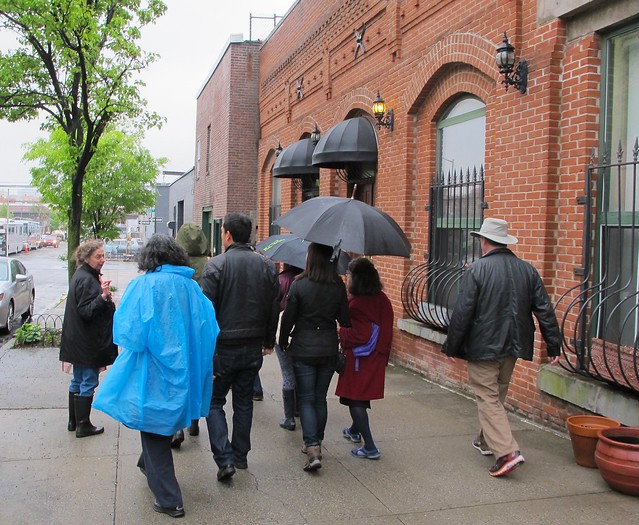
Buildings on south side of 4th Street between Hoyt and Bond Street, which show 
evidence of contamination along the G-G' cross section

The 2005 Final Remedial Report for Public Place indicates widespread pockets of coal tar on all four parcels. The remedial work currently being done on Parcel I, II and III by National Grid under NYS DEC supervision only removes 2 feet of soil across those parcels, and only digs down to a maximum depth of 22 feet on Parcel 1, where the remaining subsurface structures of the former gas holders need to be removed anyway.
The report also shows that the contamination has migrated outside the boundaries of all four parcels.

It is important here to indicate that the beginning and the end of each cross section along which the soil and the ground water was tested, was strictly arbitrary. If, for example, line I-I' had extended further across Smith Street and testing had been done closer to Nelson Street, it may have shown contamination under St. Mary's Playground or, one shudders to think, under some of the homes, perhaps.

It may not have been in the interest of National Grid to find out if that is the case. However, as the lead agency overseeing the Public Place remediation, one wonders why NYS DEC did not insist on more testing, more mitigation and more barriers to prevent the contaminants from migrating outside of the site.. After all, the documents referred to above have been available since 2005.

Why is all of this so relevant?
The pollution at Public Place and the gasses they emit are dangerous to human health. Despite this knowledge, Mayor de Blasio and Councilmember Brad Lander envision Gowanus Green, a 29 story development project with 950 affordable housing units and a school on a section of Public Place that is City owned (Parcels 1 and 2). More housing is planned on the privately owned parcel 3.

As a community, we need to insist that independent testing along a wider radius of Public Place is performed. We must insure that the coal tar is not present under other adjacent buildings.
At the very least, we need to insist that no housing be built right on top of the source of the contamination on Public Place.


We are dealing with people's lives and cannot have National Grid nor NYS DEC take any shortcuts. This community has already been exposed to the harmful effects of this contamination for more than a century.
Let's organize and fight together to get the environmental clean-up we deserve and are entitled to by law.


Related reading:
National Grid's online repository for the Citizen's Gas Site documents.


Read more

Monday, March 22, 2021

Voice Of Gowanus Releases New Environmental Baselines For Just And Sustainable Development In Gowanus


Today, members of Voice Of Gowanus gathered next to the Public Place site on 5th Street at Hoyt Street to release their new Environmental Baselines for Just and Sustainable Development in Gowanus. The location was significant since Public Place is a polluted former manufactured gas plant site, which has been proposed for housing under the Gowanus rezoning

From a press release by VoG: 

The group was unequivocal: Before any proposed rezoning in Gowanus may proceed,  five baselines for environmental and human health must be met.  The baselines are built upon new legal and environmental expert analysis commissioned by VOG.

The coalition also demanded that FEMA and the EPA be full co-lead agencies in preparing the Environmental Impact Statement (EIS) for the proposed Gowanus rezoning given the neighborhood's notorious flooding, sewage, and toxicity problems.  Any EIS without EPA and FEMA as co-lead agencies is insufficient and invalid.

Voice of Gowanus and a panel of experts will further review the health and environmental issues that must be addressed prior to any rezoning at its Fight for Gowanus: Townhall Panel Discussion on March 24 at 6:30 pm (full details and registration here).

Click here for full Baselines Document


Read more