Showing posts sorted by relevance for query question of the week. Sort by date Show all posts

Friday, June 19, 2009

A Letter From Albany: State Senator Squadron Updates His Constituents On The Goings-On


Have you been following the despicable goings-on in Albany in the last few days? As our State Senate has been turned into one giant soap-opera, our State Senator Daniel Squadron addresses his constituents directly with this email to express his own indignation at his colleagues. The email was sent out yesterday. Just in case you did not get it, I am reprinting it here.


Dear Friend,

With so much happening in Albany, I wanted to send along an update.
Over the last week and a half, I’m sure you have joined the rest of the state in looking on with horror and fascination as the State Senate has collapsed. A partially aborted attempt by two of my Democratic colleagues to enter into a pact with the Republicans has led to deadlock...and absurdity. For a period last week, the most significant question circling the capitol was, who holds the keys to the Senate chamber? The absurd truth is that control of the upper legislative house in the third largest state in the nation seemed for a period to hinge on an actual hinge.

There are lots of reasons we are in this mess. For one, it's important to remember there are many who have been desperate to freeze action on important progressive goals from housing to jobs to ethics and campaign finance.

But things have gotten so bad so quickly for a simple reason. In the State Senate, the person, or people, who lay claim to the title of Temporary President and Majority Leader hold all the power. You are not witnessing a simple battle over titles or committee chairs. Rather you are witnessing a fight built on the question of who controls:

· All of the millions of dollars of internal Senate resources (staff, district mailings, member “lulu” stipends…even paper clips)
· All of the tens of millions of dollars of legislative grants and capital investment dollars
· All – that’s right all – of the legislation that moves through the house (in effect giving the leader of the Senate a non-overideable veto on all legislative matters in the
State of New York)
· All other things you can imagine, except who gets elected to this body
New Yorkers are watching a woefully undemocratic process unfold because this is a battle for control of a woefully undemocratic place. After having been elected by the people, each legislator holds one powerful card – the vote for leader. In a sixty-two-member body in which members are so evenly divided between parties – and all sixty-two of us, not to mention advocates, lobbyists and special interests, understand the stakes – desperation, chaos, and stalemate are all too likely.

The only way out of this mess, assuming neither party suddenly gains a large majority, is for the entire body to enact real reform that fundamentally changes the power dynamic.

In the short-term, we need a bipartisan operating agreement that leaves the question of leadership aside while letting us pass the legislation that is so important for our city and our state. We cannot let the madness overwhelm the fact that the issues we fight for and the laws we pass have a profound effect on our constituents.

The proposal put forward by the Democratic Conference, modeled on what other states have done, is a fair way to get us back to the business of legislating, or at least a place to start the conversation. (On the other hand, the "proposal" put forward by the Republican Conference would give Pedro Espada and Dean Skelos absolute power and includes the insane idea that Senator Espada has two votes.)

Of course, whatever solution we come to now won’t get all of the legislation I'm fighting for passed or solve all of the Senate's problems -- and there are a lot of them. Real long-term reform is necessary; we need substantive changes on ethics, campaign finance and internal rules. This year we started to move the ball on each, but we have not done nearly enough. Beyond just getting support for ethics reform, which I was pleased to do, we have to enact it. Beyond just introducing campaign finance bills, we have to pass them into law. And beyond rules reform at the margins (or what the "coup" served up, which is a cynical attempt at headlines that masks leader-controlled business-as-usual), we need to fundamentally change the way the Senate is organized: if we had a real way to move bills to the floor, non-partisan administration of the Senate, and a fairer balance of power between the leader and the members, this sort of nuclear stalemate would be very, very unlikely.

New Yorkers are witnessing a fight over choosing a leader who will have near-absolute power, not just on a $130 billion budget but on issues from healthcare to the environment, housing to farming to civil rights. If there is any lesson from this standoff, it is that reform is not about idealism or feeling nice. It is about democracy, at its most basic core. Without democracy, the rot emanating from the Senate Chamber won’t stop in Albany; it is sure to spread, via bad laws and poor policy, across the state from Western New York to the eastern tip of Long Island.

I wish I could offer a prediction about what happens next; but the last week and a half has been so unpredictable, I'm convinced predictions are impossible. (A week and a half ago I would have bet that this week we would pass my ethics reform legislation, my housing, education and pedestrian safety proposals, and a raft of other bills I carry.)

As always, please let me know if you have any thoughts, suggestions -- or predictions. I look forward to hearing from you soon.

Best,

Daniel

Daniel Squadron
State Senator
25th Senate District


For Home Page, click Pardon Me For Asking

Read more

Saturday, April 16, 2022

Woman Struck in Gowanus by FDNY Ambulance Still in Court Six Years Later

Intersection of Union and Bond Streets, where Aeliana Boyer was struck 
by an FDNY Ambulance six years ago
FDNY EMS Station 32 at Carroll Street
Images credit: google.com

Dear Neighbors,
The article below was written by Joseph Alexiou, a journalist, licensed New York City tour guide and the author of Gowanus: Brooklyn's Curious Canal. His freelance work has appeared in the New York Times, The New York Observer, Gothamist, and the Brooklyn Eagle.
Joseph, a former Gowanus resident and longtime friend, came to me with Aeliana Boyer's long struggle to get justice and relief after being hit by an FDNY ambulance from the EMS Station at Carroll Street and Bond that ran a red light.  
I would like to thank Joseph and Aeliana for allowing me to post this article here on PMFA since many walk past that station and are often in the path of its fast- moving ambulances. What happened to Ms. Boyer could happen to any of us.


Woman Struck in Gowanus by FDNY Ambulance Still in Court Six Years Later
Why does it take so long for New York City to do right by victims of emergency vehicle accidents?
By Joseph Alexiou

    Around 5pm on May 16, 2016, Aeliana Boyer was biking home through Gowanus when an FDNY ambulance drove through the red light and struck her at approximately 35 miles per hour. First she recalls being smashed by the driver’s side door and then again by the rear of the vehicle. The details reported in this story in the Daily News include the resistance of the city to even acknowledge an accident occurred. However, the ambulance’s presence has been confirmed by an eye witness and GPS tracking data that was acquired during Boyer’s spiraling, 6-year long lawsuit against the city of New York which has not yet been settled.

    As her body flew into the center of the intersection at Union and Bond Streets, one block from FDNY EMS Station 32 at Carroll Street, the Con Edison workers stopped jackhammering in the manhole in the center of the road and came to her aid as the ambulance sped off. Since this moment she’s sustained multiple injuries which, six years later, cause her to suffer from chronic daily pain all over her body. She has felt the after effects of an untreated concussion, during which she has been unable to work and was almost rendered homeless. Before this accident she was a published novelist and noted activist who had just acquired a masters degree. Today she lives in subsidized housing and is dependent on the Medicaid system, still waiting for her case to be resolved.

Exactly one week ago on April 7, an NYPD van ran a red light on Eastern Parkway at Schenectady Avenue and struck a reportedly homeless 53-year old man on the median. Carrying four prisoners towards the 77th precinct lockup, the van dragged the man approximately 35 feet before stopping. He died at Kings County Hospital. Despite calls from elected officials and civic leaders, the police have released no statements, explanations, or footage of the event, despite the fact that there are cameras on the corner in question. One week later, no one has been held accountable.

The only reason Ms. Boyer has housing at all in this city is because she managed to speak to former Mayor Bill de Blasio during his weekly “Ask the Mayor” segment on WNYC, days after the Daily News profile was published:

Brian Lehrer: "Mr. Mayor, my understanding is that Aeliana’s story was in the Daily News this summer, are you familiar with it?"

Mayor: "No, Brian actually I’m not familiar but Aeliana. I’m very, very sorry for the things you’ve gone through and want to find out, you know what has happened and what we can do about it here because this is news to me. Aeliana if you will share you information with WNYC I will make sure that one of our senior folks gets to you right away and discusses with you what’s happened here and what we can do about it.


Obviously you know, a lot has changed in the way that for example the NYPD operates since the days of Occupy Wall Street in 2011, it was a very different time and we approach things very differently today. We made a lot of changes, a lot of reforms but I am very concerned about what you are saying and I want to make sure that we follow up right away."

De Blasio’s office did eventually follow up with Boyer and connected her to a Legal Aid attorney who was able to secure her housing, but did not make any moves to aid the procession of the case. As the legal battle grew, so did the costs and mountains of evidence, and then COVID reduced the NYC court system to a standstill.

In the beginning of March 2022 Ms. Boyer’s attorney Michael Pontone handed the case file to city attorney Rodiana Katsaros, informing her that they had insurmountable evidence of the hit-and run and were ready to accept a settlement offer from the city. After a week of review she requested further evidence, then another week, and then informed Pontone her case had been handed to the comptroller’s office for review and there would be a response in two weeks. It has now been five weeks and no city agencies have reached out to Ms Boyer.

After the story of the Eastern Parkway death broke late Thursday, I reached out to a press representative of Comptroller Brad Lander’s office to inquire about the status of Boyer’s case. They informed me that they could only discuss pending claims against the City with claimant or their counsel and, despite repeated inquiries, they would not give a reasonable timespan for the comptroller to respond. However they then informed me on Monday that the Comptroller’s claims department had confirmed that the case was not in the Comptroller’s office, despite Katsaros’ insistence, and was back in the city attorney’s hands.

On that same Monday, I attempted to contact Ms Katsaros, who did not respond, but a press representative at the NYC Law Department called me to inquire about the story, describing the hit-and-run as “alleged” and informing me that Katsaros was not on the case. They inquired why I was trying to contact somebody that would not speak with me and wasn’t even part of this case. The representative later followed up officially with a two-sentence email: “There is no indication that an FDNY vehicle was involved in the alleged incident. Discovery revealed no record of the collision and no EMT in the area matched the description provided by plaintiff as being involved.”

It is truly questionable that, after 6 years on this case, after being asked several questions about the matter Katsaros suddenly disappeared from the lawsuit entirely. The Law Department declined to comment further on my follow up question:

With all due respect to the law department, I have seen with my eyes the GPS tracking data that says there was an FDNY ambulance on the scene and met the locally-based eye witnesses, named in this case, who also reported seeing the FDNY ambulance strike Aeliana Boyer. She herself says she was hit by an FDNY ambulance.

How can the law office impart this position when all of the evidence in this particular case says otherwise? Is there a reason someone could and would invent such a story, one block from FDNY EMS station 32? (Full disclosure, I lived down the street from that station at 391 Bond Street for 5 years, and have walked and biked many times around their movements). This past October the NY Times published a story about the dangers of siren noise, with the sub headline that reads “The overuse of lights and sirens, combined with speeding, pose heightened risks to emergency responders and civilians. One expert called it a ‘public health dilemma.’” These tragic incidents occur even when the sound of concrete being drilled in a Con Ed hole isn’t filling the street, such as the evening of April 7 on Eastern Parkway.

One week after the incident, neither the city nor the NYPD have followed up on that man who was killed on Eastern Parkway. In fact, trying to get a straight answer from an NYC public service representative is like dredging the Gowanus Canal for coal—something you need professionals to do. After contacting the 77th precinct about the van (it was to this precinct station that the prisoners were headed), nobody answered the phone and no responses to my messages were received. At the 73rd precinct—where the accident took place and a camera is located—when I reached an officer at the switchboard, I was told “Oh, okay hold on…” after identifying myself and my reason for calling and was put on hold for just under eight minutes. When I called the second time, my number was sent to a voicemail, on which I left a message. I called once more ten minutes later and my number went directly to a recorded message stating that the precinct was unavailable and that I should call at a later time, before an audible “click."

The officer at the FDNY EMS Station 32 could not provide statements regarding either Ms. Boyer’s case or the case on Eastern Parkway. The 76th precinct officer (the Gowanus precinct) who answered the phone directed me to their Community Affairs line, which also left me with a message and no response. When I called the comptroller’s press representative, they informed me they were “sick” but, yes, this was indeed their work cell phone, and yes they were working but, still, “what do you want?” they demanded.

Some of our elected officials are demanding answers. Crystal Hudson, Council Member of the 35th district where the NYPD van incident went down, did not mince words:

“The recent NYPD-involved traffic fatality that claimed the life of a local resident is devastating. It underscores the NYPD’s utter apathy toward the communities they serve.It is disheartening to see, time and again, those who are supposed to provide ‘courtesy, professionalism, and respect’ show a blatant disregard for human life.”

“Since the incident, we have called on the NYPD to name the officers involved and terminate them immediately and asked the State Attorney General to investigate the incident. Our community deserves nothing less than full accountability and transparency. My Office has been in contact with the family of the deceased and is helping direct them to resources and support.”


“Additionally, according to NYPD data, there have been 1,639 crashes since 2020 involving ambulances, including 368 in Brooklyn. The number of ambulance crashes citywide has increased in recent years, jumping 25 percent between 2020 and 2021, though we have seen a decrease in Brooklyn. What these numbers show, however, is a clear need to rethink what accountability means for first responders who act neglectfully.”

Aeliana Boyer has a storied past with the government of the City of New York. It began in 2011 and specifically with the NYPD and Occupy Wall Street. The current mayor is himself a retired Police Captain, and so she asks herself, is it so paranoid to think that because of this the city is stalling this case?

The dissipating spectre of COVID is decreasingly present as restaurants, bars, museums, schools and libraries do not require masks and yet COVID regulations remain present in the court system. Very recently the NY Bar Association released a report detailing how the pandemic slowdown has decimated family court and “ruined” the lives of thousands of children. Boyer feels that this backlog of court cases has become a tactic to fatigue plaintiffs with complaints against the city. “The pandemic absolutely changed the court system. Everything went online and then last summer the city’s law department system got hacked,” she said, referring to the embarrassingly rudimentary hacking incident at the Law Department last July

This does beg the question, why is Mayor Adams letting other places go to business as usual but the courts are still in a Covid-centric process? If your case can be resolved within a week, they’ll let it through, but if it’s anything like a two-week trial or beyond, in the case of Aeliana Boyer then you get pushed further back down the line. So the more severe your accident, the more merde-outta-luck you are for your case and its procedure. Ms. Boyer also wonders if Brad Lander—who was speaker of the Council at the time of the accident while also overseeing Gowanus and Park Slope—or if current Mayor Eric Adams, who was acting Brooklyn borough President at the time, were even alerted to her case after the accident, or after the Mayor’s Office pledged to see the case through.

“All I know for certain is that when I was a school bus driver in college in California, I was trained to stop whenever there is any accident involving a city vehicle. And an investigation always happened afterwards,” she said in a recent interview.

Perhaps the most chilling and unsurprising fact about Boyer’s accident is that there was never an NYPD investigation, nor did any other city agencies review the incident. All of the attention and help she has received on the case has come from friends and colleagues, online petitions and her own petition of the mayor in a public forum. If one considers the string of actions of the City of New York since 2016 it is hard not to conclude that health, wellbeing and the future of one New York City transwoman—injured beyond the ability to work but offered none of the help a person hit by an anonymous driver would receive—was simply not really important to our self-described “progressive” leaders.

Furthermore, they actively deny a truth that seems clear to every individual and attorney I know who have read the details of the case: that the FDNY ambulance did indeed hit Aeliana Boyer. They would perhaps do this in order to achieve the only real end goal I can perceive: Protect at all costs the individuals and the organizations that are the NYPD and the FDNY against all scrutiny, all review, all reform, and all accountability.

By our current standards a city vehicle is fully allowed to turn on some noise and lights and then hit, maim, or kill New Yorkers—taxpaying or not—while traveling well above the speed limit, running red lights and with absolutely zero responsibility. This is not protecting, or serving. This is abuse and it's killing us. It is not acceptable, and it needs to stop, now.

Read more

Thursday, March 08, 2007

Le roi,c'est moi!


All righty, what's better: winning half of the $390 Mega Million Jackpot as Ed Neighbors, the Georgia trucker did this week or finding out that you may be the last king of France (and the first Indian one to boot.) For all you history buffs out there, this article is for you. And for my french friends, let me know if you are even aware of the fact that the next french Bourbon king lives in Bhopal.

Found in India: The Last King of France
Angelique Chrisafis in Paris
Saturday March 3, 2007
The Guardian

Balthazar Napoleon de Bourbon, a jovial Indian lawyer and part-time farmer, has always been fascinated by France. Framed pictures of the Eiffel Tower and the palace of Versailles implausibly decorate his house in a dusty, bustling suburb of the central Indian city of Bhopal. He gave his children French names even though he has never set foot in France.
But he may soon make his first trip to Paris, after he was visited by a relative of Prince Philip, who told him that he is the first in line to the lost French throne.
This Indian father-of-three is being feted as the long-lost descendent of the Bourbon kings who ruled France from the 16th century to the French revolution. A distant cousin of Louis XVI and Marie Antoinette, he is alleged to be not only related to the current Bourbon king of Spain and the Bourbon descendants still in France, but to have more claim than any of them to the French crown.
The story of a potential Asian dauphin to one of the most important royal houses of Europe appears to be a poke in the eye for colonial history, and has sparked a rush of interest among royals in Europe.
Prince Michael of Greece, the cousin of Prince Philip, this week published a historical novel called Le Rajah de Bourbon, which traces the swashbuckling story of Mr Bourbon's first royal ancestor in India. Prince Michael believes Jean de Bourbon was a nephew of the first Bourbon French king, Henry IV. In the mid-16th century Jean embarked on an action-packed adventure across the world which saw him survive assassination attempts and kidnap by pirates to be sold at an Egyptian slave market and serve in the Ethiopian army.
In 1560, he turned up at the court of the Mogul emperor Akbar. It was the beginning of a long line of Bourbons in India, who centuries later would serve as the administrators of Bhopal and become the second most important family in the region.
Michael of Greece, who lives in Paris and is of Bourbon descent, believes his detective work on his newfound Indian "cousins" is more than just the latest whimsy in a history of attempts to uncover relatives of Louis XVI and Marie Antoinette.
"If I am right - and I don't have absolute proof, but I completely believe in my theory - then Balthazar Bourbon would be the eldest in the line," he told the Guardian.
"This is the cherry on the cake. Mr Bourbon is head of a decent, dignified, middle-class Indian family. They look so Indian and yet bear this name. When you look at them, it seems incredible. The more unbelievable it is, the more I believe in it."
He said several of his royal relatives in Spain and France were "quite excited and thrilled to have found a new branch". He was in favour of a DNA test, perhaps from a surviving lock of Bourbon hair, to establish the facts.
From his home in the Bhopal suburbs, Mr Bourbon, 48, said he would be glad to take a DNA test, but remained stoical about the "hypothetical question" of whether he was heir to the throne. Conscious of the bloody outcome for royals in France, he felt royal status could bring "trouble", not to mention questions from skeptical historians.
Still, he has long had a brass plaque above his front door reading "House of Bourbon" with the fleur-de-lis crest of the French monarchy. His wife runs the neighbouring school for local children, called the Bourbon school. The family is Catholic and keeps Bourbon relics, including a sword, in their home. He said he felt "a sense of pride" when contemplating the picture of Versailles on his wall.
But he is aware that his family's fortunes waned in Bhopal long ago. He describes the Indian branch of the family as Bourbons on the rocks.
"From the day I was born, I was made to understand that I belonged to the family of the Bourbons," he said.
"I may be from a royal family but I live my life as a commoner. I didn't have time to learn French as a teenager because my father's death meant I had to work to look after my mother and sisters. Life has been very tough for me."
When his sister went to France on holiday she visited a castle once owned by Bourbon kings. It was closed to the public but she showed her Indian passport with the Bourbon name and was allowed in.
"I don't know if any of this will change my life," Mr Bourbon said. "The fact is, we've been having visitors from England, France and across Europe for years, curious about our family name.
"All these travellers, all this publicity, but nothing has happened yet. So how can I believe that something will change now?" Read more

Monday, May 16, 2011

"Green Gowanus": Columbia And Parsons Students Imagine The Future Of The Industrial Canal

Gowanus-Invite-0001

IMG_1413

IMG_1353
A model of the Gowanus Canal and development surrounding it.
The green and blue indicate the original streams and marshes of the area.
IMG_1355

IMG_1356

IMG_1368
Architect: Eun Ki Kang, Engineer: Brett Benowitz
IMG_1369
Architect:Hye Lee On, Engineer: Daniel Marasco, Planner: Sophonie Joseph
IMG_1370
Architect: Yihan Hao, Engineers: Yuri Niu, Sara Serachioli, Bianca Howard
IMG_1372
Architect: Hyunjae Nam, Engineer: Riashee Jain, Planner: Masahiko Haraguchi
IMG_1380
Architect: Nelly Chang, Engineer: Dario Feliciangeli, Planner, Alexis Perrotta
IMG_1379
architect: Ulyong Moon, Engineer: David Changa-Moon, Eric Hirani, Visiting Scholar: Zhoo Conghui
IMG_1373

IMG_1384

IMG_1399
Richard Plunz, Director of the Urban Design Program at Columbia's Graduate School of Architecture
IMG_1392
Christos Tsiamis, EPA Region 2 Project Manager for the Gowanus Canal
IMG_1396
Dan Wiley of Congresswoman Nydia Velázquez's office
IMG_1407
Parsons' Ellen Evjen and Richard Gonzalez of Columbia University
IMG_1360

IMG_1366

IMG_1367

IMG_1365

IMG_1363

"All cities exist by reason of their strategic relationships to resources and infrastructure; and to the production that they enable. The question of the re-invention of the Gowanus directly touches this consideration; and the reality that the Gowanus represents an irreplaceable resource that must not be casually discarded. The future of cities everywhere is connected to understanding the changing requirements for infrastructure and redefinition of resources, especially in relation to understanding long-term environmental impact and sustainability. For this studio, a large consideration was devoted to the question of new production-e.g. energy, food production-and how by restoring the local economy and investing in infrastructure could help to facilitate long-term remediation of the canal itself."
Introduction to Columbia's Advanced Studio V


What will happen after the Environmental Protection Agency is done with the Superfund clean-up of the industrial pollution in the Gowanus Canal? The Bloomberg Administration and developers are hoping to line the shores of the waterway with residential developments and big box stores. However, there are more interesting strategies which take into account the long-term sustainability of New York City's economy and urban climate issues.
Graduate students from Architecture Planning and Preservation at Columbia University with Columbia Engineering and The School of Art, Media and Technology within Parsons The New School For Design have imagined this future. Their highly innovative and progressive designs for the renewal of the Gowanus area were on exhibit in a show entitled "Green-Gowanus: Re-Envisioning the Gowanus Canal" at the Old American Can Factory on Third Street this week-end.

The students' approaches were refreshing and their proposals open up an interesting dialogue on the area's long term site remediation and re-development.

Besides Columbia and Parsons The New School professors, Christos Tsiamis, EPA Region 2 Project Manager for the Gowanus Canal, was on hand to listen to the students' presentation.

The show was sponsored by Friends and Residents Of Greater Gowanus (F.R.O.G.G.)


°°°°°°°°°°°°°°°°°°°


Read more

Wednesday, March 22, 2017

Attorney General Schneiderman During A Visit To The Gowanus Canal: EPA Budget Cuts Could "Easily Kneecap All Efforts To Clean Up This Canal"

IMG_0284
IMG_0287
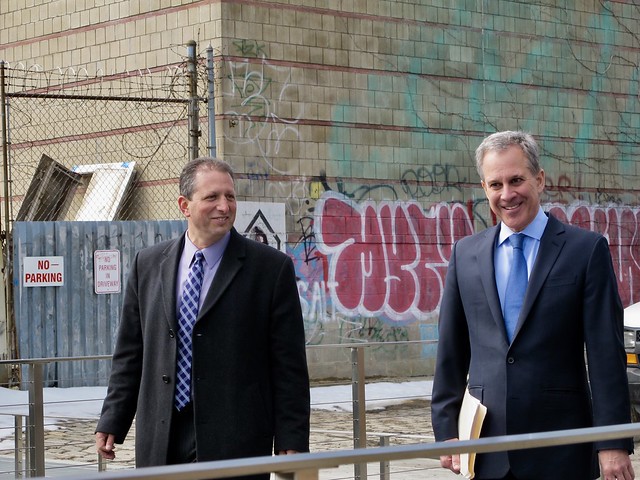
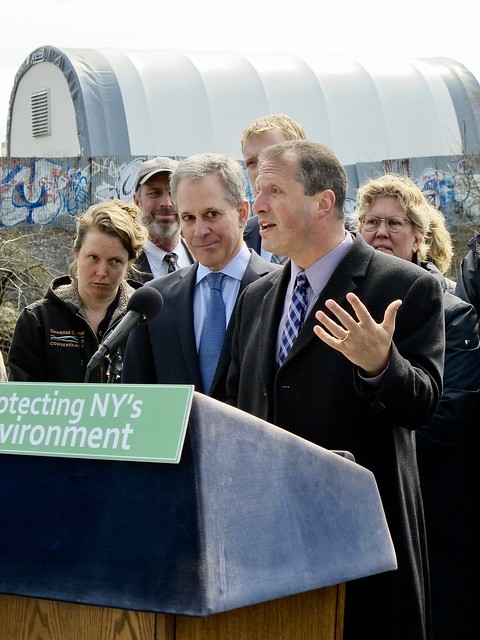
Councilman Brad Lander with  New York Attorney General Eric Schneiderman in Gowanus on Tuesday.
IMG_0290
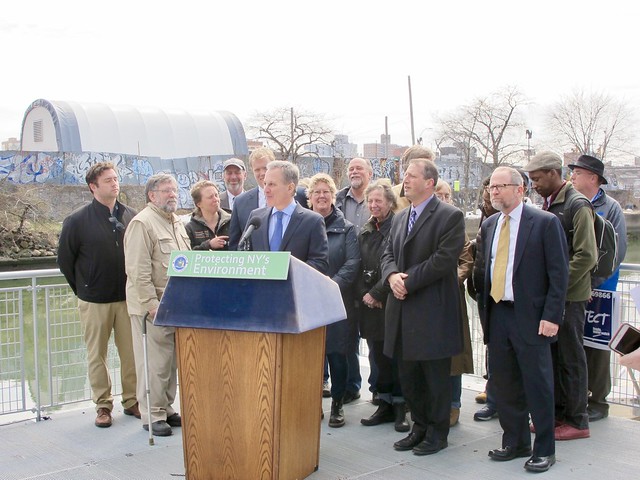
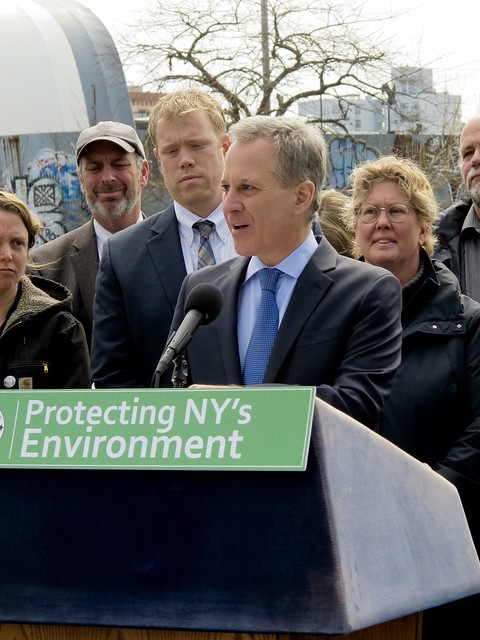
New York Attorney General addressing the Press on the shores of the Gowanus
IMG_0291

IMG_0297
Brad Lander addressing Trump Administration's proposed EPA budget cuts

The number one question being asked by many Gowanus residents these days is: "Will the Superfund clean-up of the toxic Gowanus Canal be affected by the proposed budget cuts to the Environmental Protection Agency?"

As we all know by now, the Environmental Protection Agency is the hardest-hit agency under President Trump’s fiscal year 2018 budget proposals. The budget would cut funding for the Agency by 31 percent from its current level, EPA’s staff could be cut by about 21 percent, and the Superfund program, responsible for cleanups of contaminated sites, would have its funding cut from about $1.1 billion to $762 million.

In addition, according to Inside EPA, the Agency's Office of Management and Budget (OMB) is currently developing "a plan for consolidating its 10 regional offices into eight, a step being justified as a way to realize 'efficiencies' but which is already sparking concerns that it could spread an already strapped agency too thin to accomplish its mission. In addition, some state sources are concerned that cutting back on the number of regional offices could also limit support..."

Less money, less staff and cuts to the Superfund program?  Doesn't sound too promising for the Gowanus clean-up, does it?

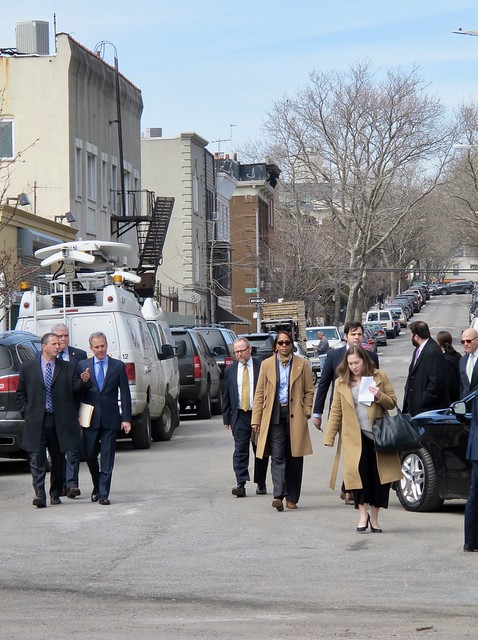
This past Tuesday, New York State Attorney General Eric Schneiderman, accompanied by Councilman Brad Lander, held a press conference on the shores of the Gowanus Canal to address the proposed cuts.
"We are here today because the Gowanus Canal is an example  of a successful effort to clean up a Superfund site...so far. We are facing now an unprecedented assault on the Superfund Program and other environmental programs by the Administration of President Trump. Last week, Trump released a budget that calls for extraordinary dangerous and extremely shortsighted cuts to nearly all federal programs to protect our environment, our health our economy and our future.  This is a cruel betrayal  of the American people and in particular, a cruel betrayal of fellow New Yorkers," Schneiderman told the press.

"The budget the President announced promises to unravel all of our gains und promises to send us back to the sad old days of choking smog and toxins in our rivers and streams," according to Schneiderman.  "There are 85 Superfund sites in New York State, all off them are now at risk. If Trump gets his way, funding for this critical program will be cut by 43%. A hollowed out EPA, with far fewer staff and an administrator who does not seem to care about environmental protection or believe in climate change could easily kneecap all efforts to clean up this canal and could have a devastating effect on Superfund sites where the clean-up hasn't even begun."

"The canal right behind us is a terrific example. It has taken decades of hard work and constant advocacy to finally put this canal on a path of clean-up. It is being cleaned up now as part of an extremely successful, cost effective program known as Superfund," Schneiderman said.

"The clean-up of the Gowanus Canal could be slowed by these cutbacks. The Administration could delay further proceedings. This is not necessary and this is something that we are going to fight against."  Schneiderman further said: "There is no rational basis for these damaging cuts. EPA represents about 2/10th of 1% of the Federal budget, yet it has a positive effect on the lives of every single American."

"If Donald Trump and [EPA Administrator] Scott Pruit think that they can get away with the massive rollback of programs that are critical of the health and wellbeing of ordinary Americans, they have another thing coming," he added.
"No New York should have to wait a single day longer than necessary to clean toxins out of our waterways," Schneiderman concluded.

Councilman Brad Lander agreed with Schneiderman that President Trump's proposed budget would represent "completely intolerable cuts to the EPA."  According to Lander, "we would be the frog boiling ourselves in toxic water if we accept these cuts, so we have to fight back."  

"It took decades of activism by many of the people who are here and many others in the neighborhood to get the EPA take a look at this canal. Once they agreed to take a look, it was the science that dictated the Superfund clean-up. They did the investigation, they tested the sludge at the bottom of this canal. It is unsafe, it is toxic. That is why the Superfund designation was made and that is why we are on a path to get this canal dredged and cleaned up and turned from a toxic waterway into a community resource."
He re-iterated that the cuts were "penny wise and pound foolish.
"The beauty of the Superfund  program is that the polluters pay for the clean-up. This is what is going to happen here. We don't need federal money to actually clean the canal. Of course, that only works if the EPA can administer the program."
In the case of the Gowanus Canal Superfund, Lander mentioned that the EPA does not yet have a "signed consent decree that tell the polluters that they are on the hook."
According to Lander: "If the administrative budget is cut and the Superfund staff can't work on the administrative order, the polluters won't pay to clean-up the canal. That would be devastating for this community and foolish for all of us."

During the press conference, neither Councilman Lander nor New York State Attorney General Eric Schneiderman mentioned that NYC Department of City Planning  is currently studying  Gowanus for future re-zoning and development. A re-zoning could bring thousands of new residents to the banks of this polluted waterway.

Ironically, the press conference was being held in front of Lightstone Development's new 700 residential units, and across from a large development parcel, where Jared Kuschner, President Trump's son-in-law, plans on building a 30 story luxury apartment building.

Now that the Gowanus community has learned from Schneiderman and Lander that the EPA budget cuts could certainly slow down and undermine the Superfund clean-up of the Gowanus Canal, perhaps the next question asked by the community should be:
"If that is the case, should the rezoning of the Gowanus be set aside until we are certain that the canal clean-up moves forward in a timely fashion under the Trump administration?"


Read more

Wednesday, February 17, 2016

Why Is Ferrara Building New Structure On Public Place In Gowanus Rather Than Vacating So Site Can Be Remediated?

IMG_7022
IMG_7023
IMG_7001
IMG_7004
IMG_7003
IMG_7011
IMG_7009
IMG_7010
IMG_7008
IMG_7007
IMG_7012
IMG_7031
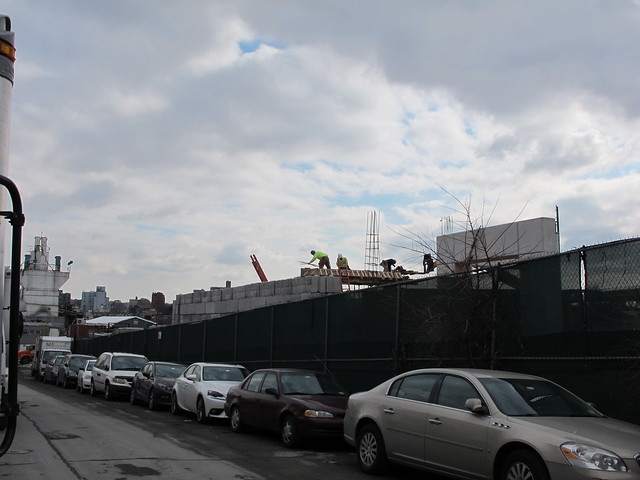
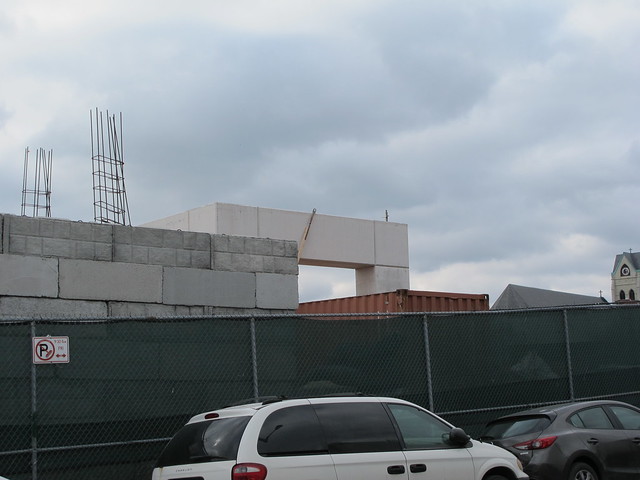
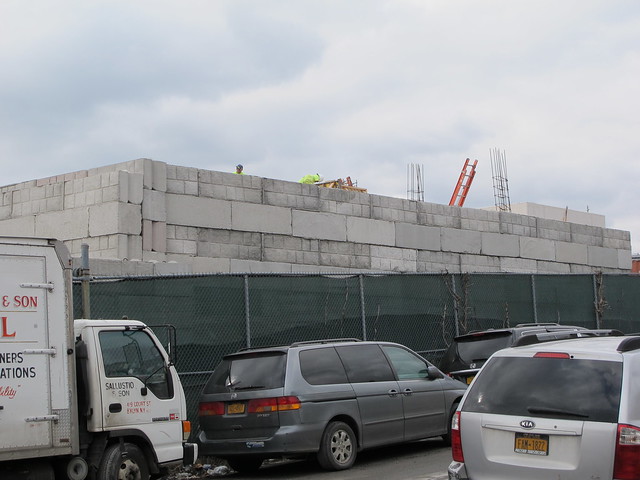
Last week, PMFA received emails from two readers who asked about the construction currently happening along 5th Street on the Public Place site adjacent to the Gowanus Canal.

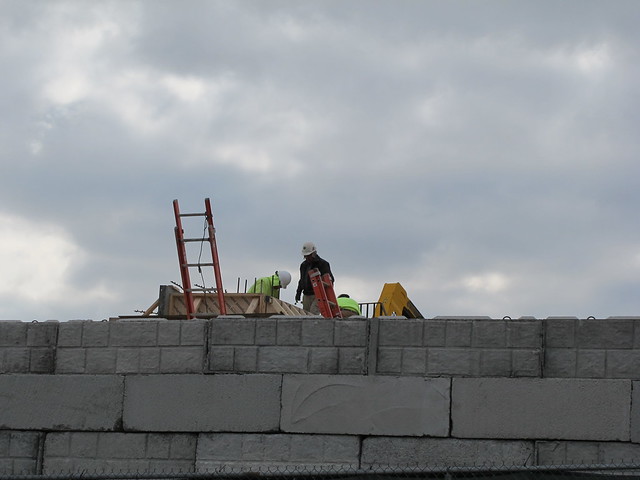
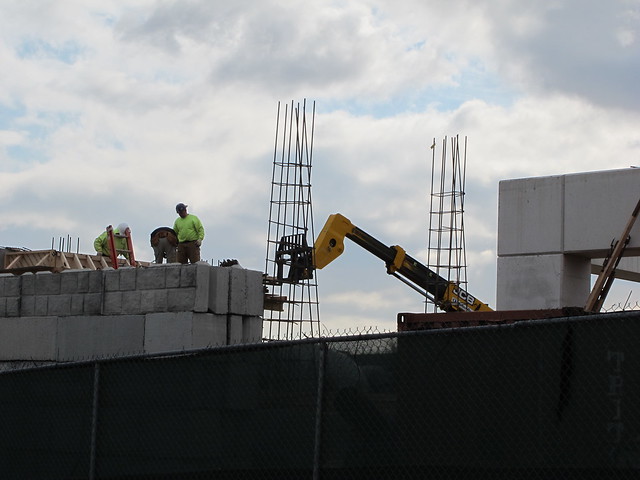
Stephen, a local resident wrote: "I just went down 5th street between Hoyt and Smith. There is a building going up in the gas company lot across from the Kabir bakery. It looks like a warehouse definitely an industrial building. I thought that site was off limits for construction until the cleanup issue is resolved. Any idea what's going on?"

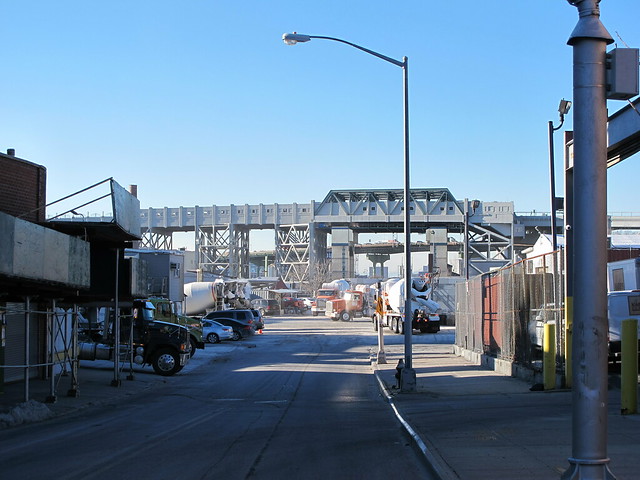
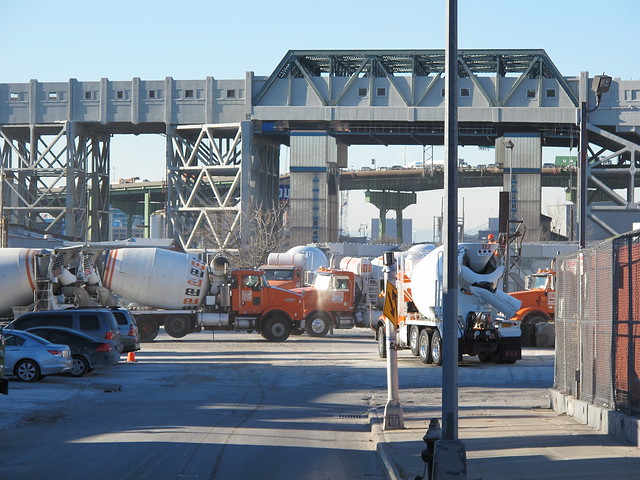
Anik, another neighborhood resident sent in the photo below of "a weird structure" being built on the site.
photo credit: Anik L.

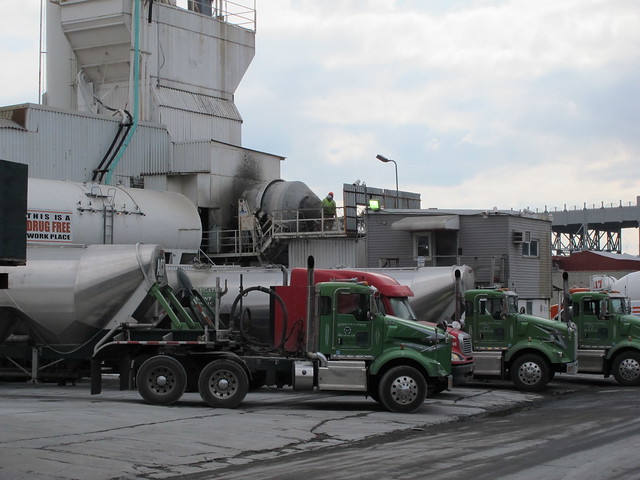
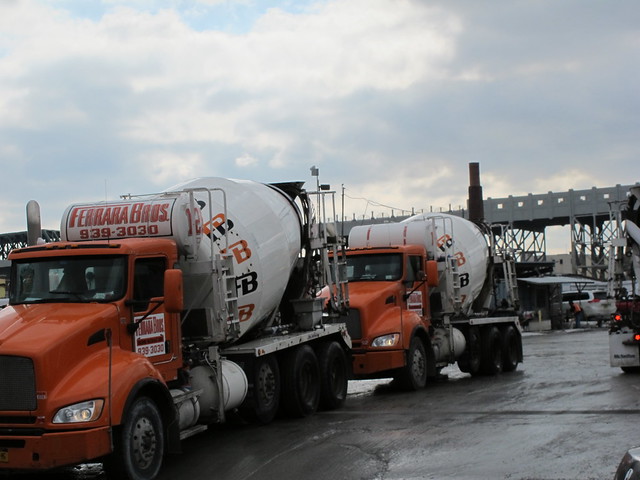
I made it a point of walking along 5th Street along Public Place, where Ferrara Brothers operates one of their five a ready-mixed concrete batch plant in new York City. Sure enough, a construction crew was busy building a rather large steel-reinforced concrete structure on the City owned property.

For the past two or three years, the question of why Ferrara Brothers is expanding its operation on Public Place when the heavily contaminated site should be undergoing environmental remediation, has been repeatedly asked by the community.
Why should this be of concern to local residents?
Here is some background on Public Place:
The approximately 8.4 acre site was the home of the former Citizens Gas Light Company's 12th Ward Gas Work Plant, where coal and petroleum products were turned into flammable gas. The gas was used for cooking, lighting, heating and commercial purposes in the surrounding neighborhoods.

Unfortunately, one of the by-products of this gasification process is coal tar, a black viscous liquid, which is harmful to the environment. Coal tar has been found at depths of 150 feet on the site.

The Citizens Gas Works plant was decommissioned in 1958. The responsibility for the clean-up falls on National Grid, which has entered into a Voluntary Cleanup Agreement with the NYS Department of Environmental Conservation (NYSDEC).

Since some of the coal tar has also been found to ooze from the site into the adjacent Gowanus Canal, the US Environmental Protection Agency, which declared the canal a Superfund site in 2010, is also involved. EPA has named National Grid a Potential Responsible Party [PRP] which means that the company will contribute to the Gowanus Canal clean-up.

The City of New York acquired ownership of Lots 1 and 100 of the former MGP site through a condemnation proceeding in 1975. That land is known in the community as "Public Place". The other parcels are privately owned.
Ferrara Brothers Concrete has been operating on lot 100 near 5h Street since the early 1970's. The company rents the land under a month-to month lease agreement with New York City.

There has been talk of Ferrara Brothers relocating since at least 2007. Obviously, the City has continued leasing the lot to them.
Granted, the actual environmental remediation has not actually begun yet, but one has to wonder if the expansion of Ferrara on the site has not hampered or even slowed things down somewhat since this has forced National Grid and the EPA to perform their remedial investigations around the concrete trucks.

Don't misunderstand. We should of course protect existing businesses in Gowanus, and cement plants are an important and necessary part of the city. However, Ferrara Brothers, which lists its main address in Flushing Queens, has four other plants.
From Ferrara Brothers' Facebook page:
"Over the past 45 years, we have grown to become a concrete producer whose name is synonymous with quality and service. From 5 trucks and one concrete plant to 80 trucks and 5 concrete plant, Ferrara Bros. continues to grow."

Interestingly enough, I came across an article from 2015, which mentions that Ferrara Brothers has been sold to U.S. Concrete, Inc.. It quotes Joseph A. Ferrara, President and CEO of Ferrara Brother: "Since our founding in 1969, and continuing through three generations of the Ferrara family, our company has consistently strived to enhance our position in the marketplace so as to better serve our customers, employees and other stakeholders. We greatly admire U.S. Concrete's strategic and financial achievements, and we are honored to become part of a national leader in our industry."

I have reached out to Christos Tsiamis, EPA Region 2's project manager for the Gowanus Canal Superfund and sent him the photos above of the construction activity on Public Place. He forwarded my inquiry to National Grid who "confirmed this is Ferrara related work and not National Grid's."

This all begs the question: Why is Ferrara/ U.S. Concrete, Inc. allowed by New York City to expand and build on Public Place?   It is hard to understand why the City wouldn't want to make things as easy as possible so that the complicated environmental remediation work can move forward with as few obstacles as possible. It is rather ironic given the fact that the City has slated their parcels for development. The Gowanus Green project would bring 770 units of affordable housing to the shores of the Gowanus.

A view of Public Place from 4th Place in the 1930's


Read more

Thursday, April 17, 2008

Hoyt Street Alliance Issues Statement After Controversial C.B.6 Vote On Bar


Since last week's controversial C.B.6 vote supporting the proposed oyster bar on Hoyt Street, the Hoyt Street Alliance, which opposed it, has been quiet. Now they have issued a press release to express their disappointment with the entire process and with C.B.6's bias for restaurant and bar owners over the objections of the immediate neighbors.
This is an issue that HAS to be addressed by our local board. Labeling residents who want to protect the living quality in this city as nimbys or suggesting that they should move to the suburbs is not helpful. Finding a balance between the needs of residents and businesses is. We should all demand that of our board, because hey, you never know, a bar may just open up right next to you, too!


The Hoyt Street Alliance
Sharing a commitment to maintain our neighborhood's character

294 HOYT STREET BROOKLYN, NEW YORK 11231


April 16, 2008

Do you live near a ground floor medical office? If you do, brace yourself. Hoyt Street residents recently learned that their local Community Board considers a newly vacant doctor’s office an excellent place for…yet another new “theme” liquor bar with restaurant!

Hoyt Street neighbors were extremely disappointed by CB6’s decision last week to support the creation of a new liquor bar in the center of a 5-block-long residential area. The location, 299-301 Hoyt Street, was occupied for the previous 25 years by a pediatrician. At the same time, the Hoyt Street Alliance was heartened by “no” votes from Board members Celia Cacace, Mark Shames, and Lou Sones, who among others listened thoughtfully to our arguments. We feel that anyone who studies photographs of the block can see that the proposed bar is centered directly between St. Agnes’s church and P.S. 32. The possibility of a 48-foot-wide barroom intruding between such iconic neighborhood sites, in an area heavily traveled by children, is an unfortunate image for the neighborhood and for Brooklyn as a whole.

The Hoyt Street Alliance, a group of homeowners and residents, is grateful for the support of groups like P.S. 32’s PTA and the Gowanus tenants council in the effort to prevent the bar from opening, and looks forward to rallying further local support before the operator’s liquor license application is submitted to the State Liquor Authority. Whether or not the bar intrudes on the 200-ft. buffer space required by law between it and the church to the north and the elementary school to the south is still a matter for debate; different maps disagree on the exact distance. That the bar is not welcomed by its residential neighbors is certain. However, since the Community Board has now taken the extraordinary step of recommending to the State Liquor Authority that the proposed liquor license be granted, it will be a tough fight to stop it.

Our neighbors were initially notified of a CB6 Land Use Committee meeting to consider the bar five days before the meeting, which days included the long New Years weekend (four days for most people). We had no time to prepare or organize ourselves. We arrived at the meeting to find the proposed bar’s owner placed in charge of the meeting to answer our questions. One lone neighbor said she would feel safer coming home at night if the bar was there. In spite of the fact that a half dozen or so of us spoke strongly against it, the committee seemed to rely on this one statement and voted to recommend the bar. They never discussed the implications of letting our residential block become a spill-over area for Smith Street expansion.

Later, the full board ratified the committee vote. For several meetings they seemed only interested in building department procedures. Again, there was no real discussion of what was right for the community. There were several comments that members of our block association had wronged the board by strongly criticizing the way the board was handling this issue, and basically used this as a reason to vote for the bar.

CB6 urgently needs to craft new methods to address the runaway proliferation of eating and drinking establishments in South Brooklyn neighborhoods. Much confusion exists about what the Board’s role is supposed to be in this process. We hoped they would act as advocates for local residents, and were unhappily surprised to learn that few members saw themselves in that light. Most seemed unpleasantly surprised by local citizen’s swift, vocal opposition to the proposed liquor bar, and some hastily arrived-at assumptions regarding the neighborhood and the proposed bar were wrongly accepted as true.

For example, Hoyt Street neighbors were told they should be grateful for a late-night business on the block, because its presence would inhibit crime; but those of us who have lived on the block for 30 years and more have experienced almost zero in the way of street crime. In contrast, residents of booze-rich Smith Street experience regular nighttime nuisances in the form of noise, brawling, vermin and litter, as well as light and noise pollution. Common sense dictates that using alcohol to attract hundreds of strangers onto our small, narrow block every week will NOT make our lives safer or happier.

Ironically, most CB6 members seemed perfectly willing to accept developer Jim Mamary’s definition of his projected establishment as “a restaurant, not a bar” despite the fact that his floor plans show no kitchen and his sample menu lists only raw oysters and “things on skewers.” A refrigerator does not a restaurant make!

CB6 claims to have heard testimony from numerous residents of the block who favored the applicant. If there are such people, they certainly didn’t feel strongly enough to speak publicly at the last three Board meetings about the matter. Who they are and what their influence might be remains a question mark. On the opposing side, three hundred petitioners willingly signed their names and addresses in protest of the bar. But disturbingly, neighbors attending the most recent Board meeting were warned that if we didn’t accept the bar, we’d “end up with something we liked even less.”

One CB6 member who vehemently supported the bar’s developers called the Hoyt Street Alliance speakers liars, saying, “No one lives across from that address – there are only three garages there. Unless someone’s living in their car, what’s the problem?” His flippant remarks ignored the substantial, multigenerational family home connected to the small building housing three one-car spaces --hardly the vast parking facility his tone implied. But noise will doubtless travel across that little garage roof and carry into several backyards of Union Street, putting a stop to peaceful summer evenings in the garden and even ending the possibility of open windows for many whose homes are there.

In at least this instance Community Board 6 did not consider the best interests of the community. From what we could tell many of the members do not really see it as part of their job. Yes, our neighbors may have been a bit upset by the prospect of a bar, but that should not be surprising. We did not know that our impassioned pleas for help would cause us to lose a popularity contest among the board, and that our penalty would be to get a bar on our block. We thought CB6 would be interested in hearing why a bar at this location is a bad idea, but that was not the case. CB6 needs to look at itself in the mirror over the way it handled this issue, and the community in general should look at CB6. We ask everyone who cares about this neighborhood to join us in demanding that the board represent everyone, not just the bar owners.

Sincerely,

The members of the Hoyt Street Alliance


related Reading:
Community "Business" Board 6 Sticks It To Hoyt & Bond Residents

Interesting Viewpoint On The Subject Of C.B.6 And Liquor Licenses

Zoning Unimportant In Carroll Gardens!

[where: Hoyt Street]
For Home Page, click Pardon Me For Asking Read more

Monday, May 18, 2020

Question From A Carroll Gardener: How Do Renters And Landlords Navigate Corona Restrictions And Guidelines In A Shared Building?

Untitled
Untitled
Untitled
Over the week-end, a friend and longtime PMFA reader contacted me with a question that he would like to pose to others in the neighborhood. What happens if you yourself follow all the Covid-19 restrictions, wear a mask when you go out, and don't allow anyone into your apartment, but your landlord or fellow tenants seem to throw caution to the wind by inviting guests and hosting gatherings?
Here is his question to others:
How are people managing the shared responsibility of preventing the spread of the pandemic while complying with the lockdown restrictions known as PAUSE there where they live?

That is, how are your readers (as tenants or renters but also building owners and property managers) approaching the lockdown and social distancing? Do they see it as a shared responsibility or is up to each person to decide whether not to comply? For example, does your building have a coordinated policy?

And if so, do the policies or practices align with PAUSE and Matilda's Law (the city-wide restrictions) and are all of the tenants in regular compliance? 

Tenants in our building are very good about sharing the responsibility for keeping the building clean and as germ-free as possible. We all wipe down door handles, we all wear masks and gloves when using the common areas, we all make space for each other. on top of that, most of us meet up outside our building for the 7PM "clap because we care" where we all maintain social distancing. It all adds up to helping everyone feel that we are looking out for each other. 

I know other buildings have similar set-ups but i'm curious how many of your readers are using practices like these or if it's a sticking point for some people?

With that in mind, what happens when tenants don't get with the program? What if it's not the tenants or renters who are the problem but instead it's an owner who is also a tenant?

I'd love to know how your readers are managing these concerns and how they feel about all of this? 

Furthermore, if tenants / renters / landlords don't comply, how are people handling that? What's the right balance between "live and let live" and "shared responsibility" and what ethical concerns are they dealing with so that we can all get through this pandemic without getting sick?

For example, (1) what happens when a tenant won't wear a mask or take protective measures when using the common areas (like the stairwell, the hallways, the entry ways)? (2) what happens when tenants won't collect their mail or deliveries or even take out their garbage (because they don't want to leave their apartment)? (3) what happens when a tenant regularly hosts gatherings?

The PAUSE restrictions are very clear - NO GATHERINGS of ANY KIND for ANY REASON, in particular no gatherings between people of different households (even if they are from the same family) - it's simply not allowed because it creates too much risk of contagion by introducing potential new vectors for the spread of the disease.

I know of circumstances where tenants regularly host gatherings and outdoor get-togethers where social distancing is not practiced and not only does it seem very unwise, it also seems very disrespectful to all of the people on that block who comply with PAUSE and Matilda's law and have been doing so during these last two months.

Why do some people act like they are the exception and therefore give themselves permission to ignore the rules? 

How does this affect the others who have made a lot of sacrifices as part of complying with the rules?

Of course, there's also the reality that a significant number of people simply don't believe the COVID19 is dangerous. they question the very need for restrictions of any kind.

This is not meant to be a debate about how the lockdown is affecting businesses - we all know it's bad, and we all know that businesses in our neighborhoods are really hurting, but that's a separate conversation. 

This is a question of how renters and tenants, building owners and landlords are handling the restrictions and guidelines in the buildings where they live. 

Thank you.

How about it? Have you had issues with a landlord an/or fellow tenant not being as careful as you in your building? How have you handled it?  Is this a bigger issue in brownstones/townhouses or does it affect larger buildings as well?

Read more