Showing posts with label EPA Region 2. Show all posts

Thursday, October 24, 2019

Latest EPA Update On Gowanus Canal Superfund: All You Need To Know

Untitled
Untitled
Untitled
Gowanus Canal Community Advisory Group
Untitled
Untitled
Christos Tsiamis
EPA Region 2 Gowanus Canal Project Manager
Untitled
EPA Fact Sheet on Fulton Bulkhead Barrier Wall

The Gowanus Canal Superfund Community Advisory Group gathered this past Tuesday for its October General Meeting to receive an update on work currently performed in and around the canal under the supervision  of the Environmental Protection Agency.

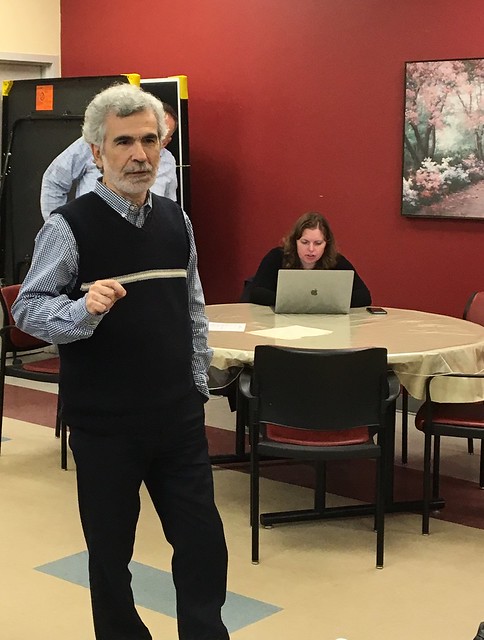
Christos Tsiamis, the EPA project manager for the Gowanus Canal Superfund gave the CAG an overview on the Fulton Bulkhead Barrier Wall Construction at the head of the canal. The sealed wall  will serve as an environmental barrier, preventing liquid coal tar from the former Fulton Manufactured Gas Plant from recontaminating the canal after the Superfund clean-up is completed. The work is being done by National Grid contractors  and consists of "880 feet of steel sheet piling to be placed in front of the bulkheads along the eastern side of the Gowanus Canal and will extend from the canal head end to the Union Street Bridge."

Work on the wall began in late August 2019 and has been progressing as planned, except for a small  delay caused by repairs to the Union Street Bridge. However, the NY City Department of Transportation has assured EPA that it will open the bridge so that barges carrying material for the wall construction can get through. EPA does not project a significant delay because of the bridge repair.
"The conclusion is that we are on track to finish that wall by August 2020," Tsiamis told the CAG.

Untitled
DoT at work on the Union Street Bridge this morning

Recently, the group of Potentially Responsible Parties (Polluters) handed EPA 90% of the design for the clean-up of the upper portion of the canal. EPA is in the process of reviewing in detail  all aspects of the canal design and will send back comments to the PRPs shortly.
"I mention this because we have had some differences with the PRPs, in particular National Grid and their contractor in regards to the approach of that particular clean-up. We had objections to the schedule that they were presenting." Tsiamis stated.
EPA believes that the dredging at the head of the canal can begin in August/ September 2020, whereas National Grid is pushing for a start date in May 2021.
"We still believe that the head of the canal clean-up can start by sometime in 2020. We are looking carefully at the design that they have submitted and we will let you know how things are going at the next CAG meeting." Tsiamis added.

Regarding the two retention tanks that NY City's Department of Environmental Protection is mandated to build to keep Combined Sewer Overflow out of the Canal during rain events  (one 8 million gallon tank at the head of the Canal and a 4 million gallon tank on the Salt Lot on Second Street), Tsiamis mentioned that the City has just provided EPA with the 90% design for the larger of the two tanks.  Again, the Agency is currently reviewing the plans.
"I am also looking forward to resuming work on the middle of the canal retention tank," he told the CAG.

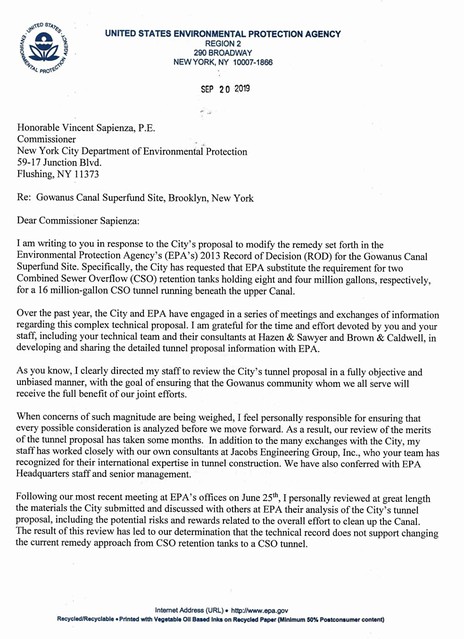
When asked how DEP had reacted to a recent decision by EPA Region 2 Regional Administrator Lopez to disallow the City to shift from constructing the two CSO tanks to a tunnel,  Tsiamis answered: "That matter is finished on the part of the EPA. and we are moving forward."


"The EPA has spent nearly a year and a half and lots of resources looking at what had been presented to us. We offered our input to the Administrator. He considered everything and he made his decision.  That decision is very well summarized in the letter that was sent by him to [DEP's] Commissioner."
{see letter below}

"We now have to really focus all of our efforts on getting on with the work, finalizing the design, initiate the design, hopefully in an accelerated fashion, and cleaning up the canal, which is not a small task.," Tsiamis concluded.


Letter from EPA Regional Administrator Lopez To DEP Commissioner Sapienza 
regarding CSO tunnel decision.


Screen Shot 2019-10-24 at 3.00.28 PM
Screen Shot 2019-10-24 at 3.00.47 PM
Screen Shot 2019-10-24 at 3.01.09 PM
Read more

Thursday, October 03, 2019

Don't Eat The Fish! Man Seen Fishing In Gowanus Canal

Untitled
Untitled
Untitled
Untitled
Untitled
Untitled
(photos by Linda Mariano)

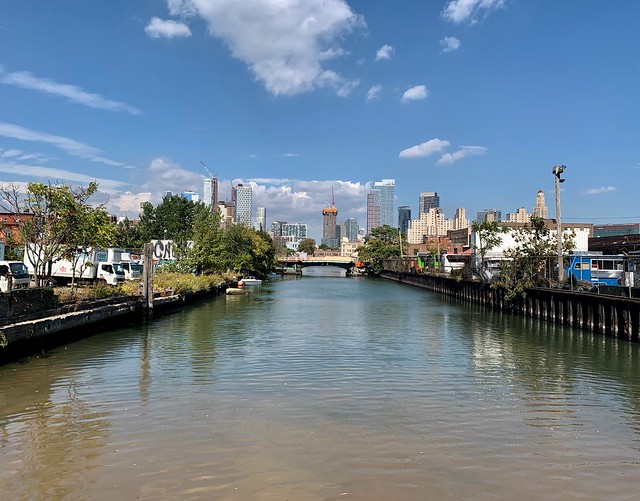
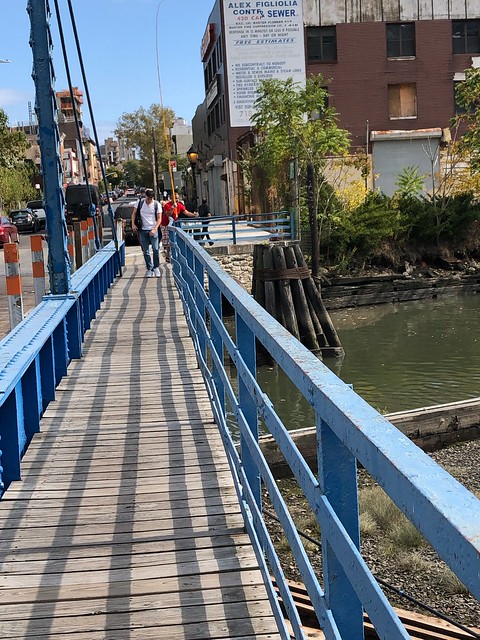
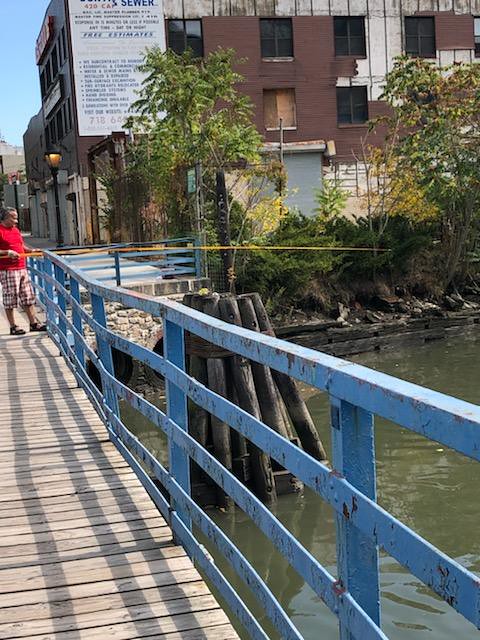
A few days ago, Gowanus resident and activist Linda Mariano came across a man fishing in the Gowanus Canal off the Carroll Street Bridge. He had caught several small fishes, which he had placed in a bucket. She tried to explain to him that the Gowanus Canal is an EPA Superfund site and that it was NOT a good idea to consume the fish. The man did not seem to speak English very well and perhaps did not understand her warning. However, a 'No Fishing' sign with graphics warn people  just a few feet away from where he was standing.
Apparently, this is not the first time he has been seen with his fishing rod and others have apparently warned him as well.

The Federal Environmental  Protection Agency declared the Gowanus Canal a Superfund Site in 2010 because it is one of the most polluted waterbodies in the nation. Once a thriving industrial transportation route, it was contaminated by the Manufactured Gas Plants (MGP), paper mills, tanneries and chemical plants that once operated along the Canal and discharged toxins into it.  To this day, contaminants mixed with raw sewage find their way into the Gowanus through Combined Sewer Overflow points along the canal.

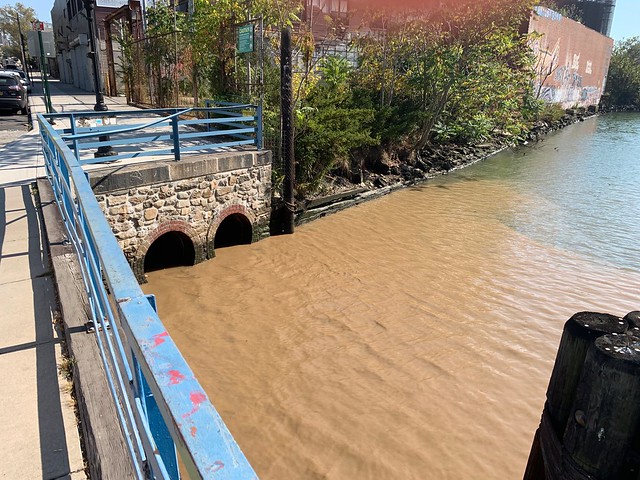
One of the largest sewer overflow pipes happens to be right next to the Carroll Street Bridge at the spot were the man was fishing.

Ironically, one of the factors (besides its toxicity) that earned the Gowanus Canal a spot on the EPA Superfund List was the fact that people were fishing and consuming fish caught in the waterway, especially when the anglers told EPA that they sold the extra catch to local restaurants.

Members of the  Gowanus Canal Community Advisory Group (CAG) have been urging  the New York State Department of Environmental Conservation to put up clearer and more urgent No Fishing, No Crabbing and No Swimming signs along the Gowanus. With the CAG's input, NYSDEC has finalized a new version of the signs. which will be put up shortly.
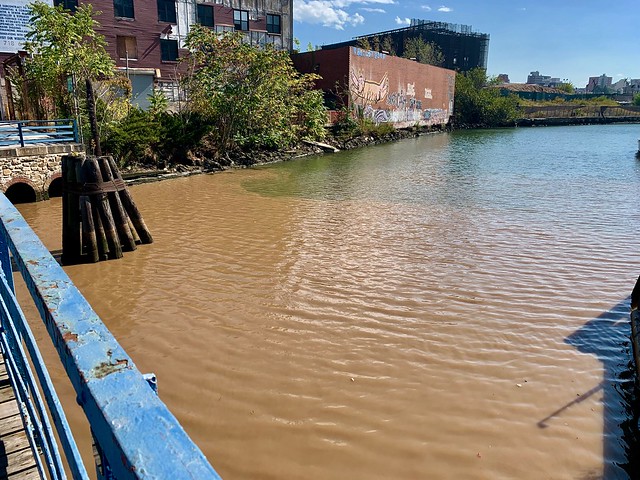
Just yesterday, we walked across the Carroll Street Bridge ourselves and witnessed a huge plume of dirt being discharged from the CSO outfall into the canal. The dirt most probably cane from a construction site on the Par Slope side of the Gowanus.

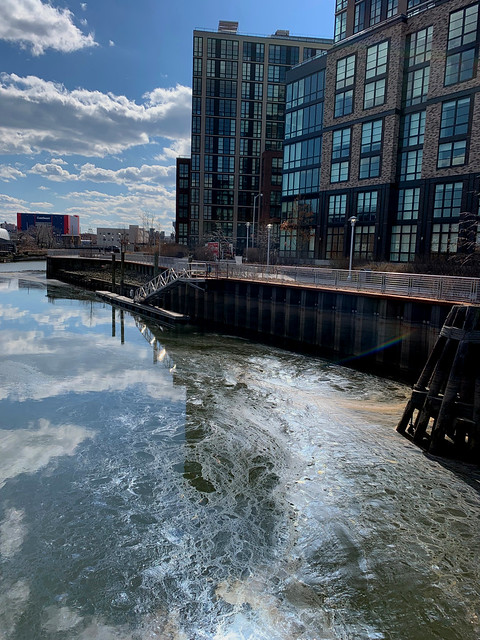
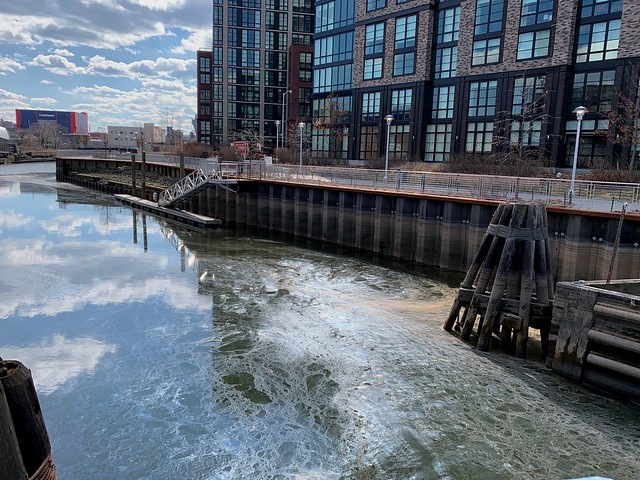
There was also a plume of raw sewage right next to the Lightstone residential buildings just adjacent to the outflow.

So, please folks, don't eat fish caught in the canal.

Untitled
Gowanus Canal at the Carroll Street bridge yesterday at 2 pm.
Untitled
Untitled
Read more

Tuesday, May 28, 2019

EPA Projects A 'Significant Increase' In CSOs Into The Gowanus Canal As Part Of Proposed Area Rezoning

The toxic Gowanus Canal, an EPA Superfund Site
Untitled
Christos Tsiamis, the EPA Senior Project Manager for the Gowanus Canal Superfund
and a recent Gowanus Superfund Community Advisory Group Meeting
Untitled
Untitled
Current conditions!
Raw sewage floating on the Gowanus Canal .

EPA Region 2  has sent  NY City Department of City Planning(DCP) its own comments on the Gowanus Neighborhood Rezoning Draft Scope of Work for an Environmental Impact Statement.(DSOW).

In a letter dated Thursday May 23, 2019, Christos Tsiamis, the EPA Senior Project Manager for the Gowanus Canal Superfund, is projecting a massive 11x increase in Combined Sewer Overflow into the canal as a result of the proposed neighborhood upzoning from manufacturing to residential.

The EPA does not get involved in land use issues. However, as Tsiamis mentions in his comments to NYC DCP, the Federal Agency is protective of its environmental remedies and will get involved if there is a risk of re-contamination to a Superfund site.

It will be interesting to see how New York City's Department of Environmental Protection and City Planning will try to engineer their way out of this, given the fact that the City has not yet managed to capture current CSOs into the waterway, let alone 11 times the amount.

Once again, it would appear that EPA is stepping in to protect the environment and the health of the  Gowanus community. The same cannot be said about Mayor deBlasio, as well as Councilmen Brad Lander and Steve Levin, who are all pushing for the rezoning before environmental remediation.
Here are EPA's comments.

The Environmental Protection Agency (EPA) has reviewed the Environmental Impact Statement (“EIS”) scoping documents, including the “Gowanus Neighborhood Rezoning and Related Actions Draft Scope of Work for an Environmental Impact Statement,” March 22, 2019, that were issued by New York City (“City”) for public comment. The proposed rezoning affects an area on and around the Gowanus Canal.

EPA does not have a role in local land-use or zoning decisions. However, understanding local land use is an important component in EPA’s planning of response actions under the Comprehensive Environmental Response, Compensation and Liability Act (“CERCLA” or “Superfund”). EPA also has a role in ensuring that future land use changes do not adversely affect the integrity of Superfund cleanups. With that context, EPA offers the following comments on the EIS scoping documents.

Background:

The Canal was constructed by bulkheading and dredging a tidal creek and wetland. After its completion in the 1860s, the Canal quickly became one of the nation’s busiest industrial waterways. As a result of decades of direct and indirect discharges of hazardous substances generated by industrial and other activities, the Canal became a repository for untreated industrial wastes, raw sewage, and runoff, causing it to become one of New York’s most polluted waterways.

Following a request from the New York State Department of Environmental Conservation (“NYSDEC”), EPA placed the Canal on the Superfund National Priorities List in March 2010. The Gowanus Canal Superfund Site (“Site”) is defined as the approximately 100-foot wide, 1.8-mile-long canal located in the borough of Brooklyn, Kings County, New York, and also includes any areas that are sources of contamination to the Canal.

In 2013, EPA issued a Record of Decision (“ROD”) for the cleanup of the Canal that included the dredging and off-Site disposal of the contaminated sediment in the Canal, the placement of a multilayer absorbing cap to prevent dissolved contamination from moving with the groundwater into the Canal waterbody, and the control of contamination from upland sources to prevent the recontamination of the clean Canal.

Such upland sources include certain levels of hazardous substances found in solids discharged into the Canal during Combined Sewer Overflow (“CSO”) events when stormwater and sanitary sewage capacity is exceeded within the approximately 1,758-acre Gowanus Canal watershed.

The CSO portion of the EPA-selected remedy includes the construction and operation of two CSO retention tanks by the City, a Potentially Responsible Party (“PRP”) for the Site. The City is currently preparing the CSO remedy design pursuant to two EPA administrative orders[1] and participating in the dredging and capping remedial design, for which work in the upper portion of the Canal is targeted to begin in 2020. Progress on the Canal cleanup is among the factors cited by the City in proposing the rezoning.

In anticipation of potential redevelopment, the ROD requires that any future activities which fall under the City’s purview, including development, do not compromise the effectiveness of the Gowanus Canal remedy. Among other things, the ROD specifically states that “redevelopment projects will need to take mitigation measures to prevent or offset additional sewer loadings” to the Canal to protect the remedy.

EPA review of EIS Scoping Documents:

EPA has reviewed the EIS scoping documents from the perspective of ensuring that the EIS process includes the proper assessment of and mitigation planning for any impacts that the rezoning actions may have on the effectiveness of the selected remedy.

In reviewing the EIS scoping documents, EPA notes that the City preliminarily projects a significant increase in the wastewater generation in the neighborhood as a result of the proposed development. Specifically, for residential development, wastewater generation is estimated to increase from 178,795 gallons per day (“gpd”) at present to 1,977,302 gpd once the proposed development has been completed. (See Gowanus Neighborhood Rezoning and Related Actions at Table B-1).

The EIS process should accurately determine the incremental volume of CSO-related discharges to the Canal and what appropriate mitigation measures, or combination of measures, are required to prevent an adverse effect on the EPA-selected remedy for the Canal.

EPA intends to work cooperatively with the City to ensure that the rezoning process is conducted in a manner that is, with respect to the Canal, protective of human health and the environment.

Sincerely,
Christos Tsiamis
Senior Project Manager
New York Remediation Branch
USEPA, Region 2


The EPA Gowanus Canal Community Advisory Group will be meeting tonight at 6:30 pm at Mary Star of the Sea, Mary Star of the Sea, 41 1st Street

This is what a Gowanus Canal CSO event looks like!

SAY NO TO THE GOWANUS REZONING!
Read more

Tuesday, March 26, 2019

NYC Planning And DEP To Jointly Attend Gowanus Community Advisory Group Meeting Tonight

Untitled
Untitled
Untitled
Untitled
Raw sewage and toxic discharges floating on the serface of the Gowanus Canal, past 363 Bond Street and 365 Bond Street apartment buildings along the Gowanus Canal on March 19, 2019.

Tonight's Gowanus Canal Community Advisory Group's general meeting should be an interesting one, and since it is open to the public, I encourage local residents to attend.
On the agenda tonight are the New York City Department of City Planning (DCP) and NYC's Department of Environmental Protection (DEP). The two agencies have been invited by the CAG to "provide information on how the tunnel proposal and land use changes in the neighborhood will impact the Superfund process and remedy."

Here is why having both agencies in one room is important.
Everyone is hopefully aware by now of the upcoming upzoning of the Gowanus neighborhood. The rezoning will allow more residential developments along the Gowanus Canal, which the EPA declared a Superfund in 2010.
The proposal calls for buildings that may reach 22 to 30 stories along the heavily polluted waterway

The rezoning is slated to move through the Uniform Land Use Review Procedure (ULURP) by the end of 2019.  Since ULURP takes about 9 months to 12 months to complete, developers could potentially begin building their residential towers by the end of next year.

Everyone may also remember that EPA, as part of its Superfund clean-up, has mandated that NYC DEP must finally cease  the practice of dumping raw sewage into the Gowanus Canal during heavy rain events.  The Federal Government has ordered New York City to build two Combined Sewer Overflow tanks to remedy the situation. The larger of the two tanks, which will have an 8 million gallon capacity, is planned for the head of the Canal.
Instead of swiftly moving ahead with fulfilling its obligation in light of the City's rezoning efforts, DEP has managed to delay a completion date for the tank, by first insisting on building it on land that needed to be taken by eminent domain instead of placing it under a City-owned park,  and then to switch course entirely, by proposing a tunnel under the canal, instead of the tank.

So now, the community is looking at a scenario in which thousands of new residents may be living next to an open sewer by 2020, while DEP is still talking about a CSO tunnel/tank completion date of 2030.

Tonight's CAG meeting will therefore give the community an opportunity to ask these conflicting timelines. I hope you will take time to attend.


Full CAG Meeting
Tuesday, March 26, 2019
6:30pm
Mary Star of the Sea Senior Apartments, 41 1st Street, Brooklyn
Read more

Monday, November 27, 2017

Gowanus Canal Superfund Clean-Up: Community Advisory Group To Meet This Tuesday, November 28

IMG_1236
The Gowanus Canal Community Advisory Group will be hosting its November general meeting on Tuesday, November 28h, 2017.  Find out the latest about the clean-up of our polluted waterway.
The Environmental Protection Agency Region 2 team responsible for overseeing the environmental remediation will be on hand to update the community on the latest.
New York City Department of Environmental Protection will also attend to address the two Combined Sewer Overflow Tanks and to give an update on the design for the 1st Street Turning Basin.
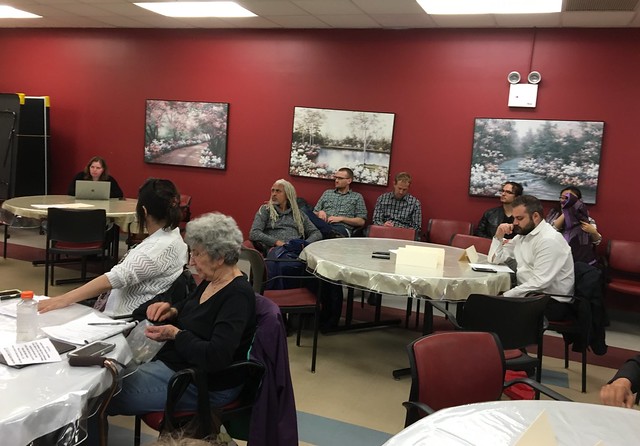
The meeting open to everyone.
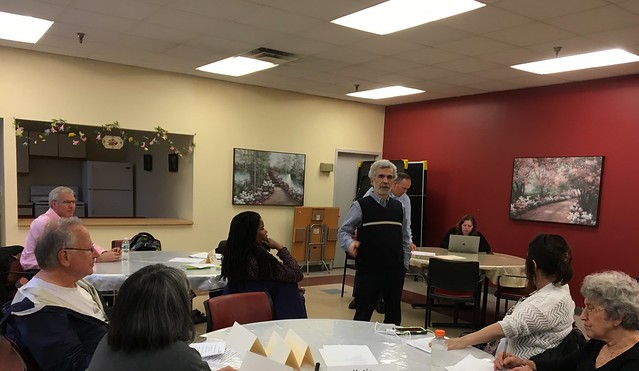
Gowanus Canal CAG Meeting
Tuesday, November 28, 2017 @6:30pm
Mary Star of the Sea Senior Apartments, 41 1st Street, Brooklyn


Read more

Friday, June 09, 2017

Delegation From Vietnam Visits The Gowanus Canal To Learn About EPA Superfund Site Cleanups

IMG_0854
IMG_0851
IMG_0852
34214222000_34450d4392_k
IMG_0829
IMG_0826
EPA's Gowanus Canal Remedial Project Manager Christos Tsiamis 
and EPA Legal Council Brian Carr
IMG_0844
EPA Community Involvement Coordinator Natalie Loney (center) 
with Melissa Dimas, EPA Regional Manager of the International Affairs Program (left) and Tsiamis
IMG_0837
IMG_0830
IMG_0850

This past Thursday, June 8th, I was invited by the Environmental Protection Agency's Region 2 team responsible for the clean-up go the Gowanus Canal to join a tour of the Superfund site with high ranking officials, environmental scientists and engineers from the Environmental division of the Ministry of Defense of Vietnam.
Vietnam is facing severe environmental issues, many of which are due to the Vietnam War. They have gotten assistance from the U.S. EPA to address some of these problems.
The trip to the Gowanus was a way to better understand environmental clean-up methods and techniques employed in the United States.
The delegation was given an overview of the Gowanus Canal's history as an industrial waterway, the resulting environmental issues and the proposed clean-up plan by EPA Region 2's Remedial Project Manager Christos Tsiamis.
As part of the tour, the officials were shown the 4th Street Turning Basin, located near Third Avenue, next to the Gowanus Whole Food store. A debris removal Pilot Project was conducted at the basin in 2016, which will be followed by dredging of toxic material at this site. Tsiamis explained that the pilot project and the dredging at the 4th Street basin will allow EPA to fine tune the different techniques that will eventually be applied to the clean-up of the entire canal.

Here is some additional information on the visit from EPA Headquarters:
"On Monday, June 5th, Office of International and Tribal Affairs (OITA), Office of Research And Development (ORD), and Office of Land and Environmental Management (OLEM) met with a high-level delegation from the Vietnam Ministry of National Defense (MND) that is responsible for dioxin remediation at Da Nang and Bien Hoa airports in Vietnam. This visit follows on the May 31st meeting between the Vietnamese Prime Minister and the President, in which they committed to work together to address war legacy issues, including completing dioxin remediation at Da Nang Airport and intent to discuss continued collaboration at Bien Hoa Airport

Over the last several years, EPA, in partnership with USAID, has provided technical assistance to the Vietnamese government to remediate dioxin contaminated soils at the Da Nang Airport. This project is expected to be successfully completed this year.

MND requested EPA technical assistance at Bien Hoa, a larger and more complex site than Da Nang. During the visit, EPA provided information on the Superfund program (including community involvement), remediation of persistent organic pollutants, and options for dioxin risk reduction. From Washington DC, the delegation is traveling to Regions 2 and 3 to visit Superfund site cleanups."

As always, I would like to thank the EPA Region 2 team for allowing me to document the visit for the community.  It is truly fascinating how much international interest the Gowanus Canal continues to generate.

To read about similar Gowanus visits by international delegations, click on the links below.
Read more

Thursday, April 27, 2017

Forget Clean Gowanus Canal By 2022: Schedule Proposed By Potentially Responsible Parties Adds Six To Seven Years To Completion Date

IMG_0476
IMG_0470
Untitled
Doug Sarno facilitator for the Gowanus Canal Superfund Community Advisory Group
Untitled
At the CAG's April General meeting this past Tuesday.
Untitled
Untitled
Christos Tsiamis of EPA addressing the Gowanus Canal Superfund CAG this past Tuesday
 Untitled
EPA timeline for the clean-up of the Gowanus Canal

National Grid, New York City, Honeywell, Amerada Hess, Con Edison and other Potentially Responsible Parties (PRPs) seem to be dragging their feet in regards to the Environmental Protection Agency's  Gowanus Canal Superfund Cleanup.
At last night's Gowanus Superfund Community Advisory Committee (CAG) meeting, Christos Tsiamis, the EPA project manager for the canal, told local residents that certain differences of opinion have arisen fairly recently between his agency and the PRPs.

The differences relate to the schedule of the work that the group of 28 PRPs has been directed to perform in the canal by the EPA.

Following the selection of the environmental remedy for the site in September 2013, the EPA had issued orders to the PRPs to design the selected remedy on a specific timetable. The remedial design work is supposed to be done in stages in three remedial target areas along the canal.
Roughly,
-remedial Target Area #1 includes the upper canal area from Butler Street to the 4th Street Basin
-remedial Target Area #2 includes the middle canal area from the 4th Street Basin to 9th Street
-remedial Target Area #3 includes the lower canal area from 9th Street to the Erie Basin at 21st Street
According to EPA's timetable , the design for Target Area #1 of the Canal was anticipated to be completed by the end of  2017. However, a schedule submitted by the PRPs to EPA indicates a completion date of February 2019. That is a significant change, especially because work for the entire canal is estimated by EPA to be completed by 2022.

The delays could be magnified during the design phase of the other two target areas.  EPA has "reasonably assumed" that the work will therefore be delayed by six to seven years.
"If the PRPs have the same approach as they have now, we conservatively estimate going to 2028-2030 for the completion of the canal, not 2022," Tsiamis explained.

The timeline discrepancy is related to the difference of approach. "One is the 'organizing principle' of the work, the second is the sequencing", according to Tsiamis.  "Our agency's organizing principle from the time that we came to Gowanus to do the investigation, was to build on past work that already existed from the Corps Of Engineers and others.   Then we added what was needed and excercised good engineering judgement to make decisions. We are not trying to reinventing the wheel."

The group of PRPs, however, is insisting on repeating many elements of the work rather than to rely on information that already exists. This is not only a waste of time, it is also a waste of money, according to the EPA.

Sequencing refers to how the actual work is done and how one deals with sub-contractors.  "One of the important aspects of the clean-up is fixing the bulkheads," said Tsiamis. "From our perspective, it makes sense while we are doing other investigations in the canal, to start fixing them."
For the past few years, the EPA has been speaking with property owners, have prepared orders and have been successful in completing a number of bulkheads with others being completed in the near future.  Tsiamis stated that 'one can de-couple the bulkhead work from the rest of the work that is happening in the canal. 
The PRPs are taking the opposite approach, trying to lump all work together.

"I am doing everything in my power to push the work forward. I have issued a number of directives in the last month. I am not sure how successful I will be in compressing the schedule that they have presented." Tsiamis told the CAG. "What you need is willingness on the part of the PRPs."

Obviously the PRPs are taking full advantage of the Trump administration's gutting of the EPA. The Gowanus community should be outraged by any possible delays in the clean-up of our toxic waterways and should voice its protest loudly and clearly.
Enough is enough!


Read more

Monday, November 28, 2016

Gowanus Canal Superfund Clean-Up: Community Advisory Group To Meet This Tuesday

IMG_9365
The Gowanus Canal Community Advisory Group will be hosting its November general meeting on Tuesday, November 29th at 6:30PM. Find out the latest from the EPA Region 2 team responsible for the clean-up of our polluted waterway and connect with members of the CAG.
The meeting is held at Mary Star of the Sea, 41 1st Street. The meeting open to everyone.


Read more

Thursday, June 09, 2016

EPA Finalizes Agreement with New York City on Combined Sewer Overflow Tank Design

IMG_7876
The US Environmental Protection Agency just today issued a press release announcing that the Federal Agency has finalized its agreement with the City of New York regarding the location of one of two Combined Sewer Overflow tanks, which are part of the remedy for the Gowanus Canal clean-up.

This is disappointing but not unexpected news since it seemed clear from the beginning that Regional Administrator Judith Enck was willing to make concessions to the City in regards to the siting of the tank that will:
- include the taking of land by eminent domain
-prolong the timeline of the environmental clean-up 
-allow the City to re-contaminate for a period after the canal has been dredged and capped since the tank may not be completed before then.
-and will cost local residents more money in taxes and water rates.

When the proposed agreement was first outlined for the community this spring, the Gowanus Canal Community Advisory Group asked the EPA to please give local residents and organizations time to comment.  EPA's response to the public's comments can be found here.
The comments may not have made a difference in Enck's mind ultimately, but it was still important to capture them for the record.

What is your reaction to this announcement?

(New York, N.Y. – June 9, 2016) The U.S. Environmental Protection Agency (EPA) today finalized an agreement with the City of New York that secures the design of the larger of two combined sewage and storm water overflow (CSO) retention tanks, which are key components of the Gowanus Canal cleanup, including both the tank’s size and location. It also requires New York City to undertake activities to prepare that location for the tank installation and to pay EPA’s oversight costs. Prior to finalizing the agreement with New York City, the EPA accepted comments from the public for 45 days and attended two Brooklyn community meetings to explain the proposal. A response to the public comments has been issued with the final order.

The final administrative agreement and order released today allows New York City to locate an eight million gallon retention tank in New York City’s preferred location, known as the “Head-of-Canal” location, but it also holds the city to a strict schedule with monetary penalties imposed if violations of the schedule occur. Also, the EPA can require New York City to place the tank in the Thomas Greene Park location instead if certain activities do not occur on schedule, including if New York City is not able to acquire the land at the Head-of-Canal location within approximately four years. Locations for staging and other work related to the construction of the 8 million gallon retention tank will be acquired by New York City as part of the ongoing design phase of the project.

“The New York City Parks Department prefers not to have a large sewage retention tank
permanently located in a city park,” said Judith A. Enck, EPA Regional Administrator. “The EPA is committed to preserving urban parkland and worked with the City of New York on this alternate location. This alternate location meets the dual goals of cleaning up the canal while also protecting urban parkland.”

More than a dozen contaminants, including polycyclic aromatic hydrocarbons (PAHs), polychlorinated biphenyls (PCBs) and heavy metals such as mercury, lead and copper, were found at high levels in the sediment in the Gowanus Canal. PAHs and heavy metals were also found in the canal water. PAHs are a group of chemicals that are formed during the incomplete burning of coal, oil, gas, wood, garbage or other organic substances. PCBs were used as coolants and lubricants in transformers, capacitors and other electrical equipment, and their manufacture was banned in 1979. PCBs and PAHs are suspected of being cancer-causing and PCBs can have neurological effects as well. To this day, people can still be found fishing in the Gowanus, despite advisories about not eating fish from the canal. In 2010, the Gowanus Canal was added to EPA’s Superfund list of the nation’s most contaminated hazardous substance sites.

The EPA issued its final cleanup plan for the Gowanus Canal Superfund site on September 27, 2013. The cleanup includes dredging contaminated sediment that has accumulated on the bottom of the canal as a result of industrial and sewer discharges. The dredged areas will be capped. The EPA’s cleanup plan also calls for the construction of two sewage and storm water retention tanks to significantly reduce CSO discharges from two key locations in the upper portion of the canal. These discharges are not being addressed by current New York City upgrades to the sewer system. Without these controls, CSO discharges would re-contaminate the canal after its cleanup. The plan also includes controls to prevent other land-based sources of contamination from compromising the cleanup. The canal design work is expected to continue for another two years, including a dredging and capping pilot which the EPA expects will be initiated at the 4th Street basin in 2017, followed by the start of full-scale cleanup construction at the top of the canal in 2018.

The EPA’s cleanup plan assumed possible locations for the two tanks, both owned by New York City -- the Thomas Greene Park location for the larger tank at the top of the canal and the Department of Sanitation salt storage lot located at 2nd Avenue and 5th Street for the smaller tank in the middle of the canal. The cleanup plan specified that the final locations would be determined during the design phase of the project. The EPA and New York City have already agreed that one tank, with a capacity of four million gallons, will be located at the Department of Sanitation salt storage lot.

For the larger eight million gallon tank at the top of the canal, New York City proposed as its preferred location two adjacent properties on Nevins Street between Butler and DeGraw Streets. Under the agreement, the larger tank will be located at the Head-of-Canal location. The agreement also requires the City to carry out actions to prepare that site for installation of the tank, including removal of contaminated soil. As a contingency, the agreement also requires New York City to work concurrently on a tank design for the Thomas Greene Park location. If the agreement conditions are not met within timeframes specified in the agreement, the EPA can require New York City to construct the tank at the Thomas Greene Park location.

The final administrative agreement and order will be posted by close of business today at this link:https://semspub.epa.gov/src/collection/02/SC34404

EPA’s responsiveness to comments will be posted today at: https://semspub.epa.gov/src/document/02/395898

To learn more about the Gowanus Canal Superfund site, visit: https://cumulis.epa.gov/supercpad/cursites/csitinfo.cfm?id=0206222


Read more