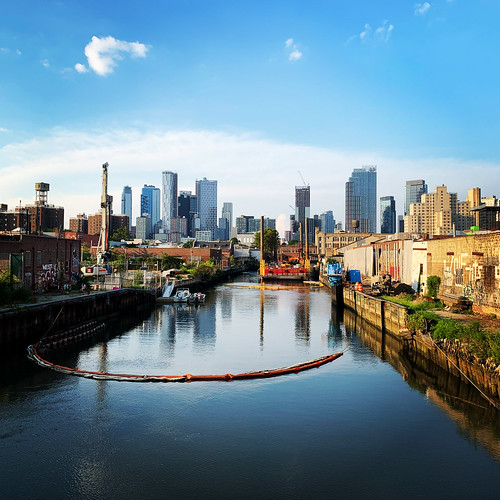
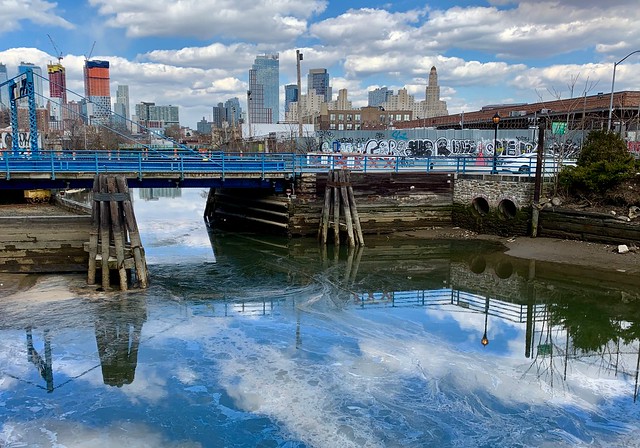
Showing posts with label NYC Department Of City Planning. Show all posts

Thursday, January 28, 2021

UPDATE On Voice Of Gowanus Legal Suit: After today's Court Hearing, the Gowanus Rezoning Still Legally Barred From Being Certified

This statement just in from Voice of Gowanus, the coalition of neighborhood associations, which brought suit against the City in regards to virtual ULURP meetings.

VOICE OF GOWANUS PREVAILS IN COURT SKIRMISH 

THIRD JUDGE UPHOLDS RESTRAINING ORDER AGAINST CITY

REQUIRES CITY TO RELEASE FULL REZONE APPLICATION TO THE PUBLIC

Today's Hearing

Kings County Supreme Court Justice Katherine A. Levine upheld a restraining order against the city today, blocking the de Blasio Administration from certifying the Uniform Land-Use Review Procedure (ULURP) application for its massive Gowanus rezoning proposal, pending a second hearing scheduled for Tuesday, February 2nd.

“We are pleased that the Court has maintained nearly all of the TRO today. Certification of the ULURP Application remains barred for the time being. The Court allowed for the City to release the ULURP Application, which we agree is helpful for public review,” said attorney Jason Zakai of Hiller, PC. “Our clients look forward to continuing their efforts to obtain meaningful public access as the case continues,” Zakai said.

As part of her narrow ruling today, Judge Levine required that the de Blasio Administration release the full rezoning application to the public, and has asked for the parties to come up with “creative solutions” that would allow for “ample access” to the public and that address the array of issues with the City’s virtual-only plan for public hearings. Justice Levine has left in place a restraining order dating back to January 15th that stops the city from certifying its rezoning application. Only certification will trigger the start of ULURP.

What it All Means

“The court today affirmed that there are significant access and equity issues with the city’s attempt to hold virtual-only public hearings on the Gowanus rezoning,” said Jack Riccobono of the Voice of Gowanus Legal Committee. “The judge’s decision wisely requires that the city release the full Gowanus rezoning application to the public, and stops the city’s attempt to stifle full, fair and equitable community participation during the public review process.”

This decision is the third time in two weeks that a judge has sustained an order preventing the city from certifying the Gowanus rezoning.

“We’ve said it for months and it’s clear from today’s decision: our concerns here in Gowanus about issues of access and due process are real. Virtual public hearings in their current form are not sufficient under city law for rezonings,” said Gowanus resident Brad Vogel of Voice of Gowanus. "We'll continue our grassroots fundraising push with the Gowanus Legal Defense Fund to keep this legal effort going."

Looking Forward

The de Blasio Administration’s plan for virtual hearings is rushed, poorly planned, technically flawed, and under-resourced. As the legal process moves forward, Voice of Gowanus has vowed to continue the fight to protect our democratic institutions and to make sure the city follows the law, so that all New Yorkers can have their voices heard during the public review process.

Voice of Gowanus
http://www.voiceofgowanus.org/


Read more

Tuesday, January 12, 2021

Voice of Gowanus Has Lawyered Up To Challenge Gowanus Rezoning

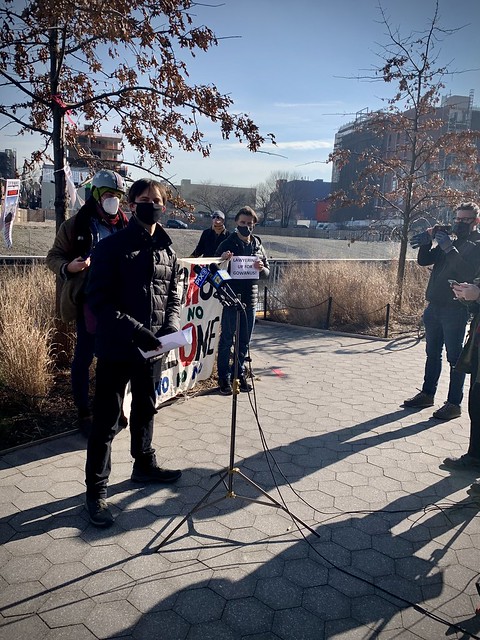
Voice of Gowanus at a press conference at noon today

Members of Voice of Gowanus held a press conference at noon today to announce that its coalition of neighborhood civic groups has retained a lawyer and an environmental consultant to challenge New York City's rezoning of the massive Gowanus rezoning from industrial/manufacturing to mostly residential.
Of course, Pardon Me For Asking was there to capture the event...and to speak.

Please take a look at the video to understand why VoG is opposed to the rezoning,
Below find Voice of Gowanus' statement on retaining legal council. I encourage everyone to contribute to Gowanus Legal Defense Fund


January 12, 2021 

VOICE OF GOWANUS LAWYERS UP IN REZONE FIGHT
Coalition Retains Counsel, Mulls Challenge To Gowanus Rezoning

GOWANUS, BROOKLYN – Voice of Gowanus, a grassroots community coalition, announced today that it has retained legal counsel and is contemplating possible legal challenges to Mayor Bill de Blasio’s and City Planning’s deeply flawed rezoning proposed for Gowanus, Brooklyn.

“The proposed rezoning stinks worse than the Gowanus Canal on a bad day,” said Katia Kelly of Voice of Gowanus. “We’ve retained counsel, and we’ll fight the city’s ill-advised plan in court if we must.”

Attorney Jason Zakai of the law firm Hiller, P.C. will represent Voice of Gowanus as legal counsel, working with the group’s legal committee, which itself is comprised of several attorneys. Hiller, PC is the leading opposition land-use, zoning and preservation law firm in New York City. Dedicated to preserving neighborhoods and protecting communities from out-of-control development, the firm regularly takes on legal challenges against arbitrary and capricious City land-use approvals, or those that violate lawful procedure.

“There are serious problems both with the massive rezoning proposal itself, and with the lack of transparency concerning the proposal, and we are looking into all legal options on behalf of our client,” Zakai said. “Rather than move forward with such a problematic plan, the City should go back to the drawing board and shelve it for another day.”

Voice of Gowanus previously launched the Gowanus Legal Defense Fund to raise financial support for the legal effort and continues to fundraise. An outpouring of community support for the Fund indicates the intense level of concern about a rezoning that stands to increase raw sewage overflows into the Gowanus Canal and compromise the Gowanus superfund cleanup.

The rezoning, which seeks to permit 22-30 story luxury residential towers in a vulnerable flood zone, also proposes placing housing on Public Place, one of the most toxic sites in the city, which will never be fully cleaned of plumes of carcinogenic coal tar extending 100 feet below the surface.

“We’re also excited to announced that Voice of Gowanus has retained environmental administrative law expert Maureen Koetz, a veteran of earlier fights against wanton rezoning actions here in New York City,” said Jack Riccobono of Voice of Gowanus. “We are ready to go to the mat to stop this incredibly unwise push to rezone a neighborhood during a pandemic.”

Voice of Gowanus has also repeatedly raised concerns about the city’s strange rush to ram the rezoning through during the middle of the global pandemic.

“Protecting our community’s rights to due process and ensuring that laws are followed even during a pandemic are top priorities for us,” said Brad Vogel of Voice of Gowanus. “Just because a mayor or council member’s term will be ending doesn’t mean the rules regarding land use review can be suspended. Especially when the proposed rezoning is as drastic and unsustainable as the one being put forward here in Gowanus.”

For more on Voice of Gowanus and concerns about the Gowanus rezoning: www.voiceofgowanus.org

Jack Riccobono of Voice of Gowanus
Brad Vogel, VoG member
Linda LaViolette of VoG

Read more

Thursday, October 29, 2020

Reality Check! EPA Warns City Gowanus Area Upzoning Cannot Compromise The Canal Clean-up

Just hours before the Gowanus Canal Community Advisory Group's October meeting this past Tuesday,  the Environmental Protection Agency sent a letter to New York City warning that the proposed upzoning of the Gowanus neighborhood cannot compromise the EPA Superfund clean-up of the 1.8 mile toxic waterway. 

The letter, written by EPA Region 2 Administrator Peter Lopez informs the New York Department of City Planning and the New York City Department of Environmental Protection that his agency anticipates a significant increase in wastewater generated as a result of the rezoning from manufacturing to residential.

EPA estimates that waste water will increase from the present 178,795 gallons per day to 1,977,302 gallons per day once the proposed development has been completely built out. 

This should not come as a surprise to the City since the EPA had addressed the same concerns in its comments on the Gowanus Neighborhood Rezoning Draft Scope of Work for an Environmental Impact Statement (DSOW) back in May 2019.

The EPA is very clear that it does not get involved in land use issues. However, anticipating future use is an important component of designing the Superfund remedy. The Federal Agency is also protective of its environmental remedies and will get involved if there is a risk of re-contamination to a Superfund site.

The City of New York is one of the major polluters of the Gowanus canal, as a result of allowing sewage to discharge into the canal when waste water exceeds the capacity of our treatment facilities during periods of heavy rainfall.  To remedy the situation, EPA has mandated that the City construct two retention tanks to capture the waste water during these rain events.

The City has been dragging its feet and using one delaying tactic after another to avoid taking responsibility for polluting the canal. As it stands, NYC DEP now anticipates the completion of the first tank in 2032.
EPA, for its part, is moving ahead at full speed.  In November, the dredging of the toxic material in the canal will begin, followed by the installation of a multi-layer cap at the bottom of the waterway.

Since the City has not yet begun building its tanks, solids from the waste water discharges risk recontaminating the Superfund site.

It will be interesting to see how the City's Departments of Environmental Protection and Planning will try to engineer their way out of this, given the fact that the City has not yet managed to capture current CSOs into the waterway, let alone 10 times the amount.

Once again, it would appear that the EPA is stepping in to protect the environment and the health of the Gowanus community. The same cannot be said about Mayor deBlasio, as well as Councilmen Brad Lander and Steve Levin, who are all pushing for the rezoning before environmental remediation.

Below is Administrator Lopez's letter to the City.

Dear Director Lago and Commissioner Sapienza:

The U.S. Environmental Protection Agency (EPA) is in receipt of public notices indicating that
the Department of City Planning (DCP) has resumed the Gowanus rezoning process,
commencing with the public meeting on October 22, 2020 before the Brooklyn Community
Board 6 Land Use Committee.

As you know, the proposed rezoning affects an area surrounding the Gowanus Canal, which EPA
placed on the Superfund National Priorities List in March 2010. The Gowanus Canal Superfund
Site (Site) is defined as the approximately 100-foot wide, 1.8-mile-long Canal, and also includes
any areas that are sources of contamination to the Canal.

In 2013, EPA issued a Record of Decision (ROD) for the cleanup of the Canal that included the
dredging and off-Site disposal of much of the accumulated contaminated sediment within the
Canal, the capping of certain contamination remaining below the dredged material, and the
control of upland sources to prevent the recontamination of the clean Canal. See
https://semspub.epa.gov/workl02/692106.pdf

Such upland sources include certain contaminated sewer solids discharged into the Canal during
Combined Sewer Overflow (CSO) events when stormwater and sanitary sewage capacity is
exceeded within the approximately 1,758-acre Gowanus Canal watershed. The CSO portion of
the EPA-selected remedy requires the City, a potentially responsible party for the Site, to
construct and operate two CSO retention tanks. Pursuant to several EPA administrative orders,
the City is required to design those CSO tanks and to participate in the first stage of the dredging
and capping work. The City will be required to construct the CSO tanks pursuant to a future EPA
enforcement instrument.

EPA does not have a direct role in local land-use or zoning decisions. However, accounting for
current and anticipated future local land use is an important component in EPA's planning of
response actions under the Comprehensive Environmental Response, Compensation and
Liability Act ("CERCLA" or "Superfund"). EPA also has a role in ensuring that future land-use
changes do not adversely affect the integrity of Superfund cleanups, including the ongoing work
at the Gowanus Canal. Accordingly, in May 2019, EPA provided comments to DCP on the
Environmental Impact Statement (EIS) scoping documents for the rezoning, and also directed the
New York City Department of Environmental Protection (DEP) to provide rezoning-related
information to EPA as part of the CSO tank design process.

The first phase of the dredging and capping is to begin in mid-November 2020 in the upper
Canal, which is in the area where DCP has proposed rezoning for residential use. Progress on the
Canal cleanup is among the factors cited by the City in support of the rezoning.
Progress on the CSO tanks, however, has been delayed by DEP, as noted in recent EPA
communications to DEP. In June 2020, DEP requested that EPA grant an extension of time to
complete the CSO tanks. EPA is reviewing that request, which may impact the effectiveness of
the remedy and have implications on the rezoning.

In light of community interest associated with the start of dredging, DEP's CSO-related delays,
and the resumption of the rezoning process, EPA believes that it would be of assistance to the
City, the community, and other stakeholders to reiterate the cleanup-related discharge parameters
of the ROD.

In anticipation of potential redevelopment, the ROD requires that any future activities that fall
under the City's purview, including development, do not compromise the effectiveness of the
Gowanus Canal remedy. Among other things, the ROD specifically states:

Current and future high density residential redevelopment along the banks of the canal and
within the sewershed shall adhere to NYC rules for sewer connections (Chapter 31 of Title 15
of the Rules of the City of New York) and shall be consistent with current NYCDEP criteria
(NYCDEP, 2012) and guidelines to ensure that hazardous substances and solids from
additional sewage loads do not compromise the effectiveness of the permanent CSOcontrol
measures by exceeding their design capacity. For example, redevelopment
to take mitigation measures to prevent or offset additional sewer loadings. Separated
storm water outfalls will also require engineering controls to ensure that hazardous
substances and solids are not discharged to the Canal. [ROD at page 84.]

In EPA's May 2019 comments on the EIS scoping documents, EPA noted that the City
preliminarily projects a significant increase in the wastewater generation in the neighborhood as
a result of the proposed development. Specifically, for residential development, wastewater
generation is estimated to increase from 178,795 gallons per day (gpd) at present to 1,977,302
gpd once the proposed development has been completed. (See Gowanus Neighborhood
Rezoning and Related Actions at Table B-1).

Consistent with EPA's May 2019 comments, the EIS process should accurately determine not
just the total wastewater generation, but also the incremental sanitary and stormwater volumes
and what appropriate mitigation measures, or combination of measures, are required to prevent
added CSO-related discharges to the Canal and adverse effects on the Canal remedy. In
particular, EPA believes that DEP must determine whether any infrastructure serving the parcels
that are to be rezoned requires upgrading to provide adequate conveyance and prevent overflows
to the Canal. EPA will review all such determinations and other relevant information related to
the impacts of the proposed rezoning on the Superfund Canal remedy and will assess whether
any mitigation measures proposed as part of the development, as a result of the rezoning, would
indeed be protective of the Canal remedy.

EPA acknowledges the City's authority to engage in land-use planning and zoning. With that
said, however, EPA respectfully submits that any rezoning impacting the Canal must proceed in
a manner that is protective of human health and the environment, as envisioned in EPA's Canal
remedy.

EPA looks forward to engaging with the City, the community and other stakeholders in a
cooperative manner so that the appropriate information is available for a productive
consideration of rezoning issues.

After the rains! Raw sewage floating on the Gowanus Canal 


Read more

Thursday, August 27, 2020

Can Gowanus Be Both A White, Rich Neighborhood And A Low-Income Opportunity Zone? Why It Matters In Regards To The Proposed Rezoning

Untitled
Of Shifting Neighborhood Lines Between Carroll Gardens And Gowanus, 
And Diverging Narratives About The Neighborhood's Income Level In Regards To The Proposed Gowanus Rezoning

For decades, the area between New York Harbor and the Gowanus Canal in Brooklyn was strictly known as "Red Hook" to locals. It was only in the 1960's that real estate agents began calling the area from Degraw Street/ Warren Street to 9th Street and from Hicks Street to the West side of Bond Street "Carroll Gardens."

It was an attempt to elevate and differentiate the brownstone enclave from Gowanus and Red Hook.

The rebranding of Carroll Gardens, a mostly working class neighborhood in the 60's into a more genteel sounding one was obviously a success. Carroll Gardens is now ranked as one of Brooklyn's most expensive neighborhoods.

Though some of the boundaries of Carroll Gardens sometimes shift depending on who you talk to, New York City officially rezoned the neighborhood in 2009 and set the boundaries mentioned above.

New York City Planning map of Carroll Gardens

So imagine our surprise when we recently googled Carroll Gardens on Trulia and saw that the real estate site defined the eastern border of Carroll Gardens at Smith Street, not Bond Street. The site included everything from Smith Street to Bond Street as Gowanus.

That seemed odd, especially since it would place the Carroll Gardens Historic District in Gowanus.
We cannot say for sure but it seems to us that the site's boundary shift is recent.


Why would this matter?  For one, it may have affected the dialog regarding the proposed rezoning of the Gowanus neighborhood.  As we all know, Carroll Gardens is rather affluent.  Gowanus, on the other hand, is mostly still industrial, though speculation by developers pushing for the rezoning have increased prices in the past few years.

However, shifting the border between Carroll Gardens and Gowanus from Bond to Smith Street would certainly raise median house prices and the median income level of Gowanus by quite a bit.

It is also important to note that the Gowanus Canal Rezoning Framework left out the Gowanus Houses and Wycoff Gardens NYCHA housing, though according to Community Board 6, the majority of Gowanus residents live there. Leaving NYCHA housing out of the framework thereby further skewing the median income in the area.

This has allowed pro development groups like Open New York to claim that Gowanus is "the only affluent, majority-white, high-opportunity neighborhood that the de Blasio administration has proposed rezoning for greater densities."

Councilmember Brad Lander, who is in full support of the Gowanus rezoning, claimed on his City Council page that "Gowanus would be the first “mandatory inclusionary housing” (MIH) neighborhood re-zoning proposed for a whiter, wealthier neighborhood, where there’s relatively little risk of displacement. So we have the opportunity to create a real model for an integrated neighborhood, with diverse schools, and a vibrant community life, right here in the middle of Brownstone Brooklyn."

On the same page, however, Lander writes: "I love the neighborhoods of Park Slope and Carroll Gardens. But they are not integrated or affordable. According to City Planning’s analysis, the Gowanus Neighborhood Rezoning would likely lead, over time, to an estimated 8,200 new housing units, 3,000 (or 37%) of which would be permanently affordable to low- and moderate-income families."
So, which is it? If Gowanus is a white, wealthy neighborhood and needs to be integrated, why allow 63% of the new units to be market rate or luxury housings? Why not push for more affordability?

Complicating Lander's argument even more is the fact that under President Trump, the Gowanus area has been designated as an Opportunity Zone. The Opportunity Zone program offers tax incentives for investors to place their capital gains into low-income communities.

The Gowanus area slated for rezoning overlaps almost exactly with the Gowanus Opportunity Zone.

So, is Gowanus a rich, white neighborhood, as Councilman Lander claims?  Is it a low income area, as per the Opportunity Zone program? Will the rezoning diversify the neighborhood by adding low income housing to a high priced area, or will it displace poorer residents by gentrifying a lower-than-average poverty community.

Is Brad Lander using his narrative to claim that the rezoning will not displace current residents, knowing fully well that developers and investors will profit from huge tax incentives by claiming the opposite?

One thing is for sure: Gowanus can't be both rich and poor at the same time. As a community, we need to make sure we deal with real data and facts while engaging with Lander and New York City when discussing the rezoning.  The truth always matters.


Additional reading:
Bond Street at Carroll Street
Untitled
Smith Street

Read more

Tuesday, August 11, 2020

Yet Again, NYC DEP Wants To Delay Construction Of Two Crucial CSO Retention Tanks For The Gowanus Canal

Untitled
The head of the Gowanus Canal
Untitled
The Salt lot at 2nd Avenuel
The famous "poo-nami' video showing CSO event on Gowanus Canal

Despite a pandemic, despite an exodus out of New York City, Mayor Bill de Blasio and Councilmember Brad Lander are both still pushing for the rezoning of the Gowanus neighborhood from mostly manufacturing to residential.  It is by far the largest proposed New York City upzoning of the de Blasio administration despite the fact that the area still faces serious and dangerous environmental challenges

First, the Gowanus Canal, which runs through the area, was declared  an EPA Superfund site and has not been remediated yet.  Secondly, much of the land in Gowanus is in a FEMA Flood Zone A. Thirdly, there are three former Manufactured Gas Plant  (MGP) sites along the canal's shores that are now and will forever be laden with liquid coal tar at depths of 100 to 150 feet. And fourthly, NYC continues to use the canal as an open sewer, allowing Combined Sewer Overflow to enter the waterway during heavy rain events. That is a clear violation against the Federal Clean Water Act.

It is expected that the Department of City Planning will certify the proposed rezoning, which will trigger the Uniform Land Use Review Process (ULURP) very soon.

But....what about the pollution, you may ask? Well...
Just yesterday, PMFA wrote about the fact that shortcuts were being taken on the most polluted MGP site in Gowanus where our Councilman is envisioning 900 units of housing.

In addition, residents learned at the July 28th EPA Community Advisory Group meeting that the City of New York is yet again trying to delay the construction of two CSO control facilities meant to reduce the volume of untreated wastewater entering the Gowanus Canal.

Here is some background. As part of the EPA Superfund clean-up, the Federal Agency has ordered the City to build two retention tanks, one 8 million gallon tank at the head of the canal at Butler and Nevins Streets, and a 4 million gallon tank at the Salt Lot at 2nd Avenue, located in the middle section of the canal.

In the past few years, the NYC Department of Environmental Protection has managed to delay the construction of the tanks by several years by insisting on siting the tanks on land seized by eminent domain and by over-designing the tank facilities. The Agency also managed to more than double the construction cost. In  2018, D.E.P.'s Kevin Clarke testified that the cost for the entire 'program' that includes both tanks is estimated to reach $1.2 Billion. E.P.A. had estimated the cost at $500 million.

So, imagine the community's surprise when it heard that DEP's Commissioner Vincent Sapienza had reached out to EPA Region 2's Administrator Peter Lopez, asking for additional time due to the financial challenges the City is currently facing because of the Covid-19 pandemic.
Sapienza asked for a one year delay for the completion of the larger tank and an 18 months delay for for the smaller one.

Keep in mind that the tanks are only addressing current CSO discharges and that 0EPA expects a significant increase in CSOs into the canal as part of the area rezoning, this is bad news for current and future residents.

The news prompted Voice Of Gowanus, a coalition of civic organizations and local residents to reach out to Administrator Lopez with the following letter on August 7th:

Gowanus Canal Superfund Required Sewage Detention Tanks 
Vs. DEP Delay Request

Dear Regional Administrator Lopez,

During the recent July Gowanus CAG meeting, the community was made aware that NYC DEP has requested a substantial delay in carrying out its obligations in the EPA Superfund cleanup for the canal, which includes one sewage detention tank at the head the canal and a smaller one on the city’s 2nd Avenue Salt Lot. We have been told that the DEP cites a large coronavirus-related revenue shortfall as a reason to push back this Superfund construction work a year for the larger tank, and a year and a half for the smaller tank.

As a local Gowanus coalition of civic associations and residents, we are reaching out to you with our concerns now, given that the EPA CAG will not be meeting again till late September and we understand this is a very time-sensitive matter.

As members of the Gowanus community many of us are aware of previous times when the DEP had fully funded Gowanus infrastructure work (the 2004 Flushing Tunnel Project) only to have DEP pull the funding for years and delay Gowanus for new infrastructure projects elsewhere.

We have good reason to be concerned with this current excuse for delay especially given that the EPA has already allowed several delays on this DEP work. And that this work will now no longer be completed by the time the dredging work is finished. Further, there was an understanding in the community that funding for Gowanus CSO tanks has been in place. In March 2016, Councilman Lander TWEETED proudly that he was glad to see $510m in the updated capital plan for Gowanus CSO retention tanks.

From Councilman Brad Lander's Twitter account, March 2016

The Gowanus community prefers that you DO NOT allow the NYC DEP to delay its portion of the Superfund cleanup any further. If you are inclined to negotiate any delay, we ask that you only agree to delay the work of one tank's construction, not both, and make approval contingent upon NYCDEP agreeing to prioritize design and construction of both retention tank projects over all other new DEP infrastructure projects. We would feel deeply wronged in Gowanus if the EPA granted the requested delays to the DEP only to have the DEP fund new infrastructure works at the expense of finishing the Gowanus tank projects.

As you know, hundreds of millions of gallons of raw sewage discharging regularly into our waterway continues to be a major environmental and health concern. The problem is about to become even more acute as the City appears poised to certify the massive rezoning of the Gowanus corridor.

Our community needs a hero. Please be ours.

Respectfully,
Voice of Gowanus


If you would like to send your own email to Administrator Lopez in support of Voice Of Gowanus, click on the link below. It will open a new page with the email address and letter. So easy.
Click to Write Your Own Email To Administrator Lopez

Read more

Wednesday, August 05, 2020

Voice Of Gowanus: NYC's 'Virtual' Hearings For The Proposed Neighborhood Rezoning Will Deprive Community Of Due Process Rights And Violate City Charter Requirements For ULURP

Voice Of Gowanus, a coalition of Gowanus-area residents and  civic associations, just sent a letter to New York City Planning Commission Chair Marisa Lago regarding the proposed Gowanus rezoning.

The group has been very vocal about its concerns relating to the rezoning, the largest undertaken by the De Blasio administration so far. 

To become law, the rezoning needs to go through a months-long public Uniform Land Use Review Procedure, a process mandated by the New York City Charter.  The charter requires public hearings at several stages of the ULURP process be held in places of public assembly in a physical location. 

VoG wants to make absolutely sure that Gowanus residents will have the same opportunity as all other New York City neighborhoods that have been rezoned. In the letter to Lago, the group points out that an attempt by the city to proceed with "virtual" public hearings for the proposed Gowanus rezoning while it is not possible to hold safe, large-scale, in-person public hearings will violate the city charter's requirements for ULURP.

From VoG:
"Now is not the time to proceed with an illegitimate and diluted land use review process for a major rezoning that would dramatically impact our neighborhood.  Community members are entitled by law to a process that protects their rights to hold public officials accountable in the same room - and in the same manner as other neighborhoods that have previously faced rezonings."

Below is the letter sent by the group to Marisa Lago yesterday.


August 4, 2020

Chair Marisa Lago City Planning Commission New York City

Dear Chair Marisa Lago:

Many in our Brooklyn community are concerned that the city’s land use process is set to re-open without adequate consideration of existing land use law. Together our group of concerned independent community members calls upon the Department of City Planning and the City Planning Commission to cease any further consideration of the proposed Gowanus rezoning-and any other New York City-led neighborhood rezonings-until conditions permit holding safe, large-scale, in-person public hearings. This pause must include holding off on certifying any City-led neighborhood rezoning.

Any further actions undertaken by the Department of City Planning and the City Planning Commission to certify the proposed Gowanus rezoning this month that would lead to so-called “virtual” Uniform Land Use Review Procedure (ULURP) public hearings starting in September—a civic process that has never before been carried out “virtually” in any previous New York City-led neighborhood rezoning—would constitute a violation of ULURP.

“Virtual” ULURP hearings would not be uniform in light of what the law requires. The city charter provision regarding ULURP procedures requires that public hearings for ULURP at the community board level occur in a physical location (as does the provision about borough president hearings during ULURP):

“A community board public hearing shall be held at a convenient place of public assembly chosen by the board and located within its community district. If in the community board's judgment there is no suitable and convenient place within the community district, the hearing shall be held at a centrally located place of public assembly within the borough.”

Given the in-person civic process other communities have been afforded to date when facing neighborhood rezonings, “virtual” ULURP hearings would unfairly undercut the procedural rights of community members in greater Gowanus and any other neighborhood facing a rezoning, and would prevent them from holding their elected and appointed officials accountable.

The virtual hearings and practices recently rushed into use by other City agencies indicate that, especially in the context of ULURP for an entire neighborhood, attendees’ collective power would be severely diluted through the use of an online platform. Equitable access to technological devices and high-speed internet is simply presumed by the City but a resourced plan has not been offered or executed to ensure access for all community members. Structurally diluting a community’s ability to hold power accountable during the current Covid-19 crisis, when the future of our entire neighborhood and its interconnected communities is at stake, is unacceptable. It does not conform to the letter or the spirit of what ULURP requires; even if more individuals could theoretically participate in “virtual” hearings, community power to confront politicians collectively in a room is blunted by an internet-only process. We urge you in the strongest possible terms to abandon plans for this illegitimate and illegal “virtual” ULURP process that will effectively deprive our community members of their due process rights.

Please also find enclosed an Op-Ed co-authored by State Assemblymember Jo Anne Simon published in yesterday’s edition of City Limits that details further the widespread community concerns regarding “virtual” ULURP hearings and any certification that would lead to such hearings.

Resolutely,
Voice of Gowanus


Opinion: Fairness Requires that NYC Pause the Gowanus Rezoning


Read more

Wednesday, May 29, 2019

Bravo! State Senator Montgomery Firmly Against Gowanus Rezoning Before Environmental Clean-Up

Councilman Brad Lander with State Senator Velmanette Montgomeryduring the first 
3D model of a fully built-out Gowanus after rezoningby 
Untitled
Untitled
State Senator Velmanette Montgomery's letter to NYC Department of City Planning

Thank YOU, State Senator Velmanette Montgomery, for categorically saying "NO" to the proposed Gowanus area upzoning!

A letter from May 24, 2019 from Montgomery to New York City's Department Of City Planning was distributed to members of the Gowanus Canal Community Advisory Group last night. It states:
"I am writing to express my opposition to the proposed re-zoning of the community surrounding the Gowanus Canal prior to the completion of the superfund remediation. After decades of uncertainty, there is finally a plan in place to perform desperately needed environmental remediation of a famously polluted site. Cleaning up the canal and working to handle the continuing problem of combined sewer overflow (CSO) pouring into the canal after each major rainfall or snowmelt is of paramount importance."
She concludes:
"I stand firm in my position that this rezoning must be put on hold until a genuine environmental cleanup can take place. We need to improve the quality of life in the Gowanus community before we add thousands of housing units and people to an already overburdened infrastructure system."

Her firm stand is significant since Montgomery is one of the five elected officials who, in 2013, convened "Bridging Gowanus", which was meant to develop a "framework for the infrastructure and land use needed for a safe, vibrant and sustainable Gowanus".

Many residents who participated in the Bridging Gowanus meetings have expressed their frustration that very few of the community's inputs ultimately made it into NYC Department of Planning's proposed rezoning of the area, which calls for 22 to 30 story buildings.

This is the second time that Senator Montgomery showsu real leadership regarding Gowanus.
In 2009, she was one of the first elected official to support the designation of the Gowanus Canal as an EPA Superfund site. In a letter to EPA, she wrote ten years ago: "Since one-half of the Gowanus Canal lies within the 18th New York Senate District, the development and health of the area, for both the current and future residents and businesses are my top priorities. While the economic development of this artery is crucial to the future of New York City sustainable, healthy development is only possible in a sustainable, healthy environment.
Much of the development proposed for the areas surrounding the Gowanus Canal, such as the Public Place project, envision much needed affordable housing with parks and playgrounds for the families living there. However I cannot in good conscience support development on contaminated land. The area must be made safe for current and future generations
."

Senator Montgomery's position on the rezoning aligns with Voice Of Gowanus, a newly formed coalition of Gowanus area residents and groups, who have asked for environmental remediation BEFORE a rezoning


Read more

Tuesday, May 28, 2019

EPA Projects A 'Significant Increase' In CSOs Into The Gowanus Canal As Part Of Proposed Area Rezoning

The toxic Gowanus Canal, an EPA Superfund Site
Untitled
Christos Tsiamis, the EPA Senior Project Manager for the Gowanus Canal Superfund
and a recent Gowanus Superfund Community Advisory Group Meeting
Untitled
Untitled
Current conditions!
Raw sewage floating on the Gowanus Canal .

EPA Region 2  has sent  NY City Department of City Planning(DCP) its own comments on the Gowanus Neighborhood Rezoning Draft Scope of Work for an Environmental Impact Statement.(DSOW).

In a letter dated Thursday May 23, 2019, Christos Tsiamis, the EPA Senior Project Manager for the Gowanus Canal Superfund, is projecting a massive 11x increase in Combined Sewer Overflow into the canal as a result of the proposed neighborhood upzoning from manufacturing to residential.

The EPA does not get involved in land use issues. However, as Tsiamis mentions in his comments to NYC DCP, the Federal Agency is protective of its environmental remedies and will get involved if there is a risk of re-contamination to a Superfund site.

It will be interesting to see how New York City's Department of Environmental Protection and City Planning will try to engineer their way out of this, given the fact that the City has not yet managed to capture current CSOs into the waterway, let alone 11 times the amount.

Once again, it would appear that EPA is stepping in to protect the environment and the health of the  Gowanus community. The same cannot be said about Mayor deBlasio, as well as Councilmen Brad Lander and Steve Levin, who are all pushing for the rezoning before environmental remediation.

Here are EPA's comments.

The Environmental Protection Agency (EPA) has reviewed the Environmental Impact Statement (“EIS”) scoping documents, including the “Gowanus Neighborhood Rezoning and Related Actions Draft Scope of Work for an Environmental Impact Statement,” March 22, 2019, that were issued by New York City (“City”) for public comment. The proposed rezoning affects an area on and around the Gowanus Canal.

EPA does not have a role in local land-use or zoning decisions. However, understanding local land use is an important component in EPA’s planning of response actions under the Comprehensive Environmental Response, Compensation and Liability Act (“CERCLA” or “Superfund”). EPA also has a role in ensuring that future land use changes do not adversely affect the integrity of Superfund cleanups. With that context, EPA offers the following comments on the EIS scoping documents.

Background:

The Canal was constructed by bulkheading and dredging a tidal creek and wetland. After its completion in the 1860s, the Canal quickly became one of the nation’s busiest industrial waterways. As a result of decades of direct and indirect discharges of hazardous substances generated by industrial and other activities, the Canal became a repository for untreated industrial wastes, raw sewage, and runoff, causing it to become one of New York’s most polluted waterways.

Following a request from the New York State Department of Environmental Conservation (“NYSDEC”), EPA placed the Canal on the Superfund National Priorities List in March 2010. The Gowanus Canal Superfund Site (“Site”) is defined as the approximately 100-foot wide, 1.8-mile-long canal located in the borough of Brooklyn, Kings County, New York, and also includes any areas that are sources of contamination to the Canal.

In 2013, EPA issued a Record of Decision (“ROD”) for the cleanup of the Canal that included the dredging and off-Site disposal of the contaminated sediment in the Canal, the placement of a multilayer absorbing cap to prevent dissolved contamination from moving with the groundwater into the Canal waterbody, and the control of contamination from upland sources to prevent the recontamination of the clean Canal.

Such upland sources include certain levels of hazardous substances found in solids discharged into the Canal during Combined Sewer Overflow (“CSO”) events when stormwater and sanitary sewage capacity is exceeded within the approximately 1,758-acre Gowanus Canal watershed.

The CSO portion of the EPA-selected remedy includes the construction and operation of two CSO retention tanks by the City, a Potentially Responsible Party (“PRP”) for the Site. The City is currently preparing the CSO remedy design pursuant to two EPA administrative orders[1] and participating in the dredging and capping remedial design, for which work in the upper portion of the Canal is targeted to begin in 2020. Progress on the Canal cleanup is among the factors cited by the City in proposing the rezoning.

In anticipation of potential redevelopment, the ROD requires that any future activities which fall under the City’s purview, including development, do not compromise the effectiveness of the Gowanus Canal remedy. Among other things, the ROD specifically states that “redevelopment projects will need to take mitigation measures to prevent or offset additional sewer loadings” to the Canal to protect the remedy.

EPA review of EIS Scoping Documents:

EPA has reviewed the EIS scoping documents from the perspective of ensuring that the EIS process includes the proper assessment of and mitigation planning for any impacts that the rezoning actions may have on the effectiveness of the selected remedy.

In reviewing the EIS scoping documents, EPA notes that the City preliminarily projects a significant increase in the wastewater generation in the neighborhood as a result of the proposed development. Specifically, for residential development, wastewater generation is estimated to increase from 178,795 gallons per day (“gpd”) at present to 1,977,302 gpd once the proposed development has been completed. (See Gowanus Neighborhood Rezoning and Related Actions at Table B-1).

The EIS process should accurately determine the incremental volume of CSO-related discharges to the Canal and what appropriate mitigation measures, or combination of measures, are required to prevent an adverse effect on the EPA-selected remedy for the Canal.

EPA intends to work cooperatively with the City to ensure that the rezoning process is conducted in a manner that is, with respect to the Canal, protective of human health and the environment.

Sincerely,
Christos Tsiamis
Senior Project Manager
New York Remediation Branch
USEPA, Region 2


The EPA Gowanus Canal Community Advisory Group will be meeting tonight at 6:30 pm at Mary Star of the Sea, Mary Star of the Sea, 41 1st Street

This is what a Gowanus Canal CSO event looks like!

SAY NO TO THE GOWANUS REZONING!
Read more

"We Do Not Want The Cart Put Before The Horse": Carroll Gardens Coalition For Respectful Development Comments On NYC's Gowanus Environmental Impact Statement

Untitled
Untitled
Untitled
Untitled
Untitled
Toxins, raw sewage and a flood zone.
Gowanus!

Gowanus area residents and groups had till yesterday, May 27th, 2019 to send NY City Department of City Planning (DCP) their comments on the Gowanus Neighborhood Rezoning Draft Scope of Work for an Environmental Impact Statement.(DSOW).

DCP had asked the community for input on the Gowanus Draft Scope of Work at a public meeting on April 15th, and accepted written comments until last night.  A DSOW is a "technical document that lays out proposed methodologies and assumptions and that identifies the project and the types of environmental analyses that may be performed. The DSOW helps the public understand and participate in the CEQR review from the start and a necessary precursor to preparing a Draft Environmental Impact Statement."

We are posting below the comments that Carroll Gardens Coalition for Respectful Development sent to City Planning regarding the Gowanus Rezoning because we agree with CORD and support their assessment of the rezoning.


To: The NYC Department of City Planning
From: CG CORD Carroll Gardens Coalition for Respectful Development

When digesting the framework and plan to rezone the Gowanus and this Environmental Impact Statement, the one phrase that continually comes to mind is, "putting the cart before the horse".

The Gowanus Canal is a Superfund site. Her waters are classified as industrial which legally allow for a certain level of toxins and pathogens to remain in the water.

Under the EPA's Record of Decision , two retention tanks of different sizes are to be constructed in order to reduce the CSO emitted pathogens and the resulting "attached" toxins. ( We note here that we are aware of NYC's continuously and deliberately keeping this plan in flux, but that is, nevertheless, the mandate issued by the Record of Decision.)

If no rezoning of the Gowanus were taking place, then, ideally after the Superfund cleanup, we reach acceptable levels of toxins and pathogens for an industrial waterway.

This is definitely an improvement to the health and safety of all Gowanus, Carroll Gardens, Cobble and Boerum Hill, Red Hook and Park Slope residents and the very aim and purpose of the EPA/Superfund will have been successfully achieved.\

With the proposed Gowanus rezone, this EIS does not insist or even recommend the classification of the Gowanus Canal to be upgraded to the more appropriate CERCLA standards for RESIDENTIAL classification.

It does not even suggest the inadvisability of residential development along the banks of any industrially classified waterway. Nor does it suggest or even hint at the inadvisability of building ANYTHING residential in an area that is classified as a flood zone. WHY NOT?

In addition, this EIS does not effectively model how new developments in the Gowanus neighborhood would naturally increase CSO discharges into the Canal.

It is bewildering that this topic is not more thoroughly addressed within this EIS.

While these glaring omissions by this EIS have us questioning the very purpose of what purports to be an ENVIRONMENTAL IMPACT STATEMENT, it also has us questioning how our other city, state and federal agencies are going to cope with what we have heard as described "the largest rezoning" of an area in New York City ever.

We wonder if the FDNY, the NYPD, OEM, EMT SERVICES, DSNY, DOE, DOT, NYCT, DCP, DEP, PARKS, DEC, MTA and FEMA are taking any steps to prepare for the estimated nineteen thousand (19,000) new residents occupying approximately eight thousand two hundred (8200) new apartments- - which by the way, works out to 2.3 people per apartment - a number representing complete fantasy.

We wonder where all the .3 people will go to school? How will all of the 2's fit on trains and busses? Where will all of the automobiles owned by the conservatively estimated 19,000 residents be? What, if any, hospital emergency facilities will be added? What tentative plans are being made to accommodate this huge increase in population in the event of an emergency/natural disaster?

We seem to recall that the "evacuation route" for Carroll Gardens takes us down to Bond Street. Will all of us be directed there and provided with canoes in the event of an evacuation scenario?

During Hurricane Sandy, this "escape route" was completely flooded by many feet of awful smelling water with our neighbors parked cars freely floating within it.

How is the current evacuation "plan" being adjusted? Is it even being considered?

So, since the apparently acceptable bunch of words that substitute for an Environmental Impact Statement, do not seem to address any of the truly important impacts this rezoning will inflict upon all of us actually living here, we add to our above comments the following:

A panel of all of the above mentioned agencies along with our EPA Region 2 team, be brought together for a minimum of two (2) TOWN HALL conversation/question answer periods as to how these agencies plan to address and resolve the REAL environmental impact of this very poorly thought out rezoning.

These meetings are to be organized, held and hosted by our COMMUNITY BOARD 6 and announced widely throughout the district.

This panel must be assembled and the town hall meetings MUST TAKE PLACE WELL BEFORE THE ULURP Community Board 6 Land Use Committee vote on the Gowanus Rezoning proposal in order to give the community the time to understand what is being presented and how it will affect them.

Right now there are no meetings scheduled or being held by our Community Board to discuss this EIS, neither what it says nor what it doesn't.

It is unreasonable for any community to attend one land use meeting for a proposal of this proportion and be expected to digest and comment intelligently without all of the players involved being there to answer questions.

Our Community Board may not be "required" to do this, but they should do it anyway-- in the spirit of being good neighbors and community guardians.

If meetings of this type are not required by NYC procedure or law-- then set some precedent here. This is an extremely ambitious rezone. It is not the same as many others before it. Let's do some things differently and better than before not just the same.

We do not want the cart put before the horse.

We want answers to our questions.

We do not need to hear how all of the appropriate boxes have been checked off.

We want a responsible rezoning.

Thank you. We welcome your comments and letters at cgcord@gmail.com

Sincerely,
CG CORD Co-founders:
Lucy DeCarlo
Rita Miller
Triada Samaras

We join CORD's call for an inter-agency panel discussion on the rezoning of the Gowanus Canal to be held by Community Board 6, so that the community can assess for itself if the City has the means, the resources and the will to TRULY plan for the impact of about 8,2oo new housing units and an estimated 20,000 new residents. After all, WE will have to live with the consequences of the rezoning.

If you agree, send an email to Community Board 6 at  Info@BrooklynCB6.org and to Jonathan Keller of City Planning at JKeller@planning.nyc.gov .
Please copy CORD cgcord@gmail.com, so the group has a record of the ask,

Read more

Monday, April 15, 2019

Landersville: Important Scoping Meeting On Proposed Gowanus Rezoning Coming Up On April 25

Untitled
Untitled
Combined Sewer Overflow floating on the surface of the Gowanus Canal
at 363 Bond Street building.
Photo taken April 15, 2019.

Leave it to NY City Department of City Planning (DCP) to schedule an important meeting regarding the up-zoning of the Gowanus Canal area during a school vacation week, when many families may be out of town. Let us try to stay involved despite the City's effort to make it harder for us to have our voices heard.

The proposed up-zoning of the Gowanus Canal area is moving along quickly.
Here is the next step in the massive re-zoning, and it is an important one.

The Department of City Planning is holding a very important meeting on Thursday, April 25th, 2019, at Middle School (M.S.) 51 at 350 5th Avenue starting at 4 pm to start the Environmental Review Process for the proposed Gowanus Rezoning. The meeting will go through the evening hours.

This meeting will give local residents an opportunity to identify potential effects that the proposed change in zoning will have on the area's infrastructure and the environment.
Here is the opportunity, for example,  to ask how the City aims to deal with the additional sewage produced by 20,000 new residents in around 8,000 units since it has not managed to address  the ouflow of Combined Sewage Overflow into the canal under current conditions.
Or how about asking the City if it is prepared to shelter all new Gowanus residents in the case of flooding since most of the rezoning footprint is in a FEMA Flood Zone A with mandatory evacuation.

According to DCP:
"The first step in the Gowanus environmental review process is to get community input on the Draft Scope of Work (DSOW), a technical document that lays out proposed methodologies and assumptions and that identifies the project and the types of environmental analyses that may be performed. The DSOW helps the public understand and participate in the CEQR review from the start and a necessary precursor to preparing a Draft Environmental Impact Statement. The DSOW and other documents are on our website."

DCP will also accept written comments until the close of business on Monday, May 27th, 2019, but it is better to show up at the meeting on April 25th, so please make sure to attend.

Further reading:


Read more