Tuesday, March 30, 2021
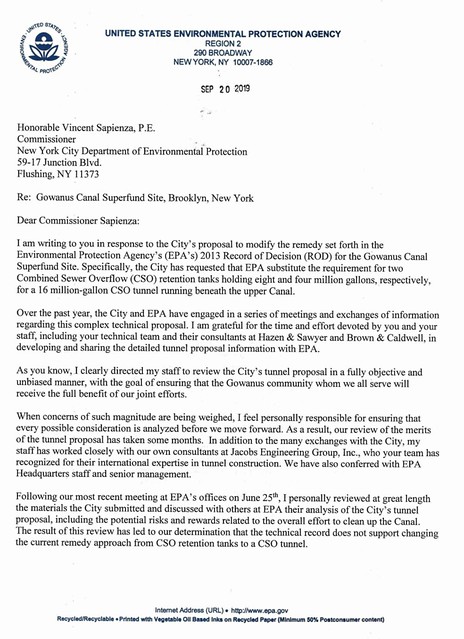
EPA Issues Administrative Order Requiring City to Construct Sewage Retention Tanks for Gowanus Canal Superfund Site Cleanup

Posted by
Katia
at
2:23 PM
2
comments
Labels: EPA, Gowanus, Gowanus Superfund, NYC Department of Environmental Protection, retention tanks
Thursday, December 10, 2020
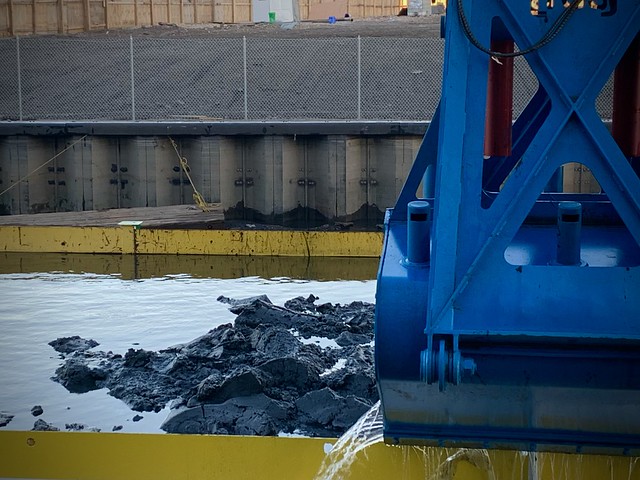
Dredging In The Polluted Gowanus: Two Whole Cars Were Just Fished Out Of The Canal
So, one can imagine the surprise of the excavator operator on site last Friday when he 'hooked' a whole car, possibly a Mercedes, on the East side of the canal between the 1st Street Basin and the Carroll Street Bridge (see the yellow dot on the map below).
Posted by
Katia
at
1:16 PM
10
comments
Labels: cars, dredgings, EPA, Gowanus Canal, It came from the Gowanus Canal, Superfund
Monday, November 30, 2020
Hear Directly From The EPA Regarding Dredging In Gowanus Canal At Tuesday's Gowanus CAG Meeting
https://us02web.zoom.us/j/83249420669
Call-in option:
(929) 436-2866. Code 832 4942 0669#
Posted by
Katia
at
3:49 PM
0
comments
Labels: EPA, EPA Superfund, Gowanus Canal Brooklyn, Gowanus Canal CAG
Thursday, October 29, 2020
Reality Check! EPA Warns City Gowanus Area Upzoning Cannot Compromise The Canal Clean-up
The letter, written by EPA Region 2 Administrator Peter Lopez informs the New York Department of City Planning and the New York City Department of Environmental Protection that his agency anticipates a significant increase in wastewater generated as a result of the rezoning from manufacturing to residential.
This should not come as a surprise to the City since the EPA had addressed the same concerns in its comments on the Gowanus Neighborhood Rezoning Draft Scope of Work for an Environmental Impact Statement (DSOW) back in May 2019.
It will be interesting to see how the City's Departments of Environmental Protection and Planning will try to engineer their way out of this, given the fact that the City has not yet managed to capture current CSOs into the waterway, let alone 10 times the amount.
Dear Director Lago and Commissioner Sapienza:
The U.S. Environmental Protection Agency (EPA) is in receipt of public notices indicating that
the Department of City Planning (DCP) has resumed the Gowanus rezoning process,
commencing with the public meeting on October 22, 2020 before the Brooklyn Community
Board 6 Land Use Committee.
As you know, the proposed rezoning affects an area surrounding the Gowanus Canal, which EPA
placed on the Superfund National Priorities List in March 2010. The Gowanus Canal Superfund
Site (Site) is defined as the approximately 100-foot wide, 1.8-mile-long Canal, and also includes
any areas that are sources of contamination to the Canal.
In 2013, EPA issued a Record of Decision (ROD) for the cleanup of the Canal that included the
dredging and off-Site disposal of much of the accumulated contaminated sediment within the
Canal, the capping of certain contamination remaining below the dredged material, and the
control of upland sources to prevent the recontamination of the clean Canal. See
https://semspub.epa.gov/workl02/692106.pdf
Such upland sources include certain contaminated sewer solids discharged into the Canal during
Combined Sewer Overflow (CSO) events when stormwater and sanitary sewage capacity is
exceeded within the approximately 1,758-acre Gowanus Canal watershed. The CSO portion of
the EPA-selected remedy requires the City, a potentially responsible party for the Site, to
construct and operate two CSO retention tanks. Pursuant to several EPA administrative orders,
the City is required to design those CSO tanks and to participate in the first stage of the dredging
and capping work. The City will be required to construct the CSO tanks pursuant to a future EPA
enforcement instrument.
EPA does not have a direct role in local land-use or zoning decisions. However, accounting for
current and anticipated future local land use is an important component in EPA's planning of
response actions under the Comprehensive Environmental Response, Compensation and
Liability Act ("CERCLA" or "Superfund"). EPA also has a role in ensuring that future land-use
changes do not adversely affect the integrity of Superfund cleanups, including the ongoing work
at the Gowanus Canal. Accordingly, in May 2019, EPA provided comments to DCP on the
Environmental Impact Statement (EIS) scoping documents for the rezoning, and also directed the
New York City Department of Environmental Protection (DEP) to provide rezoning-related
information to EPA as part of the CSO tank design process.
The first phase of the dredging and capping is to begin in mid-November 2020 in the upper
Canal, which is in the area where DCP has proposed rezoning for residential use. Progress on the
Canal cleanup is among the factors cited by the City in support of the rezoning.
Progress on the CSO tanks, however, has been delayed by DEP, as noted in recent EPA
communications to DEP. In June 2020, DEP requested that EPA grant an extension of time to
complete the CSO tanks. EPA is reviewing that request, which may impact the effectiveness of
the remedy and have implications on the rezoning.
In light of community interest associated with the start of dredging, DEP's CSO-related delays,
and the resumption of the rezoning process, EPA believes that it would be of assistance to the
City, the community, and other stakeholders to reiterate the cleanup-related discharge parameters
of the ROD.
In anticipation of potential redevelopment, the ROD requires that any future activities that fall
under the City's purview, including development, do not compromise the effectiveness of the
Gowanus Canal remedy. Among other things, the ROD specifically states:
Current and future high density residential redevelopment along the banks of the canal andwithin the sewershed shall adhere to NYC rules for sewer connections (Chapter 31 of Title 15of the Rules of the City of New York) and shall be consistent with current NYCDEP criteria(NYCDEP, 2012) and guidelines to ensure that hazardous substances and solids fromadditional sewage loads do not compromise the effectiveness of the permanent CSOcontrolmeasures by exceeding their design capacity. For example, redevelopmentto take mitigation measures to prevent or offset additional sewer loadings. Separatedstorm water outfalls will also require engineering controls to ensure that hazardoussubstances and solids are not discharged to the Canal. [ROD at page 84.]
just the total wastewater generation, but also the incremental sanitary and stormwater volumes
and what appropriate mitigation measures, or combination of measures, are required to prevent
added CSO-related discharges to the Canal and adverse effects on the Canal remedy. In
particular, EPA believes that DEP must determine whether any infrastructure serving the parcels
that are to be rezoned requires upgrading to provide adequate conveyance and prevent overflows
to the Canal. EPA will review all such determinations and other relevant information related to
the impacts of the proposed rezoning on the Superfund Canal remedy and will assess whether
any mitigation measures proposed as part of the development, as a result of the rezoning, would
indeed be protective of the Canal remedy.
EPA acknowledges the City's authority to engage in land-use planning and zoning. With that
said, however, EPA respectfully submits that any rezoning impacting the Canal must proceed in
a manner that is protective of human health and the environment, as envisioned in EPA's Canal
remedy.
Posted by
Katia
at
5:35 PM
4
comments
Labels: EPA, Gowanus Cag, Gowanus Canal Superfund, NYC DEP, NYC Department Of City Planning, Peter Lopez
Friday, July 03, 2020
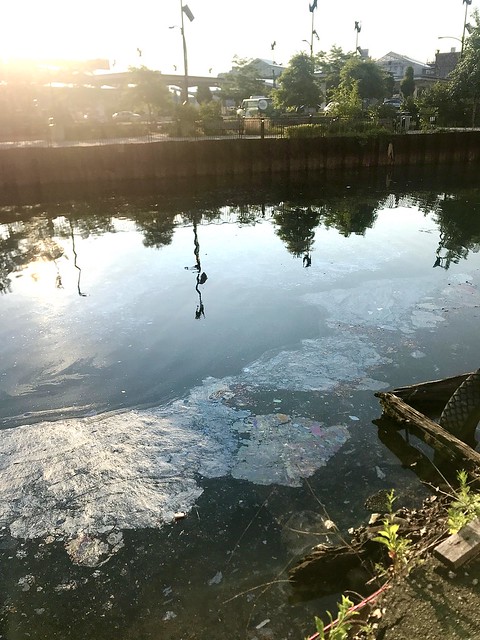
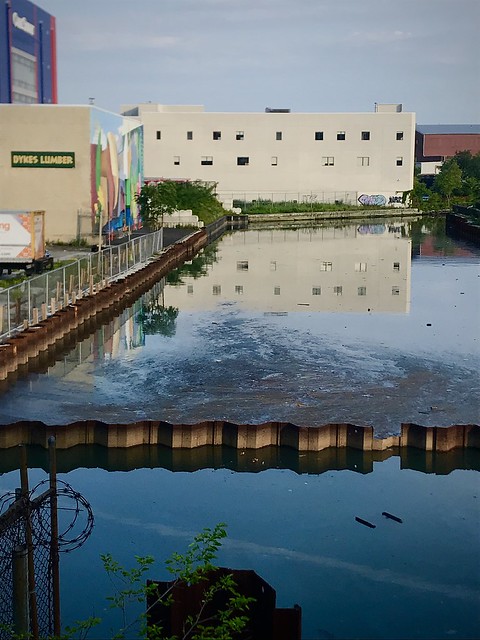
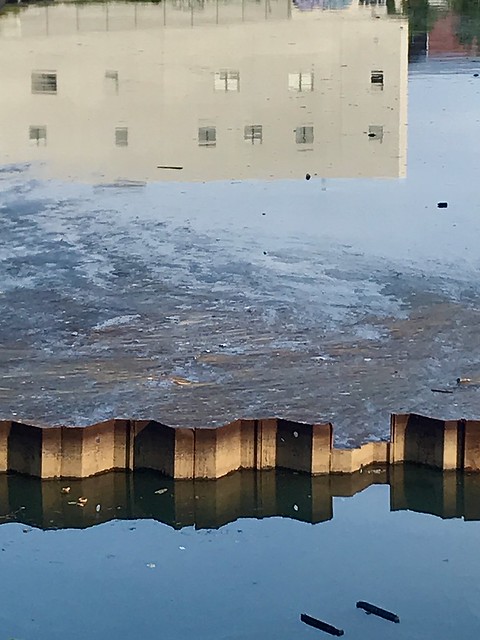
Large Amount Of Coal Tar And CSO Pollution Flowing Into The Already Remediated Gowanus Canal 4th Street Basin
The Environmental Protection Agency was immediately notified of today's condition.
The sight is heartbreaking. Why? Because the 4th Street Turning Basin was the first portion of the canal to be cleaned and capped as part of the EPA's Superfund remediation of the polluted canal. The basin had been chosen for a Dredging and Capping Pilot Study, the results of which informed and helped EPA fine-tune different techniques that will be applied to the entire canal.
E.P.A.'s plans to begin the dredging of the main canal sometime in late 2020.
The pilot study was completed in late 2018 and represented a huge milestone. The work consisted of dredging the contaminated sediment at the bottom of the basin and capping it to prevent recontamination. It was the first time in over 100 years that a section of the Gowanus was clean of debris and toxic 'black mayonnaise', the thick coal tar sediment at the bottom of the canal, which is a result of heavy industrial use in and around the Gowanus over centuries.
This is why the sight of new coal tar and CSO floating on this remediated section this morning is so upsetting. The pollution was flowing into the Basin from the main canal. Perhaps Wednesday's heavy rains are to blame for the current conditions?
This illustrates the complexity of remediating such a polluted body of water . It also demonstrates the fragility of the environment after decades of abuse.
Surely, the sight of little ducklings swimming around on the polluted water in Vogel's video above is just so sad.
Read more
Posted by
Katia
at
9:30 AM
8
comments
Labels: 4th Street Basin, Brad Vogel, EPA, Gowanus Canal, Gowanus Canal 4th Street Basin, Gowanus Dredgers, pollution, US Environmental Protection Agency
Wednesday, February 26, 2020
EPA Explains Superfund Clean-Up Sequence For The Upper Gowanus Canal. Work To Begin This Fall
Christos Tsiamis, the EPA project manager, began the lengthy and detailed presentation by saying:
"It has been a long time coming for me and for you, this moment when I stand here in front of you to discuss specific steps that we will take for cleaning up the canal in a timeframe that is within sight. So I am very happy to be here tonight."
With the lessons learned during the Pilot Study in the Fourth Street Basin near Whole Foods in 2018, the EPA has made some adjustments to the original clean-up plan and estimates that the work on Remediation Target Area 1, which covers the top of the canal from Butler Street to the Carroll Street Bridge, will begin sometime in late August/ September of 2020.
The work, as Tsiamis explained yesterday, needs to be carefully choreographed. Before the toxic material at the bottom of the canal can be removed, new bulkheads need to be installed to provide structural support to the shore. Also, work on the Fulton Bulkhead Barrier Wall Construction at the head of the canal is still ongoing. The sealed wall will serve as an environmental barrier, preventing liquid coal tar from the former Fulton Manufactured Gas Plant from recontaminating the canal after the Superfund clean-up is completed.
The work on this upper portion is expected to take about 30 months and is estimated to cost $125 million. Upon its completion, the clean-up will continue on the middle and lower parts of the canal.
Posted by
Katia
at
9:13 PM
4
comments
Labels: Christos Tsiamis, EPA, Gowanus Cag, Gowanus Canal, Superfund
Thursday, January 30, 2020
Environmental Remediation Of Gowanus Canal Moves A Giant Step Forward As EPA Issues Order To Begin Superfund Clean-Up
Currently, bulkheads are being replaced from Butler Street to the Union Street Bridge to prevent the collapse of the uplands during dredging. Work on the Fulton Bulkhead Barrier Wall Construction at the head of the canal is also ongoing. The sealed wall will serve as an environmental barrier, preventing liquid coal tar from the former Fulton Manufactured Gas Plant from recontaminating the canal after the Superfund clean-up is completed.
This big step signals the true beginning of the clean-up of this long neglected waterway. It will be a pretty momentous occasion for Gowanus.
EPA Issues Administrative Order Requiring Start of Gowanus Canal Superfund Site Cleanup
NEW YORK (January 28, 2020) Today, the U.S. Environmental Protection Agency (EPA) announced the issuance of an administrative order requiring the start of the cleanup of the Gowanus Canal Superfund site in Brooklyn, New York. This is a major milestone in the cleanup of the site. The order, which covers both the cleanup of the upper canal – denominated as Remediation Target Area (RTA) 1 – and the 1st Street turning basin, is based on years of detailed engineering, scientific studies and design work. The work required by the order involves full-scale dredging and capping of RTA 1, as well as restoration of the 1st Street turning basin. This important work is estimated to cost $125 million and is expected to take about 30 months to complete. EPA and the New York State Department of Environmental Conservation (NYSDEC) are coordinating closely on the cleanup of the Gowanus Canal and the surrounding area. The NYSDEC has primary responsibility for addressing contamination at the upland properties adjacent to the Canal.
“This order will ensure the remediation of a portion of the heavily-contaminated waterway, which is the centerpiece of a revitalized neighborhood,” said EPA Regional Administrator Pete Lopez. “By addressing Superfund sites in densely populated urban areas such as the Gowanus Canal, EPA is protecting public health and the environment while supporting Brooklyn’s continued economic redevelopment.”
“We’ve come a long way to achieve this significant milestone in cleaning up the Gowanus Canal. With pilot dredging tested, full-scale dredging, capping and restoration of the canal can proceed, starting with the first third of the canal,” said U.S. Representative Nydia M. Velázquez. “We are on an ambitious timeline for cleanup as compared to other Superfund sites throughout the nation. Most importantly, we are cleaning up Gowanus the right way, in a manner respectful of community needs, and responsible parties are shouldering the cost. I would like to thank all the EPA regional staff for their tireless work for the health and benefit of Brooklyn and New York.”
The remediation of RTA 1 is the first of three areas of the Canal that are targeted for cleanup. The restoration of the contaminated filled-in former 1st Street turning basin will serve as the primary wetlands area for mitigating or offsetting incremental encroachment into the Canal created by construction of deeper and more robust bulkheads along the Canal that are needed to allow dredging to take place at the necessary depths. The start of dredging required by the order is currently scheduled for September 2020, contingent on completion of bulkhead upgrades.
EPA, NYSDEC and the New York State Department of Health will be overseeing the work, which includes plans for community health and safety monitoring. The order is being issued to six parties that EPA determined have the largest shares of responsibility for the contamination at the Gowanus Canal site: Brooklyn Union Gas Co. d/b/a National Grid New York; the City of New York; Consolidated Edison Co. of New York, Inc.; Hess Corp.; Honeywell International Inc. and The Brooklyn Improvement Co. EPA is seeking to enter into cost recovery settlements with about 30 other private and federal government entities that have significantly smaller shares of responsibility.
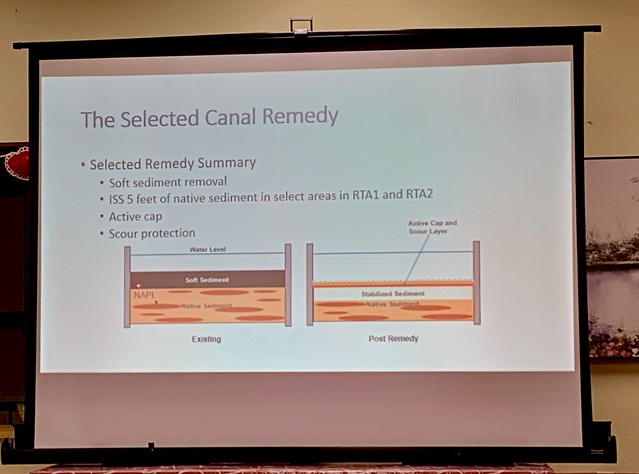
More than a dozen contaminants, including polycyclic aromatic hydrocarbons (PAHs), polychlorinated biphenyls (PCBs), and heavy metals, including mercury, lead and copper, are present at high levels in the Gowanus Canal sediment. The cleanup plan for the Gowanus Canal Superfund site includes dredging to remove contaminated sediment from the bottom of the Canal, which has accumulated because of industrial and combined sewer overflow (CSO) discharges. Following dredging, construction of a multilayer cap in dredged areas will isolate and prevent migration of any remaining chemicals in the deep native sediments. Certain areas of the native sediment, below the original canal bottom, that contain mobile liquid tar and are too deep to excavate will be mixed with cement and solidified to prevent the migration of the tar into the water of the Canal. Controls to reduce CSO discharges and prevent other land-based sources of pollution, such as street runoff, from compromising the cleanup are also included in the cleanup plan.
The Superfund program has been providing important health benefits to communities across the country for nearly 40 years. Superfund cleanups also strengthen local economies. Data collected through 2017 shows that at 487 Superfund sites in reuse, approximately 6,600 businesses are generating $43.6 billion in sales and employ 156,000 people who earned a combined income of $11.2 billion.
To view EPA’s administrative order for the site, please visit: https://semspub.epa.gov/src/document/02/586740
Learn more about the Gowanus Canal Superfund site here: www.epa.gov/superfund/gowanus-canal
Posted by
Katia
at
2:46 PM
0
comments
Labels: EPA, Gowanus Canal, Peter Lopez
Sunday, October 27, 2019
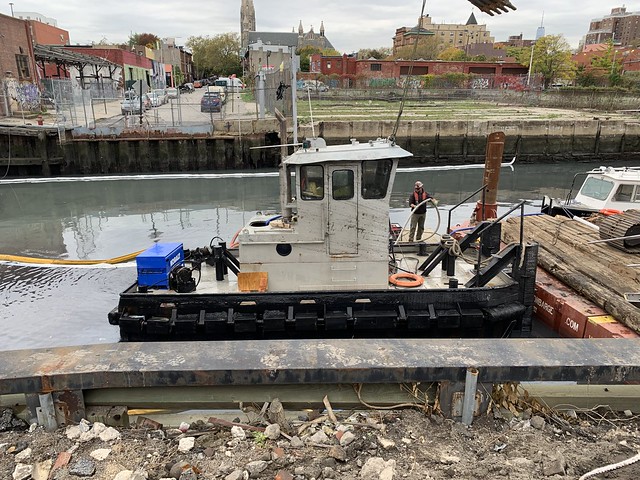
Tugboat Partially Sinks On The Gowanus Canal On A Rainy Sunday
****See 10/27/2019 update below the post****
The boat was being used for work related to the Fulton Bulkhead Barrier Wall construction at the head of the canal.
The construction work is part of the Environmental Protection Agency's Superfund clean-up of the heavily polluted waterway. It is being performed by contractors for National Grid under EPA's supervision and began in late August.
The photos above of the sunken tugboat were sent to us by friend and Gowanus Canal Dredgers Canoe Club member Brad Vogel, who told us that It happened during the storm earlier today. Oil spill prevention booms on it by the time it was first noted
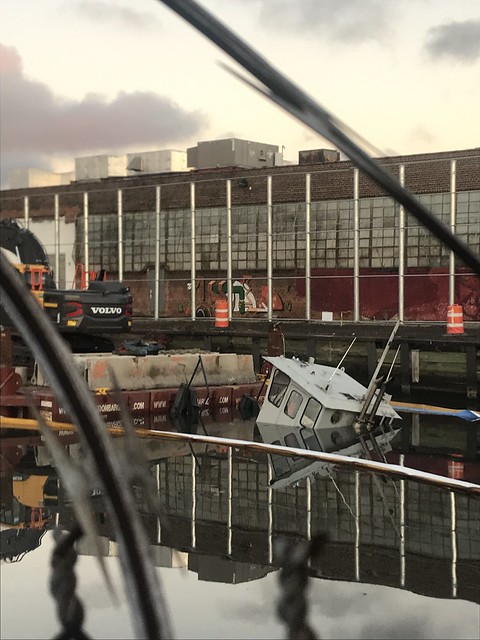
The incident has been reported to both EPA and National Grid and oil spill prevention booms have been placed around the boat.
It seems odd for a tugboat to sink even on a rainy day like today. It will be interesting to find out the reason this could have happen.
Update:
The photo of the tugboat below was taken on Monday, October 27th, after it was lifted out of the water. It was sent to us by Christos Tsiamis, EPA project manager for the Gowanus Canal Superfund clean-up
According to Tsiamis, "the reason for its partial sinking was that the bilge pump (that pumps water out of the boat) failed during that big rainfall (while no work was being done) and all the water stayed on the boat…"
Posted by
Katia
at
7:17 PM
3
comments
Labels: EPA, Gowanus Canal, National Grid, tugboat
Thursday, October 24, 2019
Latest EPA Update On Gowanus Canal Superfund: All You Need To Know
Posted by
Katia
at
3:34 PM
3
comments
Labels: EPA, EPA Region 2, Gowanus Canal, Gowanus Canal CAG, National Grid, NYC Department of Environmental Protection, NYC Department Of Transportation