Showing posts with label NYC Planning Commission. Show all posts

Thursday, November 19, 2020

Tonight, Tell Council Member Lander That Building Affordable Housing On The Toxic Public Place Site In Carroll Gardens Is Insane ...And Nefarious

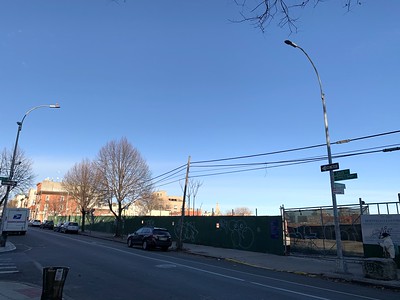
Public Place site at Smith and 5th Street
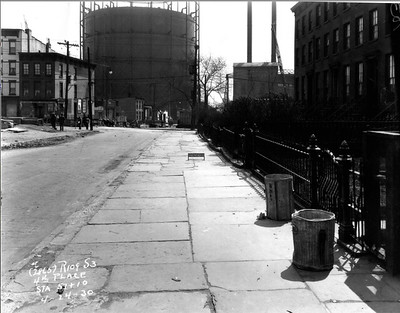
A 1930 view of the former Citizens Gas Work Site on what is now Public Place

TONIGHT, TELL COUNCIL MEMBER LANDER THAT BUILDING AFFORDABLE HOUSING ON LAND THAT WILL FOREVER BE POISONED IS JUST INSANITY!

By now, most residents in Gowanus and neighboring areas have hopefully heard about the proposal by the NYC Department of City Planning  to up-zone the Gowanus Canal area, which calls for 8,200 new units of housing that will bring approximately 20,000 new residents to the area.


If this seems insane to most, the plan has nevertheless the backing of Councilman Brad Lander, who has supported the rezoning from the start.
Though it appears on the surface that Lander wants to make sure that "plans for growth are grounded fully in the public interest, and will achieve our shared goals", the rezoning of the Gowanus area was always a huge giveaway to developers despite all the talk about affordable housing units that may be gained in the process.
Councilmember Brad Lander, supporter of housing on Public Place

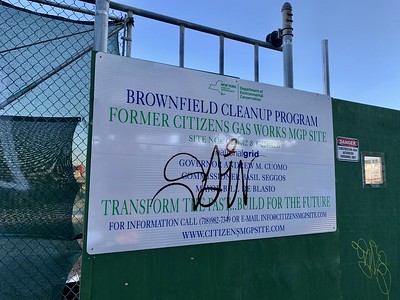
Which brings us to Public Place, the City-owned six acre Brownfield site near the intersection of Smith and 5th Streets adjacent to the Gowanus Canal. It is currently in NYC Department of Housing Preservation and Development portfolio.

Brad Lander has been pushing for the development of housing on Public Place from the moment he ran for City Council, if not before.  From 1993 to 2003,  he served as executive director of Park Slope's Fifth Avenue Committee, a not-for-profit community-based organization that develops and manages affordable housing.)

Interestingly enough,  in 2008, Fifth Avenue Committee, together with  Hudson CompaniesJonathan Rose, and the Bluestone Organization was selected to develop the site for affordable housing with retail space, community facilities and open space.
Fifth Avenue Committee's current executive director is Michelle de la Uz, who also currently serves as a Commissioner of NYC Planning Commission. If that is not a conflict of interest, what is?

Gowanus Green: a proposal for about 900 apartments and a school on permanently toxic land

Their proposal was named 'Gowanus Green' and included 774 units of housing, of which 70% would have been permanently affordable. To move forward, the site needed to go through a rezoning from manufacturing to residential, which never moved forward after the Environmental Protection Agency declared the Gowanus Canal a Superfund Site.

Gowanus Green has been revived of late since City Planning has wrapped Public Place into the framework of the agency's Gowanus Neighborhood Planning Study

The new plan for Public Place calls for about 900 units of affordable housing in 30 story buildings as well as a new public school. 

Tonight at 6 pm, the NYC Department of City Planning and the “Gowanus Green” development team are going to present the development at a webinar hosted by Community Board 6.
To register, click here.

In 2019, Brad Lander stated:
"The chance to build a sustainable, mixed-income community in Gowanus is one of the most important and unique opportunities of the Gowanus Neighborhood Rezoning. Gowanus sits in-between Carroll Gardens and Park Slope, two wonderful neighborhoods, with great schools, thriving commercial strips, great access to transit -- and almost no affordable housing. Gowanus Green offers us the opportunity to build hundreds of units of truly affordable housing, right at the heart of the neighborhood, to open up the opportunity of our dynamic community to a much wider range of people than can afford to live here now."

Affordable housing, additional parkland, a new public school...it all sounds great, until you consider the history of Public Place, which Brad Lander refuses to mention in his email to the community.

The truth is that to this day, Public Place will remain one of, if not the most polluted site along the Gowanus Canal even after remediation.

From the 1860s to the early 1960s, the Public Place site was the home of the former Citizens Gas Light Company's 12th Ward Gas Work Plant, a Manufactured Gas Plant (MGP) where coal and petroleum products were turned into flammable gas. The gas was used for cooking, lighting, heating and commercial purposes in the surrounding neighborhoods.

Unfortunately, one of the by-products of this gasification process is coal tar, a black viscous liquid, which is harmful to humans and the environment. At Public Place,  coal tar has been found in significant amounts at depths of 150 feet.   

When the Citizens Gas Works plant was decommissioned in the 60s, the site was given to the city 'by condemnation' as public land in 1975. Hence the name "Public Place". Citizens Gas Light Company later sold to Brooklyn Union Gas, which became Keyspan, which is now National Grid.

The responsibility for the clean-up falls on National Grid. The work is currently being done under the supervision of NYS Department of Environmental Conservation.

Since coal tar and contaminated groundwater have been found to ooze from the site into the Gowanus Canal for decades, the US Environmental Protection Agency, which declared the canal a Superfund site in 2010, has also been involved.

Though National Grid's contractor, Creamer Environmental, has been recently implementing remedial actions on the site. we are a long way from a clean environment.
Brownfield remediation consists mostly of removing the top layer of existing dirt, adding new clean fill, and installing a plastic vapor barrier before capping the contamination on the site with cement.

How well those sites are monitored and how long the barriers maintain their integrity is anyone's guess. As an example, the Lowe's site in Gowanus at 9th Street, which was also built on an MGP site but cleaned under the NYS Brownfield program a decade ago, was found to be in need of additional remediation by the EPA.

By far the biggest concern about housing on Brownfield sites is the intrusion of vapors into the structures.  According to Public Integrity.org

"Plastic vapor barriers and other soil containment measures are all that states require in some types of redevelopment.

But sometimes, such efforts fail or the science changes. New York’s Department of Environmental Conservation decided to reopen hundreds of Superfund, brownfield, and other sites that had been remediated to investigate potential new threats from vapor intrusion, something that had not been considered at the time of the “cleanups.” The reviews are ongoing, but the agency has already found mitigation will be necessary at more than 70 sites."

If Brad Lander refuses to even acknowledge to his constituents that Public Place will have a plume of coal tar underneath the site in perpetuity, we need tell him that we will hold him ultimately responsible for the health of everyone of the future resident and schoolchild he intends to bring here.

Perhaps he should listen to those who came before him. In 1984, a New York City Partnership withdrew its proposal to build moderate income housing on the site "because of serious environmental problems and exorbitant costs associated with developing the lot."

Read more

Sunday, December 01, 2019

Brad Lander's Brownfield Of Dreams Part 1: Our Councilman's Push To Build Housing And A School On The Most Polluted Site in Gowanus Is Folly

Untitled
Public Place on Smith Street near 5th Street
Untitled
Untitled
Untitled
Untitled
Untitled
Untitled
Screen Shot 2012-04-30 at 9.21.52 AM
A 1930 view of the former Citizens Gas Work Site on what is now Public Place
An arial view of the Citizens Gas Work site in 1926
Councilmember Brad Lander, supporter of housing on Public Place
Gowanus Green: a proposal for 1000 apartments and a school on permanently toxic land

By now, most residents in Gowanus and neighboring areas have hopefully heard about the proposal by the NYC Department of City Planning  to up-zone the Gowanus Canal area, which calls for 8,200 new units of housing that will bring approximately 20,000 new residents to the area.

The rezoning will likely go forward early next year as it moves through the Uniform Land Use Process (ULURP) despite the fact that it will still take years for the Canal to be environmentally remediated as part of the EPA Superfund Clean-up, and despite the fact that the City still uses the waterway as an open sewer and that the area's infrastructure is already stretched to its limits under current conditions. The area is also a FEMA Flood Zone A.

The ULURP process, once it starts, should take between six to nine months. If the rezoning goes through, developers who have already purchased the land around the Gowanus can start building 22 to 30 story high rises.

If this seems insane to most, the plan has nevertheless the backing of Councilman Brad Lander, who has supported the rezoning from the start.
Though it appears on the surface that Lander wants to make sure that "plans for growth are grounded fully in the public interest, and will achieve our shared goals", the rezoning of the Gowanus area was always a huge giveaway to developers despite all the talk about affordable housing units that may be gained in the process.

Which brings us to Public Place, the City-owned six acre Brownfield site near the intersection of Smith and 5th Streets adjacent to the Gowanus Canal. It is currently in NYC Department of Housing Preservation and Development portfolio.

Brad Lander has been pushing for the development of housing on Public Place from the moment he ran for City Council, if not before.  From 1993 to 2003,  he served as executive director of Park Slope's Fifth Avenue Committee, a not-for-profit community-based organization that develops and manages affordable housing.)

Interestingly enough,  in 2008, Fifth Avenue Committee, together with  Hudson CompaniesJonathan Rose, and the Bluestone Organization was selected to develop the site for affordable housing with retail space, community facilities and open space.
Fifth Avenue Committee's current executive director is Michelle de la Uz, who also currently serves as a Commissioner of NYC Planning Commission. If that is not a conflict of interest, what is?

Their proposal was named 'Gowanus Green' and included 774 units of housing, of which 70% would have been permanently affordable. To move forward, the site needed to go through a rezoning from manufacturing to residential, which never moved forward after the Environmental Protection Agency declared the Gowanus Canal a Superfund Site.

Gowanus Green has been revived of late since City Planning has wrapped Public Place into the framework of the agency's Gowanus Neighborhood Planning Study

The new plan for Public Place calls for 1000 units of 100% affordable housing in 30 story buildings as well as a new public school. 

This Monday, December 2, the NYC Department of City Planning and NYC Housing, Preservation, and Development  will be presenting an update on the Public Place / Gowanus Green site to Community Board 6 at PS 32.

Ahead of the meeting, Brad Lander's office released a statement that reads in part:
"The chance to build a sustainable, mixed-income community in Gowanus is one of the most important and unique opportunities of the Gowanus Neighborhood Rezoning. Gowanus sits in-between Carroll Gardens and Park Slope, two wonderful neighborhoods, with great schools, thriving commercial strips, great access to transit -- and almost no affordable housing. Gowanus Green offers us the opportunity to build hundreds of units of truly affordable housing, right at the heart of the neighborhood, to open up the opportunity of our dynamic community to a much wider range of people than can afford to live here now."

Affordable housing, additional parkland, a new public school...it all sounds great, until you consider the history of Public Place, which Brad Lander refuses to mention in his email to the community.


The truth is that to this day, Public Place remains one of, if not the most polluted site along the Gowanus Canal and needs extensive remediation.


From the 1860s to the early 1960s, the Public Place site was the home of the former Citizens Gas Light Company's 12th Ward Gas Work Plant, a Manufactured Gas Plant (MGP) where coal and petroleum products were turned into flammable gas. The gas was used for cooking, lighting, heating and commercial purposes in the surrounding neighborhoods.

Unfortunately, one of the by-products of this gasification process is coal tar, a black viscous liquid, which is harmful to humans and the environment. At Public Place,  coal tar has been found in significant amounts at depths of 150 feet.   

When the Citizens Gas Works plant was decommissioned in the 60s, the site was given to the city 'by condemnation' as public land in 1975. Hence the name "Public Place". Citizens Gas Light Company later sold to Brooklyn Union Gas, which became Keyspan, which is now National Grid.

The responsibility for the clean-up falls on National Grid. The work will be done under the supervision of NYS Department of Environmental Conservation.

Since coal tar and contaminated groundwater have been found to ooze from the site into the Gowanus Canal for decades, the US Environmental Protection Agency, which declared the canal a Superfund site in 2010, is also involved.
Though National Grid's contractor, Creamer Environmental, has been recently implementing remedial actions on the site. we are a long way from a clean environment.
Brownfield remediation consists mostly of removing the top layer of existing dirt, adding new clean fill, and installing a plastic vapor barrier before capping the contamination on the site with cement.

How well those sites are monitored and how long the barriers maintain their integrity is anyone's guess. As an example, the Lowe's site in Gowanus at 9th Street, which was also built on an MGP site but cleaned under the NYS Brownfield program a decade ago, was found to be in need of additional remediation by the EPA.

By far the biggest concern about housing on Brownfield sites is the intrusion of vapors into the structures.  According to Public Integrity.org

"Plastic vapor barriers and other soil containment measures are all that states require in some types of redevelopment.

But sometimes, such efforts fail or the science changes. New York’s Department of Environmental Conservation decided to reopen hundreds of Superfund, brownfield, and other sites that had been remediated to investigate potential new threats from vapor intrusion, something that had not been considered at the time of the “cleanups.” The reviews are ongoing, but the agency has already found mitigation will be necessary at more than 70 sites."

If Brad Lander refuses to even acknowledge to his constituents in a press release that Public Place will always have a plume of coal tar underneath the site, we need to tell him that we will hold him ultimately responsible for the health of every current and future resident, and every schoolchild he intends to bring to Public Place.

Perhaps he should listen to those who came before him. In 1984, a New York City Partnership withdrew its proposal to build moderate income housing on the site "because of serious environmental problems and exorbitant costs associated with developing the lot."

Untitled
Untitled


Brownfield of Dreams: A Film By Matt Sollars from 2008


PLEASE ATTEND!
Public Place/Gowanus Green Presentation to CB6
Monday, December 2, 6:30 PM
P.S. 32
317 Hoyt Street
Read more

Wednesday, October 30, 2013

No Gowanus Planning Without Meaningful Representation: Let's Demand A Truly Democratic Process

IMG_6015
IMG_8530
IMG_4030
From 2008's City Planning Gowanus Draft Rezoning Proposal
Pratt Center's Draft Timeline For "Gowanus Community Planning"

Proposed Gowanus Zoning study area


No Gowanus Planning Without Meaningful Representation:
A rather long post about a terribly important issue

With the Brooklyn real estate market soaring in the last decade, developers have been salivating over the mostly-industrial Gowanus Canal area.  However, their dreams of luxury glass-clad high-rises clashes with the popular vision of Gowanus as an incubator for small businesses, light manufacturing and the arts.
Local residents have been debating the merits of one over the other with much fervor. The conversation became more divisive when, in November 2008, New York City Department of Planning Commissioner Amanda Burden came to the community to introduce her agency's Draft Rezoning Proposal for 25 blocks along the Gowanus Canal. The land use framework put forth by City Planning addressed issues like land use, density, bulk and waterfront access.
Though the rezoning proposal sought to maintain areas for continued industrial and commercial use,
it also allowing for a mix of uses, including residential, in certain areas currently zoned for manufacturing.  According to the timeline presented by City Planning at the time, the Uniform Land Use Review Process (ULURP), the public review process of a rezoning, was due to begin in early 2009.

What City Planning was envisioning for those mixed-use areas would soon become clear.  In February 2009, after a contentious ULURP process and much community opposition, City Planning granted Toll Brothers, a national developer, a rezoning from manufacturing to mixed use, allowing Toll to build 470 residential condo units at the edge of the canal.
At the time, City Planning justified their decision to allow Toll Brothers to move ahead of the City's over-all rezoning by saying that the project was essentially based on their own plans for Gowanus.

But just two months later, in April 2009,  the Environmental Protection Agency (EPA) proposed the 1.8 mile long Gowanus Canal to the Agency’s Superfund National Priorities List, a list reserved for the country's most polluted sites.  Toll Brothers bailed on their project, and City Planning shelved their rezoning.

By the following year, the EPA had formally designated the Gowanus a Superfund site.  The agency made it clear that they would not get involved in land-use issues, but suggested that it would be helpful to the agency to know the end use of the uplands.

Then in 2011, Hurricane Sandy slammed into the area, and caused serious flooding to homes and businesses in Gowanus.  City Planning made clear that the agency had no plans to resume its rezoning effort until Federal Emergency Management Agency (FEMA) had released its redrawn post-Sandy draft flood maps.

After the hurricane, many of our local elected officials addressed this 'new reality.' Congresswoman Velázquez spoke of the need to set public policy and of a revision of the type of development allowed along the coastline. Councilman Brad Lander felt that this was a very important time, one which offered a re-set button in regards to development on the shores of the Gowanus Canal.

The Superfund nomination of the canal and the hurricane only offered a short reprieve from a rezoning. By this spring, Councilman Lander was ready to resume the conversation about 'planning for Gowanus'. However, at several meetings, he hinted that a rezoning should be moved forward under a new administration,  and that "the upcoming transition at City Hall – with a new Mayor and City Planning Commission – presents an opportunity for a better outcome."

On August 5, 2013, State Senator Velmanette Montgomery, Congresswoman Nydia Velazquez, State Assemblywoman Joan Millman,  Councilmember Steven Levin and Councilmember Lander convened  a Gowanus Planning Kick-Off meeting. On the list of invited stakeholders were representatives from local organizations and neighborhood associations.***
This first step in what Councilman Brad Lander called "inclusive community planning" didn't seem so inclusive to some.  The meeting was not announced, not posted in any way on the internet,  not open to the general public and was closed to the press.

Pratt Center for Community Development (not to be confused with the Pratt Institute) has been hired by the elected officials as the consultant that is running the planning process.
According to an overview  prepared by Pratt, the goal of these planning meetings is to:
*Develop the outlines of a comprehensive, community‐based infrastructure and land‐use plan for a safe, vibrant, and sustainable Gowanus area
*Bring community stakeholders together to build as much consensus as we can around a long‐term vision for the Gowanus Canal area
*Shape the next NYC mayoral administration’s thinking about the Gowanus Canal
*Create a space for honest conversation about different viewpoints

Just recently, Pratt has held a series of small group interviews with the stakeholders who were invited to the first meeting.  I was asked to participate in the group that apparently "cared deeply about the environment."  The interview, held on Monday evening, was led by Elena Conte and Paula Crespo of Pratt.  The questions were rather basic and covered such topics as what makes Gowanus special, what should be preserved, and what are some of the infrastructure issues.  

My group included members from CORDSave Gowanus, and South Brooklyn Local Development.
(FROGG, though invited, did not send a representative because the group put into question the validity of the process.)
The group quickly seemed to reach consensus that before moving ahead with any re-zoning, a health study and a hydrological study were needed to investigate the health effects of exposure to the environmental hazards in Gowanus, and to evaluate the effect of new development in this flood prone area. We also felt that we first need assurances that the City Of New York will pay and follow through  on the EPA-mandated retention basins that will help reduce the Combined Sewer Overflows and improve water quality in the canal.  Without these studies and without the retention basins, planning more housing in Gowanus seemed "recklessly premature."

In the coming weeks, Pratt Center will compile the information from these interviews and will then host a series of three public meetings.  The first one is scheduled for Thursday, November 14th.  (The time and place has not yet been determined.  As soon as I find out, I will post the information.)

Personally, I remain very skeptical of this entire 'Gowanus planning' process and doubt that the community will have a true say or vote in the outcome.  Though I appreciate the opportunity to weigh in on the area's future,  I can't shake the suspicion that my participation in these meetings only serves to rubber-stamp a re-zoning plan that has already been chosen by our politicians and by developers.

As far as Brad's suggestion that planning under a new city administration presents the opportunity for a better outcome, he may be mistaken.
As the latest numbers indicate, Bill deBlasio will most likely be our next mayor.  DeBlasio not only supported the Toll Brothers spot-rezoning back in '08, he fought hard to drive away the EPA when the agency proposed to list the Gowanus as a Superfund.
If DeBlasio wins , we can be sure that he will hand over the Gowanus Canal to developers on a silver platter, no matter what we say.
"I give Mayor Bloomberg tremendous credit for fighting [the EPA] tooth and nail, and I was proud to stand with him. We tried every play in the book to save the [Toll Brothers'] development deal.
In the end, the EPA won out, the development stalled and every time I drive past that site I see derelict lots where we should now have hundreds of new homes and jobs.


I couldn't disagree more. Today, the Gowanus Canal area is slowly healing after years of neglect. Small businesses and a vibrant artist community are thriving there.  Jobs are being created.  Yes, the area has some serious environmental problems, but thanks to the EPA, they are being addressed.  What seems to be holding back Gowanus is the threat of a zoning change that will most likely drive away many businesses, and the speculation by developers that a re-zoning will reward them for holding on to their 'derelict lots'.

We owe it to ourselves and to all who will come after us to take our seat at the table, and to push for a true, transparent, democratic process.  We need to tell our politicians that before any new development is envisioned, we need to first find out what the Gowanus can sustain.  We need to first invest in infrastructure to strengthen the businesses and the residential areas that are already there, and we need to demand new tools in City Planning's tool box.  Because Gowanus is unique and deserves solutions that are just as unique.

***I was invited to the August meeting but was out of the country and could not attend.


IMG_7065


Read more

Monday, November 12, 2012

Friends And Residents Of Greater Gowanus (FROGG) To City Planning: After Sandy, How Can Department Consider 700-Unit Apartment Complex In Gowanus?

IMG_8977
IMG_8996
Proposed Lightstone Development next to the Gowanus Canal (credit: Lightstone Group)
IMG_9006
IMG_9002
IMG_9000
Untitled
Lightstone Development site, Canal at Carroll Street during Sandy  (photo credit: Margaret Maugenest)
Second and Bond Streets during storm (photo credit: Triada Samaras)
Sandy flooding at First and Bond Streets near Canal (photo credit: Carl Teitelbaum)

On November 13th***, NYC's Department Of City Planning will be reviewing The Lightstone Group's application for "minor modifications" to the previously approved land use actions at 363-365 Bond Street on two blocks right next to the Gowanus Canal. One of those minor modifications is to increase the number of units from 447 to 700, which doesn't seem so very minor at all.

In 2009, after a Uniform Land Use Review Process (ULURP) that was set in motion by Toll Brothers, a national development company, the property was spot re-zoned by City Planning from manufacturing to special mixed-use, which allows housing.
After the Gowanus Canal was declared a Superfund Site by the US Environmental Protection Agency in 2010, Toll Brothers decided to abandon plans for their proposed condo development.

Lightstone revived the project and is planning a 700-unit rental complex. In order to proceed, they just need City Planning's approval.  (It is important to note that Lightstone could start construction on the previously approved 447 unit building immediately.)

Many Gowanus residents have warned that the building site is in a flood zone A and that the infrastructure, especially the sewer system in the Gowanus area is dreadfully antiquated.  
After Hurricane Sandy and the ensuing flooding, these concerns are well founded.

The group Friends And Residents Of Greater Gowanus (FROGG) just released the  statement below aimed at NYC Planning and Chairperson Amanda Burden to address the 'new reality' about the vulnerability of our shoreline and the risks of bringing more residents to a flood plain.

BROOKLYN RESIDENTS, SMALL BUSINESSES BLAST NY CITY PLANNING’S DECISION TO CONSIDER A NEW 700-UNIT APARTMENT COMPLEX IN CONTAMINATED ZONE A
Development would be the first approved since Superstorm Sandy despite being in a flood-prone, mandatory evacuation zone along a hazardous Superfund site; Brooklyners upset at the prospective rise in insurance costs from the eventual bail out of this building in the next storm; City Planning to discuss approval November 13.***
Brooklyn residents and small businesses are outraged that the New York City Planning Commission will consider a proposal to build a gigantic 8 to 12 story apartment complex to house over 1400 residents on the banks of the Gowanus Canal, which is a hazardous federal Superfund site. Their proposed site was under more than 10 feet of toxic, sewage- contaminated water during Hurricane Sandy.
After the mandatory evacuation order for Zone A and the continuing devastation from the hurricane, many Gowanus residents have still not been allowed to return to their damaged buildings. Other high rises in the neighborhood, such as the Gowanus Houses, are still without power and heat a week after the storm. The EPA is currently conducting street-level site sampling to determie whether the cancer-causing contaminants from the canal’s toxic sediments linger and are harmful to citizens. It’s in this dystopian environment that the Lightstone Group is applying
to build an apartment complex. “It is lunacy for the city to consider this project in light of the damage from the hurricane,” says Linda Mariano, co-chair of the community advisory group Friends and Residents of the Greater Gowanus (FROGG). “We are calling for a full moratorium on development and all up-scale zoning changes in any waterfront district.”
A 2010 State Sea-Level Task Force Report recommends " restriction of new development and redevelopment in high- risk areas”. That’s because the costs of dealing with a storm’s aftermath is too costly to New York taxpayers. The dollars to bail out residents during future storm surges raises everyone’s taxes as well as insurance rates.
The NY City Planning Commission will discuss this project at a November 13 meeting at which the public is not allowed to speak. Unlike other proposals for new developments, the Lightstone project is slipping backdoor through a loophole in the city planning process. The proposal will not go through a city ULURP hearing or have to file and environmental impact statement because of
an earlier area spot zoning in 2009. However, given the federal government’s designation of the Gowanus Canal as a Superfund site in 2010 and the incredible damage and displacement
from Hurricane Sandy, it is irresponsible for the City Planning Commission to greenlight such a development at this time.
Lightstone has said that despite the storm, it will proceed with building, claiming that they plan to raise the grade of their development to offer protection to the new residents. However, the surge brought in by Sandy exceeded their proposed elevation changes. And even if their buildings are above the flood plain,  all their of nearly 1400 residents will still need to be evacuated in the next storm– a task made more complicated by the city’s evacuation route also being underwater for high tides during the storm. Furthermore, in Sandy’s wake, new developments can’t only seek to impede a flood by trapping storm water, but also need to be evaluated as to whether they can assist in the speedy drainage of future storm surges, something Lightstone’s proposal does not include.
“Flood water would not only find another path, it would go further up each side of the Canal to find open or other accessible space,” says Diane Buxbaum, a neighborhood resident and environmentalist “It makes no sense to continue building on our shore areas. Creating open areas and trying to restore some link to wetlands is the better choice.”
More than 500 Brooklyn residents and small businesses have signed a petition decrying the development, and it is also opposed by a large number of community groups incluing FROGG (Friends and Residents of Greater Gowanus), CORD (Coalition for Responsible Development) and the Central Brooklyn Independent Democrats, among others.
These allies call upon Governor Cuomo, Mayor Bloomberg, Congresswoman Nydia Velasquez and Councilman Brad Lander and other elected officials, acting under the power of the current “State of Emergency,” to take the first steps in addressing the effects of hurricane and storm surge catastrophes by calling for a moratorium on development and all up-scale zoning changes in any waterfront district that was affected by the storm surge of hurricane Sandy. They call for Amanda Burden and the NY City Planning to put an immediate moratorium on the review or approval of any pending projects planned for Zone A, including that of the Lightstone Group, until new guidelines for such development have been created. To do otherwise would not only be foolish, but irresponsible and costly to the community as well. As Governor Andrew Cuomo recently stated, “We have a 100-year flood every two years now.” The NY City Department of Planning must acknowledge this fact, and act accordingly.
We must rebuild following Sandy – but not at the water’s edge. Let’s not create new and costly regional flood control problems.

*** The hearing on this development was delayed. The date apeared on NYC Department of City Planning's online calendar prior to Hurricane Sandy, but was removed after the storm. No word yet on when it will be rescheduled.


Read more

Monday, October 08, 2012

Gowanus Residents Hoping Full Community Board 6 Will Follow Land Use Committee's Recommendations Regarding Lightstone Development On Bond Street

IMG_9548
IMG_9002
IMG_9000
On Thursday, September 27th, Community Board 6's Community Board 6 Landmarks/Land Use Committee recommended that the City Planning Commission table an application at 363-365 Bond Street submitted by Lightstone Group to the NYC Department of City Planning  requesting a three-year renewal of a previously approved special permit and approval for “minor modification of this special permit, "until such time as various specific conditions are met."

In addition, members of the committee voted 14 to 3 in favor of asking for a supplemental Environmental Impact Study (EIS) for the project as well as asking Lightstone to commit to:
*have 30 percent of the units be affordable
*reducing the over-all height of the buildings to eight stories as opposed to 12 stories.
*follow Community Board Responsible Contractor Conditions (which include union labor)

The matter will go in front of the full Community Board on October 10th, where a final vote will be taken.
Here is the information:

Community Board 6 General Board Meeting
October 10th
at 6:30 PM
Prospect Park Residence
1 Prospect Park West
Brooklyn, NY 11215

Though the full Community Board mostly aligns its vote to the committee's vote, Gowanus residents are not taking a chance.
They are currently collecting signatures on a petition that they will present to members of the Board on Wednesday evening.

A statement reads:
Even though the turnout at the Public Hearing was larger than any other hearing in the neighborhood in recent memory, and even though the number of folks opposed to the project outnumber those who were for it 3 to 1, and even though the CB6 Land Use subcommittee voted to urge the Department of City Planning to TABLE the Lightstone Group Proposal for Bond and Carroll Street 12 to 2, it now lies with the larger body of CB6 to determine whether this recommendation will be passed along to DCP. 

We are hoping that they will listen to the community and approve the recommendation. But we want them to know that there is widespread community support for this motion. And since the Lighstone Group has hired at least 3 lobbying groups to actively work on this, targeting the Department of City Planning, NYC Council members, and others, we feel it was very important to take this action in order to make sure that the community's voice, and not just that of Lightstone lobbyists, are heard. (You can go here and enter "Lightstone" to see the companies they have employed for this and who their targets are: http://www.nyc.gov/lobbyistsearch/ )

The petition can be found here: http://savegowanus.org/petition

Please make time to attend this important Community Board 6 meeting and to sign the petition.


Read more

Friday, September 28, 2012

Community Board 6's Land Use Committee Weighs In On Lightstone Development In Gowanus And Asks For Supplemental Environmental Impact Study

IMG_9521
IMG_9537
Peter Fleming, Chair of Community Board 6's Land Use Committee
IMG_9530
The Lightstone 'group'
IMG_9538
Heather Gershin of the 5th Avenue Committee
IMG_9548
IMG_9554
IMG_9550
IMG_9560
Diane Buxbaum, local resident and member of the Sierra Club
IMG_9561
Marlene Donelly of Friend sAnd Residents Of Greater Gowanus (FROGG)
IMG_9569
Owen Foote Of Gowanus Canal Dredgers
IMG_9580
Councilman Brad Lander

PS 32's auditorium was filled to capacity last night for the monthly Community Board 6 Landmarks/Land Use Committee meeting. The Board, chaired by Peter Fleming, was reviewing The Lightstone Group's application for "minor modifications" to the previously approved land use actions at 363-365 Bond Street in Gowanus, and it was obvious that the community had come out in force to weigh in.

Lightstone is reviving the former Toll Brothers project on Bond Street adjacent to the Gowanus Canal. Back in 2009, the land at 363-365 Bond Street was spot re-zoned from manufacturing to special mixed use by New York City after a lengthy Uniform Land Use Review Process (ULURP) that was set in motion by the previous developer.

Though the project is basically the same as  previously proposed by Toll, who decided to walk away when the Gowanus Canal was designated an EPA Superfund Site,  Lightstone has asked the New York City Planning Commission to modify and grant a three-year renewal of a special permit granted to Toll in 2009. City Planning considers these changes "minor" modification's which are subject to review and approval only by the Commission, rather than 'major' modifications, which would require the initiation of a new ULURP.

The changes requested by Lightstone include "variations in the base height of the project, building heights and footprints of portions of the buildings, relocation of parking entrances, changes to the location and design of the open space, and changes to the number of residential units from 447 to 700.

Peter Flemming quickly pointed out that the Community Board was not going to revisit the original spot-rezoning.  "The Department Of City Planning has determined that this is a minor modification. We are not here tonight to discuss whether this is a minor modification," Fleming told the audience. "Though not required, City Planning has asked CB6 for a review and recommendation of those changes. City Planning may take these recommendations into consideration when making a decision."

Then it was Lightstone's turn to present its development. The developer's representative started off by stating: "Carroll Gardens is one of the best neighborhoods in the five boroughs and this is the kind of place where we want to make a long term investment." He continued by giving a short overview of their project. It is a mixed-use, all-rental development with 700 units. It will be made-up 560 market rate apartments and 140 affordable, fully integrated apartments. There will be two small retail spaces on Bond Street, community spaces on the Canal and on 1st Street as well as open space along the Canal. There will also be parking for 316 cars.The buildings will range in height from 6 stories to 12 stories, with the higher buildings on the canal front. The affordable component will be affordable in perpetuity and will be managed by the Fifth Avenue Committee.

After the presentation, members of the audience wishing to make a comment were permitted to speak for two minutes each. Those speaking in opposition far outnumbered those in favor.
Amongst those for the project were Ray Howell, Bill Duke and Owen Foote, members of the Gowanus Dredgers (who incidentally negotiated with Lightstone for a community facility space).  Bill duke felt that "this is something new that is very exciting that provides public access and a means for canoeing,"
Jean Austin, who is affiliated with the Gowanus Canal Community Development Corporation, cited the lack of affordable housing in the neighborhood and therefore welcomed the units Lightstone's project would provide.

Those opposed cited the fact that the existing infrastructure, especially the already taxed Bond Street sewer system, could hardly accommodate a development of the size proposed by Lightstone.
Marlene Donnelly of Friend and Residents Of Greater Gowanus stated: "There is nothing in this system that says we have capacity for additional toilets and sewers for a project this size. We are faced with several other projects that might come aboard like the Public Pllace site and the Gowanus Green project and ever other housing project that wants to go into this drainage area. The problem that we have here is that the Environment Impact Statements (EIS) are dealt with in isolation. No one is looking at the cumulative effect. This project should not go forth in isolation."

Schools were also a concern. "PS 58 is at 120 percent capacity," one resident reminded everyone. So were hospitals and the already overcrowded subway. "You can't physically get into the subway in the morning," another resident stated.

Diane Buxbaum, representing the New York State Chapter of the Sierra Club, cited concerns about sea level rise and that we should be pulling away from our shoreline instead of bringing more residents to flood plains. "I understand the need for affordable housing. I understand Mayor Bloomberg wanting additional tax bases, but we need to protect people by not putting them in harms way."

Councilman Brad Lander stated that he did not support the rezoning of 363-365 Bond Street by Toll Brothers in 2009, because he did not "believe that it made sense to have a one-off, privately-sponsored 'spot rezoning' for a small piece of the Gowanus area. What we need is a long-term comprehensive plan that begins with a comprehensive clean-up, invests in sustainable infrastructure, and builds on the mixed-use character of the neighborhood. Thanks to Superfund designation, I believe that we have a real opportunity to get this in the years to come."

Members of CB6's Land Use Committee also seemed to have concerns about the project, the lack of additional EIS and the limited public process of the 'minor modification' application to City Planing.

Committee member Bette Stoltz stated: "I will be ashamed of us if we do not ask City Planning , no, even demand that City Planning go through another Environmental Impact Study. We have never seen the context change so dramatically before the development began as happened with this EIS." Her statement was greeted by the public with thunderous applaud.

Elly Spicer reminded her fellow members that the Toll project re-zoning and special permitting had originally been approved because Toll had committed itself to using union labor, something that Lightstone has not done, though the developer had been offered a 20% reduction contract from all of the building trade. "Lightstone clearly is more interested in big profits at the expense of the community and the wages the residents need and deserve. Therefore, I am opposed to this project on that level and the method by which it is approved."

In the end, Peter Fleming reinforced the point that had been made by Board President Daniel Kumer, that "since City Planning was treating this as a fairly open process, we should treat it the same way. If we have an opinion, we should make that opinion a part of the motion."

The following motion was then put forth:
-Request that City Planning not move ahead with this and that it be tabled until a supplemental EIS is performed.
-that the developer commit to the following:
* that 30 percent of the units be affordable
*that the over-all height of the building be reduced to eight stories as opposed to 12 stories.
*and that the Community Board Responsible Contractor Conditions (which include union labor) be followed.


The motion passed 14 to three in favor.

The result prompted more cheering from the crowd.

The issue will now go in from of the entire community board in October.


*****
Below please find the testimony given last night by Rita Miller of Carroll Gardens Coalition For Respectful Development (CORD.)  It was one of the best statements last night.


Good evening
I am a co founder of cord and serve as the CORD representative on the administrative, real estate and water quality committees of the CAG [EPA Gowanus Superfund Community Advisory Group]
In that capacity I was one of the very limited number of cag members, as per the developer's request, that Lightstone agreed to meet with last week.
But I am here tonight as a resident and CORD member.

It is my understanding that it is your role, as the land use committee members to assess and advise on this new application by Lightstone

I deliberately use the word new, not only because of the changes, minor or not, but because of the fact that this proposal comes before you under a different set of circumstances than its predecessor did

As the Cord representative on the Cag--i have been lucky enough to learn a great deal not only about the canal, our sewer system, the superfund, that a floatable is not always a pool toy---but about how things within our government work, how rules are created and applied and mostly how we must adapt and sometimes be brave enough to fight back when we recognize that the application of the same old rules is just not working for us

That is really the dilemma before you this evening because tonight is not about being for or against this project

Tonight is not about being pro or anti development

Tonight is about being for or against what is in the best interests of your community, your neighbors and your own families

Tonight is about saying out loud--superfund designation of that canal is the best thing that ever happened here --it has changed the old rules -and is the one shot we have at getting some of our most pressing present environmental problems fixed and improving the conditions for whatever future WE participate in creating for our own community

We are on new ground here--this is an exciting time and you are in a position to make a real difference

Do you want to? Are you strong enough? Or do you want to rubber stamp a project just because the "rules" , as provided to you in such a narrow fashion, say you should...

The Epa tells us developers are interested in the area---

Be brave--send a message to city planning that you will not be used -- don't thank them for including you--stand up and tell them we want a comprehensive rezoning first a STUDY of the area that addresses the cumulative impact of that rezoning and any proposed projects upon our environment, our community and the proposed remedy--something this 'spot rezoned before so therefore we must plop it down now' mind set does not do--
Tonight is the night to say, no.


And here is the testimony I gave myself in front of the Committee last night:

My name is Katia Kelly,

As a member of the EPA Gowanus Community Advisory Group's water quality and real estate committees, I had the opportunity to meet with the representatives of Lightstone to discuss their proposed development on the shores of the Gowanus Canal. I was one of eight CAG members that Lightstone agreed to meet with.

I am not speaking for the CAG tonight, but as a long time resident of this community.

Back in 2009, this Community Board voted to allow the spot-rezoning of 363-365 Bond Street.
The board somehow ignored the fact that the Gowanus Canal was a highly toxic waterway and that the City uses the canal as an open sewer.

The board dismissed the many area residents who argued that the canal needed to be cleaned and the sewer system updated before any thought of development. They warned that it was dangerous and a liability to put more residents in harm's way.

But still, many members on this board went ahead and voted yes.

Shortly afterwards, the EPA declared the canal a Superfund site, proving beyond a shadow of a doubt that this is one of the most polluted waterways in the United States.

With this new scientific knowledge, this board is now asked to rubber stamp some 'minor' modifications, which would bring even more people to the canal, even before the clean-up has started.

This board cast the wrong vote back in 2009
Please cast the right one this time.


Read more

Thursday, September 27, 2012

REMINDER! Important Public Meeting: This Thursday, CB6 To Review Lightstone Group's Application For 'Minor' Modifications At 363-365 Bond Street, Gowanus

IMG_2256
363-365 Bond Street 
IMG_2251
IMG_8977
IMG_8996
IMG_9000

REMINDER! 
THIS MEETING IS TONIGHT

Mark your calendar! There is an important public hearing coming up.
Brooklyn CB6 Landmarks/Land Use Committee will be reviewing The Lightstone Group's application for "minor modifications" to the previously approved land use actions at 363-365 Bond Street. The meeting will be held at 6:45pm on Thursday, September 27th and it will take place at P.S. 32 Auditorium, 317 Hoyt Street (between Union/President Streets), Brooklyn.

As many of you probably know by now, Lightstone is reviving the former Toll Brothers project on  Bond Street in Gowanus. Back in 2009, after a Uniform Land Use Review Process (ULURP) that was set in motion by Toll Brothers, the property was successfully spot re-zoned from manufacturing to special mixed-use by the City of New York despite the protests of many members of the community who pleaded with city officials to first clean the Gowanus Canal thoroughly before rezoning the area.

Shortly afterwards, however, the Environmental Protection Agency came to the community to inform residents of the toxicity of the Canal and declared is a Superfund Site. It did not take long for Toll Brothers to abandon its plans, stating that the Superfund designation made it impossible to go forward with their 447 unit luxury condo project.

The Lightstone Group doesn't seem to share the same concerns and is charging ahead. Though the project is basically the same as the one proposed by Toll Brothers, Lightstone has asked the New York City Planning Commission to modify the special permit granted to Toll Brothers back in 2009. City Planning considers these changes "minor" modification,s which are subject to review and approval only by the Commission, rather than 'major' modifications, which would require the initiation of a new ULURP.

The changes requested by Lightstone include "variations in the base height of the project, building heights and footprints of portions of the buildings, relocation of parking entrances, changes to the location and design of the open space, and changes to the number of residential units and size of non-residential portion of the proposed development."

Many Gowanus residents would not consider the change from 447 condo units originally planned by Toll to 700 rental units proposed by Lightstone quite so minor, especially on a site next to a Superfund which also happens to be in a flood zone. Besides, the project will increase the strains on the already overloaded, antiquated sewer infrastructure on Bond Street.

The community will have an opportunity to voice its concerns at Thursday's CB6 Land Use Committee on Thursday. Make sure you are there.

To read more on Lightstone's project , click here.


Read more