Showing posts with label Michelle de la Uz. Show all posts

Thursday, November 19, 2020

Tonight, Tell Council Member Lander That Building Affordable Housing On The Toxic Public Place Site In Carroll Gardens Is Insane ...And Nefarious

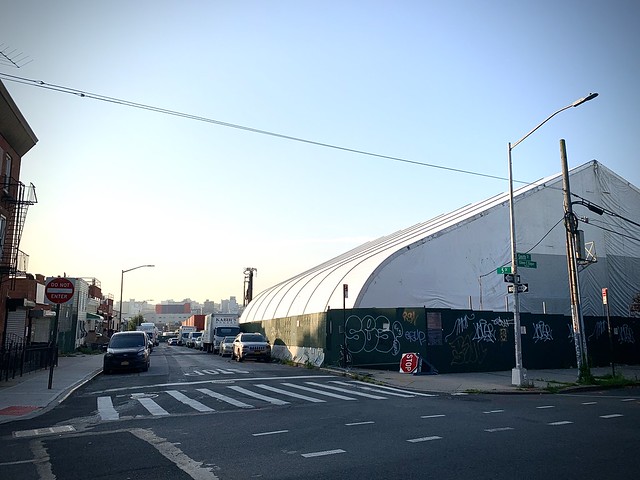
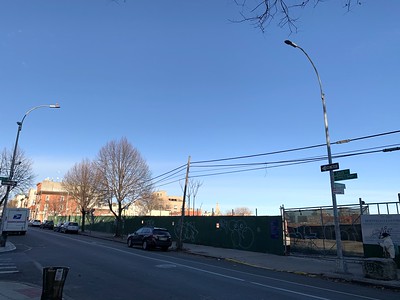
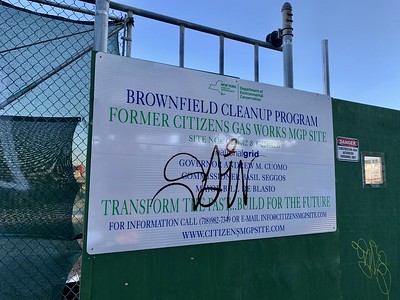
Public Place site at Smith and 5th Street
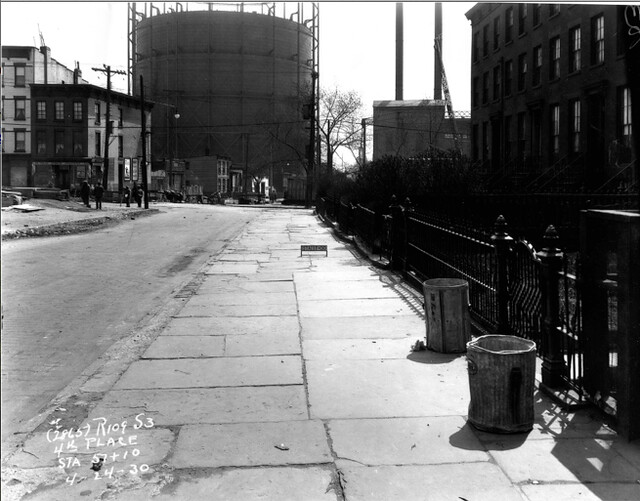
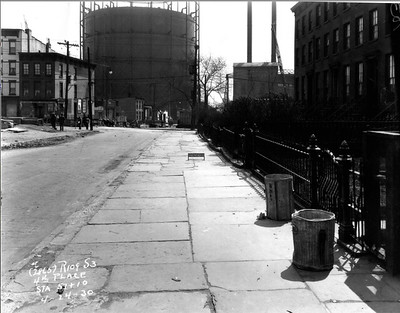
A 1930 view of the former Citizens Gas Work Site on what is now Public Place

TONIGHT, TELL COUNCIL MEMBER LANDER THAT BUILDING AFFORDABLE HOUSING ON LAND THAT WILL FOREVER BE POISONED IS JUST INSANITY!

By now, most residents in Gowanus and neighboring areas have hopefully heard about the proposal by the NYC Department of City Planning  to up-zone the Gowanus Canal area, which calls for 8,200 new units of housing that will bring approximately 20,000 new residents to the area.


If this seems insane to most, the plan has nevertheless the backing of Councilman Brad Lander, who has supported the rezoning from the start.
Though it appears on the surface that Lander wants to make sure that "plans for growth are grounded fully in the public interest, and will achieve our shared goals", the rezoning of the Gowanus area was always a huge giveaway to developers despite all the talk about affordable housing units that may be gained in the process.
Councilmember Brad Lander, supporter of housing on Public Place

Which brings us to Public Place, the City-owned six acre Brownfield site near the intersection of Smith and 5th Streets adjacent to the Gowanus Canal. It is currently in NYC Department of Housing Preservation and Development portfolio.

Brad Lander has been pushing for the development of housing on Public Place from the moment he ran for City Council, if not before.  From 1993 to 2003,  he served as executive director of Park Slope's Fifth Avenue Committee, a not-for-profit community-based organization that develops and manages affordable housing.)

Interestingly enough,  in 2008, Fifth Avenue Committee, together with  Hudson CompaniesJonathan Rose, and the Bluestone Organization was selected to develop the site for affordable housing with retail space, community facilities and open space.
Fifth Avenue Committee's current executive director is Michelle de la Uz, who also currently serves as a Commissioner of NYC Planning Commission. If that is not a conflict of interest, what is?

Gowanus Green: a proposal for about 900 apartments and a school on permanently toxic land

Their proposal was named 'Gowanus Green' and included 774 units of housing, of which 70% would have been permanently affordable. To move forward, the site needed to go through a rezoning from manufacturing to residential, which never moved forward after the Environmental Protection Agency declared the Gowanus Canal a Superfund Site.

Gowanus Green has been revived of late since City Planning has wrapped Public Place into the framework of the agency's Gowanus Neighborhood Planning Study

The new plan for Public Place calls for about 900 units of affordable housing in 30 story buildings as well as a new public school. 

Tonight at 6 pm, the NYC Department of City Planning and the “Gowanus Green” development team are going to present the development at a webinar hosted by Community Board 6.
To register, click here.

In 2019, Brad Lander stated:
"The chance to build a sustainable, mixed-income community in Gowanus is one of the most important and unique opportunities of the Gowanus Neighborhood Rezoning. Gowanus sits in-between Carroll Gardens and Park Slope, two wonderful neighborhoods, with great schools, thriving commercial strips, great access to transit -- and almost no affordable housing. Gowanus Green offers us the opportunity to build hundreds of units of truly affordable housing, right at the heart of the neighborhood, to open up the opportunity of our dynamic community to a much wider range of people than can afford to live here now."

Affordable housing, additional parkland, a new public school...it all sounds great, until you consider the history of Public Place, which Brad Lander refuses to mention in his email to the community.

The truth is that to this day, Public Place will remain one of, if not the most polluted site along the Gowanus Canal even after remediation.

From the 1860s to the early 1960s, the Public Place site was the home of the former Citizens Gas Light Company's 12th Ward Gas Work Plant, a Manufactured Gas Plant (MGP) where coal and petroleum products were turned into flammable gas. The gas was used for cooking, lighting, heating and commercial purposes in the surrounding neighborhoods.

Unfortunately, one of the by-products of this gasification process is coal tar, a black viscous liquid, which is harmful to humans and the environment. At Public Place,  coal tar has been found in significant amounts at depths of 150 feet.   

When the Citizens Gas Works plant was decommissioned in the 60s, the site was given to the city 'by condemnation' as public land in 1975. Hence the name "Public Place". Citizens Gas Light Company later sold to Brooklyn Union Gas, which became Keyspan, which is now National Grid.

The responsibility for the clean-up falls on National Grid. The work is currently being done under the supervision of NYS Department of Environmental Conservation.

Since coal tar and contaminated groundwater have been found to ooze from the site into the Gowanus Canal for decades, the US Environmental Protection Agency, which declared the canal a Superfund site in 2010, has also been involved.

Though National Grid's contractor, Creamer Environmental, has been recently implementing remedial actions on the site. we are a long way from a clean environment.
Brownfield remediation consists mostly of removing the top layer of existing dirt, adding new clean fill, and installing a plastic vapor barrier before capping the contamination on the site with cement.

How well those sites are monitored and how long the barriers maintain their integrity is anyone's guess. As an example, the Lowe's site in Gowanus at 9th Street, which was also built on an MGP site but cleaned under the NYS Brownfield program a decade ago, was found to be in need of additional remediation by the EPA.

By far the biggest concern about housing on Brownfield sites is the intrusion of vapors into the structures.  According to Public Integrity.org

"Plastic vapor barriers and other soil containment measures are all that states require in some types of redevelopment.

But sometimes, such efforts fail or the science changes. New York’s Department of Environmental Conservation decided to reopen hundreds of Superfund, brownfield, and other sites that had been remediated to investigate potential new threats from vapor intrusion, something that had not been considered at the time of the “cleanups.” The reviews are ongoing, but the agency has already found mitigation will be necessary at more than 70 sites."

If Brad Lander refuses to even acknowledge to his constituents that Public Place will have a plume of coal tar underneath the site in perpetuity, we need tell him that we will hold him ultimately responsible for the health of everyone of the future resident and schoolchild he intends to bring here.

Perhaps he should listen to those who came before him. In 1984, a New York City Partnership withdrew its proposal to build moderate income housing on the site "because of serious environmental problems and exorbitant costs associated with developing the lot."

Read more

Monday, August 10, 2020

NYS DEC Just Degraded The Environmental Clean-Up At Public Place/ Former Citizens Manufactured Gas Plant Site

Untitled
Public Place Site, the former Citizens Manufactured Gas Plant, at Smith and 5th Street

An arial view of the Citizens Gas Work site in 1926
Rendering of proposed Gowanus Green Development on the City owned Public Place lot

Have you ever received a mundane email that seems like bureaucratic nothingness...but after reading it three times...you realize that your Carroll Gardens/Gowanus community has just been wronged for the umpteenth time in decades?

A few days ago, the NYS Department of Environmental Conservation. (DEC) sent out two notices about the parcels that make up the heavily polluted Public Place Site, which was once the site of the former Citizens Manufactured Gas Site.

The first notice pertains to Parcels I and II, the 5.8 acre city-owned site at Smith Street and 5th Street.

The second notice is about Parcel III, the privately owned  3.8 acres lot at 459 Smith Street, bounded by Smith Street and Huntinton Street.
The notices are .orders to the environmental clean-up of the very polluted sites that represent "significant changes" to the original one. It's clear, after carefully reading them, that the state has changed course radically: Public Place is now going to get less of a clean up than was originally promised.  Instead of digging up and removing 8 feet of soil across the entire  9.6 acre site as initially planned, the State environmental watchdog decided that they will allow National Grid, the polluter, to only dig up 2 feet of dirt on most of the site and replace that two feet with clean soil, which DEC calls a "cover system".

And...they're planning this reduced cleanup since DEC says the site clean-up will be good enough for "restricted residential" use. 

Why didn't DEC tell the community about this reduction in remediation at the meeting?  A fear that reporters would latch on and dig into this strange change in course?  It's clear EPA was not informed about this change either.

We understand this is a lot to process for the community. What does it all mean? So many questions. Let us examine some facts about Public Place to better understand the significance of DEC's change order. 

From the 1860s to the early 1960s, the Public Place site was the home of the former Citizens Gas Light Company's 12th Ward Gas Work Plant, a Manufactured Gas Plant (MGP) where coal and petroleum products were turned into flammable gas. The gas was used for cooking, lighting, heating and commercial purposes in the surrounding neighborhoods.

Unfortunately, one of the by-products of this gasification process is coal tar, a black viscous liquid, which is harmful to humans and the environment. Coal tar attaches itself to native soil, and plumes of this dangerous thick liquid can seep in every direction. At Public Place, coal tar has been found in significant amounts at depths of 153 feet.
The following two major classes of chemical compounds found in coal tar were the focus of the Public Place investigation: MGP-related semi-volatile organic compounds (SVOC) namely polycyclic aromatic hydrocarbons (PAHS), and MGP-related non-aqueous phase liquid (NAPL)

When the Citizens Gas Works plant was decommissioned in the 60s, the site was given to the city 'by condemnation' as public land in 1975. Hence the name "Public Place". Citizens Gas Light Company was later sold to Brooklyn Union Gas, which became Keyspan, which is now National Grid.

The responsibility for the clean-up falls on National Grid. The work will be done under the supervision of NYS Department of Environmental Conservation under the Brownfield Clean-up Program.

Since coal tar and contaminated groundwater have been found to ooze from the site into the Gowanus Canal for decades, the US Environmental Protection Agency, which declared the canal a Superfund site in 2010, is also involved.

For the past few months, National Grid's contractors have been working on the site. implementing the remedial design from 2007, which was finalized in 2017 and approved by DEC in 2018.

At many community meetings held by DEC and National Grid in the past years, Carroll Gardens/Gowanus residents were told that the remedial design required:
 -the  removal of “contaminated soils to a depth of approximately 8 feet below grade."
-the removal of all structures on the site, which include gas holders on Parcel 1and a tar separator on Parcel 3.
- the installation of a High Density Polyethylene (HDPE) liner 2 feet below grade throughout the site  as storm water management to prevent rain water absorption, which could dislodge the deeper, remaining pockets of coal tar.
- two water treatment systems to clean the rainwater so it can can be discharged directly into the Gowanus Canal
- 8 feet of clean backfill and regrading of the land.
- recovery wells that will continue to collect liquid tar that bubbles up to toward the surface.
- 900 linear feet of barrier wall at the water's edge to prevent coal tar contamination from flowing into the Gowanus Canal.

Over the past two years, DEC has already degraded the remedial design by doing away with the  impermeable HDPE liner and the treatment systems. (Rain run off will now be collected in trenches running parallel to the barrier wall. However, most of the rain will penetrate the ground, raising the possibility that pockets of coal tar will migrate).

The August 2020 DEC change order is downright scary. The removal of only 2 feet of contaminated soil throughout the site should make all of us very angry and very concerned.
Hasn't the community lived with this dangerous contamination long enough? Can't we expect our own environmental agency to advocate the best clean-up for us? 

At the July 28th EPA Superfund CAG meeting,  John Miller of DEC explained that in three areas on Public Place, National Grid's contractors dug down twenty to twenty-two feet. 
However,  when asked about the pockets of coal tar that go down 100-150 feet in some areas of the site, he added:
"Honestly, you are just not going to get down that deep.  There is maybe not necessarily a need to do
that."

And then he added:  "We definitely want to find out where it's migrating and find out where the limits of the contamination have spread.  We have a fair idea of where it migrated, but some additional work is needed off site to button up our investigation."

So, not only is DEC allowing National Grid to scratch the surface of the contamination, but DEC doesn't even know where the underground plume has migrated off-site?  Does this mean that it could have oozed under some nearby houses? 

Which brings us back to the question of why the site, which will forever be polluted, is being remediated with restricted residential use in mind, when residential use on Public Place is not permitted under the current zoning.  

We can thank Councilmember Brad Lander for this folly. Lander has been pushing to rezone the 5.8 acre City-owned Public Place site as part of his overall proposed rezoning of Gowanus, despite the fact that lots I and II were designated for "for public recreational use" on the City Map on February 27, 1974,

Lander has been in favor of 'Gowanus Green', a 30 story, 900 unit housing development for the site since before his three terms as our councilman.  Lander has publicly boasted that the apartments would be 100% affordable, though the site developers contradicted him at a public meeting in December 2019 and could only promise 74%.

But is it dangerous to live on top of the most polluted site along the Gowanus Canal, on top of a huge coal tar plume? Probably, especially if the State allows National Grid to reduce the level of clean-up.
With coal tar remaining deep underground, one of the biggest problems will be semi-volatile and volatile gases. Especially naphthalene, classified by EPA as a possible human carcinogen, is highly volatile and could possibly penetrate into the residential buildings.

The Public Place remediation does not call for a vapor intrusion protection cover.  Instead, National Grid and DEC are counting on future building foundations to serve as a protective cap in order to prevent human exposure .  But... any fissure in the foundation could lead to vapor intrusion.

So, the question remains: why would NYS DEC allow National Grid to reduce the level of remediation, knowing that our Councilman is pushing for housing on the site?
And...why is Brad Lander not holding a press conference in front of Public Place blasting National Grid and DEC for lowering the level of care if he is intent on bringing families to live there?


Click here for further reading:


Untitled
Screen Shot 2012-04-30 at 9.21.52 AM
An arial view of the Citizens Gas Work site in 1926

Read more

Thursday, July 23, 2020

Gowanus Confidential! We Foiled Councilman Brad Lander's Correspondence About The Rezoning

Who, me?
Councilman Brad Lander of the 39th Council District
3D model of a fully built-out Gowanus after rezoning


During the past few years, I have attended many of the public meetings pertaining to the proposed rezoning of the area around the Gowanus Canal. Those include the Bridging Gowanus community meetings hosted by our Council Member Brad Lander together with Council Member Stephen Levin and other elected representatives, which were a sham in my book.

The more Brad Lander tried to pretend that he would make sure that "plans for growth [for Gowanus] are grounded fully in the public interest, and will achieve our shared goals", the more it appeared to the community that the rezoning was a huge giveaway to developers and that certain organizations had a seat at Brad's table to influence the rezoning long before Bridging Gowanus started.

Increasingly, I was curious to see what was being discussed about the proposed Gowanus rezoning  between our elected officials and government figures...and a very specific developer: Jared Kushner

So, like any good citizen and community activist, I worked with some friends to request Brad Lander's email correspondence pertaining to the Gowanus rezoning under the Freedom of Information Law (FOIL).  And for good measure, we foiled some more of our elected officials and government figures.

The requests were sent in May 2019. In all, we foiled the email correspondence pertaining to the rezoning of:

Councilmember Brad Lander***
Catherine Zinnel , Brad Lander's former Deputy Chief of Staff 
Rachel Goodman, Brad Lander's Chief Of Staff
Councilmember Steve Levin
Benjamin Solotaire, Steve Levin's North Brooklyn Community Organizer
NYC Department of City Planning***(partial)
Winston von Engel, Director, NYC DCP Brooklyn Office***(partial)
Jonathan Keller, NYC DCP in charge of Gowanus rezoning
Community Board 6
Mike Racioppo CB6 manager

Here is the specific FOIL request that was sent out:

To Whom It May Concern:
Pursuant to the New York State Freedom of Information Law (1977 N.Y. Laws ch. 933), I hereby request the following records:
1. Correspondence between ........... and each of the following individuals, officials, agencies, and companies regarding the proposed Gowanus rezoning and regarding the Gowanus Places Study:
Mayor DeBlasio
Alicia Glen, Former Deputy Mayor under deBlasio
Councilmember Brad Lander
Brad Lander (private citizen, private email)
Councilmember Steve Levin
Steve Levin (private citizen, private email)
Jonathan Butler NYC DCP
Winston Von Engel NYC DCP
Peter Fleming CB6 Chair
Mark Shames CB6 Land Use Chair
Mike Racioppo CB6 Manager
Salvatore "Buddy" Scotto, Long Time proponent of a Gowanus rezoning
Debra Scotto CB6 Member
Michelle de La Uz, City Planning Commissioner/ Executive Director, Fifth Avenue Committee
Andrea Parker, Executive Director, Gowanus Conservancy
Sabine Aronowsky, Fifth Avenue Committee

and

2. Any correspondence between Catherine Zinnel of Council Member Brad Lander's office and each of the following individuals a) regarding the proposed Gowanus rezoning, b) regarding the Gowanus Places Study, and c) regarding Brooklyn properties at 169 Third Street, 175-185 Third Street, and 201-225 Third Street.
Jared Kushner
SL Green
Kushner Companies
LIVWRK, Kushner's original partners for Gowanus project
Asher Abehsera, founder of  Livwrk
Aaron Lemma, co-founder of  Livwrk
Robert Schiffer, (Managing Director at SL Green)
Aby Rosen (developer, buyer of former Kushner site)
RFR Realty (Aby Rosen's development firm)

Why Jared Kushner and his associates? Because the developer and son-in-law of President Trump purchased one of the largest sites along the Gowanus in 2014. This prompted Councilman Brad Lander to declare on WNYC in 2017 that it would feel wrong to vote for the rezoning if it meant "enriching the White House senior adviser while he’s got authority over the canal. That feels ethically tainted in a way I don’t see how I could do and how I could ask my colleagues to do."

This seems like a strange statement from Lander,  since we kept on hearing that Lander was trying to convince other property owners on the same block as Kushner's property at 3rd Avenue and 3rd Street to join forces to spot-rezone the entire block to residential ahead of the larger rezoning.. Obviously, things were taking too long for Kushner Companies

In 2017, Kushner Companies and SL Green Realty sold their interest to Aby Rosen's development company RFR Realty. We found email correspondence between the Department of City Planning and a real estate law firm hired by RFR..  Surely it seems plausible that there may have been an exchange of emails between Kushner Companies, RFR and Brad Lander over the years..

After several delays and numerous requests for updates, just a few foil requests came back 7 months later. We did receive the emails of Lander and his former aid, Catherine Zinnel, as well as the emails of Levin staffer Ben Solotaire. We only received partial documents from City Planning.
Community Board 6 and its manager Mike Racioppo ignored our Foil request altogether. We have to see what to do about that with the state's Committee on Open Government.

What emerged...amidst lots of redaction...was very interesting.
Brad LANDER Gowanus Final - Redacted_Redacted102319 (dragged) copy 2
Heavily redacted email between Brad Lander and New York City Hall 5/25/2018
CATHERINE ZINNEL MayGownus1_Redacted FINAL - Gowanus Rezoning Lander FOIL (dragged) copy
The Lander emails from his official Council account did not say much. In fact, there really were not many emails included in the 630 page file sent to us, as many of the pages contained unnecessary printed presentations by the Fifth Avenue Committee and the Gowanus Conservancy, sometimes twice or three times.  The lack of emails seemed strange given how long and intimately Lander has been pushing the Gowanus rezoning. How could there not be far more emails about this massive public project that he has been advancing for years?  

And another question arose as we compared the Lander emails to those of his former staff member Catherine Zinnel and  those of the Department of City Planning.
While we had FOILED the same topics for everyone, the email records returned for Zinnel and DCP were more extensive and contained many additional emails not contained in the Lander email returns.

As we perused these emails, we began to notice a pattern. Lander's staffer (and often Council Member Levin staffer Ben Solotaire) would be in regular communication with a number of local organizations discussing the proposed Gowanus rezoning. In particular, Michelle de La Uz of the Fifth Avenue Committee and Andrea Parker from the Gowanus Conservancy seemed to have quite a correspondence and many meetings with our elected officials.

The Gowanus Conservancy's mission is to facilitate "the development of a resilient, vibrant, open space network centered on the Gowanus Canal."  Though it appears to be an environmental grassroots organization, the Conservancy has accepted money from Gowanus developers and has positioned itself to become the steward of the public waterfront parkland that developers will have to create as part of the rezoning.
And of course, Brad Lander previously served as Executive Director of the Fifth Avenue Committee from 1993 to 2003. He has pushed for a Gowanus Rezoning since his time at FAC, so it is not surprising that he continues to have a close relationship with this not-for profit organization. In addition, FAC is one of the developers of Gowanus Green, the large development planned for Public Place that requires the rezoning to take place in order to proceed
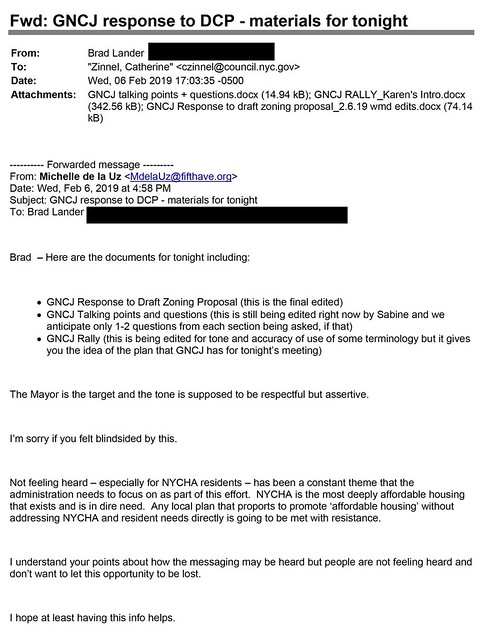
Notice the word 'confidential' in the subject line of the email below.
CATHERINE ZINNEL MayGownus1_Redacted FINAL - Gowanus Rezoning Lander FOIL (dragged) 6 copy
The emails as a whole show that FAC, GCC and their joint Gowanus Neighborhood Coalition For Justice  are in lockstep with Lander, doing his bidding lest they lose their funding source. 
One noteworthy exception is highlighted below. It shows Brad Lander complaining to De La Uz about a quote by her staff in a City Limit article, which he  obviously disagreed with.
Emails, like the one below show that for years, the Fifth Avenue Committee had privileged seats at the table with Council Members Lander and Levin, as well as with City Planning to discuss Gowanus.
Brad LANDER Gowanus Final - Redacted_Redacted102319 (dragged) 8 copy 2
Another question is: Has Brad Lander evaded Public Records Laws to push the Gowanus Rezoning?
Most of the documents block out Brad Lander's email address.  This seems strange since his address surely is part of the public record. Even stranger is that some other correspondence only shows his address blocked out on a long list of email addresses. Given the context, the only email address that would make sense there, as the email chains hashed through various strategies about the proposed rezoning....is Brad Lander's personal email.

Below is an email from the Brooklyn office of the Department of City Planning addressed to Lander's personal Gmail account. (Note that we crossed out Lander's Gmail account in blue since we believe his personal email was left un-redacted by mistake)

50140779558_269dea6642_o
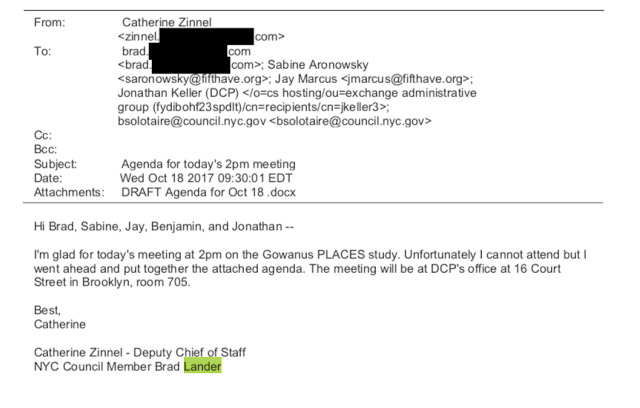
And then there is this one, sent by Catherine Zinnel from a .com address to brad, also at a .com address. It is likely that both used www.landerfornyc.com, Lander's campaign web site. Note that she nevertheless uses her official council staffer title in the signature block of her email.

It is very clear from the FOIL documents received, that Lander was involved in many aspects of strategy and negotiation regarding the proposed rezoning. For years now, the Fifth Avenue Committee has enjoyed privileged, special access to the Council Members, their staff members, and the Department of City Planning. It is fair to say that FAC had an outsize role in planning a rezoning that: a) they would benefit from as private developers of the Public Place site, and b) they would have a hand in getting through because one of their leaders is on the City Planning Commission.

On more than one occasion, Lander tried doing so outside the confines of his official email account.

This obviously raises more questions: What other groups or developers did Lander meet with over the years to discuss Gowanus? What deals were cut? What has Brad Lander been doing with his official position that he has worked to keep from the public eye? What else don't we know that is hidden in Brad Lander's personal emails - that will nevertheless have a major impact on thousands of people if the proposed Gowanus rezoning goes through? 

Before we embark on this massive rezoning, we should know the answers to all these questions, no?

We are still working through the reams of FoIL documents ourselves, but please email me if you would like to see the entire trove for yourself.
Read more

Sunday, December 01, 2019

Brad Lander's Brownfield Of Dreams Part 1: Our Councilman's Push To Build Housing And A School On The Most Polluted Site in Gowanus Is Folly

Untitled
Public Place on Smith Street near 5th Street
Untitled
Untitled
Untitled
Untitled
Untitled
Untitled
Screen Shot 2012-04-30 at 9.21.52 AM
A 1930 view of the former Citizens Gas Work Site on what is now Public Place
An arial view of the Citizens Gas Work site in 1926
Councilmember Brad Lander, supporter of housing on Public Place
Gowanus Green: a proposal for 1000 apartments and a school on permanently toxic land

By now, most residents in Gowanus and neighboring areas have hopefully heard about the proposal by the NYC Department of City Planning  to up-zone the Gowanus Canal area, which calls for 8,200 new units of housing that will bring approximately 20,000 new residents to the area.

The rezoning will likely go forward early next year as it moves through the Uniform Land Use Process (ULURP) despite the fact that it will still take years for the Canal to be environmentally remediated as part of the EPA Superfund Clean-up, and despite the fact that the City still uses the waterway as an open sewer and that the area's infrastructure is already stretched to its limits under current conditions. The area is also a FEMA Flood Zone A.

The ULURP process, once it starts, should take between six to nine months. If the rezoning goes through, developers who have already purchased the land around the Gowanus can start building 22 to 30 story high rises.

If this seems insane to most, the plan has nevertheless the backing of Councilman Brad Lander, who has supported the rezoning from the start.
Though it appears on the surface that Lander wants to make sure that "plans for growth are grounded fully in the public interest, and will achieve our shared goals", the rezoning of the Gowanus area was always a huge giveaway to developers despite all the talk about affordable housing units that may be gained in the process.

Which brings us to Public Place, the City-owned six acre Brownfield site near the intersection of Smith and 5th Streets adjacent to the Gowanus Canal. It is currently in NYC Department of Housing Preservation and Development portfolio.

Brad Lander has been pushing for the development of housing on Public Place from the moment he ran for City Council, if not before.  From 1993 to 2003,  he served as executive director of Park Slope's Fifth Avenue Committee, a not-for-profit community-based organization that develops and manages affordable housing.)

Interestingly enough,  in 2008, Fifth Avenue Committee, together with  Hudson CompaniesJonathan Rose, and the Bluestone Organization was selected to develop the site for affordable housing with retail space, community facilities and open space.
Fifth Avenue Committee's current executive director is Michelle de la Uz, who also currently serves as a Commissioner of NYC Planning Commission. If that is not a conflict of interest, what is?

Their proposal was named 'Gowanus Green' and included 774 units of housing, of which 70% would have been permanently affordable. To move forward, the site needed to go through a rezoning from manufacturing to residential, which never moved forward after the Environmental Protection Agency declared the Gowanus Canal a Superfund Site.

Gowanus Green has been revived of late since City Planning has wrapped Public Place into the framework of the agency's Gowanus Neighborhood Planning Study

The new plan for Public Place calls for 1000 units of 100% affordable housing in 30 story buildings as well as a new public school. 

This Monday, December 2, the NYC Department of City Planning and NYC Housing, Preservation, and Development  will be presenting an update on the Public Place / Gowanus Green site to Community Board 6 at PS 32.

Ahead of the meeting, Brad Lander's office released a statement that reads in part:
"The chance to build a sustainable, mixed-income community in Gowanus is one of the most important and unique opportunities of the Gowanus Neighborhood Rezoning. Gowanus sits in-between Carroll Gardens and Park Slope, two wonderful neighborhoods, with great schools, thriving commercial strips, great access to transit -- and almost no affordable housing. Gowanus Green offers us the opportunity to build hundreds of units of truly affordable housing, right at the heart of the neighborhood, to open up the opportunity of our dynamic community to a much wider range of people than can afford to live here now."

Affordable housing, additional parkland, a new public school...it all sounds great, until you consider the history of Public Place, which Brad Lander refuses to mention in his email to the community.


The truth is that to this day, Public Place remains one of, if not the most polluted site along the Gowanus Canal and needs extensive remediation.


From the 1860s to the early 1960s, the Public Place site was the home of the former Citizens Gas Light Company's 12th Ward Gas Work Plant, a Manufactured Gas Plant (MGP) where coal and petroleum products were turned into flammable gas. The gas was used for cooking, lighting, heating and commercial purposes in the surrounding neighborhoods.

Unfortunately, one of the by-products of this gasification process is coal tar, a black viscous liquid, which is harmful to humans and the environment. At Public Place,  coal tar has been found in significant amounts at depths of 150 feet.   

When the Citizens Gas Works plant was decommissioned in the 60s, the site was given to the city 'by condemnation' as public land in 1975. Hence the name "Public Place". Citizens Gas Light Company later sold to Brooklyn Union Gas, which became Keyspan, which is now National Grid.

The responsibility for the clean-up falls on National Grid. The work will be done under the supervision of NYS Department of Environmental Conservation.

Since coal tar and contaminated groundwater have been found to ooze from the site into the Gowanus Canal for decades, the US Environmental Protection Agency, which declared the canal a Superfund site in 2010, is also involved.
Though National Grid's contractor, Creamer Environmental, has been recently implementing remedial actions on the site. we are a long way from a clean environment.
Brownfield remediation consists mostly of removing the top layer of existing dirt, adding new clean fill, and installing a plastic vapor barrier before capping the contamination on the site with cement.

How well those sites are monitored and how long the barriers maintain their integrity is anyone's guess. As an example, the Lowe's site in Gowanus at 9th Street, which was also built on an MGP site but cleaned under the NYS Brownfield program a decade ago, was found to be in need of additional remediation by the EPA.

By far the biggest concern about housing on Brownfield sites is the intrusion of vapors into the structures.  According to Public Integrity.org

"Plastic vapor barriers and other soil containment measures are all that states require in some types of redevelopment.

But sometimes, such efforts fail or the science changes. New York’s Department of Environmental Conservation decided to reopen hundreds of Superfund, brownfield, and other sites that had been remediated to investigate potential new threats from vapor intrusion, something that had not been considered at the time of the “cleanups.” The reviews are ongoing, but the agency has already found mitigation will be necessary at more than 70 sites."

If Brad Lander refuses to even acknowledge to his constituents in a press release that Public Place will always have a plume of coal tar underneath the site, we need to tell him that we will hold him ultimately responsible for the health of every current and future resident, and every schoolchild he intends to bring to Public Place.

Perhaps he should listen to those who came before him. In 1984, a New York City Partnership withdrew its proposal to build moderate income housing on the site "because of serious environmental problems and exorbitant costs associated with developing the lot."

Untitled
Untitled


Brownfield of Dreams: A Film By Matt Sollars from 2008


PLEASE ATTEND!
Public Place/Gowanus Green Presentation to CB6
Monday, December 2, 6:30 PM
P.S. 32
317 Hoyt Street
Read more

Monday, March 18, 2013

Lightstone Group's Plans And Drawings For Gowanus Project Approved By City Planning, But Developer Still Needs Waterfront Certificate

IMG_1983
NYC Department Of City Planning Hearing for Lightstone Group's Gowanus development  
IMG_1981
Commissioner Betty Chen, Commissioner Michelle De La Uz, and Amanda Burden,  Chair of the NYC Department Of City Planning
IMG_1984
Commissioner Michelle De La Uz and City Planning Chair Amanda Burden
(De La Uz is the executive director of the 5th Ave. Committee. During the Lightstone discussion, she recused herself, since the developer has contracted with the 5th Avenue Committee to manage the affordable units included in the project.)
IMG_1987
 Amanda Burden,  Chair of the City Planning Commission
IMG_1988
Purnima Kapur, City Planning Brooklyn Director
IMG_1991
Aline Fader, representing NYC DCP Brooklyn Office, presents Lightstone's newest plan
IMG_1990
Aline Fader and colleague present Lightstone Groups's as-of-right project

Just a few days ago, it was announced that Lightstone Group is proceeding with its 500,000 square feet mixed-use housing development on the shores of the Gowanus Canal at 363-365 Bond Street as an as-of-right development and has abandoned the minor modification which it had previously requested of NYC's Department of City Planning (DCP).

During DCP's review session on Monday afternoon, representatives of the Brooklyn DCP office explained that Lightstone, apparently wanting to avoid the risk of legal action,  has withdrawn its minor modification application and has decided to pursue the as-of-right development under zoning granted in 2009.
This project had come in front of the commission once before in September 2012 as a 'minor modification' of the original 2009 special permit project previously granted to Toll Brothers.

This as-of-right development is nevertheless subject to City Planning Commission approval because the 2009 special permit project was made subject to a restrictive declaration that was attached to the plans and drawings.

One of the purposes of the restrictive process was to help insure that the key urban design principals of the special permit project, which ensures that the taller portions of the development should be on the canal side and the lower portions should be along Bond Street, would be respected.

The second restriction has to do with Waterfront Zoning Regulations, which did not apply to the Gowanus Canal at the time of the original approval in early 2009.  However, later the same year, the City Council made the canal subject to the zoning regulations and water front open space will now be required in connection with the as-of-right project under those provisions.

The original 2009 project provide public open space along the canal that was designed "in the spirit of" the Waterfront Regulations. It did not strictly adhere to them.  Lightstone has modified the drawings to allow the requited waterfront public access area to be included, resulting "in a net increase of open space on the Southern block, where the building is being pushed back by approximately 20 feet."

To address FEMA's recently released Advisory Base Flood Elevations and  changes to the Building Code,  the site will be raised by 2 feet at First Street. Lightstone will elevate the ground floor of the building approximately 1.1 foot and make the street level parking garage a "bath tub structure".

At yesterday's DCP session, Lightstone sought approval for the plans and drawings for the as-of right project.
The Planning Commission votes unanimously to grant the approval.

However, at a later date, the applicant will need to seek a Waterfront Certificate from Chair Amanda Burden in regards to the design of the waterfront open space. The certificate will specify the design of the open space and certify that it meets the zoning requirements. The applicant is expected to file the application later this year.

"And at that point, and only at that point, will the developer be able to begin construction. So it's really a two-step process" a representative of the Brooklyn DCP office was quick to point out during the presentation.


Read more