Showing posts with label NYS Department Of Environmental Conservation. Show all posts

Monday, August 10, 2020

NYS DEC Just Degraded The Environmental Clean-Up At Public Place/ Former Citizens Manufactured Gas Plant Site

Untitled
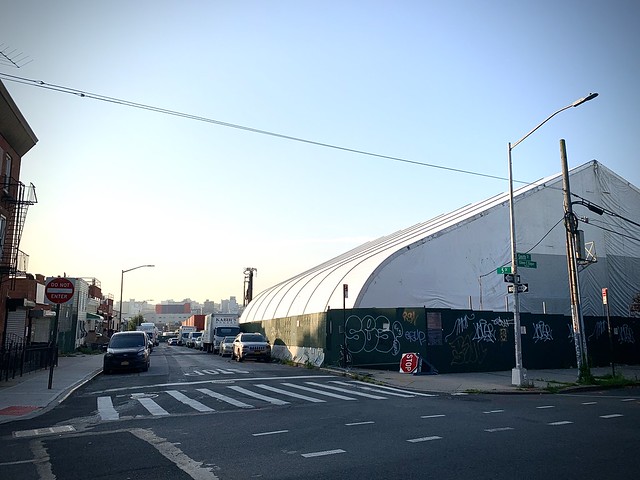
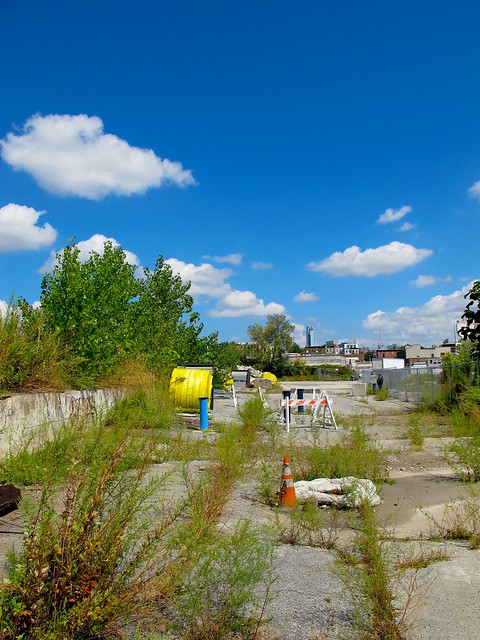
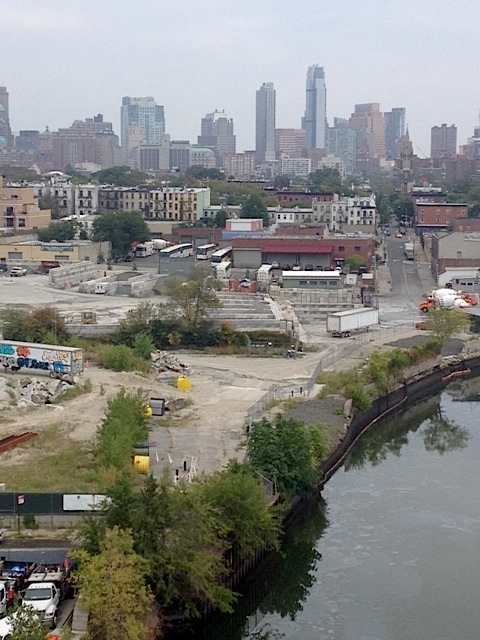
Public Place Site, the former Citizens Manufactured Gas Plant, at Smith and 5th Street

An arial view of the Citizens Gas Work site in 1926
Rendering of proposed Gowanus Green Development on the City owned Public Place lot

Have you ever received a mundane email that seems like bureaucratic nothingness...but after reading it three times...you realize that your Carroll Gardens/Gowanus community has just been wronged for the umpteenth time in decades?

A few days ago, the NYS Department of Environmental Conservation. (DEC) sent out two notices about the parcels that make up the heavily polluted Public Place Site, which was once the site of the former Citizens Manufactured Gas Site.

The first notice pertains to Parcels I and II, the 5.8 acre city-owned site at Smith Street and 5th Street.

The second notice is about Parcel III, the privately owned  3.8 acres lot at 459 Smith Street, bounded by Smith Street and Huntinton Street.
The notices are .orders to the environmental clean-up of the very polluted sites that represent "significant changes" to the original one. It's clear, after carefully reading them, that the state has changed course radically: Public Place is now going to get less of a clean up than was originally promised.  Instead of digging up and removing 8 feet of soil across the entire  9.6 acre site as initially planned, the State environmental watchdog decided that they will allow National Grid, the polluter, to only dig up 2 feet of dirt on most of the site and replace that two feet with clean soil, which DEC calls a "cover system".

And...they're planning this reduced cleanup since DEC says the site clean-up will be good enough for "restricted residential" use. 

Why didn't DEC tell the community about this reduction in remediation at the meeting?  A fear that reporters would latch on and dig into this strange change in course?  It's clear EPA was not informed about this change either.

We understand this is a lot to process for the community. What does it all mean? So many questions. Let us examine some facts about Public Place to better understand the significance of DEC's change order. 

From the 1860s to the early 1960s, the Public Place site was the home of the former Citizens Gas Light Company's 12th Ward Gas Work Plant, a Manufactured Gas Plant (MGP) where coal and petroleum products were turned into flammable gas. The gas was used for cooking, lighting, heating and commercial purposes in the surrounding neighborhoods.

Unfortunately, one of the by-products of this gasification process is coal tar, a black viscous liquid, which is harmful to humans and the environment. Coal tar attaches itself to native soil, and plumes of this dangerous thick liquid can seep in every direction. At Public Place, coal tar has been found in significant amounts at depths of 153 feet.
The following two major classes of chemical compounds found in coal tar were the focus of the Public Place investigation: MGP-related semi-volatile organic compounds (SVOC) namely polycyclic aromatic hydrocarbons (PAHS), and MGP-related non-aqueous phase liquid (NAPL)

When the Citizens Gas Works plant was decommissioned in the 60s, the site was given to the city 'by condemnation' as public land in 1975. Hence the name "Public Place". Citizens Gas Light Company was later sold to Brooklyn Union Gas, which became Keyspan, which is now National Grid.

The responsibility for the clean-up falls on National Grid. The work will be done under the supervision of NYS Department of Environmental Conservation under the Brownfield Clean-up Program.

Since coal tar and contaminated groundwater have been found to ooze from the site into the Gowanus Canal for decades, the US Environmental Protection Agency, which declared the canal a Superfund site in 2010, is also involved.

For the past few months, National Grid's contractors have been working on the site. implementing the remedial design from 2007, which was finalized in 2017 and approved by DEC in 2018.

At many community meetings held by DEC and National Grid in the past years, Carroll Gardens/Gowanus residents were told that the remedial design required:
 -the  removal of “contaminated soils to a depth of approximately 8 feet below grade."
-the removal of all structures on the site, which include gas holders on Parcel 1and a tar separator on Parcel 3.
- the installation of a High Density Polyethylene (HDPE) liner 2 feet below grade throughout the site  as storm water management to prevent rain water absorption, which could dislodge the deeper, remaining pockets of coal tar.
- two water treatment systems to clean the rainwater so it can can be discharged directly into the Gowanus Canal
- 8 feet of clean backfill and regrading of the land.
- recovery wells that will continue to collect liquid tar that bubbles up to toward the surface.
- 900 linear feet of barrier wall at the water's edge to prevent coal tar contamination from flowing into the Gowanus Canal.

Over the past two years, DEC has already degraded the remedial design by doing away with the  impermeable HDPE liner and the treatment systems. (Rain run off will now be collected in trenches running parallel to the barrier wall. However, most of the rain will penetrate the ground, raising the possibility that pockets of coal tar will migrate).

The August 2020 DEC change order is downright scary. The removal of only 2 feet of contaminated soil throughout the site should make all of us very angry and very concerned.
Hasn't the community lived with this dangerous contamination long enough? Can't we expect our own environmental agency to advocate the best clean-up for us? 

At the July 28th EPA Superfund CAG meeting,  John Miller of DEC explained that in three areas on Public Place, National Grid's contractors dug down twenty to twenty-two feet. 
However,  when asked about the pockets of coal tar that go down 100-150 feet in some areas of the site, he added:
"Honestly, you are just not going to get down that deep.  There is maybe not necessarily a need to do
that."

And then he added:  "We definitely want to find out where it's migrating and find out where the limits of the contamination have spread.  We have a fair idea of where it migrated, but some additional work is needed off site to button up our investigation."

So, not only is DEC allowing National Grid to scratch the surface of the contamination, but DEC doesn't even know where the underground plume has migrated off-site?  Does this mean that it could have oozed under some nearby houses? 

Which brings us back to the question of why the site, which will forever be polluted, is being remediated with restricted residential use in mind, when residential use on Public Place is not permitted under the current zoning.  

We can thank Councilmember Brad Lander for this folly. Lander has been pushing to rezone the 5.8 acre City-owned Public Place site as part of his overall proposed rezoning of Gowanus, despite the fact that lots I and II were designated for "for public recreational use" on the City Map on February 27, 1974,

Lander has been in favor of 'Gowanus Green', a 30 story, 900 unit housing development for the site since before his three terms as our councilman.  Lander has publicly boasted that the apartments would be 100% affordable, though the site developers contradicted him at a public meeting in December 2019 and could only promise 74%.

But is it dangerous to live on top of the most polluted site along the Gowanus Canal, on top of a huge coal tar plume? Probably, especially if the State allows National Grid to reduce the level of clean-up.
With coal tar remaining deep underground, one of the biggest problems will be semi-volatile and volatile gases. Especially naphthalene, classified by EPA as a possible human carcinogen, is highly volatile and could possibly penetrate into the residential buildings.

The Public Place remediation does not call for a vapor intrusion protection cover.  Instead, National Grid and DEC are counting on future building foundations to serve as a protective cap in order to prevent human exposure .  But... any fissure in the foundation could lead to vapor intrusion.

So, the question remains: why would NYS DEC allow National Grid to reduce the level of remediation, knowing that our Councilman is pushing for housing on the site?
And...why is Brad Lander not holding a press conference in front of Public Place blasting National Grid and DEC for lowering the level of care if he is intent on bringing families to live there?


Click here for further reading:


Untitled
Screen Shot 2012-04-30 at 9.21.52 AM
An arial view of the Citizens Gas Work site in 1926

Read more

Wednesday, November 19, 2014

Gowanus Community To Lightstone Group Regarding Gowanus Project: "You Can't Give Us Enough Sympathy For What We Are Going Through"

IMG_1943
IMG_1973
IMG_1972
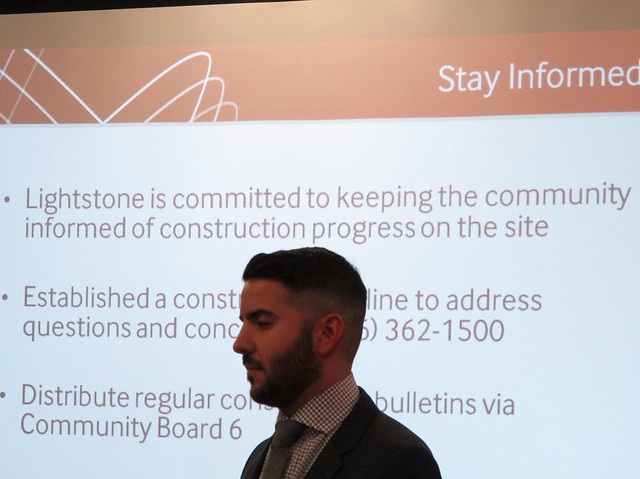
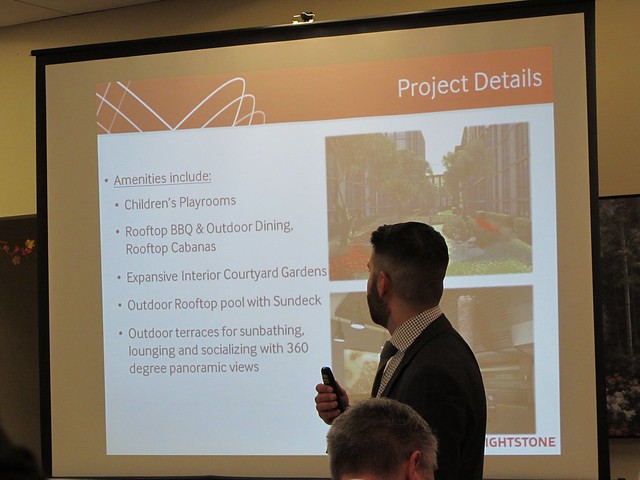
Scott Avram,  Lightstone Group Senior Vice President of Development
IMG_1961
IMG_1966
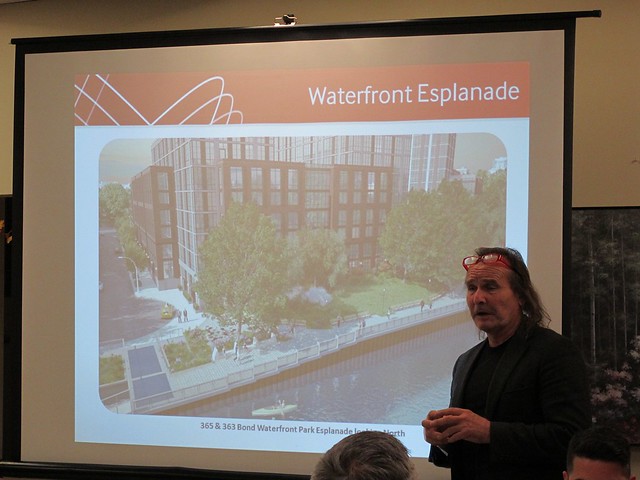
Lee Weintraub, Landscape architect for Lightstone Group
IMG_1977
Community Board 6 Manager Craig Hammerman
IMG_1953
Councilmember Brad Lander
IMG_1952
IMG_1980
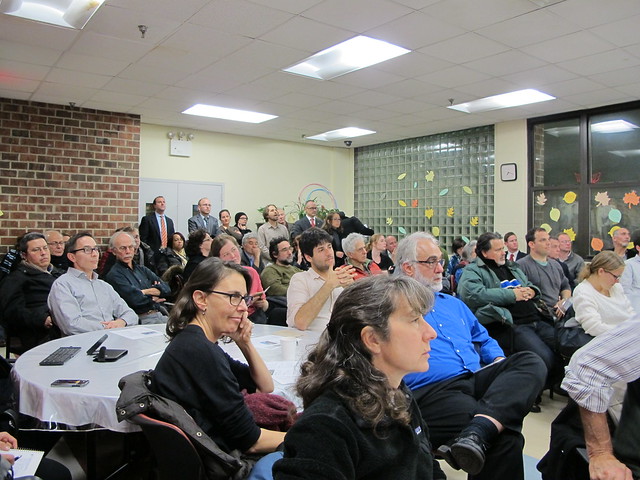
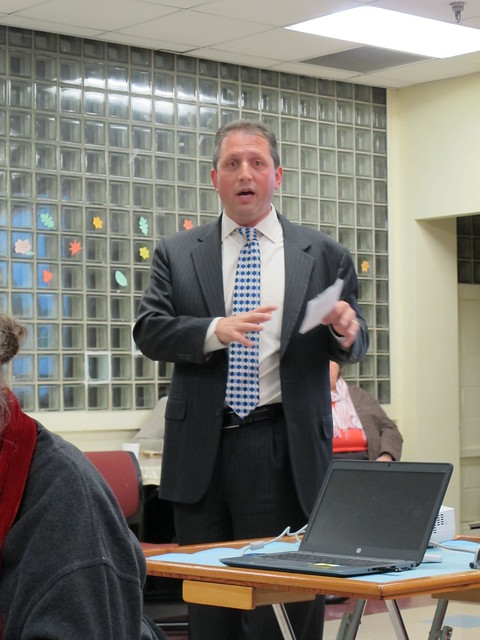
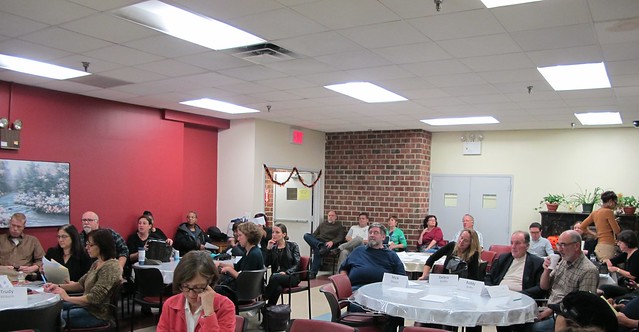
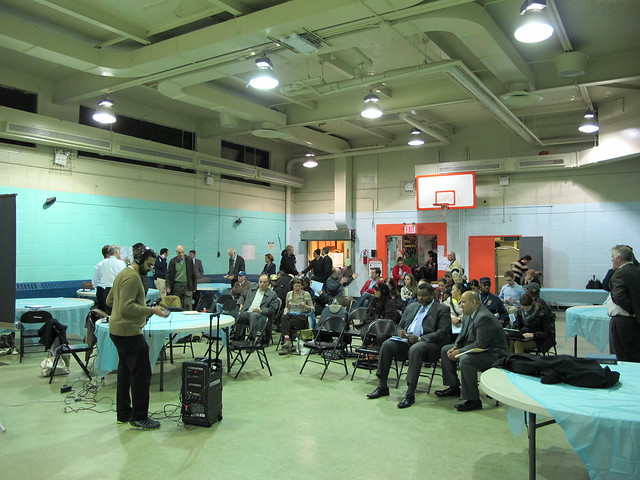
It was standing room only at Mary Star of the Sea's community room last night as Lightstone Group representatives updated local residents on the construction of their mega development at 363-365 Bond Street between Carroll Street and Second Street on the banks of the heavily polluted Gowanus Canal.

The meeting was a small concession to the community, which had to deal with months-long pounding noise and vibration from pile driving during Phase One of the project at 365 Bond Street.   Local residents made numerous calls to local elected officials and to various agencies to point out all kinds of violations at the construction site this past the summer. Many complaints were made to the Department of Health by neighbors who were reporting dizziness and headaches from fumes escaping from the Brownfield site after construction crews disturbed the contamination in the ground.

It is important to note that the NYC Department of Buildings, which had been asked to send representation, did not do so.

As the start of Phase Two at 363 Bond Street is imminent, Lightstone was willing to answer questions from residents and to listen to their complaints last night. But first, the community needed to sit through a presentation.

According to Scott Avram,  Lightstone Senior Vice President of Development, completed work at the 700 unit development site includes:
-environmental Brownfield  remediation at 365 Bond Street under the supervision of NY State Department of Environmental Conservation
-foundation pile driving at 365 Bond Street
-initial foundation work at 365 Bond Street
-Sidewalk bridge and fence installation.

Upcoming work includes:
-remaining foundation work at 365 Bond Street
-Superstructure work at 365 Bond Street
-Brownfield site remediation at 363 Bond Street
-Test piles at 363 Bond Street
-Surveying and layout.

Avram acknowledged that the company had gotten complaints from the community regarding noise and vibration from pile driving, idling trucks at 6 AM in the morning on nearby residential blocks, after- hour and week-end work at the site, and fumes from  petroleum product that was being dug up during the environmental remediation and then trucked through the neighborhood.

"Your many concerns brought forth this meeting, " Avram said.  However,  he was very quick to add that during construction of Phase 1, the surrounding neighborhood had been monitored by an independent third party engineering firm, using air and vibration monitoring devices.
He also pointed out that the Department of Buildings had approved Saturday construction hours from 8 AM to 5 PM.
Avram blamed the early morning idling trucks on third party contractors. He blamed a homeless man living under the scaffolding at Second Street for the pile-up of trash. As for the after-hour work reported by residents, it had been an" isolated, unavoidable incident caused by mechanical issues during a cement pour".  It seemed that the Lightstone representative had an excuse for every inconvenience, problem and violation at the site. 

As for potential  damage to homes adjacent to the building site, one resident expressed dismay with Lightstone's responsiveness.
"We don't trust you in the year you have been building this thing. We have not gotten a straight answer about anything. We have gotten lots of denials, lots of  'oh, its within the limits', 'oh, DoB approved it", or  "it's all according to code", the resident told the developer's representatives.  "We have nothing from Lightstone  that says that you will take responsibility," he added.

Avram's response? "We can just build the job.  It's been approved by the Buildings Department. " Later he added"We don't have to monitor, we don't have to survey.  No one is forcing us.  We are doing the best we can to answer some of your questions.  We are building a big project We are trying to do it quickly.  We are trying to be as unintrusive as possible.  We are building a big building.  We understand that it is loud and noisy."

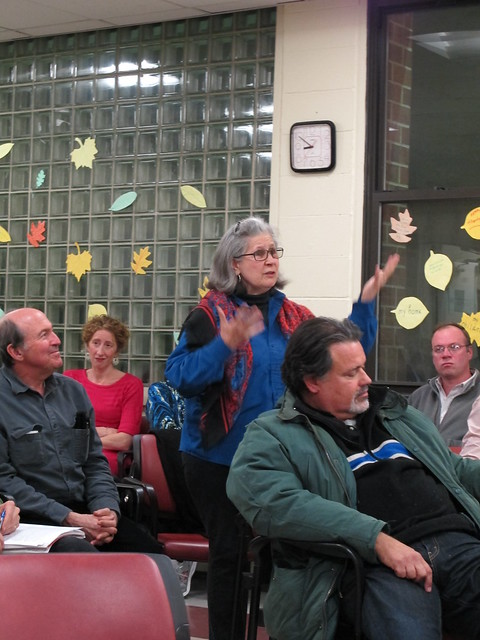
One Gowanus resident probably expressed the feeling of the community best.  She said: "You have taken on a very controversial project. I want to very much appreciate your efforts to address our concerns  You said before that you could just put your head down and not do any monitoring. I just wanted to say that, to me, it's a moral responsibility that you are taking responsibility, that you are looking at these things. And I don't think that you can underestimate how much concern, upset and anxiety this has caused.  I don't think you can give us enough sympathy for what we are going through.  You are going to have your buildings, make your money and cut off the sky.  We are going to be left with the results."

If you live near the Lightstone site and need to report a problem,  please call 311, email Community Board 6 at info@BrooklynCB6.org and call the developer's hotline at 646 362 1500.


Read more

Friday, October 31, 2014

"Think With Us": EPA Provides Bigger Picture In Regards To Siting One Of Two Gowanus Retention Tanks

IMG_1753
At Tuesday's General Gowanus Canal Community Advisory Committee meeting
IMG_1756
Christos Tsiamis, EPA Region 2 Project Manager for Gowanus Canal Superfund Site
IMG_1532
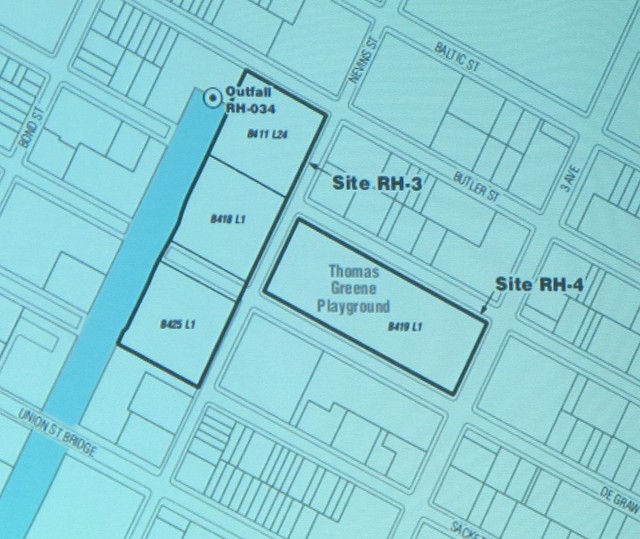
Two sites proposed by DEP for an 8 million gallon CSO retention tank at the top of the canal near Outfall Number RH-034 . One is Thomas Greene Park, the other is a site consisting of three privately owned lots adjacent to the park at Nevins Street between Butler, De Graw and Sackett Street.
IMG_1726
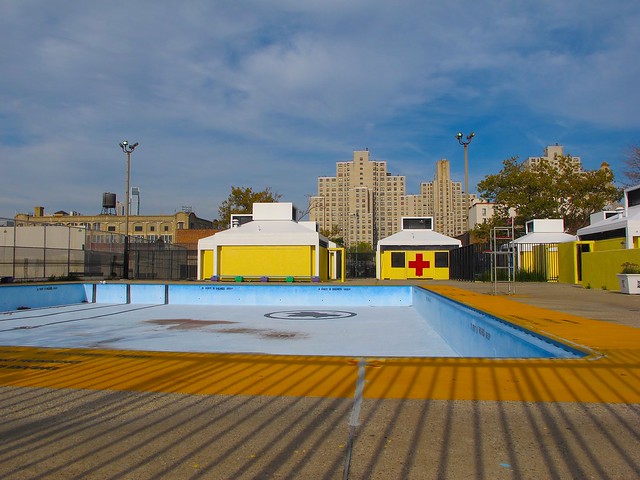
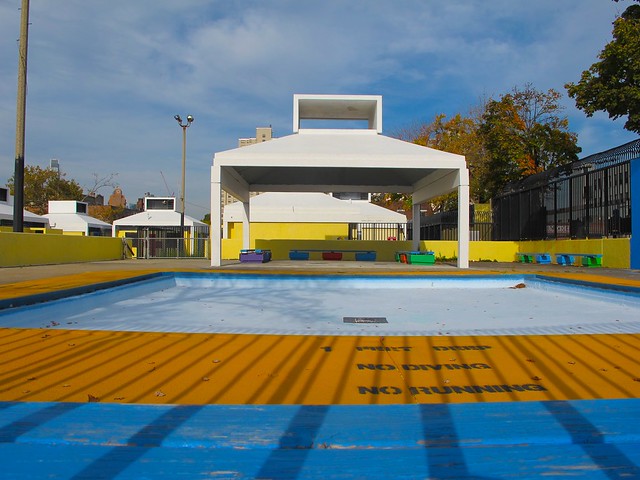
The Double D Pool at Thomas Greene Park
IMG_1724
Handball court near Nevins Street at Douglass Greene Park
IMG_1725
IMG_1727
1928 photo of the former MGP site at Douglass Street, where Thomas Greene Park is now
The park, surrounded by industry, as seen from 4th Avenue looking towards the Gowanus Canal in the 1930s.
IMG_1770
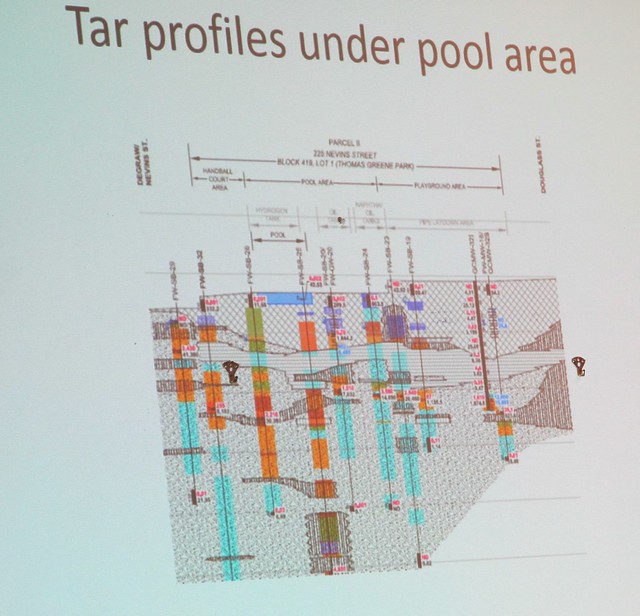
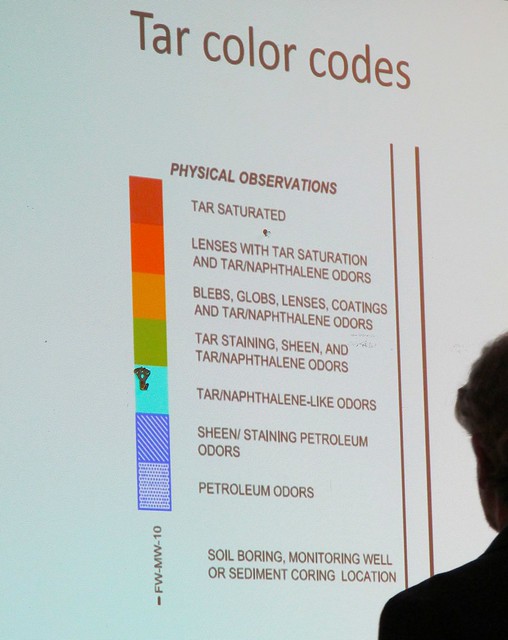
Schematic showing coal tar pollution under the Double D Pool at Thomas Greene Park
IMG_1769
Friends of Douglass Greene Pool
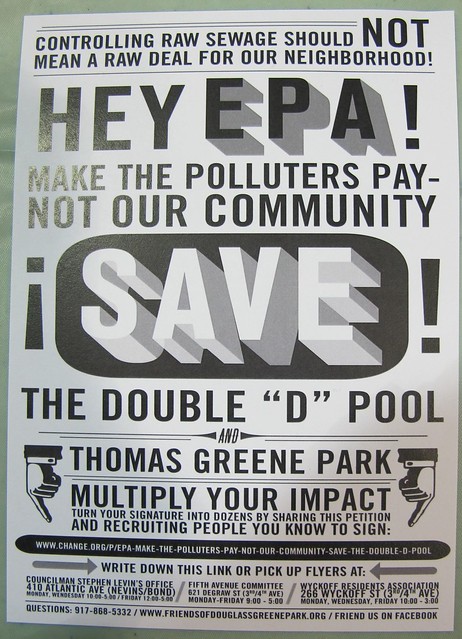
Flyer circulated by Friends Of Thomas Greene Park at a recent public meeting

The discussion at Tuesday night's general meeting of the Gowanus Canal Community Advisory Group (CAG) centered mostly around the siting of one of the two retention tanks the US Environmental Protection Agency is ordering the City of New York to build near two major Combined Sewer Outflows in the polluted waterway.

Last month, the NYC Department of Environmental Protection submitted to EPA two potential locations for each of the two tanks mandated by the Record of Decision (ROD).   For the retention basin at the head of the canal, near Outfall RH-034, DEP has suggested Thomas Greene Park and a second location across from the park, consisting of three blocks between the canal and Nevins Street from Butler Street to Sackett Street.

Thomas Greene Park is publicly owned, so the city would not need to purchase the land. The alternative site across the street, however, is privately owned and would need to be purchased by the City, presumably by means of Eminent Domain. There are currently businesses operating on the three blocks in question, which would have to be relocated. 

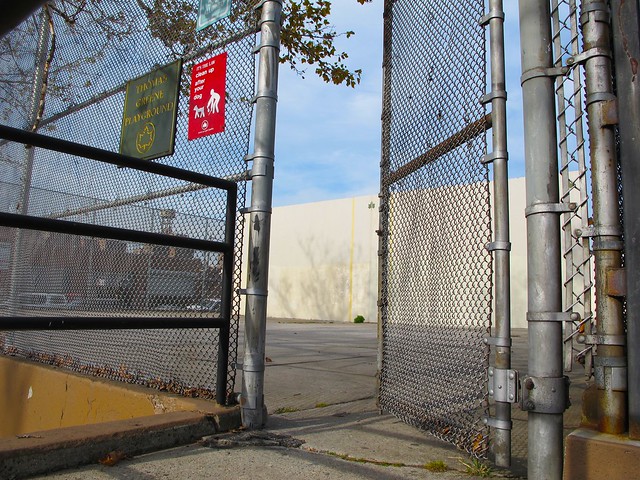
Complicating matters further, Thomas Greene Park sits on top of a former Manufactured Gas Plant (MGP) and coal tar is currently oozing under the Double D pool area and flowing towards the Gowanus Canal.   New York State Department of Environmental Conservation is currently finalizing an environmental remediation plan under the State Brownfield Program to deal with the contamination.  
The cost for the mandated clean-up will be assumed by the responsible party; National Grid.

The remediation at the site will most probably mean moving heavy equipment in and around the park.  It may also mean that the pool needs to be dug up.  That's why EPA suggested that the City place the retention tank there, since it would save money.

At a recent community meeting hosted by Congresswoman Nydia Velázquez, however,  the City made clear that it favors placing the retention tank under the privately owned land across the street. 

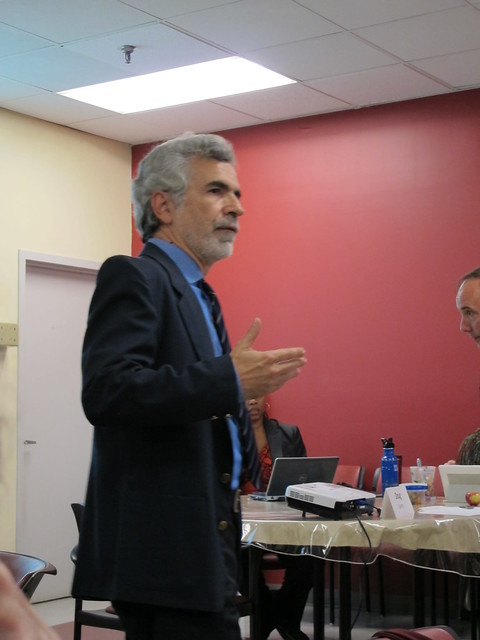
At Tuesday's CAG meeting, Christos Tsiamis of EPA wanted to provide some clarity to the community on this particular  subject, especially since Friends Of Thomas Greene Park, a group with representation on the CAG, distributed a flyer that seemed short of information but full of subtext.  
The flyer urged people to sign a petition addressed to Judith Enck, EPA Region 2 administrator , to "save our pool," and to "tell EPA to make the polluters pay!" 
The actual online petition states: "the EPA Superfund clean-up needs to be an investment in our community, and not theft of our public land."

Tsiamis' response was clear: "The site needs to be remediated. If you don't remove the pool, the park will not be remediated." He pointed out that  "this means the potential polluter does not need to pay. So when you send this [flier] out, you make the polluter NOT pay. "
He also pointed out that the only theft of land would involve the City taking the privately owned land by eminent domain if the owners refuse to sell. "That would be closer to theft than closing the park for two years."  He added: "The [EPA] does not like taking land if there is an alternative."
"If Thomas Greene Park is used for the retention basin, it would be temporarily taken.  You need to take the land in order to improve the land. Then you return it.  This is usually called 'Capital Improvements'.

As for reconstructing the pool if it needs to be removed,  Tsiamis suggested that the community work towards a better future for the facility as well as for a better clean-up of Thomas Greene Park.  
He pointed at Riverbank State Park, a park with a pool built on the top of a sewage treatment facility on the Hudson River as an example of what is possible.
Indeed, if the City is prepared to pay millions for the privately owned land across the street, perhaps the money would better spent rebuilding the pool.  Perhaps we could even get an indoor facility, which could be open during the entire year, instead of only 2 months. "Look at the better investment for the community," Christos told the CAG. "You need all the information to make an informed decision."

As for Friends Of Douglass Greene Park, it is unclear why they would try to protect the pool if it means the pollution underneath will not be fully remediated.  By doing so they are (willingly or unwillingly) creating cover for DEP and National Grid.
The group was told by a representative of the New York City Parks Department back in 2008 that the Double D pool may need to be pulled up if DEC finds contamination underneath it.  I can't imagine why the group is now so outraged after the presence of coal tar was confirmed.

Two additional points to consider are:
1) DEP did not consider cost when it suggested the two sites for the tank in the upper portion of the canal.  When this is figured in, there is no doubt that purchasing the three blocks of private land on Nevins Street would be an outrageous waste of our taxpayer money, given the fact that the City already owns the park.
2) DEP appears to have forgotten to tell the private owners of its intention to buy their land.  I spoke to one of the them a few days ago and he seemed surprised. He told me that the City had never approached him.

We all need to make sure that we understand what is at play here.  For decades now, National Grid and the City have failed to assume responsibility for the environmental hazards they have exposed us to in Gowanus.
We are closer than ever to finally getting some resolution.  Let's choose our battles and seize the moment. And most importantly, let's make sure we don't lose sight of the bigger prize: a clean canal, free of toxins and human waste.


Read more

Thursday, October 23, 2014

Notes On Congresswoman Velázquez's Informational Meeting With EPA, DEP And NYCHA At Wyckoff Gardens

IMG_1494
Last Night at the Wyckoff Gardens Community Center
IMG_1498
Congresswoman Nydia Velázquez
IMG_1502
Walter Mugdan, Superfund Division Director, US EPA, Region 2
IMG_1493
IMG_1507
Natalie Loney. EPA Region 2 Community Involvement CoordinatorIMG_1521
Councilmember Brad Lander
IMG_1525
Eric Landau, Associate Commissioner, Public Affairs at 
NYC Department of Environmental Protection
Luis Ponce, NYCHA Vice President of Operations
IMG_1539
Joe Ann Brown, representative of Warren Street Houses' tenant associationIMG_1540
NYCHA resident asking about a job training institute as part of Superfund clean-up 
IMG_1543
Gowanus NYCHA resident asking for help in getting his car replaced after Hurricane Sandy

Congresswoman Nydia Velézquez hosted an informational meeting at Wyckoff Gardens Community Center last night with representatives of the U.S. Environmental Protection Agency, New York City Department of Environmental Protection and of New York City Housing Department (NYCHA).

The meeting was meant to engage low-income housing residents in the Gowanus Superfund process, as well as to give residents of Gowanus Houses and Wyckoff Gardens, who were particularly hard hit by Hurricane Sandy, the opportunity to address issues of flooding and aging infrastructure. In particular, representatives of both apartment complexes have repeatedly complained of raw sewage in their basement and and gurgling out of their kitchen and bathroom sinks and tubs.

"Since the beginning of this process," the congresswoman told the community,  "one of the top priorities of mine, as well as the other elected officials, has been to assure community involvement and input, and I must say that EPA, under the leadership of Judith Enck, has kept this in mind throughout.  That is why the inclusive process implemented by EPA has resulted in a better strategy. Going forward, we must continue to insure that the public is familiar and comfortable with how the canal is remediated. That is why it is not only important to have the meetings with the Gowanus Superfund Community Advisory Group, but also to bring some of the meetings here. I need and I want to see more participation  from Public Housing residents."

The U.S. Environmental Protection Agency Region 2 was represented by Walter Mugdan, Superfund Division Director and by Natalie Loney, Community Involvement Coordinator.

Mr. Mugdan reminded the community that it has been exactly one year since the EPA issued its Record of Decision (ROD), which represents the finalized cleanup plan for the Gowanus Canal. He explained that there are two major components to the Superfund clean-up. The first component consists of dredging the heavily contaminated mud at the bottom of the canal and to carefully managed the material and to ship it to authorized, appropriate disposal locations outside of the New York area. In addition, the deeper contaminated soil that can not be removed will be capped to isolate it from the water and from aquatic life.
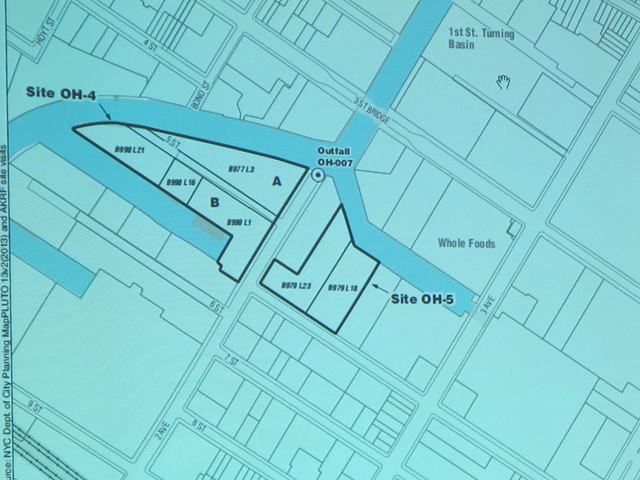
The second component relates to preventing raw sewage overflow from recontaminating the canal after it is dredged. In the ROD, the EPA is ordering City of New York to site two retention tanks near two major outflows, RH-034 at the top of the canal and  OH-007 near the 5th Street turning basin.
"We have determined in our decision, that there will have to be a significant reduction in the amount of Combined Sewage material that goes into the canal when it rains.  In order to build the tanks that will be necessary to capture the extra sewage rainwater,  the City of New York, which is responsible for doing this, will have to find a location for these tanks."

Natalie Loney gave an in depth presentation on how the Superfund program works and where in the process the Gowanus Canal Superfund stands today. [ You can access a video of Ms. Loney giving a similar presentation at TedX Gowanus here.]

Eric Landau, Associate Commissioner, Public Affairs at NYC Department of Environmental Protection  spoke about the 'many things that are going on in Gowanus.
"There is a lot that DEP is involved in here in Gowanus currently," he said.  DEP is in the process of installing High Level Storm sewers, "which will help with the flooding and will have a CSO benefit."  The City, with New York States Department of Environmental Conservation,  'is working on reducing CSOs in the canal" by putting together a long term control plan.
In addition, DEP is installing Green infrastructure elements like bioswales to capture rain water so that it does not get mixed with sewer water.

Last month, the DEP submitted to EPA two potential locations for each of the two CSO retention tanks mandated by the Record of Decision.  
For the retention basin at the head of the canal, near Outfall RH-034,  DEP has suggested Thomas Greene Park, a public park.  The second proposed location is made up of three privately owned lots across the street on Nevins Street between Butler, De Graw and Sackett Street.

IMG_1532
For Outfall Number OH-007, DEP has identified the  City-owned Salt Lot at Second Avenue at the edge of the canal.  The second location is located between the canal and 5th Street.

IMG_1535
"This is a long process.  From this point to when we get back to EPA and the community with the one site [for each tank] that we think makes the most sense, it is the end of June [2015]. From now till June, there are still a lot of things that need to be looked at, including cost and how the community feels about the various locations.  We are very well aware of how the community feels about the Thomas Greene Playground.  We definitely heard that and we take this very seriously. That is also why it is our second rank site according to our criteria."

What Landau failed to mention is that Thomas Greene Park is publicly owned already,  whereas the alternative site for Outfall RH-034 across the street is privately owned and would need to be purchased, presumably by means of Eminent Domain.  The businesses currently operating on the land would need to be relocated.
All that would cost time. legal expenses and money to purchase the land.  Considering that on its website , DEP states that it "believes that the cost of the tanks would be five to ten times higher than EPA has estimated", it is hard to believe that the agency would rank the privately owned site higher than a site that it already owns.

Landau also failed to mention that Thomas Greene Park sits on top of a former Manufacturing Gas site for which New York DEC is currently finalizing an environmental remediation plan under the State Brownfield Program.  The coal tar that currently sits under the park and the pool will most likely have to be dug up anyway, which means that placing the retention tank there could save additional money.

Finally, Luis Ponce, NYC Housing Authority's Vice President of Operations, was able to address the sewer back up issue that were foremost on the minds of most Gowanus Houses and Wyckoff Gardens residents who came out last night.
Ponce explained that since receiving the complaints, NYCHA had determined that the problem was  the result of stoppage within the buildings'  waste pipes, most probably caused by grease being poured into the kitchen drains.  The catch basins had been cleaned out and the situation resolved.
"This is definitely a NYCHA issue, not a Gowanus Canal issue," Ponce stated.


1928 photo of the former MGP site at Douglass Street, where Thomas Greene Park is now


Read more

Wednesday, September 10, 2014

Lightstone Group's Gowanus Development Just Got More Expensive By $20 Million

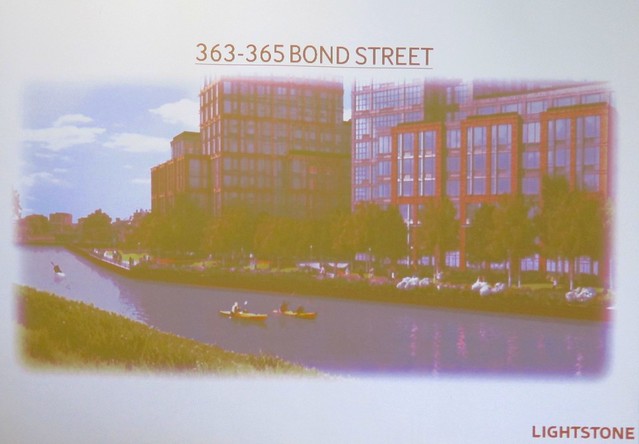
Rendering of 363 and 365 Bond Street. by Lightstone Group

On September 9th, the Environmental Protection Agency Region 2 issued a statement regarding a proposed $20 million settlement with two subsidiaries of The Lightstone Group Development to conduct environmental clean-up on the companies 3.5 acre development site along the shores of the Gowanus, where they plan 700 units of residential housing.
 According to the proposed settlement, the companies, LSG 363 Bond Street LLC and LSG 365 Bond Street LLC, have agreed to conduct sampling, cleanup work, and other measures on their three parcels of land. They have also committed to removing 17,500 cubic yards of contaminated soil from those parcels.

From the EPA press release:
"Under the terms of the settlements, and with EPA oversight, the Lightstone subsidiaries will, among other actions:
*Conduct additional sampling to help determine additional source areas of contamination
*Remove an estimated 17,500 cubic yards of contaminated soil to facilities licensed to receive
the waste
*Construct a bulkhead to prevent residual contamination from spreading and to permit dredging
*Ensure that the project will not be a future contamination source to the Canal through EPA approval of sewage and storm water plans
More than a dozen contaminants, including polycyclic aromatic hydrocarbons (PAHs), polychlorinated biphenyls (PCBs) and heavy metals, including mercury, lead and copper, were found at high levels in the sediment in the Gowanus Canal. PAHs and heavy metals were also found in the canal water. PAHs are a group of chemicals that are formed during the incomplete burning of coal, oil, gas, wood, garbage or other organic substances. PCBs were used as coolants and lubricants in transformers, capacitors and other electrical equipment and their manufacture was banned in 1979. PCBs and PAHs are suspected to be cancer-causing and PCBs can have neurological effects as well.

The EPA finalized its plan to clean up the Gowanus Canal Superfund site in September 2013. The cleanup will include removing contaminated sediment that has accumulated as a result of industrial and sewer discharges from the bottom of the Canal by dredging. The dredged areas will then be capped. The plan also includes controls to reduce combined sewer overflows, and other land-based sources of pollution from compromising the cleanup. The engineering design work for the project is ongoing.

The Lightstone properties, which were re-zoned by the City of New York for residential use in 2009, were formerly used for a variety of industrial purposes, including oil terminals, dry cleaners, manufacturing and warehousing. Sampling has identified contamination at the properties, particularly Volatile Organic Chemicals (VOCs), PAHs and metals from historic operations, which needs to be cleaned up. The state Brownfields cleanup work addresses the land’s future use as residential housing; the EPA-required work will prevent the contaminants from getting into the Gowanus Canal.

The EPA has identified numerous parties that are potentially responsible for the contamination of the Gowanus Superfund site, including National Grid, the City of New York and other private and federal government entities. Lightstone has not been identified as a party responsible for the contamination at the Gowanus Superfund site based on provisions of the Superfund law designed to promote productive reuse of land that is, or may be, contaminated. In exchange for agreeing to the cleanup work announced today, the EPA has agreed not to sue Lightstone in the future for additional cleanup work related to existing contamination at the property and impacts to or from the Gowanus Canal."


The agreement can be accessed on the EPA web site here.

The EPA will accept public comments on the two proposed settlement agreements until October 8, 2014.

Good to know that Lightstone Group will have to do an even more thorough clean-up than under the agreement they entered with New York State's Department Of Environmental Conservation under the Brownfield Cleanup program.


Read more

Tuesday, September 09, 2014

PMFA Reader Wants To Know: "Why Are Ferrara Brothers Being Allowed To Take Over The Public Place Site?"

photo-16
Photo courtesy of Carroll Gardens/ Gowanus resident.
Taken from 9th Street subway station
IMG_1098
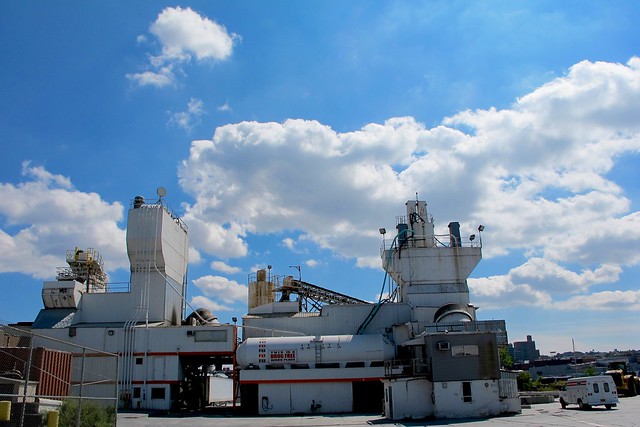
The former Citizens Gas Works plant as seen from Smith Street
IMG_1081
Ferrara Brothers Concrete plant as seen from 5th Street and the Gowanus Canal
IMG_1082
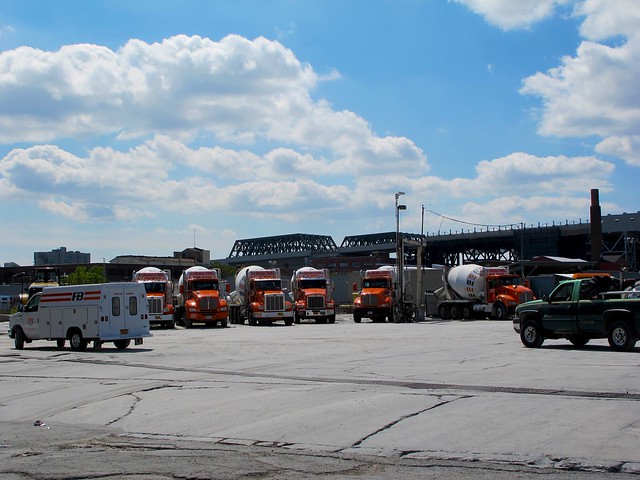
Ferrara Brothers concrete trucks
IMG_1092
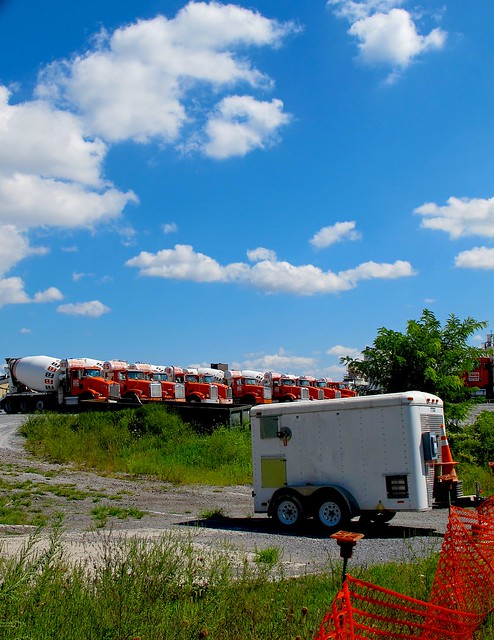
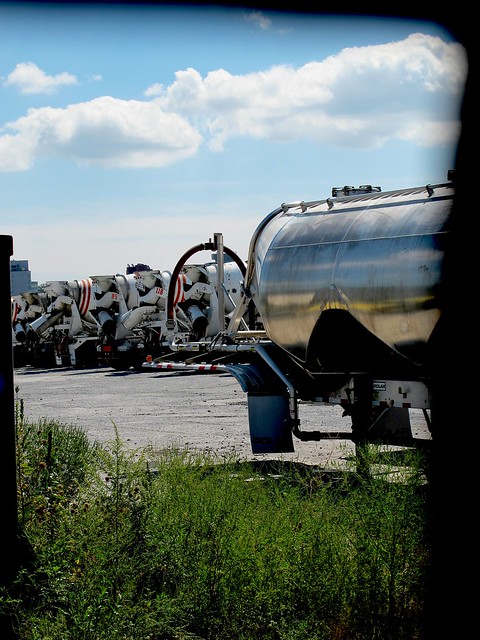
More trucks have recently appeared and taken up more space on the site.
IMG_1088
IMG_1100
Near Huntington Street.
This part of the MGP site is privately held. National Grid has installed coal tar recovery wells.
IMG_1105
Here is a question that a local resident just sent to me in an email a few days ago:
"Why are Ferrara Bros being allowed to take over the Public Place site? Aren't we trying to do a cleanup here?"
The question was accompanied by the photo above,  which shows the site as seen from the 9th Street subway station.

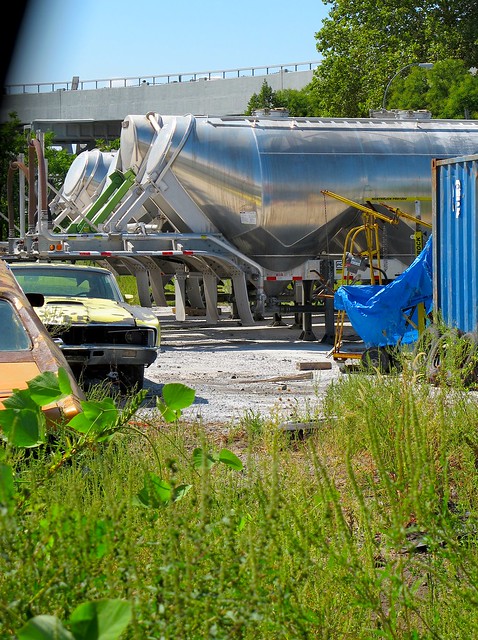
I have asked myself the same thing every time I walk past the site bound by Smith, Huntington and Fifth Streets and the Gowanus Canal. Indeed, in the past one or two years, the concrete company seems to have expanded operations on the site by moving more and more trucks in.
Why should that matter? Because, as the resident mentioned, the heavily polluted land needs to be remediated.

Here is some background:
The approximately 8.4 acre site was the home of the former Citizens Gas Light Company's 12th Ward Gas Work Plant, where coal and petroleum products were turned into flammable gas. The gas was used for cooking, lighting, heating and commercial purposes in the surrounding neighborhoods.

Unfortunately, one of the by-products of this gasification process is coal tar, a black viscous liquid, which is harmful to the environment. Coal tar has been found at depths of 150 feet on the site.
The Citizens Gas Works plant was decommissioned in 1958.  The responsibility for the clean-up falls on National Grid, which has entered into a Voluntary Cleanup Agreement with the NYS Department of Environmental Conservation (NYSDEC).

Since some of the coal tar has also been found to ooze from the site into the adjacent Gowanus Canal, the US Environmental Protection Agency, which declared the canal a Superfund site in 2010, is also involved.  EPA has named National Grid a Potential Responsible Party [PRP] which means that the company will contribute to the Gowanus Canal clean-up.

The City of New York acquired ownership of Lots 1 and 100 of the former MGP site through a condemnation proceeding in 1975.  That land is known in the community as "Public Place". The other parcels are privately owned.
Ferrara Brothers Concrete has been operating on lot 100 near 5h Street  since the early 1970's. The company rents the land under a month-to month lease agreement with New York City.  

There has been talk of Ferrara Brothers relocating since at least 2007. Obviously, the City has continued leasing the lot to them.
Why then, one may ask,  has Ferrara Brothers been allowed to expand on the site, since this has forced National Grid and the EPA to perform their remedial investigations around the concrete trucks.

Granted, the actual environmental work has not actually begun, but one has to wonder if the expansion of Ferrara on the site has not hampered or even slowed things down somewhat.

Don't misunderstand. We should of course protect existing businesses in Gowanus, and cement plants are an important and necessary part of the city. However, Ferrara Brothers, which lists its main address in Flushing Queens, has four other plants.
From Ferrara Brothers' Facebook page:
"Over the past 45 years, we have grown to become a concrete producer whose name is synonymous with quality and service. From 5 trucks and one concrete plant to 80 trucks and 5 concrete plant, Ferrara Bros. continues to grow."

It seems ironic that New York City would allow Ferrara Brothers' to take up more of the site. After all, the City has slated their parcels for development. The Gowanus Green project would bring 770 units of affordable housing to the shores of the Gowanus.

Of course, one has to wonder how prudent and realistic it is to build housing on such historically polluted land. But it is hard to understand why the City wouldn't want to make things as easy as possible so that the complicated environmental remediation work can move forward with as few obstacles as possible. 

Screen Shot 2012-04-30 at 9.21.52 AM
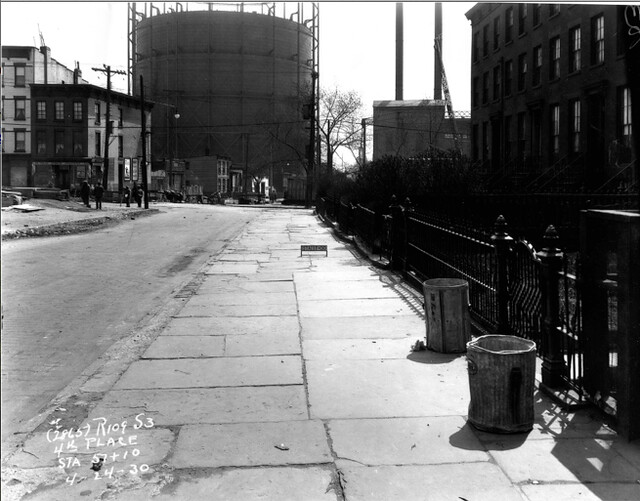
A view of Public Place from 4th Place in the 1930's
National Grid Presentation To CB6


Read more