Showing posts with label Walter Mugdan. Show all posts

Thursday, October 23, 2014

Notes On Congresswoman Velázquez's Informational Meeting With EPA, DEP And NYCHA At Wyckoff Gardens

IMG_1494
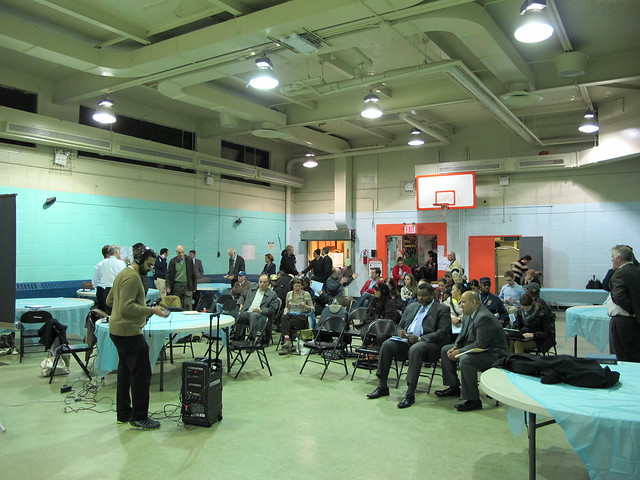
Last Night at the Wyckoff Gardens Community Center
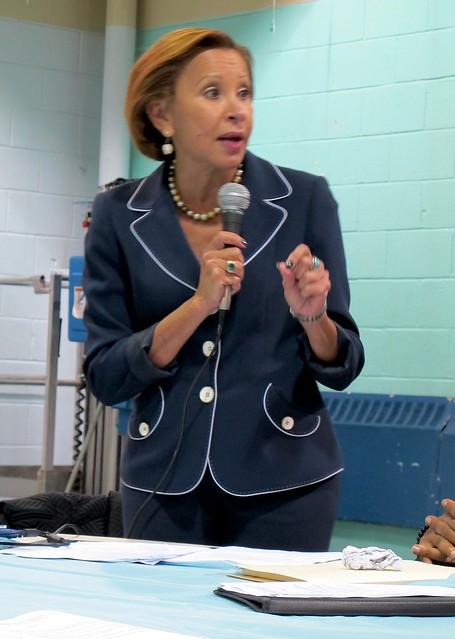
IMG_1498
Congresswoman Nydia Velázquez
IMG_1502
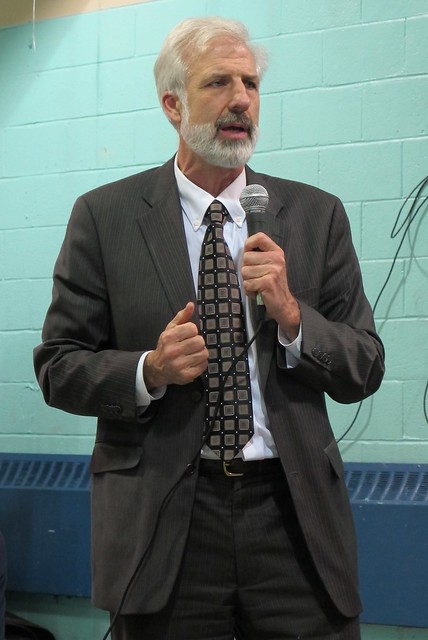
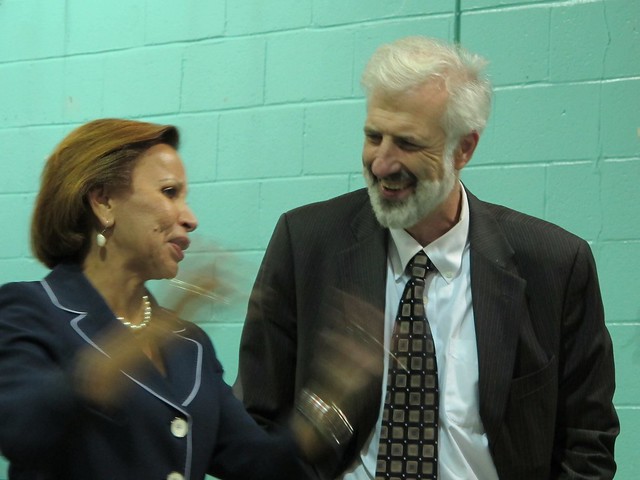
Walter Mugdan, Superfund Division Director, US EPA, Region 2
IMG_1493
IMG_1507
Natalie Loney. EPA Region 2 Community Involvement CoordinatorIMG_1521
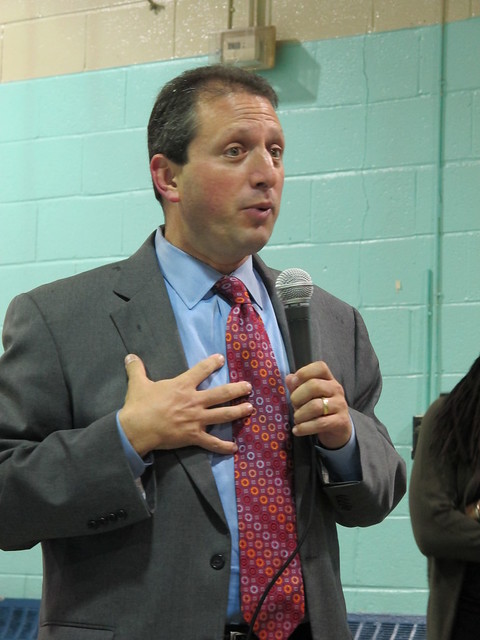
Councilmember Brad Lander
IMG_1525
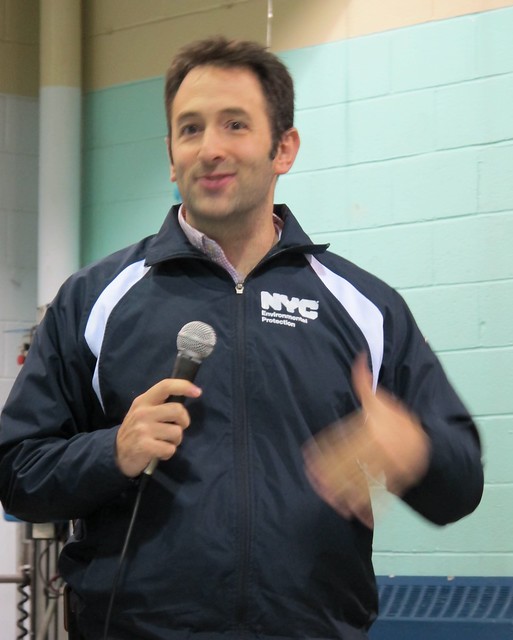
Eric Landau, Associate Commissioner, Public Affairs at 
NYC Department of Environmental Protection
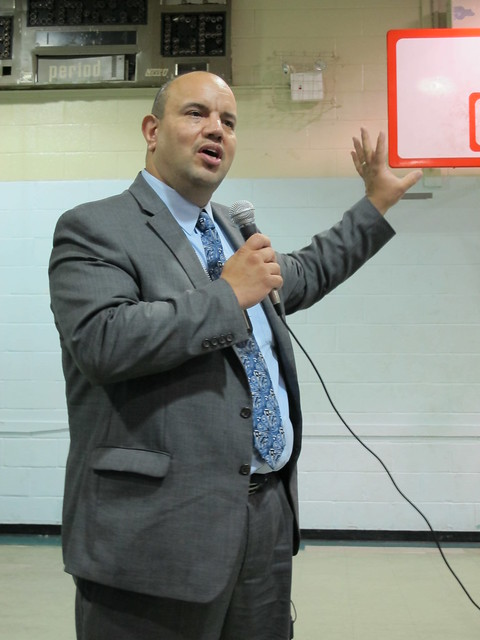
Luis Ponce, NYCHA Vice President of Operations
IMG_1539
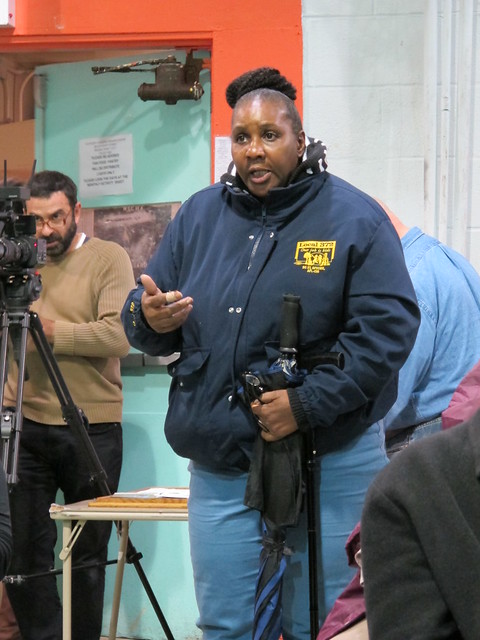
Joe Ann Brown, representative of Warren Street Houses' tenant associationIMG_1540
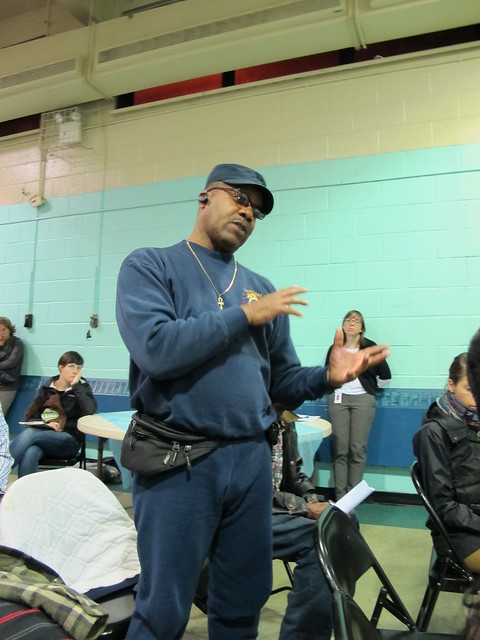
NYCHA resident asking about a job training institute as part of Superfund clean-up 
IMG_1543
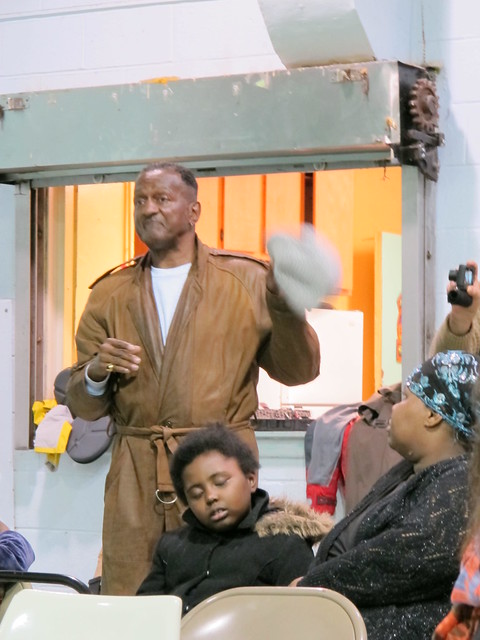
Gowanus NYCHA resident asking for help in getting his car replaced after Hurricane Sandy

Congresswoman Nydia Velézquez hosted an informational meeting at Wyckoff Gardens Community Center last night with representatives of the U.S. Environmental Protection Agency, New York City Department of Environmental Protection and of New York City Housing Department (NYCHA).

The meeting was meant to engage low-income housing residents in the Gowanus Superfund process, as well as to give residents of Gowanus Houses and Wyckoff Gardens, who were particularly hard hit by Hurricane Sandy, the opportunity to address issues of flooding and aging infrastructure. In particular, representatives of both apartment complexes have repeatedly complained of raw sewage in their basement and and gurgling out of their kitchen and bathroom sinks and tubs.

"Since the beginning of this process," the congresswoman told the community,  "one of the top priorities of mine, as well as the other elected officials, has been to assure community involvement and input, and I must say that EPA, under the leadership of Judith Enck, has kept this in mind throughout.  That is why the inclusive process implemented by EPA has resulted in a better strategy. Going forward, we must continue to insure that the public is familiar and comfortable with how the canal is remediated. That is why it is not only important to have the meetings with the Gowanus Superfund Community Advisory Group, but also to bring some of the meetings here. I need and I want to see more participation  from Public Housing residents."

The U.S. Environmental Protection Agency Region 2 was represented by Walter Mugdan, Superfund Division Director and by Natalie Loney, Community Involvement Coordinator.

Mr. Mugdan reminded the community that it has been exactly one year since the EPA issued its Record of Decision (ROD), which represents the finalized cleanup plan for the Gowanus Canal. He explained that there are two major components to the Superfund clean-up. The first component consists of dredging the heavily contaminated mud at the bottom of the canal and to carefully managed the material and to ship it to authorized, appropriate disposal locations outside of the New York area. In addition, the deeper contaminated soil that can not be removed will be capped to isolate it from the water and from aquatic life.
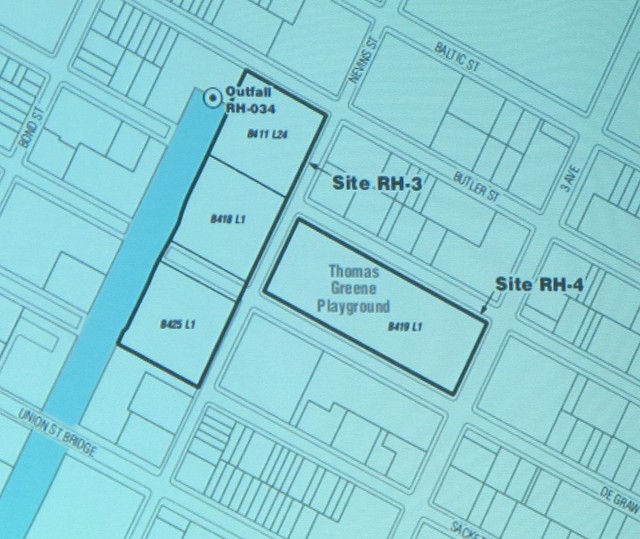
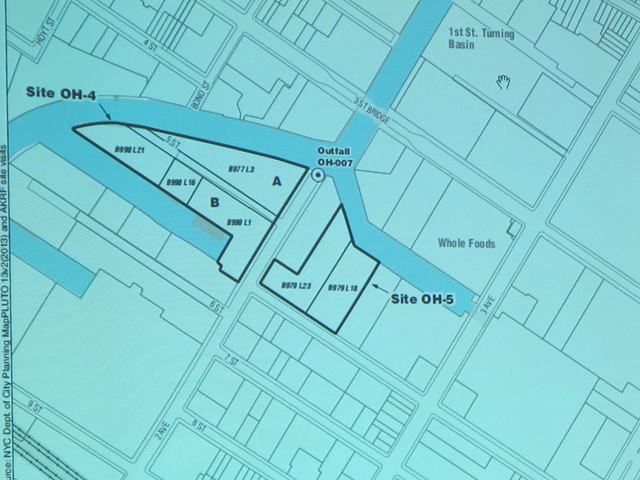
The second component relates to preventing raw sewage overflow from recontaminating the canal after it is dredged. In the ROD, the EPA is ordering City of New York to site two retention tanks near two major outflows, RH-034 at the top of the canal and  OH-007 near the 5th Street turning basin.
"We have determined in our decision, that there will have to be a significant reduction in the amount of Combined Sewage material that goes into the canal when it rains.  In order to build the tanks that will be necessary to capture the extra sewage rainwater,  the City of New York, which is responsible for doing this, will have to find a location for these tanks."

Natalie Loney gave an in depth presentation on how the Superfund program works and where in the process the Gowanus Canal Superfund stands today. [ You can access a video of Ms. Loney giving a similar presentation at TedX Gowanus here.]

Eric Landau, Associate Commissioner, Public Affairs at NYC Department of Environmental Protection  spoke about the 'many things that are going on in Gowanus.
"There is a lot that DEP is involved in here in Gowanus currently," he said.  DEP is in the process of installing High Level Storm sewers, "which will help with the flooding and will have a CSO benefit."  The City, with New York States Department of Environmental Conservation,  'is working on reducing CSOs in the canal" by putting together a long term control plan.
In addition, DEP is installing Green infrastructure elements like bioswales to capture rain water so that it does not get mixed with sewer water.

Last month, the DEP submitted to EPA two potential locations for each of the two CSO retention tanks mandated by the Record of Decision.  
For the retention basin at the head of the canal, near Outfall RH-034,  DEP has suggested Thomas Greene Park, a public park.  The second proposed location is made up of three privately owned lots across the street on Nevins Street between Butler, De Graw and Sackett Street.

IMG_1532
For Outfall Number OH-007, DEP has identified the  City-owned Salt Lot at Second Avenue at the edge of the canal.  The second location is located between the canal and 5th Street.
IMG_1535
"This is a long process.  From this point to when we get back to EPA and the community with the one site [for each tank] that we think makes the most sense, it is the end of June [2015]. From now till June, there are still a lot of things that need to be looked at, including cost and how the community feels about the various locations.  We are very well aware of how the community feels about the Thomas Greene Playground.  We definitely heard that and we take this very seriously. That is also why it is our second rank site according to our criteria."

What Landau failed to mention is that Thomas Greene Park is publicly owned already,  whereas the alternative site for Outfall RH-034 across the street is privately owned and would need to be purchased, presumably by means of Eminent Domain.  The businesses currently operating on the land would need to be relocated.
All that would cost time. legal expenses and money to purchase the land.  Considering that on its website , DEP states that it "believes that the cost of the tanks would be five to ten times higher than EPA has estimated", it is hard to believe that the agency would rank the privately owned site higher than a site that it already owns.

Landau also failed to mention that Thomas Greene Park sits on top of a former Manufacturing Gas site for which New York DEC is currently finalizing an environmental remediation plan under the State Brownfield Program.  The coal tar that currently sits under the park and the pool will most likely have to be dug up anyway, which means that placing the retention tank there could save additional money.

Finally, Luis Ponce, NYC Housing Authority's Vice President of Operations, was able to address the sewer back up issue that were foremost on the minds of most Gowanus Houses and Wyckoff Gardens residents who came out last night.
Ponce explained that since receiving the complaints, NYCHA had determined that the problem was  the result of stoppage within the buildings'  waste pipes, most probably caused by grease being poured into the kitchen drains.  The catch basins had been cleaned out and the situation resolved.
"This is definitely a NYCHA issue, not a Gowanus Canal issue," Ponce stated.


1928 photo of the former MGP site at Douglass Street, where Thomas Greene Park is now


Read more

Monday, September 30, 2013

A Monumental Day For Gowanus: EPA Releases Its Finalized Plan To Clean Up the Gowanus Canal Superfund Site


IMG_4243
IMG_4242
IMG_4284
A copy of the Record Of Decision for the Gowanus Canal Superfund
(with various signatures from EPA embers and members of the community)
IMG_4261
IMG_4244
EPA Regional Manager Judith Enck
IMG_4251
Christos Tsiamis, EPA Region 2 project manager for the Gowanus Canal, Brian Carr, EPA Region 2 lawyer, and Walter Mugdan, EPA Region 2's Director of the Division of Environmental Planning and Protection
IMG_4254
Brian Carr, Natalie Loney, EPA Region 2 Community Involvement Coordinator, and Christos Tsiamis
Elected officials
IMG_4272
State Senator Velmanette Montgomery
IMG_4265
Congresswoman Nydia Velázquez
IMG_4270
Assemblywoman Joan Millman
IMG_4274
Borough President Marty Markowitz
IMG_4279
Councilmember Brad Lander
IMG_4257
Lizzie Olesker, Gowanus Canal Community Advisory member who read a statement for the CAG
IMG_4278
IMG_4277
Gowanus Superfund Community Advisory Group

This is a historical day for Gowanus. After 150 years of environmental abuse, which turned it into one of the most contaminated bodies of water, there is a plan to remediate the 1.8 mile toxic canal, and that plan has just been written into law.
As promised, and keeping with their initial timeline, the Environmental Protection Agency (EPA)just released the signed Record Of Decision (ROD) for the clean-up of the Gowanus Canal Superfund.

At a press conference held on the shores of the canal this morning ,  EPA Regional Manager Judith Enck was joined by her amazing Region 2 team, which worked so tirelessly towards this moment:
Walter Mugdan, EPA Region 2's Director of the Division of Environmental Planning and Protection, Christos Tsiamis, EPA Region 2 project manager for the Gowanus Canal, Brian Carr, EPA Region 2 lawyer, and Natalie Loney, EPA Region 2 Community Involvement Coordinator.

The ROD represents the blue print for the remediation. The clean-up will cost $506 million, last 8 to 10 years, and will include dredging of the toxic material, caping, controls to reduce sources of contamination from uplands, as well as removal of contamination from the 1st Street Basin. Most importantly, the ROD will address and control the flow of contaminated sewage solids from the Combined Sewer Overflow. The EPA is requiring that discharges from two major outflows be captured in retention basins. This will reduce CSOs in the canal by an estimated 58 to 74%.

Enck took time to thank the community for all its input. The agency received over 1,800 comments from the public after it outlined the various clean-up methods in its Proposed Remediation Plan, which was released earlier this year.  The comments were carefully considered to chose the final remedy.
For example, the EPA decided to pass on the option of remediating the least contaminated sediment in a facility in Red Hook after residents made it clear that they would not support it.

Several members of the EPA Gowanus Canal Superfund Community Advisory Group (CAG) were also present this morning.  Member Lizzie Olesker read the statement below for the entire CAG.
The Gowanus Canal is the first EPA Superfund Site in Brooklyn, making the announcement of this Record of Decision (ROD) an historic event for the 2.5 million people of our borough. The much needed cleanup of the Gowanus Canal is long awaited; and this Record of Decision comes as a firm commitment to the people of Brooklyn that the contaminates of the Gowanus Canal will be removed from our dense urban environment. The CAG looks forward to a detailed review of the ROD and providing ongoing input to those elements that will impact the community moving forward. 
Formed in 2010, the mission of the Gowanus Canal CAG is to be a forum for dialogue between representatives of all segments of the community about the federal Superfund clean-up of the Gowanus Canal and other related issues of concern to the community 
This EPA Record of Decision (or ROD) is the outcome of more than 3 years of extensive meetings and discussions with the community and the Gowanus Canal CAG. The Gowanus Canal CAG is by far the largest, and most diverse community group ever formed to work with the EPA on a Superfund site. The CAG, having arrived at a number of consensus resolutions on the canal cleanup, is grateful for the opportunity and role it has had in the process leading up to this announcement of the Record of Decision. The CAG provided consensus resolutions to EPA supporting the overall scope and approach of the proposed plan, while stressing a focus on ecological restoration and honoring the historical character of the canal. 
The CAG appreciates the EPA's attentiveness to schedules and time frames in reaching this ROD. We understand that the CAG, as a community engagement tool, will take on new roles as this process unfolds. The Gowanus CAG looks forward to continuing a robust exchange with the EPA, as design plans for implementing the cleanup that is specified in the ROD moves forward in a timely manner. The CAG is committed to disseminating information about the Gowanus Canal and engaging all area stakeholders in ensuring that community issues are heard and articulated to EPA and other agencies. 
Information and a calendar of meetings for the Gowanus Canal CAG can be found at http://gowanuscag.org. The ROD will be discussed in detail at the next full meeting of the CAG on October 22, 2013.
As a resident of this community, I would like to thank the EPA Region 2 team for their dedication, their perseverance and all their hard work on our behalf.
Walter, Christos, Brian and Natalie, words can't adequately express my admiration. I hope you know what this day means to this neighborhood.

The entire Gowanus Canal Superfund Record Of Decision can be accessed here.


Read more

Wednesday, January 25, 2012

EPA Region 2 Presents Gowanus Canal Feasibility Study To Community

IMG_5738
Walter Mugdan, EPA Region 2's, 

Director of the Division of Environmental Planning and Protection
IMG_5768
Christos Tsiamis, EPA Region 2 project manager for the Gowanus Canal
IMG_5746
Patty White, geologist for CH2MHill
IMG_5745
Natalie Loney ,EPA Region 2 Community Involvement Coordinator
IMG_5784
Brian Carr, EPA Region 2 lawyer
IMG_5752
IMG_5750
IMG_5775
IMG_5778IMG_5779IMG_5780

The Environmental Protection Agency's Region 2 team responsible for the Gowanus Canal Superfund clean-up hosted a public information meeting last night at PS 58 to present the Feasibility Study, which was released in late December 2011.
Walter Mugdan, Director of the Division of Environmental Planning and Protection, started the meeting by pointing out that his agency is on schedule. "This job is being done 2 or 3 times faster than it was plausible to expect, but the heavy lifting is yet to come, of course." he told the audience.
Mugdan praised the tremendous effort of the site's manager, Christos Tsiamis, who "is a stern task master. "  The audience gave Tsiamis a rousing round of applause.
Mugdan also acknowledged the very engaged members of the Community Advisory Group (CAG) for the Gowanus, the largest such group in the country.

Patricia White, geologist for CH2MHill, an independent contracting firm hired by the EPA, started off the presentation by reviewing background information about the site. She also explained the Feasibility Study process, which includes:
-Develop remedial action objectives
-develop preliminary remediation goals
-define remediation target areas
-identify and screen remedial technologies
-develop and screen remedial alternatives
-evaluate remedial alternatives in detail
White also pointed out that one of the key Feasibility Study consideration is re-contamination of the canal after the cl were source control from the Combined Sewer Overflow (CSOs) and storm water discharges, discharges from the three former MGP sites, contaminated groundwater discharge, street runoff and discharges from unpermitted pipes.
Christos Tsiamis took over the presentation to speak about the various technologies that were retained and combined into seven remedial alternatives and screened according to effectiveness, implementability and cost.
The sediment dredging and capping alternatives all include dredging of the highly polluted soft sediment at the bottom of the canal, but while some alternatives call for solidifying the top of the native sediment, and capping either with a two-layer cap or a three layer cap.
So far, alternatives 5 and 7 have been retained for further detailed evaluation.
The EPA is also currently evaluating the best treatment and disposal alternatives for the dredged sediment.
The alternatives include offsite disposal, offsite or onsite stabilization with beneficial use, thermal desorption, offsite cogeneration or offsite or onsite stabilization and disposal in a constructed Confined Disposal Facility (CDF)
Of course, Tsiamis pointed out, the Gowanus Canal cannot be cleaned effectively without eliminating the CSO discharges from New York City's sewer system as well as the coal tar oozing from the three National Grid MGP sites lining the canal. The CSO discharges "cannot go on from our perspective" Tsiamis stated.
New York City's Department of Environmental Protection (DEP) has been given a schedule by DEP. Tsiamis will meet with the City to discuss this matter further in February.  ***It is important to note her that the City, one of the major Potentially Responsible Parties (PRP) has not yet signed a consent order to take responsibility of their part of the clean-up.

As for the former MGP sites, EPA is coordinating and prioritizing with National Grid, which is responsible for the clean-up and NYS Department Of Environmental Conservation (DEC), the agency in charge of overseeing the remediation of those sites. According to Walter Mugdan, DEC has been very aggressive in moving forward.
Walter Mugdan diplomatically added: "In due course, we hope that all the involved agencies will recognize what needs to be done."
The next step? A proposed remedy will be presented to the public in 6 to 8 months, and a remedy will be selected by the end of 2012.

Last night's EPA presentation can be viewed online here.


**In one final note, it was announced last night that the EPA Technical Assistance Grant (TAG) for the Gowanus Canal Superfund was awarded to Friends And Residents Of Greater Gowanus.Congratulations to Marlene Donnelly, Bette Stoltz, Linda Mariano, Margaret Maugenest and Diane Buxbaum and all the members of FROGG for their hard work on behalf of the community.

Read more

Wednesday, February 23, 2011

EPA To Community At Last Night's Meeting: "Your Canal Is In Good Hands!"

IMG_8267

IMG_8239

IMG_8233
EPA Region 2 Administrator Judith Enck

IMG_8247
Walter Mugdan, EPA Region 2's
Director of the Division of Environmental Planning and Protection

IMG_8249
Christos Tsiamis, EPA Region 2 Project Manager for the Gowanus Canal

IMG_8240
Natalie Loney, EPA's Region 2 community involvement coordinator

IMG_8259

IMG_8268


Since the Environmental Protection Agency placed the Gowanus Canal on the National Priorities List in March 2010, Christos Tsiamis, EPA Region 2 Project Manager, and his team have been extremely busy conducting investigative field work. Ahead of schedule, they have released their Remedial Investigation Report (R.I.) and the Risk Assessment this last January.

"Your canal is in good hands" EPA Region 2 Administrator Judith Enck assured the community last night in P32's auditorium for a presentation of the findings. "You have the best and brightest EPA talent working on this." After introducing the team of engineers, scientists and lawyers, Enck noted the active involvement of the community, "which is a vitally important component" of the Superfund process. So far, according to Enck, there has been a good level of co-operation with the polluters as well.

Walter Mugdan, EPA's Director of the Superfund Program for Region 2, credited Christos Tsiamis for getting the Remedial Investigation Report done at an accelerated pace. "We considered this a high priority" he told the community. He noted that the Feasability Study will most likely be done by the end of this calendar year. Mugdan expects the remedial work on the canal to be completed by 2020-2022. "It took 150 years to get the canal to the contaminated state it is in now. Taking 10 to 12 years to clean it up does not seem unreasonable." The work would be done "as quickly as it can be done, properly."

Christos Tsiamis then presented the findings of the R.I. as well as the Risk Assessment. During the study, samplings were collected from:
-the top 6 inches of the canal's surface sediment
-deep sediment
-surface water
-fish and crab tissue
-air
-Combined Sewer Overflows (CSO's) and other outfalls
-soil and groundwater on adjacent properties.

The samples revealed just how polluted the Gowanus Canal is. The primary contaminants found were:
-Polycyclic Aromatic Hydrocarbons (PAHs)
-Polychlorinated biphenyls (PCBs)
-Metals (barium, cadmium, copper, lead, mercury, nickel, silver)
-Benzene, toluene, ethylbenzene, xylnes (BTEX)
-Non-aqueous phase liquid (NAPL)
Concentrations of PAHs, PCB's, and eight metals were found to be significantly higher in the canal sediment than in the Gowanus Bay/Upper Harbor.

What does all of this mean as far as health risks to the community? Living, working and inhaling the air along the canal is within the acceptable carcinogen and non-carcinogen hazard range. However, re-creational use of the canal, which increases the risk of exposure to the polluted water and to the sediment, is not advisable. Neither is ingesting of fish and crabs from the canal.

During a question-and-answer period, two important issues were brought up again. The first issue involved the Combined Sewer Overflow. Though the Superfund clean-up only involves the bottom of the canal, the community has repeatedly asked the EPA to insist that New York City stop dumping raw sewage into the Gowanus. According to the NYC's Department Of Environmental Protection, 300 million gallons of Combined Sewer Owerflow (CSO's), made up of 30% storm water and 70% combined sewer waste, currently flows into the canal every year. Work currently done by DEP to upgrade the Gowanus flushing tunnel system will only reduce CSOs by 34 %. That means that a lot of raw sewage will find its way into the canal, even after the Superfund clean-up. Walter Mugdan acknowledged that fact. "It was always understood that this will not get us tothe finish line. In all likelihood, there will come a time when more work will have to be done.


The second issue was the toxicity of the uplands, specifically of Public Place, one of the most polluted sites along the Gowanus, which was once used by Brooklyn Union Gas for coal liquefication. The site has been slated by New York City for development. The Gowanus Green project, as it is ironically named, would bring 770 units of affordable housing to the shores of the Gowanus. Many in the community are sceptical that even after the NYS Department of Environmental Conservancy's remediation, the site will ever be safe for human habitation.
When asked about it, Christos Tsiamis stated: "As the engineer in charge of cleaning the Gowanus Canal, I am seriously concerned. This is something we have to look at closely." DEC's Engineering Geologist Gardiner Cross, who was on hand last night, did not seem worried, but acknowledged the fact that the site is continually leaking coal tar.

°°°°°°°°°°°°°°

Read more

Friday, March 05, 2010

EPA At Last Night's Meeting Regarding Gowanus Superfunding: " We Want To Do A Job That We Can Be Proud Of"


Last Night At PS 58

Just days after the Environmental Protection Agency (EPA) announced that it had placed the Gowanus Canal on its list of Superfund sites, Walter Mugdan, Christos Tsiamis, Brian Carr and Natalie Loney of the agency's Region 2 office, came before the Carroll Gardens/ Gowanus Area residents to speak about what it all means, to explain the clean-up schedule, and to answer questions.

Last night's meeting at PS58 started with a rousing round of applause from the audience. Clearly, the community was pleased by the recent announcement.
Walter Mugdan, EPA District 2 Director, expressed the hope that all parties will now move forward with common purpose.
" Our goal its to get the work done quickly and efficiently, while doing it carefully and thoughtfully."

Christos Tsiamis, the project manager for the Gowanus Canal clean-up, gave a brief outline of the work that lays ahead.

The EPA is currently continuing analytic field work that started in January. The Remedial Investigation includes surface sediment sampling, surface water and air sampling, which is expected to be completed by the end of this year.
All data will be used to do a feasibility study. By the end of 2011, the EPA will be proposing a clean-up plan. By 2012, another public process will commence, which will allow the community to comment formally on the proposal.
By the end of 2012, the EPA will make a final choice on the remedial plan. From then, it will take about 2 to 3 years to design a selected option. Dredging the bottom of the canal will most likely be required.
The actual work will take about 5 years.
The cost of the clean-up is estimated to cost from 300 to 500 million.

The cost for the clean-up will be recouped mostly from Potentially Responsible Parties (PRPs) Early in the clean-up process, the EPA looks for evidence to determine liability by matching wastes found at the site with parties that may have contributed to the pollution.
Nine such PRP's have already been identified by the agency, the City of New York being one of them.
In addition, another 20 companies have been sent informational request forms to determine if they are PRP's as well.
Orphan sites, or sites that have been abandoned by their owners will be cleaned up by the EPA and the cost absorbed by the agency.

The EPA will work closely with both the New York City Department Of Environmental Protection, as well as the the New York State Department Of Environmental Conservation.


This will, in my opinion, be a very exciting decade for this area. Decades of neglect are finally going to be addressed by experts, who clearly only have the best interest and health of the community in mind.

I also hope that, as a community, we will stay involved and will look towards the future. As residents of a soon to be clean Gowanus Canal area, we need to take the lead in shaping this future and not let developers decide for us.


For Home Page, click Pardon Me For Asking

Read more