Wednesday, May 29, 2019

Assemblymember Jo Anne Simon Stands With Gowanus Community By Expressing Serious Concerns About Current Gowanus Rezoning Proposal

 Screen Shot 2019-05-29 at 2.26.04 PM
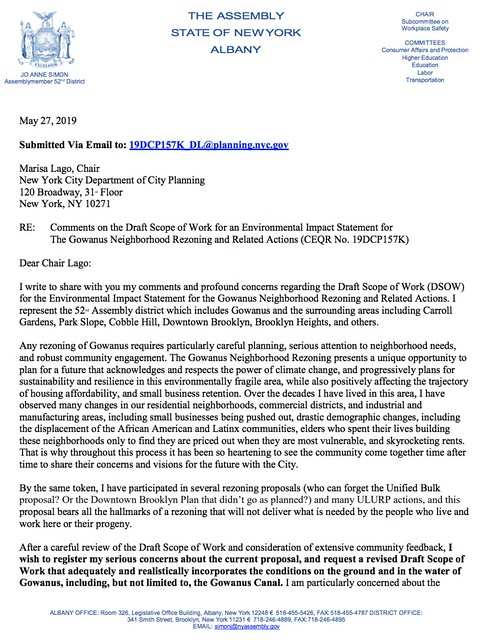
We would like to applaud NY State Assemblymember Jo Anne Simon for standing with her Gowanus area constituents by expressing serious concerns about New York City's proposed Gowanus rezoning. In a detailed and strongly worded letter to NYC Department of City Planning, the Assemblymember  asks for a revised draft scope of work and a hydrology study to assess the risks of building in a floodzone with the reality of sea level rise looming.

Simon mentions the cheer size of the rezoning and the proposed density, which leaves one to "draw no other conclusion than that DCP has succumbed to influences given to overreaching for their own benefit and not the benefit of the residential and small business communities."

Thank you, Assemblymember Simon.  We feel very fortunate to have you by our side in this fight for a clean environment and a better future for Gowanus than the one currently being proposed by Mayor deBlasio and Councilmember Lander.

Here is Simon's letter:

May 27, 2019

Submitted Via Email to: 19DCP157K_DL@planning.nyc.gov

Marisa Lago, 

Chair New York City Department of City Planning 
120 Broadway, 31st Floor
 New York, NY 10271

RE: Comments on the Draft Scope of Work for an Environmental Impact Statement for

The Gowanus Neighborhood Rezoning and Related Actions (CEQR No. 19DCP157K)

Dear Chair Lago:

I write to share with you my comments and profound concerns regarding the Draft Scope of Work (DSOW) for the Environmental Impact Statement for the Gowanus Neighborhood Rezoning and Related Actions. I represent the 52nd Assembly district which includes Gowanus and the surrounding areas including Carroll Gardens, Park Slope, Cobble Hill, Downtown Brooklyn, Brooklyn Heights, and others.

Any rezoning of Gowanus requires particularly careful planning, serious attention to neighborhood needs, and robust community engagement. The Gowanus Neighborhood Rezoning presents a unique opportunity to plan for a future that acknowledges and respects the power of climate change, and progressively plans for sustainability and resilience in this environmentally fragile area, while also positively affecting the trajectory of housing affordability, and small business retention. Over the decades I have lived in this area, I have observed many changes in our residential neighborhoods, commercial districts, and industrial and manufacturing areas, including small businesses being pushed out, drastic demographic changes, including the displacement of the African American and Latinx communities, elders who spent their lives building these neighborhoods only to find they are priced out when they are most vulnerable, and skyrocketing rents. That is why throughout this process it has been so heartening to see the community come together time after time to share their concerns and visions for the future with the City.

By the same token, I have participated in several rezoning proposals (who can forget the Unified Bulk proposal? Or the Downtown Brooklyn Plan that didn’t go as planned?) and many ULURP actions, and this proposal bears all the hallmarks of a rezoning that will not deliver what is needed by the people who live and work here or their progeny.

After a careful review of the Draft Scope of Work and consideration of extensive community feedback, I wish to register my serious concerns about the current proposal, and request a revised Draft Scope of Work that adequately and realistically incorporates the conditions on the ground and in the water of Gowanus, including, but not limited to, the Gowanus Canal. I am particularly concerned about the geographic spread of the Project Area to encompass 80 blocks, including areas far beyond the boundaries of the Gowanus area and the proposed density, leaving one to draw no other conclusion than that DCP has succumbed to influences given to overreaching for their own benefit and not the benefit of the residential and small business communities. This is particularly true with regard to the myriad unaddressed environmental impacts on this ecologically vulnerable neighborhood, and the contribution to those environmental impacts of the contemplated development. I urge the City to take far more seriously than is demonstrated in the DSOW its moral and legal obligations as a steward of the environment in this rezoning process.

My concerns include, but are not limited to:

1. The proposal’s sheer disregard for the environmental impacts of both construction and increases in population in light of the Gowanus Canal’s Superfund status and the effects of climate change; 

2. The deliberate mischaracterization of the Gowanus neighborhood to include an area of Boerum Hill, which appears to contemplate inclusion in the ever-expanding mischaracterization of surrounding neighborhoods as part of Downtown Brooklyn, and areas of Park Slope with similar effect; 

3. The DSOW’s lack of attention to traffic and transportation impacts, including overwhelming the
already far too crowded subway routes through the area; 

4. The proposal’s gratuitous demand for an unprecedented and unwelcome doubling or tripling of
current Floor Area Ratio (FAR); 

5. The vast reduction in manufacturing and industrial square footage in a neighborhood that has stressed the importance of its industrial past and maintaining a robust mix of uses; 

6. The exacerbation of inadequate open space available to residents of Gowanus; 

7. The disregard for community input provided through the Bridging Gowanus and Gowanus Lowlands exercises; 

8. The lack of real affordability, and the lack of investment provided for affordable housing including
investment in NYCHA. The City cannot build its way out of the current housing crisis which is ever more dire with increased development, gentrification and “affordable” housing which is unaffordable.
The biggest contributors to the homelessness crisis are rising rents and rezoning proposals such as this contribute heavily to that picture.

Environmental Impacts 
Throughout this process sustainability and resiliency has been a primary concern for residents, which isn’t surprising considering they live next to one of the most polluted waterways in the country. In the draft scope, DCP states that “becoming a model green neighborhood means creating a livable, safe, and productive neighborhood for generations to come,” but how does the city expect Gowanus to become a model green neighborhood without taking into account the Combined Sewage Overflow (CSO) problems plaguing the Gowanus and surrounding areas, especially in light of large development and population increases that will result from this rezoning? How does the City propose the Gowanus become a model green neighborhood by building tall towers on the banks of a narrow canal that is highly susceptible to flooding and storm surge – both of which conditions will worsen with climate change? How does the City propose the Gowanus become a model green neighborhood by underbuilding the needed infrastructure? How does the City propose the Gowanus become a model green neighborhood when it has not done a hydrology study to assess the underground streams and flow of water that affect the spreading plumes of toxins beneath the surface? We need a hydrology study. How does the City propose the Gowanus become a model green neighborhood by planning for construction before necessary data is known and understood so that fully informed decisions can be made?

Current EPA Superfund plans for the CSO tanks will be able to contain 12 million gallons of overflow, which will reduce the volume of sewage flowing into the canal to 20% of current values. Reducing overflow is necessary to ensure that the Superfund process was not for naught and that after the planned dredging and capping, the canal is no longer inundated with sewage. The CSO facilities planned have no accommodation for an increase in population such as is proposed and their associated wastewater.

As a responsible party of large tracts of the Superfund site, it is alarming that the City would not take the CSO output seriously during this planning process. As a site that will be revised by the EPA every 5 years after completion, the Gowanus Canal clean up should take into account the future of the neighborhood’s overall environment, not just the prescribed remediations. It is promising that DEP is looking into other, more modern CSO solutions by investigating a tunnel option, but that must also go beyond the current requirements and look to the future. Cities across the world have built hundreds of miles of CSO tunnels to protect their waterways, and while DEP touts the benefit of a tunnel being scalable, there is no reason to start small. The current idea for a tunnel would reduce the volume of sewage flowing into the canal to 16% of current values, only a 4% improvement from the proposed tanks. A tunnel could be much longer than the half mile proposed and would make a much bigger dent in current and future CSO levels. If this plan is built out to the fullest extent, there will be approximately 18,000 new residents who, along with the current residents of Gowanus, will be living next to what would amount to an open sewer if future CSOs are not properly addressed.

Land Use and Zoning 
The density proposed in this draft scope of work is far beyond anything brought up in the many meetings the community has engaged in over the past years. When the City was engaging with the community as recently as 2018, the canal corridor was only intended to have up to 14 stories (a previous rezoning proposal pegged that at 12 stories in a small section of the Project Area), which just might fit in with recent development without overwhelming the neighborhood character. Nevertheless, the community was not happy about 14 stories, finding that too dense. Heedless of those concerns, the DSOW calls for an increased density to allow for buildings as tall as 22 stories along the canal, a density with which the community is highly uncomfortable and which was never discussed with community in advance of the issuance of the DSOW. Mixed use development around Thomas Greene playground will be a welcome and needed change, but residential housing up to 14 stories will cast shadows over this precious open space and change the feel of it from a rare, open respite to canyon-like.

Similarly, the inclusion of large northern and southern swaths of Fourth Avenue goes too far afield, and overreaches both geographically and in terms of proposed density. The proposed density allowing for 30 stories along Fourth Avenue has raised serious concerns within the community, changing forever the feel and character of Gowanus and compromising water run-off, sewage, subway and bus overcrowding and increased traffic. The study area within 400 feet of the Project Area must be expanded. Case in point: not so far away is the planned reconstruction of the triple cantilevered portion of the Brooklyn-Queens Expressway (BQE) in Brooklyn Heights. Regardless of the final approach to reconstructing the aging highway, construction impacts will bring increased traffic to the area as cars and trucks leave the highway at 39th Street to path find their way north to the Manhattan and Brooklyn Bridges. That the plans for the BQE will attempt to mitigate traffic diversions as much as possible is unavailing as diversions will occur because drivers have their own minds.

Community Facilities 
Waterfront access is imperative for the future of the Gowanus Canal; we cannot have sterile esplanades that do not allow for an active waterfront, which has been a consistent request from the community for decades. Access to the water provides for educational and recreational pastimes, and honors the canal’s robust history as a tidal marsh. There should also be space for boat launches, and there must be egress points for both accessing the water and exiting the water. Provision for pedestrian bridges is essential to unite the communities on either bank of the canal and provide new and improved alternate routes of travel. The community also needs to have past promises fulfilled, including the reopening of the Gowanus Houses Community Center. The environmental, economic, and capital needs of NYCHA residents in the area also need to be more seriously considered.

Affordability 
Residential, commercial, and manufacturing affordability is imperative in the Gowanus neighborhood, but affordability cannot come at the cost of our neighbors’ health. Affordable housing on some of the most polluted land around the canal, including Public Place, must be adequately remediated, and continuously monitored for safe conditions. Previous remediation sites, such a Lowes and Whole Foods should be re- evaluated to determine how their remediation efforts have held up.

I thank you for this opportunity to comment and look forward to working with the Department and my colleagues in government to improve this proposal.

Very truly yours,
Jo Anne Simon


Read more

Help Smith Street Stage Celebrate 10 Years Of Shakespeare In Carroll Park At A Summer Kickoff Fundraiser

Untitled
Great news!
In June, award-winning Brooklyn theatre company Smith Street Stage will once again bring Shakespeare to Carroll Park in Carroll Gardens. Since 2010, their free, open-air productions have included Romeo and Juliet, The Tempest, Henry IV, Twelfth Night, Julius Caesar, Much Ado About Nothing, Macbeth and Richard III.

For its tenth year, the Company will be performing Romeo and Juliet, which was also their first show in Carroll Park. The show, as in years past, will be absolutely free.
To help Smith Street Stage put on these amazing productions, the company will be hosting a Summer Kick-Off  Fundraiser at East One Brooklyn on Court Street on Friday, June 7th from 6pm to 10pm.

Meet the cast of Romeo and Juliet from 6 to 7:30 pm, and at 8 pm, take part in Shakespeare/Game of Thrones trivia and support this wonderful company, so that they can continue to delight us with free Shakespeare in Carroll Park

Read more

REMINDER! Gowanus Canal CAG To Host Superfund Town Hall With Congresswoman Nydia Velázquez Tonight

Untitled
On Wednesday, May 29, 6:30 – 8:30 p.m., the Gowanus Canal Community Advisory Group (CAG) will be hosting a Gowanus Superfund Town Hall at  PS 133,  610 Baltic Street at 4th Avenue, in Brooklyn.  This is your chance to catch up on everything related to the clean-up of the canal,  to ask questions and, perhaps, to get involved.

From the Gowanus Canal CAG:
"The Gowanus Canal was designated a federal Superfund site in 2010, initiating a complex, multi-year clean-up of more than a century’s worth of toxins and other contaminants.

The US Environmental Protection Agency (EPA) has completed a successful pilot dredging and capping of the 4th Street turning basin, and is now turning its sights on the process of cleaning the entirety of the canal, beginning at the head-end near Butler Street, in 2020.

Please join us at a public town hall meeting on May 29 for an important update on the canal clean-up, the future timeline, and an idea of what to expect as the work progresses. Congresswoman Nydia Velázquez will give a keynote, and representatives from the EPA will present a project overview and look-ahead. The public will have an opportunity to ask questions following the presentation."


Please RSVP via Eventbrite. The event is FREE.

Read more

Bravo! State Senator Montgomery Firmly Against Gowanus Rezoning Before Environmental Clean-Up

Councilman Brad Lander with State Senator Velmanette Montgomeryduring the first 
3D model of a fully built-out Gowanus after rezoningby 
Untitled
Untitled
State Senator Velmanette Montgomery's letter to NYC Department of City Planning

Thank YOU, State Senator Velmanette Montgomery, for categorically saying "NO" to the proposed Gowanus area upzoning!

A letter from May 24, 2019 from Montgomery to New York City's Department Of City Planning was distributed to members of the Gowanus Canal Community Advisory Group last night. It states:
"I am writing to express my opposition to the proposed re-zoning of the community surrounding the Gowanus Canal prior to the completion of the superfund remediation. After decades of uncertainty, there is finally a plan in place to perform desperately needed environmental remediation of a famously polluted site. Cleaning up the canal and working to handle the continuing problem of combined sewer overflow (CSO) pouring into the canal after each major rainfall or snowmelt is of paramount importance."
She concludes:
"I stand firm in my position that this rezoning must be put on hold until a genuine environmental cleanup can take place. We need to improve the quality of life in the Gowanus community before we add thousands of housing units and people to an already overburdened infrastructure system."

Her firm stand is significant since Montgomery is one of the five elected officials who, in 2013, convened "Bridging Gowanus", which was meant to develop a "framework for the infrastructure and land use needed for a safe, vibrant and sustainable Gowanus".

Many residents who participated in the Bridging Gowanus meetings have expressed their frustration that very few of the community's inputs ultimately made it into NYC Department of Planning's proposed rezoning of the area, which calls for 22 to 30 story buildings.

This is the second time that Senator Montgomery showsu real leadership regarding Gowanus.
In 2009, she was one of the first elected official to support the designation of the Gowanus Canal as an EPA Superfund site. In a letter to EPA, she wrote ten years ago: "Since one-half of the Gowanus Canal lies within the 18th New York Senate District, the development and health of the area, for both the current and future residents and businesses are my top priorities. While the economic development of this artery is crucial to the future of New York City sustainable, healthy development is only possible in a sustainable, healthy environment.
Much of the development proposed for the areas surrounding the Gowanus Canal, such as the Public Place project, envision much needed affordable housing with parks and playgrounds for the families living there. However I cannot in good conscience support development on contaminated land. The area must be made safe for current and future generations
."

Senator Montgomery's position on the rezoning aligns with Voice Of Gowanus, a newly formed coalition of Gowanus area residents and groups, who have asked for environmental remediation BEFORE a rezoning


Read more

Tuesday, May 28, 2019

EPA Projects A 'Significant Increase' In CSOs Into The Gowanus Canal As Part Of Proposed Area Rezoning

The toxic Gowanus Canal, an EPA Superfund Site
Untitled
Christos Tsiamis, the EPA Senior Project Manager for the Gowanus Canal Superfund
and a recent Gowanus Superfund Community Advisory Group Meeting
Untitled
Untitled
Current conditions!
Raw sewage floating on the Gowanus Canal .

EPA Region 2  has sent  NY City Department of City Planning(DCP) its own comments on the Gowanus Neighborhood Rezoning Draft Scope of Work for an Environmental Impact Statement.(DSOW).

In a letter dated Thursday May 23, 2019, Christos Tsiamis, the EPA Senior Project Manager for the Gowanus Canal Superfund, is projecting a massive 11x increase in Combined Sewer Overflow into the canal as a result of the proposed neighborhood upzoning from manufacturing to residential.

The EPA does not get involved in land use issues. However, as Tsiamis mentions in his comments to NYC DCP, the Federal Agency is protective of its environmental remedies and will get involved if there is a risk of re-contamination to a Superfund site.

It will be interesting to see how New York City's Department of Environmental Protection and City Planning will try to engineer their way out of this, given the fact that the City has not yet managed to capture current CSOs into the waterway, let alone 11 times the amount.

Once again, it would appear that EPA is stepping in to protect the environment and the health of the  Gowanus community. The same cannot be said about Mayor deBlasio, as well as Councilmen Brad Lander and Steve Levin, who are all pushing for the rezoning before environmental remediation.

Here are EPA's comments.

The Environmental Protection Agency (EPA) has reviewed the Environmental Impact Statement (“EIS”) scoping documents, including the “Gowanus Neighborhood Rezoning and Related Actions Draft Scope of Work for an Environmental Impact Statement,” March 22, 2019, that were issued by New York City (“City”) for public comment. The proposed rezoning affects an area on and around the Gowanus Canal.

EPA does not have a role in local land-use or zoning decisions. However, understanding local land use is an important component in EPA’s planning of response actions under the Comprehensive Environmental Response, Compensation and Liability Act (“CERCLA” or “Superfund”). EPA also has a role in ensuring that future land use changes do not adversely affect the integrity of Superfund cleanups. With that context, EPA offers the following comments on the EIS scoping documents.

Background:

The Canal was constructed by bulkheading and dredging a tidal creek and wetland. After its completion in the 1860s, the Canal quickly became one of the nation’s busiest industrial waterways. As a result of decades of direct and indirect discharges of hazardous substances generated by industrial and other activities, the Canal became a repository for untreated industrial wastes, raw sewage, and runoff, causing it to become one of New York’s most polluted waterways.

Following a request from the New York State Department of Environmental Conservation (“NYSDEC”), EPA placed the Canal on the Superfund National Priorities List in March 2010. The Gowanus Canal Superfund Site (“Site”) is defined as the approximately 100-foot wide, 1.8-mile-long canal located in the borough of Brooklyn, Kings County, New York, and also includes any areas that are sources of contamination to the Canal.

In 2013, EPA issued a Record of Decision (“ROD”) for the cleanup of the Canal that included the dredging and off-Site disposal of the contaminated sediment in the Canal, the placement of a multilayer absorbing cap to prevent dissolved contamination from moving with the groundwater into the Canal waterbody, and the control of contamination from upland sources to prevent the recontamination of the clean Canal.

Such upland sources include certain levels of hazardous substances found in solids discharged into the Canal during Combined Sewer Overflow (“CSO”) events when stormwater and sanitary sewage capacity is exceeded within the approximately 1,758-acre Gowanus Canal watershed.

The CSO portion of the EPA-selected remedy includes the construction and operation of two CSO retention tanks by the City, a Potentially Responsible Party (“PRP”) for the Site. The City is currently preparing the CSO remedy design pursuant to two EPA administrative orders[1] and participating in the dredging and capping remedial design, for which work in the upper portion of the Canal is targeted to begin in 2020. Progress on the Canal cleanup is among the factors cited by the City in proposing the rezoning.

In anticipation of potential redevelopment, the ROD requires that any future activities which fall under the City’s purview, including development, do not compromise the effectiveness of the Gowanus Canal remedy. Among other things, the ROD specifically states that “redevelopment projects will need to take mitigation measures to prevent or offset additional sewer loadings” to the Canal to protect the remedy.

EPA review of EIS Scoping Documents:

EPA has reviewed the EIS scoping documents from the perspective of ensuring that the EIS process includes the proper assessment of and mitigation planning for any impacts that the rezoning actions may have on the effectiveness of the selected remedy.

In reviewing the EIS scoping documents, EPA notes that the City preliminarily projects a significant increase in the wastewater generation in the neighborhood as a result of the proposed development. Specifically, for residential development, wastewater generation is estimated to increase from 178,795 gallons per day (“gpd”) at present to 1,977,302 gpd once the proposed development has been completed. (See Gowanus Neighborhood Rezoning and Related Actions at Table B-1).

The EIS process should accurately determine the incremental volume of CSO-related discharges to the Canal and what appropriate mitigation measures, or combination of measures, are required to prevent an adverse effect on the EPA-selected remedy for the Canal.

EPA intends to work cooperatively with the City to ensure that the rezoning process is conducted in a manner that is, with respect to the Canal, protective of human health and the environment.

Sincerely,
Christos Tsiamis
Senior Project Manager
New York Remediation Branch
USEPA, Region 2


The EPA Gowanus Canal Community Advisory Group will be meeting tonight at 6:30 pm at Mary Star of the Sea, Mary Star of the Sea, 41 1st Street

This is what a Gowanus Canal CSO event looks like!

SAY NO TO THE GOWANUS REZONING!
Read more

"We Do Not Want The Cart Put Before The Horse": Carroll Gardens Coalition For Respectful Development Comments On NYC's Gowanus Environmental Impact Statement

Untitled
Untitled
Untitled
Untitled
Untitled
Toxins, raw sewage and a flood zone.
Gowanus!

Gowanus area residents and groups had till yesterday, May 27th, 2019 to send NY City Department of City Planning (DCP) their comments on the Gowanus Neighborhood Rezoning Draft Scope of Work for an Environmental Impact Statement.(DSOW).

DCP had asked the community for input on the Gowanus Draft Scope of Work at a public meeting on April 15th, and accepted written comments until last night.  A DSOW is a "technical document that lays out proposed methodologies and assumptions and that identifies the project and the types of environmental analyses that may be performed. The DSOW helps the public understand and participate in the CEQR review from the start and a necessary precursor to preparing a Draft Environmental Impact Statement."

We are posting below the comments that Carroll Gardens Coalition for Respectful Development sent to City Planning regarding the Gowanus Rezoning because we agree with CORD and support their assessment of the rezoning.


To: The NYC Department of City Planning
From: CG CORD Carroll Gardens Coalition for Respectful Development

When digesting the framework and plan to rezone the Gowanus and this Environmental Impact Statement, the one phrase that continually comes to mind is, "putting the cart before the horse".

The Gowanus Canal is a Superfund site. Her waters are classified as industrial which legally allow for a certain level of toxins and pathogens to remain in the water.

Under the EPA's Record of Decision , two retention tanks of different sizes are to be constructed in order to reduce the CSO emitted pathogens and the resulting "attached" toxins. ( We note here that we are aware of NYC's continuously and deliberately keeping this plan in flux, but that is, nevertheless, the mandate issued by the Record of Decision.)

If no rezoning of the Gowanus were taking place, then, ideally after the Superfund cleanup, we reach acceptable levels of toxins and pathogens for an industrial waterway.

This is definitely an improvement to the health and safety of all Gowanus, Carroll Gardens, Cobble and Boerum Hill, Red Hook and Park Slope residents and the very aim and purpose of the EPA/Superfund will have been successfully achieved.\

With the proposed Gowanus rezone, this EIS does not insist or even recommend the classification of the Gowanus Canal to be upgraded to the more appropriate CERCLA standards for RESIDENTIAL classification.

It does not even suggest the inadvisability of residential development along the banks of any industrially classified waterway. Nor does it suggest or even hint at the inadvisability of building ANYTHING residential in an area that is classified as a flood zone. WHY NOT?

In addition, this EIS does not effectively model how new developments in the Gowanus neighborhood would naturally increase CSO discharges into the Canal.

It is bewildering that this topic is not more thoroughly addressed within this EIS.

While these glaring omissions by this EIS have us questioning the very purpose of what purports to be an ENVIRONMENTAL IMPACT STATEMENT, it also has us questioning how our other city, state and federal agencies are going to cope with what we have heard as described "the largest rezoning" of an area in New York City ever.

We wonder if the FDNY, the NYPD, OEM, EMT SERVICES, DSNY, DOE, DOT, NYCT, DCP, DEP, PARKS, DEC, MTA and FEMA are taking any steps to prepare for the estimated nineteen thousand (19,000) new residents occupying approximately eight thousand two hundred (8200) new apartments- - which by the way, works out to 2.3 people per apartment - a number representing complete fantasy.

We wonder where all the .3 people will go to school? How will all of the 2's fit on trains and busses? Where will all of the automobiles owned by the conservatively estimated 19,000 residents be? What, if any, hospital emergency facilities will be added? What tentative plans are being made to accommodate this huge increase in population in the event of an emergency/natural disaster?

We seem to recall that the "evacuation route" for Carroll Gardens takes us down to Bond Street. Will all of us be directed there and provided with canoes in the event of an evacuation scenario?

During Hurricane Sandy, this "escape route" was completely flooded by many feet of awful smelling water with our neighbors parked cars freely floating within it.

How is the current evacuation "plan" being adjusted? Is it even being considered?

So, since the apparently acceptable bunch of words that substitute for an Environmental Impact Statement, do not seem to address any of the truly important impacts this rezoning will inflict upon all of us actually living here, we add to our above comments the following:

A panel of all of the above mentioned agencies along with our EPA Region 2 team, be brought together for a minimum of two (2) TOWN HALL conversation/question answer periods as to how these agencies plan to address and resolve the REAL environmental impact of this very poorly thought out rezoning.

These meetings are to be organized, held and hosted by our COMMUNITY BOARD 6 and announced widely throughout the district.

This panel must be assembled and the town hall meetings MUST TAKE PLACE WELL BEFORE THE ULURP Community Board 6 Land Use Committee vote on the Gowanus Rezoning proposal in order to give the community the time to understand what is being presented and how it will affect them.

Right now there are no meetings scheduled or being held by our Community Board to discuss this EIS, neither what it says nor what it doesn't.

It is unreasonable for any community to attend one land use meeting for a proposal of this proportion and be expected to digest and comment intelligently without all of the players involved being there to answer questions.

Our Community Board may not be "required" to do this, but they should do it anyway-- in the spirit of being good neighbors and community guardians.

If meetings of this type are not required by NYC procedure or law-- then set some precedent here. This is an extremely ambitious rezone. It is not the same as many others before it. Let's do some things differently and better than before not just the same.

We do not want the cart put before the horse.

We want answers to our questions.

We do not need to hear how all of the appropriate boxes have been checked off.

We want a responsible rezoning.

Thank you. We welcome your comments and letters at cgcord@gmail.com

Sincerely,
CG CORD Co-founders:
Lucy DeCarlo
Rita Miller
Triada Samaras

We join CORD's call for an inter-agency panel discussion on the rezoning of the Gowanus Canal to be held by Community Board 6, so that the community can assess for itself if the City has the means, the resources and the will to TRULY plan for the impact of about 8,2oo new housing units and an estimated 20,000 new residents. After all, WE will have to live with the consequences of the rezoning.

If you agree, send an email to Community Board 6 at  Info@BrooklynCB6.org and to Jonathan Keller of City Planning at JKeller@planning.nyc.gov .
Please copy CORD cgcord@gmail.com, so the group has a record of the ask,

Read more

Smith Canteen on Smith Street To Close At End Of June

Untitled
Untitled
Untitled
Sad news over the week-end.  Kerry Diamond, the owner of Smith Canteen at 343 Smith Street has announced that she will close the popular café at the end of June.
In a recent Facebook post, Diamond explained:
"I have some news to share. I've decided to sell @smithcanteen. We’ll be closing on June 30th. It was an incredibly hard decision because I love the Canteen and have put my heart and soul into it for the past year as the sole owner. But I had to be honest with myself that I just don’t have the bandwidth required to take this very special place on this magical corner in Carroll Gardens where it deserves to go. Even though the past year has kicked my ass and exhausted me, I'm grateful for every minute of it. I’ve always had a huge amount of empathy for people in this industry, but now I have it tenfold after a year of washing dishes and floors, figuring out a scheduling system, working the POS, making coffee (I still can’t pull a great espresso tho), and acquiring some light plumbing skills. I have so many people to thank for their generosity, patience, advice, and hard work, but I’ll save that for another post. It’s hard to close a chapter on one’s life, but here I go. (I could quote “Closing Time” here, but I’ll spare you.) For all of you addicted to the lemon-poppy seed muffins (or the blueberry ones, or the cookies) don’t worry. We’ll be sharing the recipes online next month. Thanks to everyone who’s been a part of the Smith Canteen story for the past eight years. It’s been amazing."

Since it opened 8 years ago, Smith Canteen has always drawn a huge crowd and no doubt, it will be missed by many. Perhaps a new owner can continue the café as is. It certainly is a great location and the interior of this former pharmacy lends itself perfectly to that use.

To Kerry, we are sad to see Smith Canteen go, but wish you luck in your future ventures.


Read more

Monday, May 27, 2019

Carroll Gardeners Gather In Carroll Park For A Deeply Moving Memorial Day Ceremony

Untitled
Untitled
Untitled
Untitled
Bruce McDonald and Glenn Kelly of Friends of Carroll Park with Assemblymember Jo Anne Simon
Untitled
Untitled
Untitled
Untitled
Untitled
Untitled
Assemblymember Jo Anne Simon
Untitled
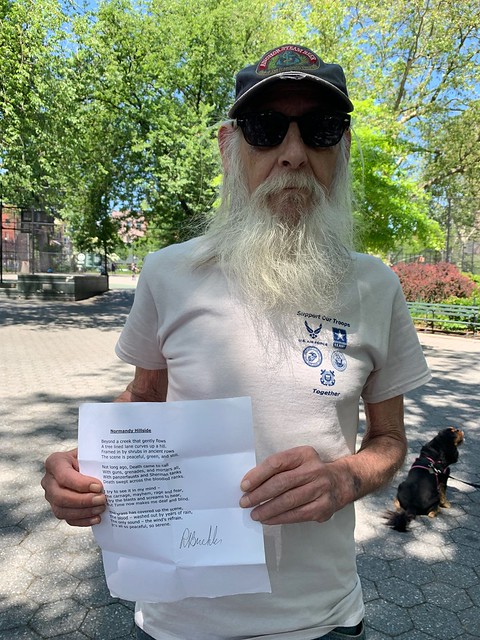
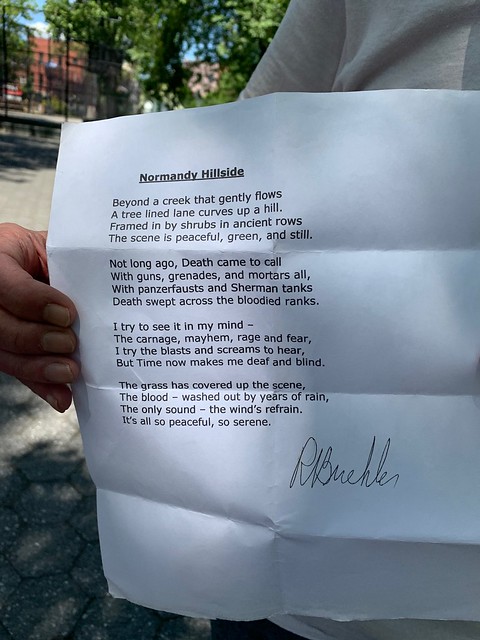
Bob Blechner read "Normandy Hillside", a poem by his friend Richard Buehler
Untitled
"Normandy Hillside" by Richard Buehler
Untitled
Untitled
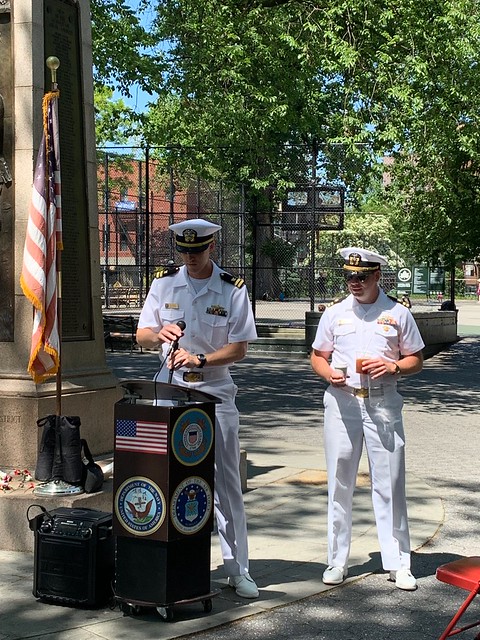
Lieutenant Eric Scoggins and Lieutenant Dan Hemmer of the USS Hué City,
which is currently docked in Red Hook
Untitled
Henry Morth, remembered by his daughter Maggie, who shared a bit of her father's
war experience with Carroll Gardeners. (see video)
Untitled
Untitled
Untitled
Untitled


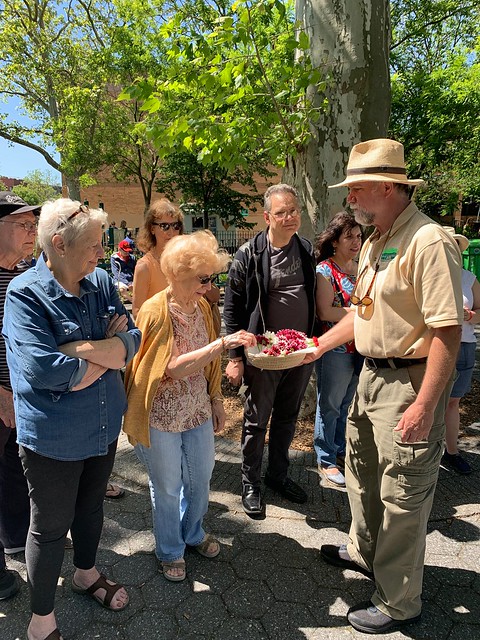
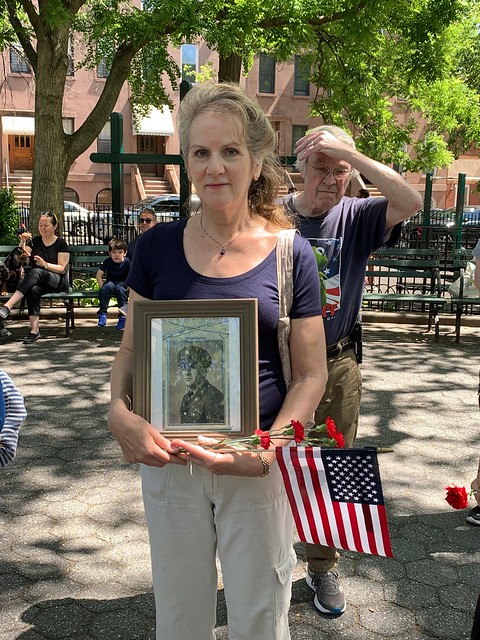
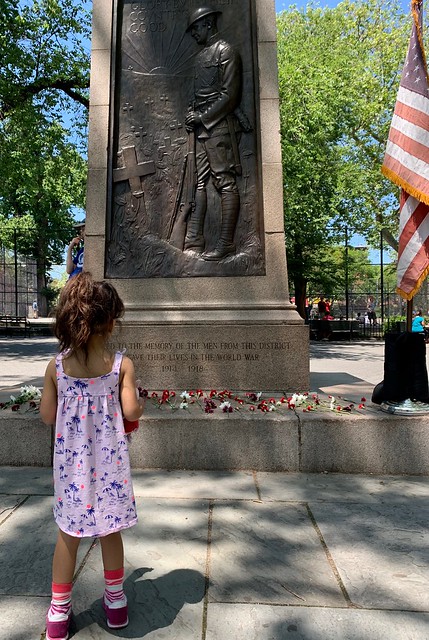
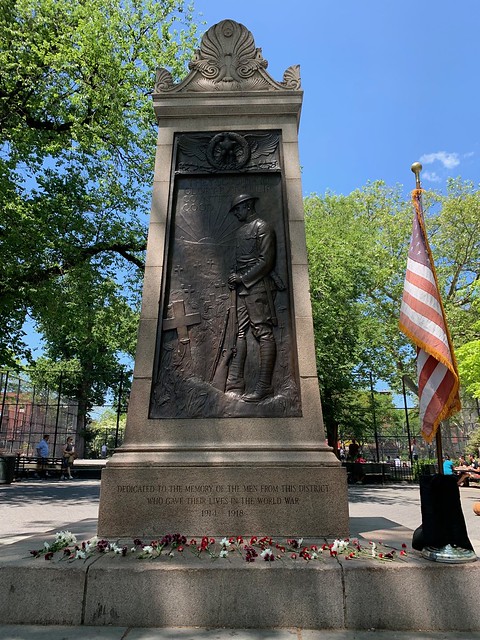
As in years past, Carroll Gardeners gathered in Carroll Park on Memorial Day to remember and honor those who gave their lives for their country.  The ceremony, hosted by Friends of Carroll Park with the Court Street Merchants Association, was a powerful remembrance of the brave service members of the United States Armed Forces, who lost their lives for their country.

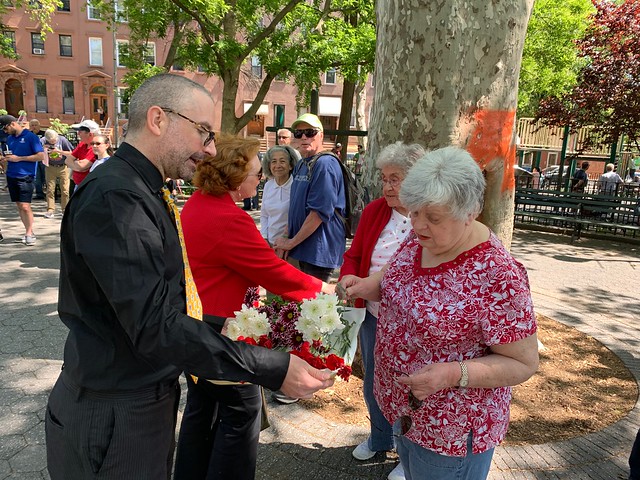
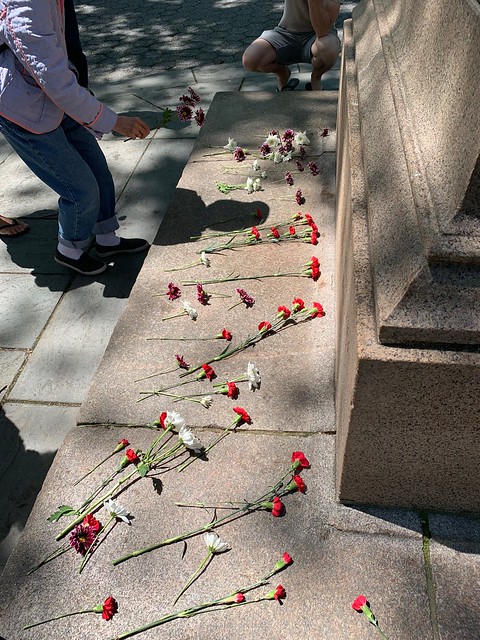
The ceremony was simple and beautiful.  Fresh flowers were distributed to those in attendance, which were then placed at the foot of the park's World War I Memorial.   New York State Assemblywoman Jo Anne Simon joined the community, as did Lieutenant Eric Scoggins and Lieutenant Dan Hemmer of the USS Hué City, which is currently docked at the Cruise Terminal in Red Hook.

A huge thank you to Bruce McDonald and Glenn Kelly, volunteers with Friends of Carroll Park for making this ceremony so special. Bruce encouraged people to come to the microphone to remember loved ones and we learned about Bruce Joseph Allen, Henry Morse and Fred DePhilipo. (please watch the video below)
Glenn Kelly read the poem "In Flanders Field" and local resident Bob Blechner read "Normandy Hillside", a poem by his friend Richard Buehler.

We would like to encourage everyone in the neighborhood to take a moment to read some of the names on the WW1 memorial next time they walk through Carroll Park.  All those names represent a local resident, a father, a son...and we owe it to them to never forget their sacrifice.

Untitled
Untitled


Read more

Wednesday, May 22, 2019

Voice Of Gowanus Holds Press Conference To Address Concerns About Neighborhood Rezoning

Voice of Gowanus members holding press conference on the Carroll Street Bridge this morning.
Glenn Kelly with fellow members of Voice Of Gowanus
Tom Angotti Professor Emeritus at Hunter College's Urban Policy and Planning
 Tom Devaney of the Municipal Arts Society
photos courtesy of Voice of Gowanus

Bright and early this morning, we joined our Gowanus area neighbors on the Carroll Street Bridge to hold a press conference to express our concerns about the proposed rezoning of the Gowanus neighborhood, which will bring an estimated 20,000 new residents to the area.
With one voice, we urged our City and our elected officials to "complete the environmental remediation of the Gowanus Canal first, address the Combined Sewer Overflow issue, before moving forward with the rezoning.
Below is the press release from Voice of Gowanus.


May 22, 2019


VOICE OF GOWANUS: TODAY’S SUCCESSFUL PRESS CONFERENCE

NEIGHBORHOOD AND CITYWIDE GROUPS OPPOSE CURRENT
 GOWANUS REZONING PLAN
GOWANUS - Over thirty five concerned Gowanus-area residents, representatives from several city-wide civic organizations, and representatives of public officials gathered along the Gowanus Canal at the Carroll Street Bridge this morning to express outrage over the proposed Gowanus rezoning.

“This is New York City! This is the 21st Century! We should not be increasing residential density in areas subject to flooding. There are better, safer, and less expensive places to add the needed housing,” said local resident Glenn Kelly. “The first priority is to bring environmental justice to this community by thoroughly cleaning the toxic poison from the Canal and upland. This cleanup should include planning to prevent combined sewer overflow into the Canal. We should not have an open sewer in an area targeted for development.”

“We need to look closely at the stacked layers of incentives that developers stand to get as part of this rezoning,” said Gowanus resident Debbie Stoller. “While everyone supports affordable housing, should it be at the water’s edge? Is Mandatory Inclusionary Housing the way to achieve this goal? How much will it cost per square foot to create this affordable housing and does it make sense for taxpayers?”

Susannah Pasquantonio, a representative from Assemblymember Jo Anne Simon addressed the crowd, too, reading a statement noting that the Assemblymember heard and understood the concerns of those gathered. Experts were on hand to weigh in as well.
“This is probably the most important community struggle in Brooklyn this century,” said Tom Angotti, a professor of Urban Policy & Planning Professor at Hunter College.

Marlene Donnelly of Friends and Residents of Greater Gowanus spoke of the ongoing need to reclassify the waters of the Gowanus Canal before the area is zoned for more residential. “Right now,” Donnelly noted, “the Clean Water Act’s requirement to limit pathogens in the water is not applicable because this is still deemed an industrial waterway.” Katia Kelly of the blog Pardon Me for Asking reiterated Voice of Gowanus’ call for a moratorium on the rezoning until the Gowanus Canal has been cleaned up, calling it a public safety issue that Council Member Brad Lander has yet to face up to as the process moves forward.

Several of the speakers touched on how the proposed Gowanus rezoning is moving forward after an improved but still fundamentally flawed process. Lynn Ellsworth of Human-Scale NYC said her organization “calls for a moratorium on all upzonings until the conflicts of interest at the Department of City Planning are cleaned out and real estate interests are removed from serving on the Commission.” The Municipal Art Society was on hand as well: “No planner has a crystal ball to tell us exactly what the future will hold, but communities deserve a reasonably accurate picture of what’s ahead,” said Thomas Devaney Senior Director of Land Use & Planning at MAS. “The final scope of work and draft environmental impact statement for the Gowanus rezoning need to tell us much more about the potential impacts that these zoning changes could produce, not just the expected results. From Long Island City to Hudson Yards, we see time and again that these expectations drastically underestimate the development that ultimately occurs.” Gowanus resident Brad Vogel mentioned that “even though many of us gathered here have attended many, many, many planning meetings, we still do not believe the current rezoning plan reflects our input. For one, we did not get concrete answers from the city about how the anticipated development will avoid polluting the Canal with more combined sewer overflow.”

Joseph Alexiou, author of Gowanus: Brooklyn’s Curious Canal, cut to the chase: “We’re up to our necks in poo around here.” His comment referred to the fact that planned infrastructure intended to capture combined sewer overflow (CSO) in tanks or a tunnel is only sufficient to capture CSO loads from the existing neighborhood - not from new development.

Beverly Corbin, a resident of Wyckoff Gardens, joined other residents of public housing in calling out Council Member Stephen Levin for failing to show up at rezoning meetings, noting that Council Member Brad Lander does not have public housing in his district and that affordable housing is not always affordable for everyone. Karen Blondel, local activist, called for the rezoning to slow down so that the needs of public housing residents could be considered in full.

Victoria Cambranes, a candidate for the 33rd District of the NYC City Council, attended and spoke of the need to organize, drawing on her experiences in Greenpoint. Linda Mariano, longtime Gowanus resident, pointed to the spot-zoning that has occurred along the Gowanus Canal as a harbinger of what is to come despite the Gowanus neighborhood’s ability to heal itself organically. Triada Samaras of CORD in Carroll Gardens called out the need for consideration of artists given their longtime importance in the Gowanus.

The coalition also acknowledged the presence of Shakti Robbins-Cubas from NYS Senator Velmanette Montgomery’s office, who attended to listen to constituent concerns.

In the end, the Coalition remains concerned that the result many feared during the planning process seems to have come true: limited zoning choices and massive development but little actual planning. The Coalition seeks reform of how land use decisions are made in our communities since it is communities like ours that suffer the consequences, both expected and unintended. The Coalition supports a better process that involves careful planning and sensible development that is not focused on maximizing profit for developers. Until that better process materializes, a moratorium on the current Gowanus rezoning proposal is the only responsible option.

As Glenn Kelly noted in his closing remarks: “If we rush through this rezoning before the Canal is cleaned up, we will have a greater risk of failure. There are too many unanswered questions and unfunded wishes,” Kelly said. “The community is not happy with the 4th avenue zoning, we were all surprised with how the LIC and downtown Brooklyn zonings were built out. These were the best that NYC Planning could do with the tools available to them…but it was only the developers who got what they wanted. If we slow down and plan carefully, we will definitely produce a better result. And don’t we all want a better result?”

More press coverage of the event:
Patch: Clean It Before You Rezone It,' Gowanus Activists Tell City
Read more