Showing posts with label Congresswoman Nydia Velázquez. Show all posts

Wednesday, May 29, 2019

REMINDER! Gowanus Canal CAG To Host Superfund Town Hall With Congresswoman Nydia Velázquez Tonight

Untitled
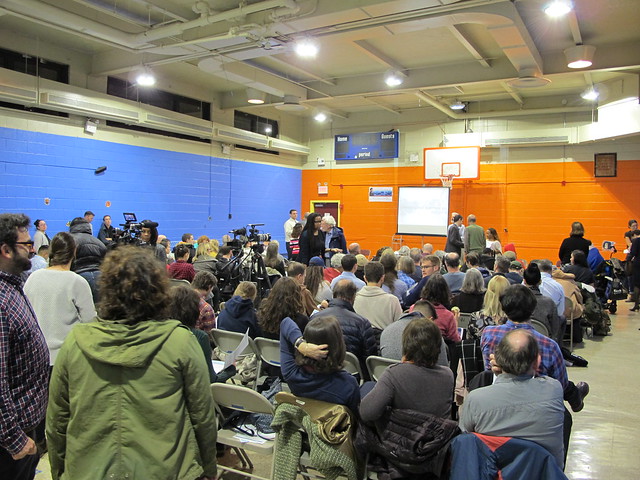
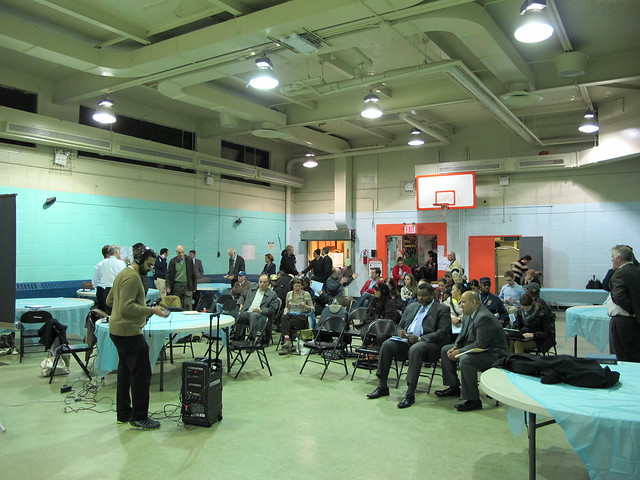
On Wednesday, May 29, 6:30 – 8:30 p.m., the Gowanus Canal Community Advisory Group (CAG) will be hosting a Gowanus Superfund Town Hall at  PS 133,  610 Baltic Street at 4th Avenue, in Brooklyn.  This is your chance to catch up on everything related to the clean-up of the canal,  to ask questions and, perhaps, to get involved.

From the Gowanus Canal CAG:
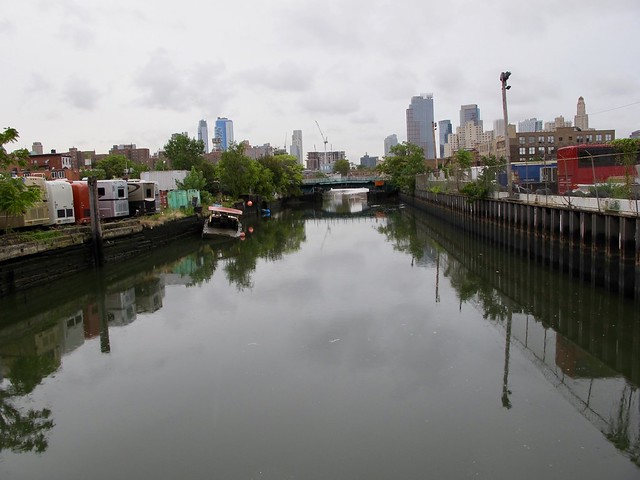
"The Gowanus Canal was designated a federal Superfund site in 2010, initiating a complex, multi-year clean-up of more than a century’s worth of toxins and other contaminants.

The US Environmental Protection Agency (EPA) has completed a successful pilot dredging and capping of the 4th Street turning basin, and is now turning its sights on the process of cleaning the entirety of the canal, beginning at the head-end near Butler Street, in 2020.

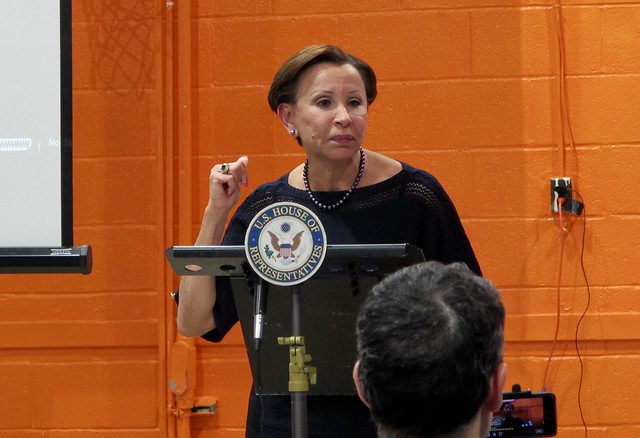
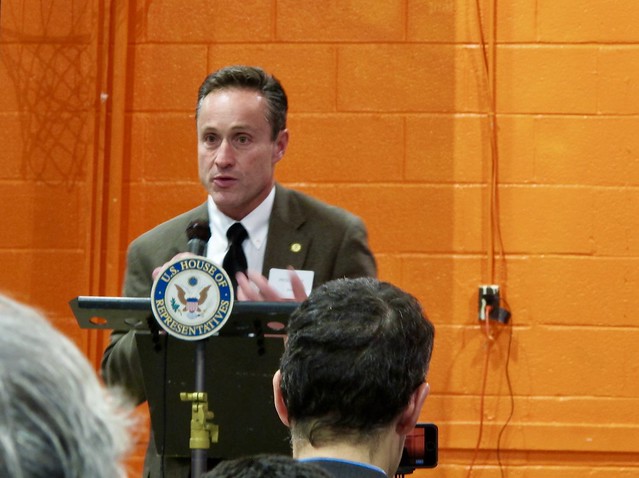
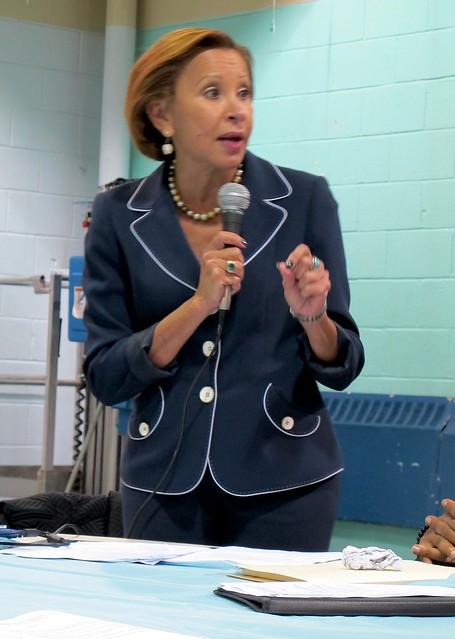
Please join us at a public town hall meeting on May 29 for an important update on the canal clean-up, the future timeline, and an idea of what to expect as the work progresses. Congresswoman Nydia Velázquez will give a keynote, and representatives from the EPA will present a project overview and look-ahead. The public will have an opportunity to ask questions following the presentation."


Please RSVP via Eventbrite. The event is FREE.

Read more

Monday, May 20, 2019

Gowanus Canal CAG To Host Superfund Town Hall With Congresswoman Nydia Velázquez

Untitled
On Wednesday, May 29, 6:30 – 8:30 p.m., the Gowanus Canal Community Advisory Group (CAG) will be hosting a Gowanus Superfund Town Hall at  PS 133,  610 Baltic Street at 4th Avenue, in Brooklyn.  This is your chance to catch up on everything related to the clean-up of the canal,  to ask questions and, perhaps, to get involved.

From the Gowanus Canal CAG:
"The Gowanus Canal was designated a federal Superfund site in 2010, initiating a complex, multi-year clean-up of more than a century’s worth of toxins and other contaminants.

The US Environmental Protection Agency (EPA) has completed a successful pilot dredging and capping of the 4th Street turning basin, and is now turning its sights on the process of cleaning the entirety of the canal, beginning at the head-end near Butler Street, in 2020.

Please join us at a public town hall meeting on May 29 for an important update on the canal clean-up, the future timeline, and an idea of what to expect as the work progresses. Congresswoman Nydia Velázquez will give a keynote, and representatives from the EPA will present a project overview and look-ahead. The public will have an opportunity to ask questions following the presentation."


Please RSVP via Eventbrite. The event is FREE.


Read more

Friday, November 17, 2017

At Last Night's Town Hall, EPA And Congresswoman Velázquez Update Community On Gowanus Canal Superfund

IMG_1304
On Thursday evening at the Wyckoff Gardens Community Center
IMG_1329
Congresswoman Nydia Velázquez
IMG_1334
Peter Lopez, EPA Regional Administrator
IMG_1339
EPA Community Involvement Coordinator Natalie Loney
IMG_1340
Gowanus: From tidal
IMG_1341
IMG_1343
Walter Mugdan, Director of the Emergency and Remedial Response Division 
for the EPA's region 2 office 
IMG_1345

IMG_1352
Christos Tsiamis EPA Remedial Project Manager for the Gowanus Canal Superfund

Last night, the Gowanus Canal Community Advisory Group (CAG) hosted a town hall meeting on the Environmental Protection Agency 's $506 million Superfund clean-up of the 1.8 mile toxic canal. Representatives from EPA Region 2 were on hand to give the public an overview and an update on the environmental remediation and to answer questions from the public.

The key note speaker was Congresswoman Nydia Velázquez, who was one of the first elected officials to support the designation of the Gowanus Canal to EPA's list of most toxic sites in the country in 2010, despite pressure from other electeds, including then-mayor Michael Bloomberg.

"I remember getting calls and letters under the door to my house telling me that if I proceeded to support the Superfund nomination for the Gowanus Canal, I would pay the consequences because it would bring the real estate value around the canal down," she recounted "Really?" she told the people in the audience, who broke out in laughter.

To Mayor Bloomberg's request not to support the nomination, she response was:
"Your Honor, in all due respect, I am not a scientist. I am an elected official. I will wait for the scientists to let me know what is the best way to clean-up and restore the canal." Last night, she told those in attendance: "The rest is history."

"I am so proud. Not only has this been a community driven process, but the EPA has been on the forefront of this process. One of the first actions taken by the EPA was to form the Gowanus CAG, which has been meeting monthly for so many years now."

Addressing Washington's new administration, she reassured local residents. "I know that you were concerned when President Trump sent the EPA budget to us. As we all know, the President proposes;  for that is his duty. but it is our privilege as members of Congress to dispose of the budget. When they cut the Superfund program by $360 million, we restored the funding. In 2017, the budget for the program was $1.08 billion. We are on track this year to approve a similar amount, or even slightly higher for 2018. No one should be concerned that the Superfund program will not have the money to continue this work."

The Congresswoman mentioned that she will call on the EPA to create a Superfund job training program so that "we can train able-bodied residents from this area so that they can reap the rewards of the economic activity that is going to happen here."
"We are cleaning up the canal the right way, in a manner respectful to the community's needs," she concluded. "I want to take this opportunity to say 'thank you' to the members of the CAG and to everyone in the community for being active participants throughout this process."

Velázquez then introduced Peter Lopez, the new EPA Region 2 Administrator, who echoed the Congresswoman by saying that commitment and engagement by local residents is vitally important.
He also took the time to acknowledge "the very capable team" responsible for the clean-up and to "thank the professionals who have been working here."

He called Walter Mugdan, Region 2's Superfund Director, a Renaissance man. "What I value most in Walter is his heart, his compassion and his commitment. I am very glad to have him as an ally and to help me understand this project more fully."

He also acknowledged Christos Tsiamis, the Gowanus Canal Superfund project manager: "He is hands on, very dedicated, and relentless in his pursuit in making this canal a shining star for the community."

Lopez also gave a shout out to Brian Carr, the team's legal council and to the project's Community Involvement Coordinator, Natalie Loney.

He concluded: "I would like to thank you on behalf of the EPA. We are committee to serve you. want this community safe, we want people to have a quality of life. They say that without vision, people perish. What I see in this room is tremendous vision and tremendous energy. We want to work towards this vision."

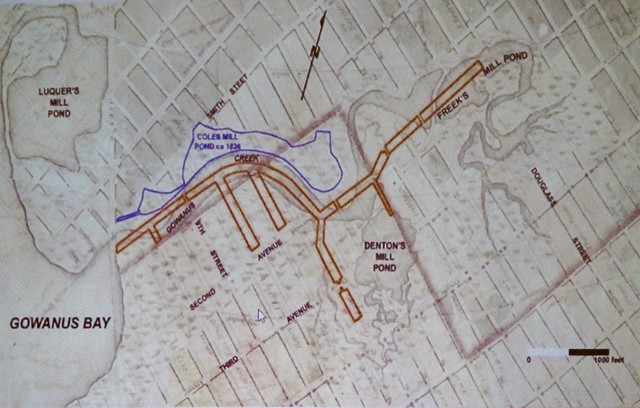
Natalie Loney gave a brief presentation on the history of the canal from Gowanus creek in new Amsterdam to a man-made waterway in the mid-1800s, which served as a major industrial transportation route, to its current status as a Superfund site.
For decades, three Brooklyn Union Gas Manufactured gas plants (MGP), paper mills, tanneries and chemical plants, which once operated along the Canal, discharged wastes into it. The resulting sludge at the bottom of the canal contains high levels of contaminants, including polycyclic aromatic hydrocarbons, polychlorinated biphenyls and heavy metals, including mercury, lead and copper. In addition, contamination flows into the Canal by way of New York City's Combined Sewer system, which discharges sanitary waste from homes and rainwater from storm drains.
(You can access a similar presentation given by Natalie a few years ago at TEDxGowanus conference.)

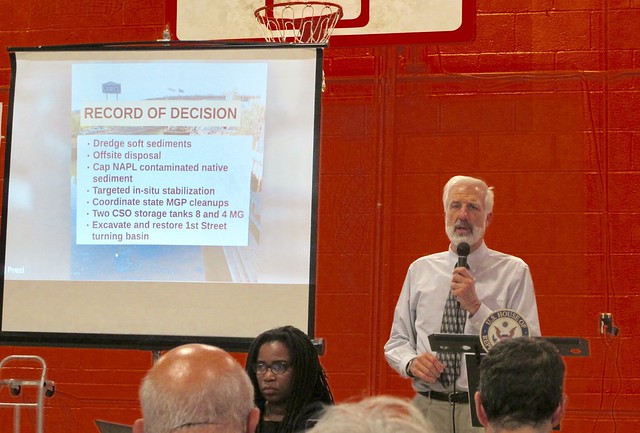
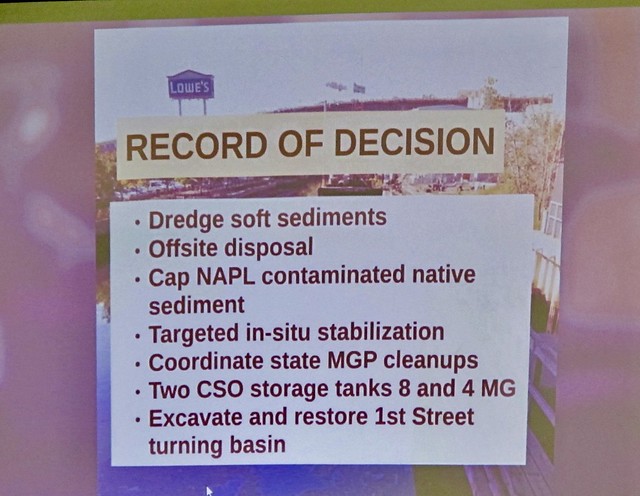
Walter Mugdan then spoke on the environmental remedy laid out in the Record Of Decision (ROD), which was signed in 2013. He also updated the community on what has been accomplished, what the next steps are and, most importantly, the timetable.
Currently, the EPA is about to begin a dredging and capping pilot study at the 4th Street basin, across from Whole Foods.  Future steps will include the restoration of the First Street Basin, construction of a cut-off wall on the eastern side of the canal from the Head of the Canal to the Union Street Bridge, the clean-up of the former Fulton MGP site under Thomas Greene Park, as well as the construction of  two CSO tanks by the City of New York to capture 'the first flush' of sewage and rainwater during rain events keep it from discharging into the Canal until it can slowly be pumped to the wastewater treatment plants after the storm.

Dredging along the length of the Canal will begin by 2020. Work will continue sequentially along the canal in three sections, starting at the Norther end.

"I want to stress that this is an unbelievably complicated project," Mugdan told residents. "Problems will arise, but we have a top notch team working on this project."


Read more

Friday, November 10, 2017

EPA And Congresswoman Nydia Velázquez To Attend Gowanus Superfund Town Hall

IMG_9365
On Thursday, November 16, 2017 at 6:30 pm, the Gowanus Canal Community Advisory Group (CAG) will be hosting a Gowanus Superfund Town Hall. In attendance will be representatives of the U.S. Environmental Protection Agency and Congresswoman Nydia Velázquez will be the keynote speaker.
This is YOUR opportunity to get an overview and timeline of the environmental clean-up of everyone's favorite polluted canal. There will be a question and answer period after the presentation.As a Gowanus Canal CAG member, I will be on hand with my fellow members after the meeting to give out information on how to join the group.
The meeting will be held at the Wyckoff Gardens Community Center, 272 Wyckoff Street.
Don't miss this! It is important for all of us to stay involved and to be up to date on this important neighborhood issue.


Read more

Tuesday, May 26, 2015

Reminder: Congresswoman Velázquez To Hold Public Meeting In Gowanus On Changes to National Flood Insurance Program's Preliminary Flood Insurance Maps And Rates

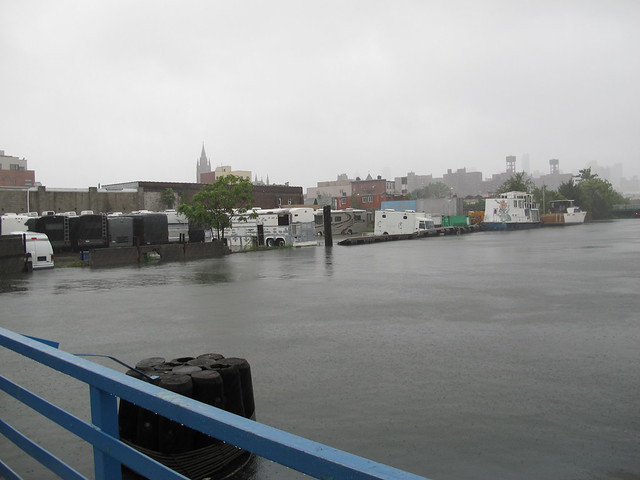
Gowanus Canal overflowing its banks during Hurricane

IMG_1498
***Reminder***
This Meeting Is This Thursday

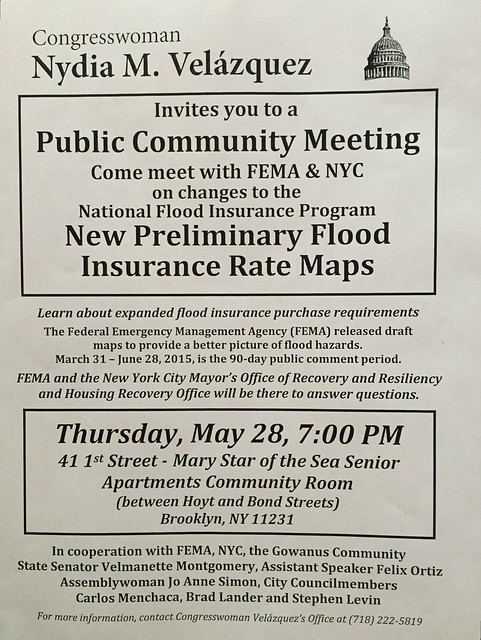
Thank you to Congresswoman Nydia Velázquez, who is organizing a second public meeting, this time in Gowanus, regarding the changes to the National Flood Insurance Program's new preliminary flood insurance maps and rates.  The meeting will be held on Thursday, May 28 at 7 PM at 41 1st Street, in the community room of the Mary Star of the Sea Senior Apartments.

Here is why this meeting is important:
In the past few weeks, the Federal Emergency Management Agency (FEMA) sent out letters regarding updated flood maps for New York City to all property owners in or near the Special Flood Hazardous Area newly identified by the federal agency.

The Agency encourages everyone to identify their property's flood risk by checking the Preliminary 
Flood Insurance Rate Maps. The maps can be accessed here and here.

In the letter, FEMA stresses that the maps are only preliminary. A public comment and appeal period began on March 31st, 2015 and will continue until June 28th, 2015. During this period, homeowners can challenge FEMA's new maps by sending technical and/or scientific data regarding their individual property.
After FEMA evaluates all challenges and appeals, the new maps will be incorporated and flood insurance purchase requirements will go into effect.

If you received the FEMA letter because your property is either is zone A or Zone X, you need to take the time to understand what all of this will mean. This has some very important ramifications beyond getting flood insurance.

If you need legal help regarding this issue:
Two weeks ago, I was contacted by Antony Gemmell, Staff Attorney for New York Legal Assistance Group, a non-profit organization which provides free legal services to people who were impacted by Superstorm Sandy.
Gemmell let me know that New York Legal Assistance Group "offers advice and representation on a wide range of legal issues related to Sandy, including flood insurance."
Please avail yourself of the organization's services by contacting NYLAG's Storm Response Unit (SRU) client intake team at (212) 584-3365 or stormhelp@nylag.org.


Read more

Friday, April 24, 2015

Important Information For All Gowanus (And Red Hook) Residents Who Got A Letter From FEMA

IMG_3268
Gowanus Canal overflowing its banks during Hurricane

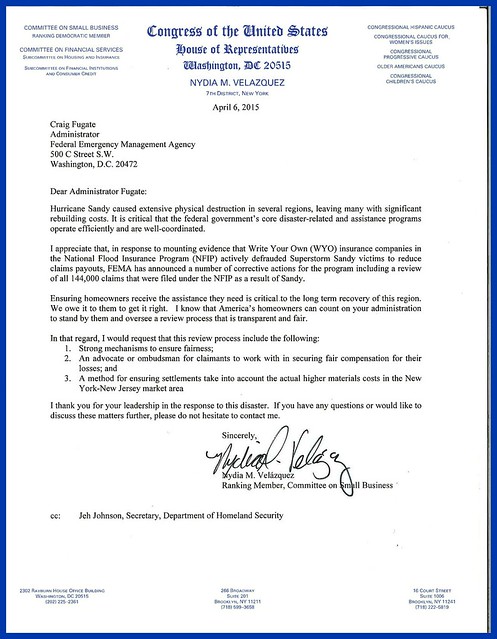
Velazquez_FEMA 4-6-2015 copy
Congresswoman Nydia Velázquez’s letter to the FEMA Administrator regarding 
the National Flood Insurance Program and its process for reopening claims.


In the past few days, the Federal Emergency Management Agency (FEMA) sent out letters regarding updated flood maps for New York City to all property owners in or near the Special Flood Hazardous Area newly identified by the federal agency.

The Agency encourages everyone to identify their property's flood risk by checking the Preliminary Flood Insurance Rate Maps. The maps can be accessed here and here.

In the letter, FEMA stresses that the maps are only preliminary. A public comment and appeal period began on March 31st, 2015 and will continue until June 28th, 2015. During this period, homeowners can challenge FEMA's new maps by sending technical and/or scientific data regarding their individual property.

After FEMA evaluates all challenges and appeals, the new maps will be incorporated and flood insurance purchase requirements will go into effect.

Clearly, this is an important issue for homeowners in both Gowanus and Red Hook.  The  information created by FEMA has generated more questions and has left many owners confused, as they are trying to navigate through this process in a relatively short time period.

FEMA has held a community meeting in Red Hook two weeks ago.  After residents called for a similar meeting in Gowanus, FEMA and the City have just announced that they will be happy to organize an informational  meeting in the Gowanus/ Carroll Gardens area.
That is good news.  I will be posting information on the meeting as soon as a date has been set, so stay tuned.

Above also please fine Congresswoman Nydia Velázquez’s letter to the FEMA Administrator Craig Fugate regarding the National Flood Insurance Program and its process for reopening claims.
Her office has been very helpful in this matter.

A few days ago, I was contacted by Antony Gemmell, Staff Attorney for New York Legal Assistance Group, a non-profit organization which provides free legal services to people who were impacted by Superstorm Sandy.
Gemmell let me know that New York Legal Assistance Group "offers advice and representation on a wide range of legal issues related to Sandy, including flood insurance."
Please avail yourself of the organization's services by contacting NYLAG's Storm Response Unit (SRU) client intake team at (212) 584-3365 or stormhelp@nylag.org.

If you received the FEMA letter because your property is either is zone A or Zone X, you need to take the time to understand what all of this will mean. This has some very important ramifications beyond getting flood insurance.


Read more

Monday, March 30, 2015

Reminder: Congresswoman Velázquez Will Hold FEMA Flood Insurance Meeting In Red Hook Tomorrow

Here is a quick reminder that Congresswoman Nydia Velázquez, in cooperation with several other elected officials, is hosting a  FEMA Flood Insurance Meeting in Red Hook tomorrow evening.

According to the Congresswoman's office:
"It’s time for another flood insurance meeting: March 31, 2015 – which begins a 90-day public comment period on new maps where many more people will be required to get flood insurance. (FEMA is sending out 400,000 letters to NYC property owners mapped in or near the special flood hazard areas next week.) Anticipating a lot of questions, the Congresswoman is hosting a public community meeting in Red Hook (accessible to Gowanus and open to all) with FEMA and the City officials."

Since this information is of equal importance to residents in Gowanus, please circulate the flyer and mark your calendar.

Perhaps, as one of my neighborhood friends suggested, Gowanus residents should request their very own meeting? Just a suggestion.

If you would like to check if your home is in a FEMA Flood zone, click here to enter your address:
What Is My BFE? Address Lookup Tool | FEMA Region II

Click here for the Gowanus-specific map.
You can also leave a comment on Fema's web site here.


Read more

Wednesday, March 18, 2015

Congresswoman Velázquez To Hold FEMA Flood Insurance Meeting In Red Hook

Congresswoman Nydia Velázquez, in cooperation with several other elected officials, is hosting a FEMA Flood Insurance Meeting in Red Hook.
According to the Congresswoman's office:
"It’s time for another flood insurance meeting: March 31, 2015 – which begins a 90-day public comment period on new maps where many more people will be required to get flood insurance. (FEMA is sending out 400,000 letters to NYC property owners mapped in or near the special flood hazard areas next week.) Anticipating a lot of questions, the Congresswoman is hosting a public community meeting in Red Hook (accessible to Gowanus and open to all) with FEMA and the City officials."

Since this information is of equal importance to residents in Gowanus, please circulate the flyer and mark your calendar.

Perhaps, as one of my neighborhood friends suggested, Gowanus residents should request their very own meeting?  Just a suggestion.

If you would like to check if your home is in a FEMA Flood zone, click here to enter your address:
What Is My BFE? Address Lookup Tool | FEMA Region II


Read more

Thursday, October 23, 2014

Notes On Congresswoman Velázquez's Informational Meeting With EPA, DEP And NYCHA At Wyckoff Gardens

IMG_1494
Last Night at the Wyckoff Gardens Community Center
IMG_1498
Congresswoman Nydia Velázquez
IMG_1502
Walter Mugdan, Superfund Division Director, US EPA, Region 2
IMG_1493
IMG_1507
Natalie Loney. EPA Region 2 Community Involvement CoordinatorIMG_1521
Councilmember Brad Lander
IMG_1525
Eric Landau, Associate Commissioner, Public Affairs at 
NYC Department of Environmental Protection
Luis Ponce, NYCHA Vice President of Operations
IMG_1539
Joe Ann Brown, representative of Warren Street Houses' tenant associationIMG_1540
NYCHA resident asking about a job training institute as part of Superfund clean-up 
IMG_1543
Gowanus NYCHA resident asking for help in getting his car replaced after Hurricane Sandy

Congresswoman Nydia Velézquez hosted an informational meeting at Wyckoff Gardens Community Center last night with representatives of the U.S. Environmental Protection Agency, New York City Department of Environmental Protection and of New York City Housing Department (NYCHA).

The meeting was meant to engage low-income housing residents in the Gowanus Superfund process, as well as to give residents of Gowanus Houses and Wyckoff Gardens, who were particularly hard hit by Hurricane Sandy, the opportunity to address issues of flooding and aging infrastructure. In particular, representatives of both apartment complexes have repeatedly complained of raw sewage in their basement and and gurgling out of their kitchen and bathroom sinks and tubs.

"Since the beginning of this process," the congresswoman told the community,  "one of the top priorities of mine, as well as the other elected officials, has been to assure community involvement and input, and I must say that EPA, under the leadership of Judith Enck, has kept this in mind throughout.  That is why the inclusive process implemented by EPA has resulted in a better strategy. Going forward, we must continue to insure that the public is familiar and comfortable with how the canal is remediated. That is why it is not only important to have the meetings with the Gowanus Superfund Community Advisory Group, but also to bring some of the meetings here. I need and I want to see more participation  from Public Housing residents."

The U.S. Environmental Protection Agency Region 2 was represented by Walter Mugdan, Superfund Division Director and by Natalie Loney, Community Involvement Coordinator.

Mr. Mugdan reminded the community that it has been exactly one year since the EPA issued its Record of Decision (ROD), which represents the finalized cleanup plan for the Gowanus Canal. He explained that there are two major components to the Superfund clean-up. The first component consists of dredging the heavily contaminated mud at the bottom of the canal and to carefully managed the material and to ship it to authorized, appropriate disposal locations outside of the New York area. In addition, the deeper contaminated soil that can not be removed will be capped to isolate it from the water and from aquatic life.
The second component relates to preventing raw sewage overflow from recontaminating the canal after it is dredged. In the ROD, the EPA is ordering City of New York to site two retention tanks near two major outflows, RH-034 at the top of the canal and  OH-007 near the 5th Street turning basin.
"We have determined in our decision, that there will have to be a significant reduction in the amount of Combined Sewage material that goes into the canal when it rains.  In order to build the tanks that will be necessary to capture the extra sewage rainwater,  the City of New York, which is responsible for doing this, will have to find a location for these tanks."

Natalie Loney gave an in depth presentation on how the Superfund program works and where in the process the Gowanus Canal Superfund stands today. [ You can access a video of Ms. Loney giving a similar presentation at TedX Gowanus here.]

Eric Landau, Associate Commissioner, Public Affairs at NYC Department of Environmental Protection  spoke about the 'many things that are going on in Gowanus.
"There is a lot that DEP is involved in here in Gowanus currently," he said.  DEP is in the process of installing High Level Storm sewers, "which will help with the flooding and will have a CSO benefit."  The City, with New York States Department of Environmental Conservation,  'is working on reducing CSOs in the canal" by putting together a long term control plan.
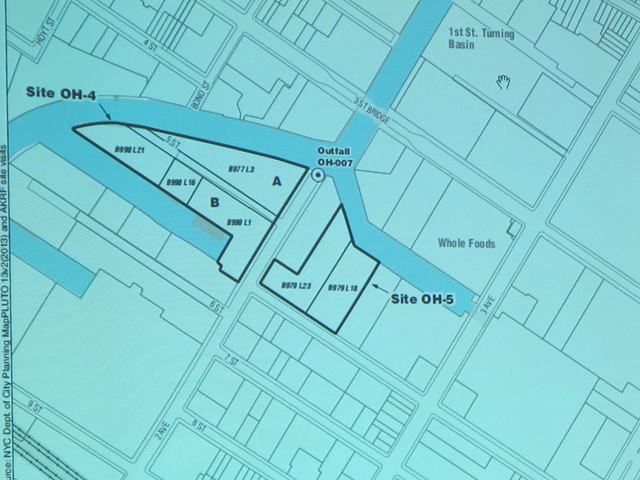
In addition, DEP is installing Green infrastructure elements like bioswales to capture rain water so that it does not get mixed with sewer water.

Last month, the DEP submitted to EPA two potential locations for each of the two CSO retention tanks mandated by the Record of Decision.  
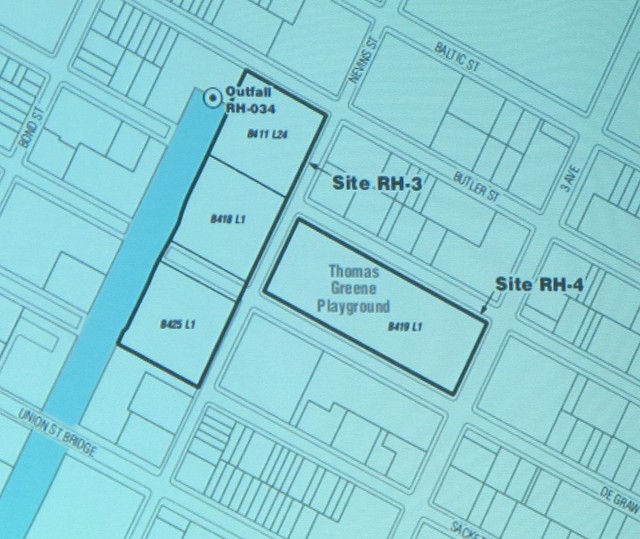
For the retention basin at the head of the canal, near Outfall RH-034,  DEP has suggested Thomas Greene Park, a public park.  The second proposed location is made up of three privately owned lots across the street on Nevins Street between Butler, De Graw and Sackett Street.

IMG_1532
For Outfall Number OH-007, DEP has identified the  City-owned Salt Lot at Second Avenue at the edge of the canal.  The second location is located between the canal and 5th Street.

IMG_1535
"This is a long process.  From this point to when we get back to EPA and the community with the one site [for each tank] that we think makes the most sense, it is the end of June [2015]. From now till June, there are still a lot of things that need to be looked at, including cost and how the community feels about the various locations.  We are very well aware of how the community feels about the Thomas Greene Playground.  We definitely heard that and we take this very seriously. That is also why it is our second rank site according to our criteria."

What Landau failed to mention is that Thomas Greene Park is publicly owned already,  whereas the alternative site for Outfall RH-034 across the street is privately owned and would need to be purchased, presumably by means of Eminent Domain.  The businesses currently operating on the land would need to be relocated.
All that would cost time. legal expenses and money to purchase the land.  Considering that on its website , DEP states that it "believes that the cost of the tanks would be five to ten times higher than EPA has estimated", it is hard to believe that the agency would rank the privately owned site higher than a site that it already owns.

Landau also failed to mention that Thomas Greene Park sits on top of a former Manufacturing Gas site for which New York DEC is currently finalizing an environmental remediation plan under the State Brownfield Program.  The coal tar that currently sits under the park and the pool will most likely have to be dug up anyway, which means that placing the retention tank there could save additional money.

Finally, Luis Ponce, NYC Housing Authority's Vice President of Operations, was able to address the sewer back up issue that were foremost on the minds of most Gowanus Houses and Wyckoff Gardens residents who came out last night.
Ponce explained that since receiving the complaints, NYCHA had determined that the problem was  the result of stoppage within the buildings'  waste pipes, most probably caused by grease being poured into the kitchen drains.  The catch basins had been cleaned out and the situation resolved.
"This is definitely a NYCHA issue, not a Gowanus Canal issue," Ponce stated.

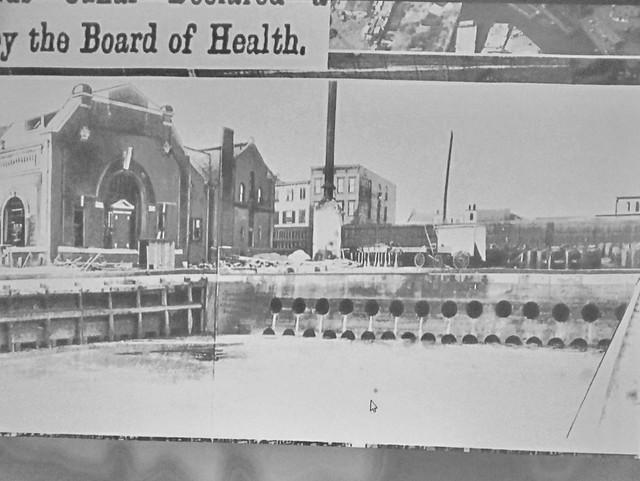
1928 photo of the former MGP site at Douglass Street, where Thomas Greene Park is now


Read more

Wednesday, June 25, 2014

DEP Commissioner Lloyd At Last Night's Gowanus Canal Superfund CAG Meeting: "We Intend To Comply" With EPA. But New DEP Letter To EPA Indicates More Stalling

IMG_0134
IMG_0151
IMG_0150
IMG_0145
IMG_0149
IMG_0138
Councilman Brad Lander and  Steven Levin

When it comes to cleaning the Gowanus Canal, the City of New York has a dismal record.  Over decades, the City has never shown the will to clean the toxins at the bottom of the canal which cause  real environmental hazards, nor has it ever addressed the Combined Sewer Overflow issue in any meaningful way.
When the US Environmental Protection Agency stepped in and proposed the Gowanus Canal as a Superfund site, a designation reserved for the most severely polluted sites in the country, the City of New York lobbied hard to keep the Federal Government at bay.
No wonder. The EPA identified the City as the second largest Potentially Responsible Party (PRP) for discharging "hazardous substance-contaminated untreated sewage" into the canal.

As we all know, the EPA did declare the Gowanus a Superfund site, and in September 2013, the agency signed its Record of Decision (ROD) for the cleanup of the canal. The ROD, which represents the blue print for the remediation, compels the City to construct two retention basins to capture the flow of contaminated sewage solids from two major outflows. It also holds the City responsible for the excavation and restoration of the 1st Street Basin.

The EPA suggested two locations for the two retention tanks in the ROD, but was willing to discuss alternative locations with the City's Department of Environmental Protection (DEP) during the remedial design period.

Unfortunately, the City responded as usual, by delaying. The Administration hired a consultant, who came up with a list of 86 possible sites, which included the newly opened Whole Foods market, the Lightstone parcels where 700 residential units are under construction, the former Power Station, which was recently purchased and is being remediated for a future non-profit arts center, Con Edison's 3rd Avenue service yard, and the American Can Factory, a 5-story multi-use arts and manufacturing complex employing hundreds of people.
By suggesting private property as opposed to using City-owned property for the siting of the tanks, the City has inflated the cost to about $500 million. In a letter to DEP, the EPA points out that this is only $6 million dollars less than the cost of the entire Superfund clean-up.
It would appear that the City is continuing to waste time and to shirk its responsibility towards the Gowanus Community

On Wednesday, May 28th, the US Environmental Protection Agency prompted New York City to conduct the design work for the remedial actions outlined in the ROD by Issuing a Unilateral Consent Order. The EPA issues Unilateral Orders if a Potentially Responsible Party (PRP) does not agree to perform the cleanup work through a judicial consent decree or an administrative order on consent.

The DEP just responded to the Unilateral Administrative Order with a ten page letter, agreeing to do the work, but postured that the "UAO contains requirements and deadlines that are not feasible or reasonably capable of performance", that the ownership of the First Street basin by the City is still in question, and most importantly, that "the Record of Decision is based on inadequate information and lacks scientific support."
The City's response goes as far as to call the Order "arbitrary, capricious and otherwise not in accordance to the law."

Last night, Gowanus Canal Superfund Community Advisory Group hosted NYC DEP Commissioner Emily Lloyd at its monthly meeting to discuss her agency's role in the clean-up.
The conversation quickly turned to EPA's Order and to the City's response.
Commissioner Lloyd was quick to dismiss the adversarial tone of her agency's letter.
"It's a lawyers' response to a lawyers' letter," she said smiling.
" I don't think we ever said we won't do this.  My predecessors have had a lot reservations and a lot of concerns about this, but  I think where we are trying to go is to recognize the jurisdiction and say that we are going to do everything we can do to comply," Lloyd explained to the members of the CAG.
"I think there is an advantage to the Superfund bringing all parties to the table and its probably a more ambitious clean-up than the City could undertake on its own. It's hard to imagine that more isn't better for Gowanus."  
"What we see as the real challenge of the summer is to work with the community to arrive at sites [for the retention basins] that will meet many of the goals that we all have, with a minimum of disruptions to the community as possible. I expect that it's not going to be a simple undertaking, but certainly one that I am looking forward to."

Congresswoman Nydia Velázquez, who attended the meeting last night addressed the Commissioner sternly: "All I have to say is that I expect better collaboration from the City administration at this time.  If we have collaboration, we can move forward to do the work. But you should also know that the Federal Government,  through EPA, has the authority to get the City to move in the right direction."

DEP and our administration better heed that advice.  If they continue to play games and refuse to obey EPA orders, the Federal agency can charge the City punitive damages of triple the cost. 

To show its concern in regards to that possibility, the Gowanus Canal Superfund Community Advisory Group voted to adopt the following resolution:

The Gowanus CAG, established by the EPA, which represents a cross section of residents, businesses and civic organizations in and around the Gowanus Canal corridor, demand that New York City as one of the Responsible Parties, as defined by the EPA, actively and cooperatively work with the EPA on all aspects which they are accountable for as required by the Gowanus Record of Decision (ROD), but especially for the timely determining the number(s), size and location(s), and design engineering of the required sewage retention tanks. 

To date, the City's positions/policies concerning the Gowanus Canal and the ROD and their participation in the initial design phase and cooperation with the EPA has not produced the positive results that are required for the clean-up the Gowanus Canal to proceed within the proposed schedule. The Gowanus CAG was alarmed by the recent consent order issued by the EPA against the City of New York that would be unreasonabley expensive for New York City tax payers. If New York City fails or refuses to participate in the planning phase, the EPA under current law can and will charge the City three times (3X) the cost to plan and build the retention tanks.

This new/improved active working relationship in determining the number, size, and location(s) of the retention tanks must take into consideration the current and future sewage needs of the Gowanus corridor (including the possible rezoning of the Gowanus area that would allow for high density residential development).


Read more

Monday, March 24, 2014

"Bridging Gowanus": Real Community Planning Or Dog And Pony Show?

IMG_6477
IMG_6485
IMG_6493
Congresswoman Nydia Velázquez
IMG_6489
Councilman Brad Lander
IMG_6500
Councilman Stephen Levin
IMG_6473
IMG_6472

IMG_6468
IMG_6482
IMG_6481
IMG_6502
IMG_6505
IMG_6506
IMG_6504
IMG_6499
IMG_6498
This past Thursday evening, I attended the second Bridging Gowanus community planning meeting about the future of the Gowanus area. About 150 local residents and business owners participated in this latest session, which was held at the Wyckoff Gardens Community Center.
Bridging Gowanus has been convened jointly by Congresswoman Nydia Velázquez, State Senator Velmanette Montgomery, Assemblywoman Joan Millman, Council Member Stephen Levin, and Council Member Brad Lander. It has been promoted as "an inclusive community-driven planning process to develop a long-term vision for a safe, vibrant, and sustainable Gowanus."

The process started last August. Since then, several meetings have been held with community stakeholders to identify broadly shared goals and "build consensus around a neighborhood framework for the infrastructure and land use regulations needed in the Gowanus Canal area."
To facilitate the conversation Pratt Center for Community Development (not to be confused with Pratt Institute) has been hired as consultant in charge of running the process.

The goal of Bridging Gowanus, as it has been explained to participants, is a community supported blueprint to help shape the De Blasio Administration's thinking about the Gowanus Canal.  

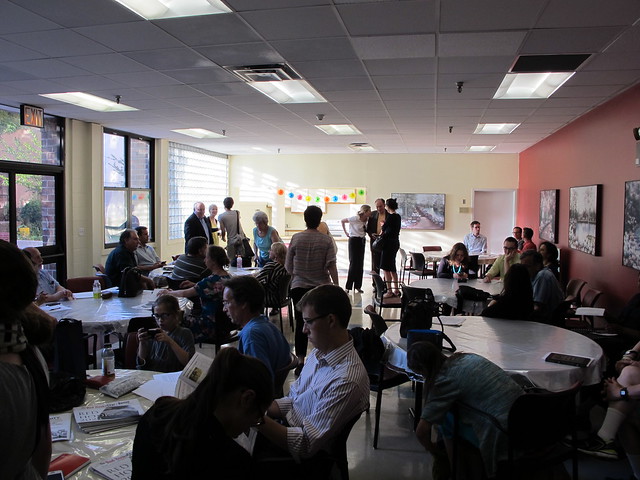
At this latest planning meeting, participants were encouraged to explore an "idea expo" which had been prepared by Pratt Center.  The expo consisted of twelve poster boards that represented some of the shared commonalities that had come out of previous sessions.  Some of these common goals included:

*strengthening and coming up with a true mixed-use zoning that will maintain a true mix of industrial and residential use.

*creating a diverse residential community by preserving and creating affordable housing.

*strengthening industry by investing in infrastructure and putting in place financial mechanisms to support industry.

*coordinating job and workforce developments with planned resiliency and environmental remediation initiatives

*flexible new school buildings that could be used by the community during the evenings and week-ends

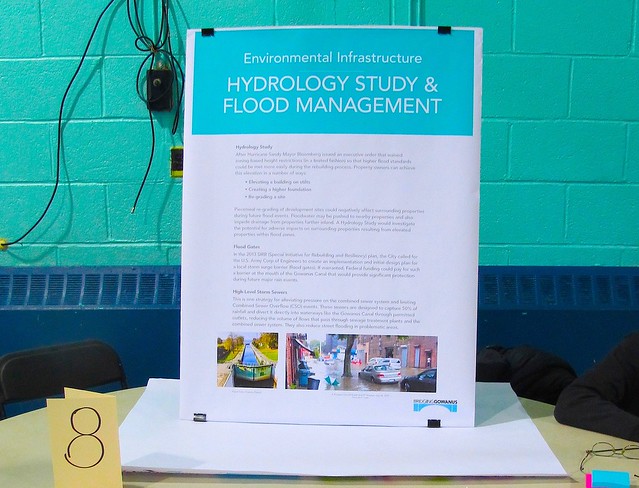
*undertake a hydrology study to investigate the effects of elevating building sites along the Gowanus corridor to meet new building codes in flood zones.

Each participant was given twelve red stickers to distribute on the twelve 'idea boards' to indicate importance or preference.
By far, the board that got the most stickers was the Hydrology Study/ Flood Management board.

The second part of the meeting involved dividing participants into groups for an exercise that was moderated by representatives of Pratt Center at each table.
Stakeholders were presented with a map of the Gowanus corridor.  They were encouraged to discuss future land use in the Gowanus.
Each table was shown a map that had been divided into three parts:
*Number One was labeled "Industrial Buisness Zone"
*Number Two was labeled "Ombudsman Area"
*Number Three was unlabeled.

The map somehow looked eerily like the one presented to the Gowanus community back in 2009, when Amanda Burden,  then-Commissioner of City Planning presented her agency's proposed re-zoning for the Gowanus Corridor.  The map presented by Burden at that time had also divided the neighborhood into three parts. Click here for the 2009 re-zoning proposal.

At my table, the Pratt Center moderator seemed to want to steer the conversation into a very specific direction. She began by asking my group if the area labeled "Industrial Buisness Zone" on the map should or should not stay manufacturing.  Most everyone agreed that it should.  If that were the case, the moderator wanted to know, where would we put housing?
The moderator then appeared to be strongly suggesting that perhaps, area number 3 could be zoned to allow residential development.  After all, the 700-unit Lighstone Group residential development had already been green lighted by the city and Gowanus Green at Public Place, with its 770 units was sure to follow.

I pointed out that dividing the Gowanus into three distinct areas went against everything that I had personally heard the community say: that there should be a fluid mix of uses everywhere in Gowanus.
Not only did the exercise remind me of playing Monopoly, the map and the direction of the conversation seemed specifically designed to support the City's 2009 proposed re-zoning.

I have now attended all except one of the Bridging Gowanus sessions.  I have tried to put aside my cynicism and hoped that, as promised, the outcome of the process would allow the Gowanus community to plan for its own future.
But make no mistake, Gowanus has already been divided amongst developers who are ready to build residential development on the shores of the canal with the blessing of newly-elected Mayor De Blasio. The Bridging Gowanus process is, in my humble opinion, a carefully orchestrated process that gives the appearance of community input.
At the end, we will most likely just end up with what New York City has planned for the area since 2009.


NYCity proposed rezoning for Gowanus presented to the community in 2009


Read more