Showing posts with label DEP Commissioner Emily Lloyd. Show all posts

Friday, May 29, 2015

Why Can't DEP Be More Like EPA? Notes From May's Gowanus Canal Superfund CAG Meeting

IMG_4274
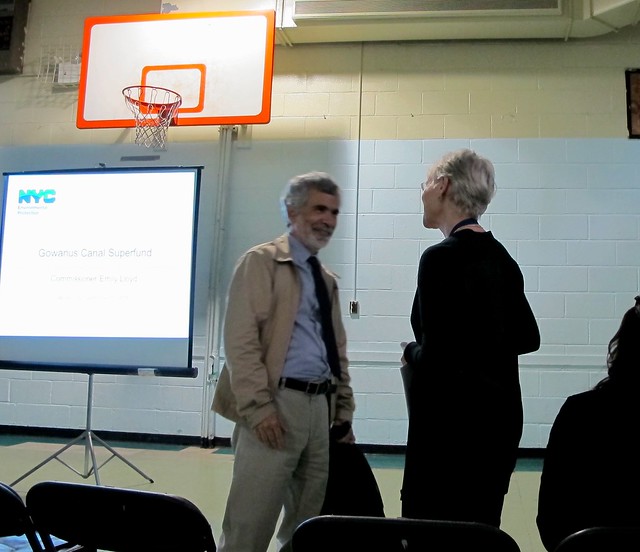
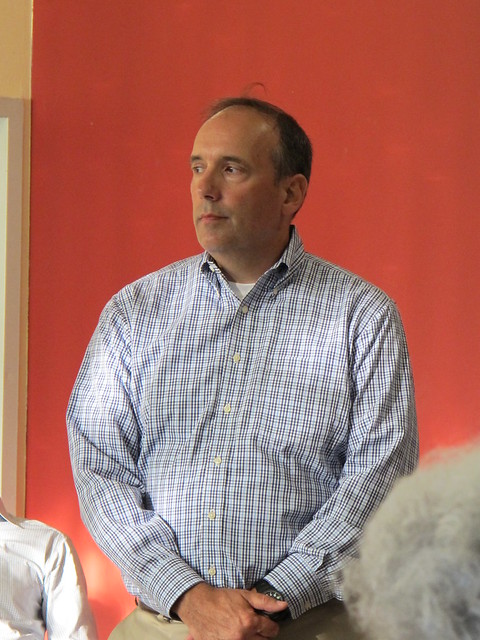
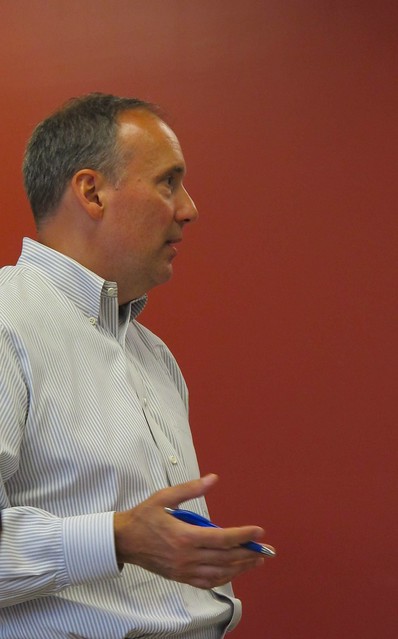
Christos Tsiamis, EPA Remedial Project Manager for the Gowanus Canal Superfund
IMG_4272
IMG_4277
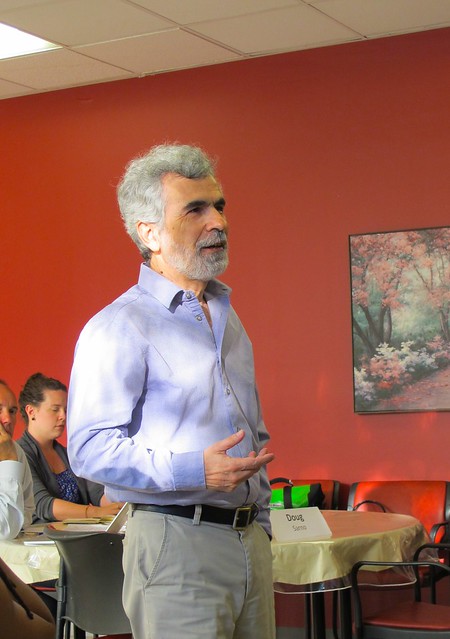
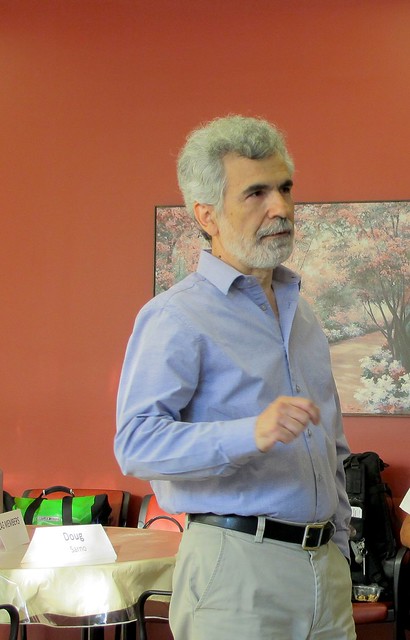
Doug Sarno, facilitator for Gowanus Canal Superfund Community Advisory Group

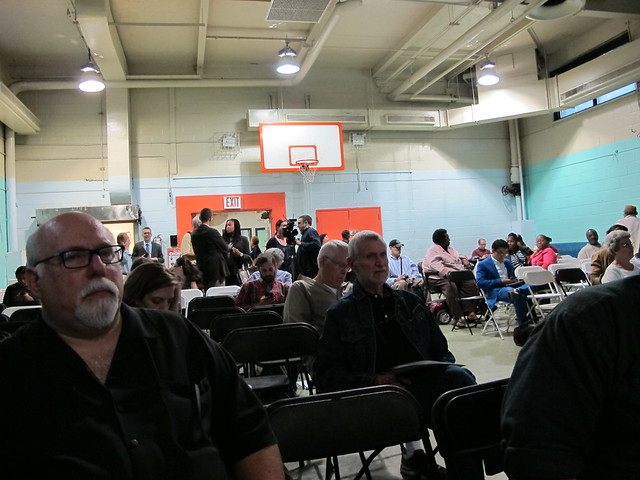
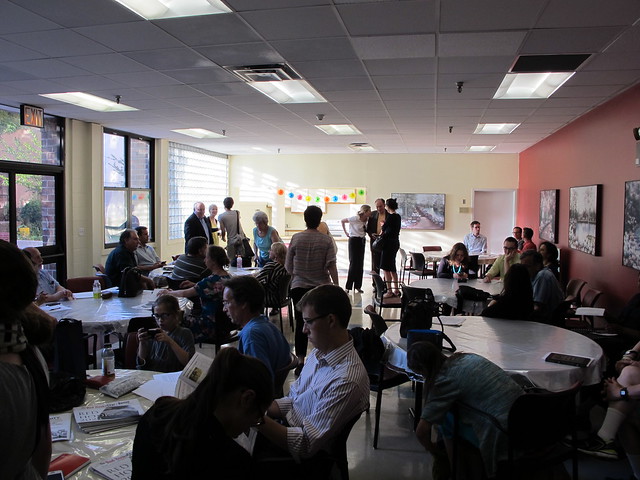
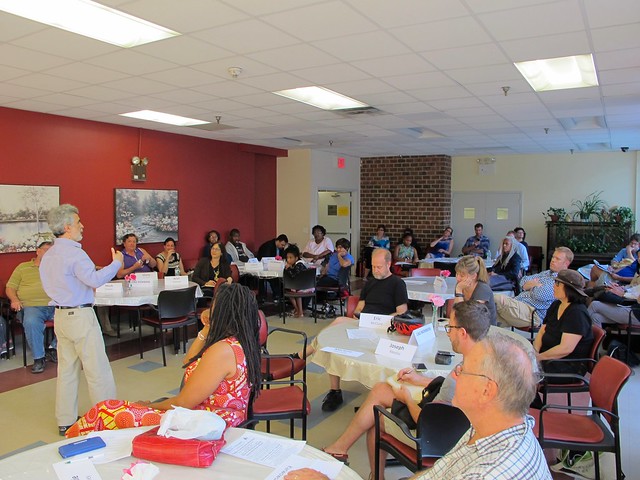
Christos Tsiamis, Environmental Protection Agency Remedial Project Manager for the Gowanus Canal Superfund clean-up, attended Tuesday night's meeting of the Gowanus Canal Community Advisory Group (CAG) to provide the public with a brief update. Most importantly, he wanted to clarify EPA's position on placement and size of the Combined Sewer Overflow retention tanks that his agency requires New York City to construct under the Record of Decision, which was signed back in September 2013.
"Some things have crossed my desk that I felt needed clarification", he told members of the CAG.

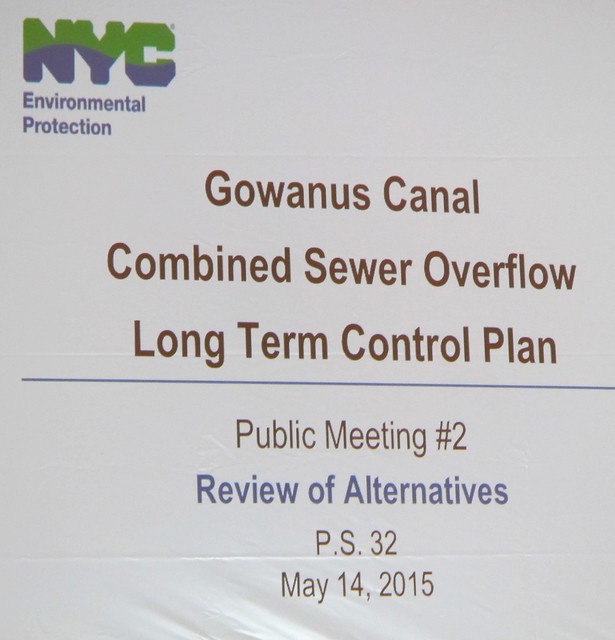
Tsiamis was referring to a public meeting held by New York City Department Of Environmental Protection (DEP) on May 14, 2015 on its Combined Sewer Overflow Long Term Control Plan for the Gowanus Canal, which the City is obligated to prepare under an order from New York State.

Though the Long Term Control plan has nothings to do with the EPA, DEP Commissioner Emily Lloyd at that meeting spoke at length about work that has to do with the EPA Superfund clean-up. In particular, the Commission discussed the potential location and the sizes of the two retention tanks mandated by the EPA as control measures to significantly reduce the combined sewer overflow (CSO) discharges to the Canal. 
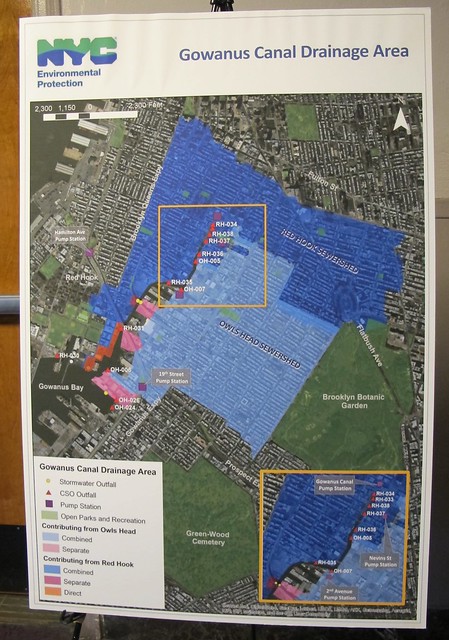
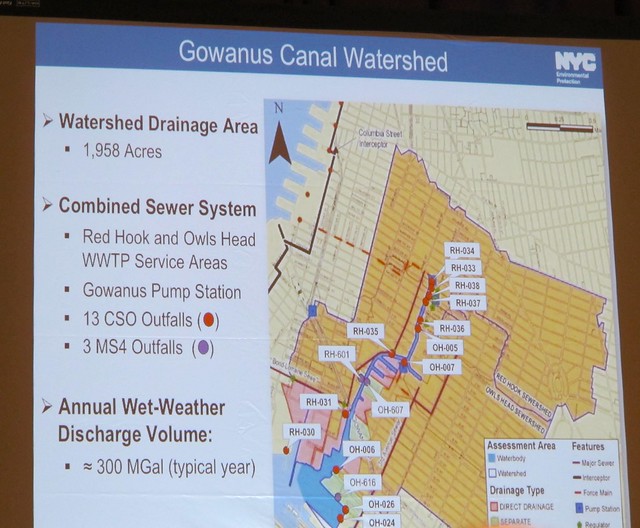
The EPA estimates that an 8-million gallon tank and a 4-million gallon tank will be required to address CSOs from the two largest outfalls, RH-034 and OH-007. Together, they will reduce the CSO in the canal by 58% to 74%.
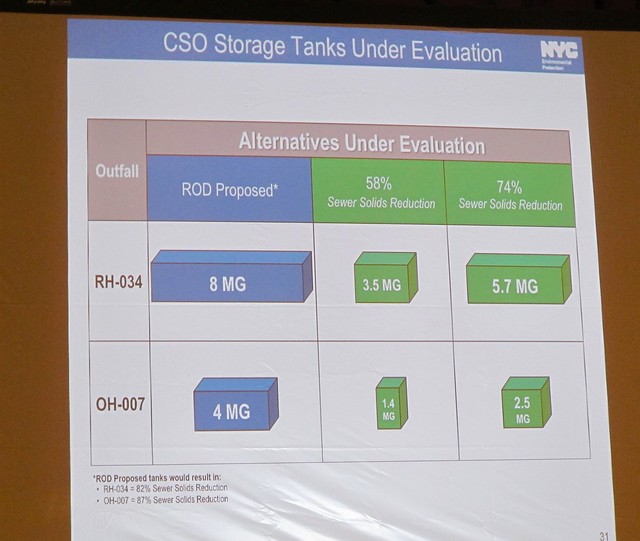
At the May 14th meeting,  DEP talked about reducing the sizes of the tanks from an 8 million gallon tank to a 3.5 or 5.7 million gallon tank at RH-034, and from a 4 million gallon tank at OH-007 to a 1.4 or 2.5 million gallon tank.
According to DEP calculations , the smaller sized tanks would be enough to achieve the 58% to 74% CSO reduction mandated by the EPA.

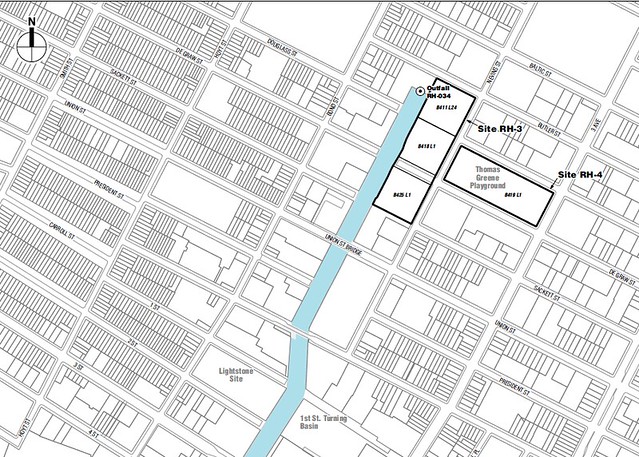
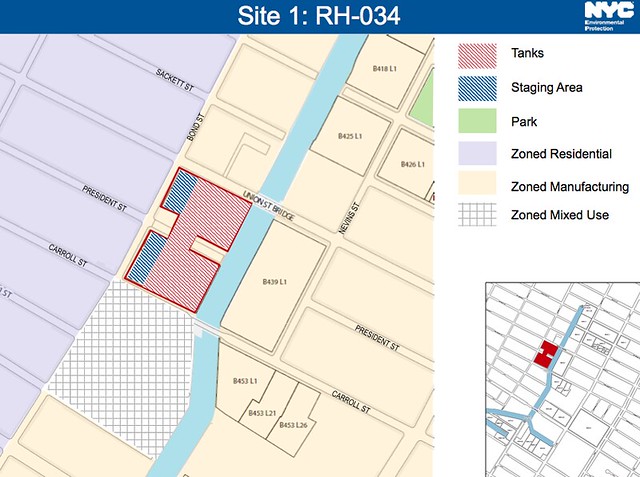
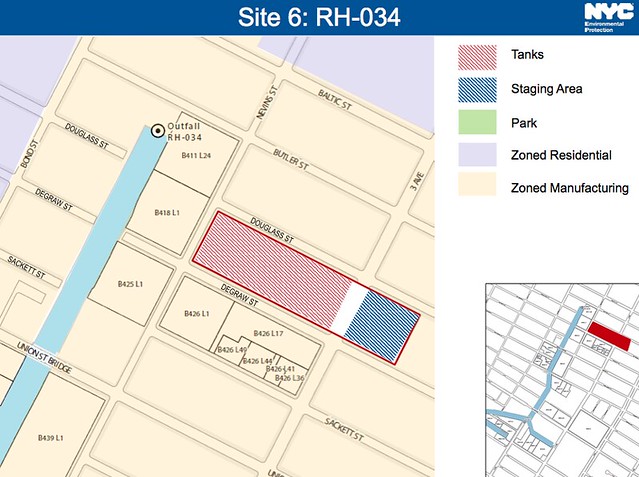
Commissioner Lloyd also indicated at the meeting that DEP is considering two sites for the  retention tank for outfall RH-034. The first site is comprised of two privately owned lots directly adjacent to the canal between Douglass Street and DeGraw Street. The second location is Thomas Greene Park, which is on land already owned by the City. Lloyd told the public that her agency will be 'likely to recommend' to EPA the privately owned lots, primarily "because of its proximity to the rest of our infrastructure, it will be more efficient to construct and operate."
Even with the cost of acquiring the privately owned sites it would still  be cost effective, Lloyd claimed. When asked what would happen if the owners of the private land were unwilling to sell, she explained that if "that is the selected site, we will proceed to eminent domain." 

Obviously, some of what DEP presented to the public regarding sizes and preferred locations for the tanks is still very much under discussion with EPA.
At Tuesday's CAG meeting, Tsiamis wanted to make this very clear:
"I am here to say that the City can discuss that, but it so happened that a week before they presented that information to the public, I personally sent comments to New York City on exactly those two issues.  On May 7th, I had commented on what the City presented to you on May 14th."
He continued:
"We took an exception to the suggested sizes of the tanks by New York City.  The EPA made comments regarding the reduced sizes  to the City. We do not agree and in our comments, we lay out the reasons why we do not agree, why we think the sizes need to be bigger than what New York City presented at that meeting.  In other words, we told DEP that this is unacceptable and we are moving towards defining what is acceptable.  And we expect a response.
I wanted to be clear that what the City presented to the public was not what will be constructed."

Regarding the DEP's preferred location of the tanks, Tsiamis had this to say:
"New York City has submitted to EPA an evaluation of two locations for each of the two CSO tanks.
We reviewed what New York City gave us and again, we had significant disagreements in the way the evaluations were conducted.  Our disagreement was regarding the cost acquisition element and its weighting factor in the evaluation. In other words, it would cost the City much more to acquire land than the cost associated with siting the tank further from the canal.
We put this in writing, sent it to them and we are still waiting for their responses.
He added:They don't make the decision. We make the decision. The City is under a unilateral order: That is a one way street."

Despite the complexity of these projections, reports, and comments, it is clear that the EPA continues to steadfastly work towards our long awaited comprehensive cleanup while our local government drags its feet and undermines the process.
I guess it is too much to ask for DEP to step up its game and be more like the EPA.
On the other hand, as a community, we have the perfect right to demand just that.
And we should.


The correspondence from  EPA to DEP was made available by Christos Tsiamis upon request

EPA COMMENTS ON NEW YORK CITY DEP’S “GOWANUS CANAL CSO TANK SITING” MEMO 
(sent to Kevin Clarke, Project Engineer for NYC DEP on May 7, 2015)

General Comment:

There are several critical omissions and unrealistic assumptions that were utilized in assigning the weighing factors to the ranking elements listed in Attachment A, which ranks potential sites for the location of the retention tanks in the vicinity of tank location RH-34 as specified in EPA’s Record of Decision.

For example, the “Land Use and Environmental” criterion for “Known contamination/hazardous materials” has been given a weighting factor of 15. The description of the scaling factors does not include the assumption that the site will be remediated by others, namely National Grid, if excavation for the construction of a retention tank takes place and, therefore, would not be the responsibility of New York City (NYC). In addition, tank locations RH-3 and RH-4 have been given different ratings, although both of the sites are known to have significant contamination and RH-4 is also known to have large underground structures that will have to be removed. In addition, as mentioned above, these locations will not be remediated by NYC. Therefore, the ratings for this criterion should be at least the same and they should have a much higher rating than the one assigned because NYC would not be responsible for their remediation. This ranking criterion should be redefined and the scaling factor should be applied properly taking into account the above considerations.

Another criterion that is improperly assessed is the “Land Use and Environmental” criterion for “Property Acquisition.” This criterion is given a weighting factor of only 10%, which is much less than the 30% weighting factor assigned to the “proximity to existing infrastructure” criterion and two other criteria. NYC’s ability to build on property that it already owns, so that it does not have to acquire property that currently is at a premium in the Gowanus area, should have a much higher weighting factor than the one assigned. In our estimate, the weighing factor for this criterion should be at least 20%, if not 30%.

A weighting of 30% would be in line with the NYCDEP Commissioner’s statement at the 2014 Wyckoff Gardens public meeting that cost would be very important in considering the tank locations. It would also take into account the rapidly increasing costs for land acquisition in the area and the loss of tax revenue in perpetuity for at least two parcels that comprise tank location RH-3, the sum of which would be presumably much higher than the additional construction and operational costs that might be associated with tank location RH-4. NYC should also assume that any costs associated with the temporary relocation of the pool and services and their eventual restoration in tank location RH-4 would be at least shared with other parties.

For similar reasons, unless the costs associated with the “Proximity to Existing Infrastructure” criterion (i.e., the approximate costs of additional conveyance pipes) are comparable with the “Property Acquisition” costs, which is unlikely, as acquisition costs are in the tens of millions of dollars, the weighting factor assigned to the “Proximity to Existing Infrastructure” criterion should be reduced.


Please revise the rankings taking into account the above considerations.


EPA COMMENTS ON NYC’S “GOWANUS CANAL BASELINE CSO VOLUME MODELING AND CSO TANK SIZING”
(sent to Kevin Clarke, Project Engineer for NYC DEP on May 7, 2015)

General Comment:

While the overall baseline scenario is better defined in this document than in prior documents, there are no details for the projected future dry weather sewage flows.  It is simply stated in the document that these new projections were “updated from 2045 projection to 2040 projection and include water conservation.”  What other assumptions were made for projected dry weather flows?  Do the flows account for ongoing and future redevelopment activities in the sewer drainage area that will increase dry weather flows in the future?  Also, a detailed description of the flow projections for the Red Hook and Owls Head WWTP service areas that were used were not provided.  Because EPA intends to review the underlying data and assumptions utilized throughout the tank design process, adequate supporting information should be included in future reports.

The tank size calculations indicate that smaller tank sizes may be sufficient to achieve the reduction goals.  The report, however, does not describe how the tanks were modeled or where they were modeled in the combined sewer systems.  In addition, the report does not describe the potential uncertainty in the model calculations themselves and the uncertainty of the eventual location of the tanks, the capacity of the infrastructure to convey flows to the tanks and their final design volume for a given site.  A description of these factors is necessary for this analysis and should be included in the eventual recommendations for tank sizes.

The report states that the tide/boundary condition downstream of the RH-034 outfall was corrected.  What provisions has New York City made in its combined sewer hydraulic and discharge calculations and plans for sea level rise and changes in rainfall that are described in older and more recent New York City Reports on Climate Change?  

Given that there are several uncertainties associated with future conditions, as described above, a conservative approach would have to be taken in designing the retention tanks called for in EPA’s Record of Decision.  Accordingly, consistent with such an approach, the tank sizes cited in Table 2 of the document under the “2014 LTCP Model 74% [solids reduction]” should be used to design the tanks rather than the volumes recommended in the report’s “Summary and Conclusions” section.   This percent reduction represents reductions estimated on the basis of the upper confidence limit of the data for PAHs.  Finally, owing to the uncertainties associated with potentially significant future development in the area and with climate change, an engineering error factor should be applied to calculate the final recommended volumes of the retention tanks.  Appropriate adjustments can be made to these preliminary assumptions as the remedial design progresses and further data and analysis are developed.


Read more

Saturday, May 16, 2015

NYC DEP Willing To Depend On Eminent Domain To Solve Gowanus Drainage Problems

IMG_4002
IMG_3995
IMG_4001
New York City Department of Environmental Protection Commissioner Emily Lloyd
IMG_4017 1
NYC DEP Deputy Commissioner Angela Licata
IMG_3996
IMG_4018 1
IMG_3998
IMG_4020 1
NYC DEP  assistant Commissioner Jim Mueller
Screen Shot 2015-05-16 at 6.34.37 PM
DEP short list for RH-034 CSO Tank siting
IMG_4023 1
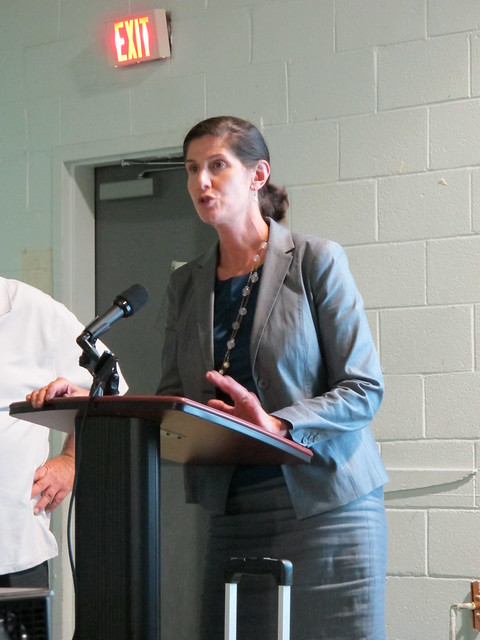
New York City Department Of Environmental Protection (DEP) Commissioner Emily Lloyd came to PS 32 on Hoyt Street on Thursday evening to present the second in a series of meetings related to the Combined Sewer Overflow Long Term Control Plan for the Gowanus Canal.

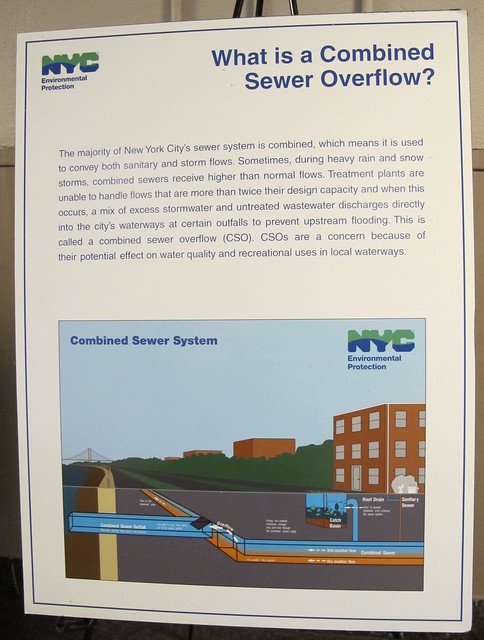
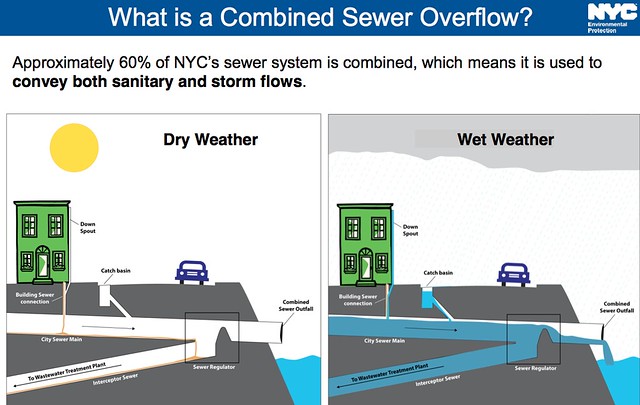
As you may know, the City diverts raw sewage mixed with rainwater directly into the Gowanus Canal and other water bodies during rain events, when our sewage treatment facility is overburdened. This violates the Clean Water Act of 1972.

In addition, the Environmental Protection Agency, as part of its Superfund investigation of the Gowanus Canal, has identified the City as the second largest Potentially Responsible Party (PRP) for discharging "hazardous substance-contaminated untreated sewage" into the canal.

Thursday night's presentation by Commissioner Lloyd focused on the work the City has already completed to address the CSOs and what measures it will implement in the future.

The Gowanus gray infrastructure improvements that have already been undertaken include upgrades to the  Gowanus Pumping Station and  to the Flushing Tunnel.
The Gowanus Pumping Station was put back into operation in June 2014. According to DEP,  the upgrades have increased pumping capacity from 20 to 30 million gallons per day.
Since May 2014, the three pumps at the Flushing Tunnel are operating, which has increased the flow through the tunnel, and improved dissolved oxygen in the water.

Further, the DEP is investing in green infrastructure in Gowanus. So far the agency has built 18 bioswales, has installed porous pavement installation at 4th Street and 5th Avenue, installed a porous playground surface at PS 261.  The Agency has provided a grant towards the Gil Hodges Community Garden's storm water management system.  90 more bioswales and 2 storm water green streets are currently under construction. 

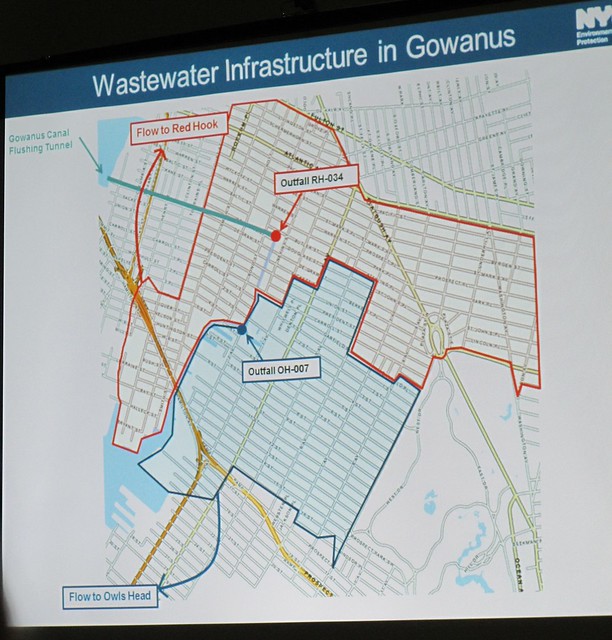
Commissioner Lloyd also spoke about the location of two CSO retention tanks that the EPA is requiring the City to construct in order to protect its remedy for the Gowanus Canal. Construction of these retention tanks is an important part of the remedial design. As per the EPA, the tanks are "combined sewer overflow (CSO) control measures for the upper reach of the Canal to significantly reduce overall contaminated solid discharges to the Canal." The retention tanks will retain discharges from two of the largest outfalls in the canal, RH-034 and OH-007 and will reduce the CSO in the canal by 58% to 74%. 
According to the Federal Agency,"it is estimated that an 8-million gallon tank and a 4-million gallon tank shall be required to address CSOs from outfalls RH-034 and OH-007, respectively."

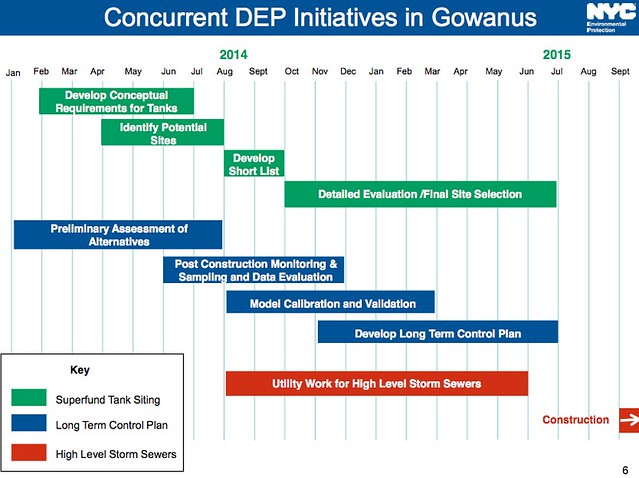
Though the EPA had suggested two sites for the retention tanks, the agency was willing to discuss alternative locations.  The City has until June 30 to make a final site decision.
Commissioner Lloyd explained: "There are two things the EPA told us we could evaluate: one is the locations for those two tanks, and the other was that we could look at alternative sizes for the tanks if we thought we could achieve the 58% to 74% reduction goal with some alternatives other than the tanks.  So we have been looking at those. We are not complete with our evaluation, but we think we are getting close."

DEP is considering two sites for the retention tank for outfall RH-034. The first site are two privately owned lots directly adjacent to the canal between Douglass Street and DeGraw Street.  The second location is directly across the street at Thomas Greene Park.
"Between those two sites, we think we are likely to recommend the first site," Commissioner Lloyd told the community. "The reasons for that are emerging. First,  because of its proximity to the rest of our infrastructure, it will be more efficient to construct and operate.  The second reason is that if we go to the park site, we will need a surface building to manage the mechanics and because of potential storm surges, it can't be low. So we have to go up and we are concerned that it will cover significant portions of the park. This means that during construction of the tank, we would disrupt most of the park."
She added:"We and the Parks Department are extremely concerned and very reluctant to lose that piece of parkland."
Lloyd indicated that even with the cost of acquiring the privately owned sites, it still would be cost effective.

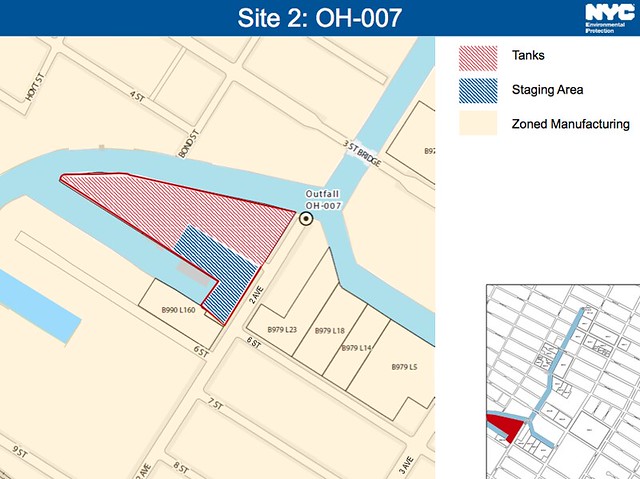
The DEP also looked at two sites for outflow OH-007 in the middle of the canal.  The agency seems to have settled on the site known as the 'Salt Lot' near the 5th Street turning basin, which is owned by the Department of Sanitation.  "It is likely that  that is the one we will recommend to the EPA, unless something turn up in our analysis from now till the end of June that surprises us," Lloyd said.
She added: "There is one other alternative that we are looking at concerning the OH-007 outflow. There is some excess capacity in the sewer system going to Owl's Head [sewer treatment plant], beyond the canal.  We are looking if we can divert flow from OH-007 into the sewer lines to Owl's Head."

Mysteriously, the DEP seems to have found so many ways to capture rainwater in and around the Gowanus watershed, that the agency is now trying to reduce the size of the EPA-mandated tanks from
an 8 million gallon tank to a 3.5 or 5.7 million gallon tank at RH-034, and from a 4 million gallon tank at OH-007 to a 1.4 or 2.5 million gallon tank. (see chart above).
Lloyd explained that the smaller tanks, according to DEP calculations would achieve the 58% to 74% CSO reduction mandated by the EPA.  "An 8 million gallon tank would achieve 82% reduction, which is above what EPA set as as a goal. We are always looking to see if we can meet targets in the canal at a less costly level."

After the presentation, the community had a chance to ask questions.

Asked if DEP is looking at population projections and the effect of new development on the retention tanks and sewage capacity,  Lloyd simply replied: "yes, we are doing population projections in the area."

My question related to the siting of the larger tank at the head of the canal and DEP's preference to locate it on private property instead of placing it on park land that it already owns.
"Have you talked to the owners of the property? Have you negotiated a price? Are they willing to sell?  If they do not want to sell, does that mean you need to take the land by eminent domain, which is going to take a long, long time?  Is that a delaying tactic by the City?" I asked.
Her answer:
"Yes, we have spoken to them.  We know what the fair market value of the land is.  Yes, if they are unwilling to sell and that is the selected site, we will proceed to eminent domain. We actually think that this can be expedited and we think that we can accomplish that much quicker than doing the work on the [Thomas Greene] park site."

It will be interesting to see what calculations DEP is using to make the argument that using eminent domain to site the tank at RH-034 is as cost effective and timely as placing it on parkland that it already owns.

One can only imagine what the EPA will think of DEP's  suggestion.
The Federal Agency, in its Record of Decision, which represents a blueprint for the cleanup of the Gowanus Canal,  had suggested Douglas Greene Park and the pool as the preferred site for the tank.
The EPA reasoned that:
- the park is one of the only open pieces of land in this densely populated area. 
-the land is already owned by New York City.
-Thomas Greene Park was constructed over the former Fulton Municipal Works Manufacturing Plant (MGP), which operated on the site from 1879 to 1929. Today, the land underneath the park is still heavily contaminated with coal tar. Since some of this free liquid tar is moving towards the canal, National, Grid, which bought Brooklyn Union Gas/National Grid in 2006, needs to address the problem. The work will be done under NYS Department of Environmental Conservation supervision.

The EPA logically concluded that constructing the tank under the swimming pool area of the park could be combined with the remediation work.

Recently, the DEC released its proposed Environmental Remediation plan. The primary components of the remedy "are the construction of a sealed wall along the western shoreline of the Gowanus Canal and the removal of any coal tar that accumulates behind it." 
They appear to be willing to let National Grid off the hook to clean up the former Fulton site until "an opportunity presents itself".  Many wonder if we are missing an opportunity right now, with EPA in charge of a massive remediation.  We should be outraged that once again this can is kicked down the road for our children and grandchildren to clean up.

So, there you have it reader, we await the final decision of our city and state and hope that they are fully seizing this opportunity to finally clean up our polluted neighborhood and to cooperate with the EPA.  We will know for sure in less than two months.


PS:
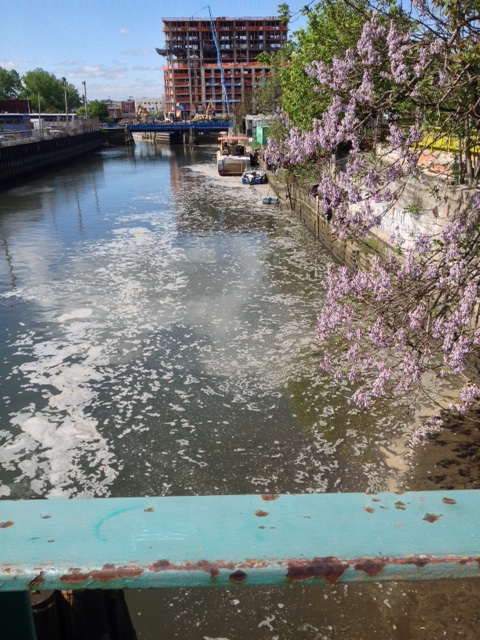
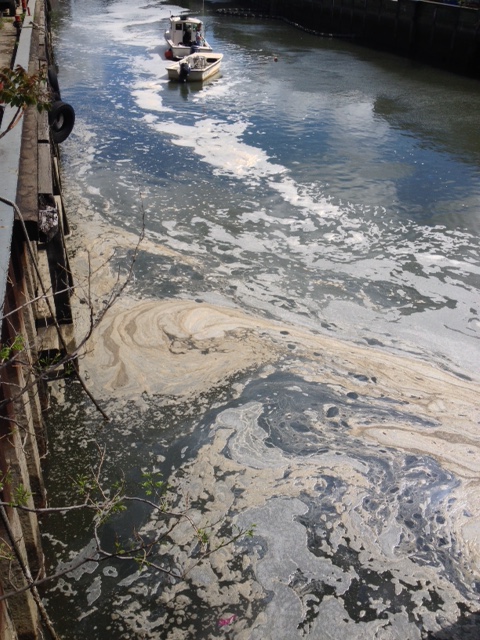
I also mentioned the suds that have been covering the Gowanus Canal lately. The problem seems to originate at the top of the canal near the flushing tunnel at Douglass Street. It would appear that the three new pumps which the DEP has installed introduce massive amounts of air and movement into the water, which could be stirring up household soaps and fats, which end up in the Gowanus by way of the CSO outflow right next to the flushing tunnel. The effect has become known to many in the Gowanus community as the 'milkshake' effect.
Since we have mostly had dry weather this spring, I asked Emily Lloyd if that was an indication that sewage was flowing into the canal even when there were no rain events."Not to give a definitive answer tonight, but we don't think this is from the CSO," Commissioner Lloyd answered. "We really think that it is the aeration coming from Buttermilk Channel. That's a very aerated flow that is coming in, and we think that as it comes in, it churns up. That is our preliminary thought at this point."


Photos illustrating the 'Gowanus milk shake effect" taken a few days ago by Reader Andrew
IMG_3446
IMG_3450-2


Read more

Monday, September 22, 2014

From 86 To 14 Possible Locations: Deadline Nearing For DEP To Site CSO Retention Basins Mandated By EPA

IMG_1206
IMG_1201
IMG_1214
NYC DEP Commissioner Emily Lloyd
IMG_1209
IMG_1227
Angela Licata of NYC DEP
Screen Shot 2014-09-19 at 1.49.18 PM
Screen Shot 2014-09-19 at 1.49.52 PM
IMG_1212
Screen Shot 2014-09-19 at 1.50.08 PM
Screen Shot 2014-09-19 at 1.50.43 PM
Screen Shot 2014-09-19 at 1.51.08 PM
IMG_1205
EPA Region 2 Gowanus Canal site manager Christos Tsiamis, who attended the meeting, with DEP Commissioner Emily Lloyd

By September 30th, 2014, New York City Department Of Environmental Protection (DEP) needs to submit to the Environmental Protection Agency (EPA) a list of no more than two locations for each of the two retention tanks, which are components of the remedy selected in the Record of Decision for the Gowanus Canal Superfund site.
Along with the list, DEP also needs to including a summary report containing the basis for which locations were screened out and retained.

Construction of retention tanks is an important part of the remedial design. As per the EPA, the tanks are "combined sewer overflow (CSO) control measures for the upper reach of the Canal to significantly reduce overall contaminated solid discharges to the Canal."
The retention tanks will retain discharges from two of the largest outfalls in the canal, RH-034 and OH-007. 
According to the Federal Agency,"it is estimated that an 8-million gallon tank and a 4-million gallon tank shall be required to address CSOs from outfalls RH-034 and OH-007, respectively." 

The EPA had suggested two locations for those tanks in the ROD, but was willing to discuss alternative locations with the City during the remedial design period.

New York City responded by hired a consultant, who came up with a list of 86 possible sites along the Gowanus Canal, some, if not most of which could easily be dismissed outright. Obviously, this was a delaying tactic by the City.
This prompted the EPA to issue a Unilateral Order to compel New York City to get moving on siting and designing the tanks.

Which brings us to last Wednesday's public meeting with DEP Commissioner Emily Lloyd at the Wyckoff Gardens Community Center in Gowanus.
Commissioner Lloyd began by giving a brief overview of DEP "commitments" in Gowanus, which include pump station and flushing tunnel upgrades at the head of the canal, the construction of high level storm sewers, and green infrastructure initiatives.

Loyd then gave a presentation on the possible sites for the EPA mandated CSO retention basins. "The DEP has narrowed down the original 86 sites to 14 sites," she told the community. She displayed maps of the sites still in the running, which include the Green Building on Union Street, and the site where the coal pockets were just removed, next to the new parol office currently being built  along the canal.

Among the proposed 14 locations were the two sites originally proposed by the EPA
It is important to note that some of the locations identified by DEP were actually just variations of each other, so that the current list of sites is much more like 6.  Take away the sites that are non-city owned and would need to be acquired, and one end up right back to the two sites proposed by EPA:
The Double D pool at Douglass Green Park and the Salt Lot as 2nd Avenue between 5th Street and the Canal.

After the presentation, Commissioner Lloyd took questions from the community.
My question to her: "How much money has the City spent on consulting fees to come up with the current list of 14 sites for the tank?" 
She could not answer.
However, a DEP representative I spoke to at the meeting told me that $50 million had been spent by his agency on consultants so far "to help us navigate the conversation with EPA."
The sum, if correct, is pretty astronomical.  But that does not seem to be the end of the expenses yet.

An engaged Gowanus community member just came across a Request for Services (RFP) in the tune of  $30,385,000 for a "Superfund Support Contract for the Gowanus Canal and Newtown Creek" which will run from 2015 to 2020. (see below)


Read more

Tuesday, September 16, 2014

Important Public Meeting On Siting Two Combined Sewage Retention Tanks In Gowanus

10517282_10152357183776158_2621228219878358784_o
IMG_0308
IMG_0300
IMG_0301
IMG_0304

This is an important meeting.  Please make sure to attend!

Exactly a year ago, the Environmental Protection Agency (EPA) released the Record Of Decision (ROD) for the clean-up of the Gowanus Canal Superfund site and signed it into law. The document explains which cleanup alternatives will be used to clean up the toxic canal.

The ROD for the Gowanus Canal Superfund required the City to implement measures to control the Combined Sewer Overflow (CSO). EPA expects the City to construct two retention tanks in the upper portions of the canal to retain discharges during heavy rainfalls, until the overflow can be pumped to the local sewage treatment plant.

The EPA suggested two locations for those tanks in the ROD, but was willing to discuss alternative locations with the City during the remedial design period.

New York City responded by delaying and hired a consultant, who came up with a list of 86 possible sites, some of which can easily be dismissed outright.
This prompted the EPA to issue a Unilateral Order to the City for conducting the design work for the remedial actions described in the ROD. Specifically, the Order compels New York City to perform the design for siting and building the CSO retention tanks and for the excavation and restoration of the 1st Street Basin, as described in the ROD.

Obviously, the City is starting to take the EPA more seriously. The NYC Department of Environmental Protection will be  holding a public meeting tomorrow evening to discuss with the community the potential location for the two combined stage retention tanks.
DEP Commissioner Emily Lloyd will be on hand to answer questions.   So will our elected representatives.

Public Meeting On Siting Two Retention Tanks To Reduce Combined Sewer Overflow
NYC  Department of Environmental Protection
Wednesday, September 17, 2014
6 PM to 8 PM
Wyckoff Gardens Community Center
280 Wyckoff Street, Brooklyn


Read more

Wednesday, June 25, 2014

DEP Commissioner Lloyd At Last Night's Gowanus Canal Superfund CAG Meeting: "We Intend To Comply" With EPA. But New DEP Letter To EPA Indicates More Stalling

IMG_0134
IMG_0151
IMG_0150
IMG_0145
IMG_0149
IMG_0138
Councilman Brad Lander and  Steven Levin

When it comes to cleaning the Gowanus Canal, the City of New York has a dismal record.  Over decades, the City has never shown the will to clean the toxins at the bottom of the canal which cause  real environmental hazards, nor has it ever addressed the Combined Sewer Overflow issue in any meaningful way.
When the US Environmental Protection Agency stepped in and proposed the Gowanus Canal as a Superfund site, a designation reserved for the most severely polluted sites in the country, the City of New York lobbied hard to keep the Federal Government at bay.
No wonder. The EPA identified the City as the second largest Potentially Responsible Party (PRP) for discharging "hazardous substance-contaminated untreated sewage" into the canal.

As we all know, the EPA did declare the Gowanus a Superfund site, and in September 2013, the agency signed its Record of Decision (ROD) for the cleanup of the canal. The ROD, which represents the blue print for the remediation, compels the City to construct two retention basins to capture the flow of contaminated sewage solids from two major outflows. It also holds the City responsible for the excavation and restoration of the 1st Street Basin.

The EPA suggested two locations for the two retention tanks in the ROD, but was willing to discuss alternative locations with the City's Department of Environmental Protection (DEP) during the remedial design period.

Unfortunately, the City responded as usual, by delaying. The Administration hired a consultant, who came up with a list of 86 possible sites, which included the newly opened Whole Foods market, the Lightstone parcels where 700 residential units are under construction, the former Power Station, which was recently purchased and is being remediated for a future non-profit arts center, Con Edison's 3rd Avenue service yard, and the American Can Factory, a 5-story multi-use arts and manufacturing complex employing hundreds of people.
By suggesting private property as opposed to using City-owned property for the siting of the tanks, the City has inflated the cost to about $500 million. In a letter to DEP, the EPA points out that this is only $6 million dollars less than the cost of the entire Superfund clean-up.
It would appear that the City is continuing to waste time and to shirk its responsibility towards the Gowanus Community

On Wednesday, May 28th, the US Environmental Protection Agency prompted New York City to conduct the design work for the remedial actions outlined in the ROD by Issuing a Unilateral Consent Order. The EPA issues Unilateral Orders if a Potentially Responsible Party (PRP) does not agree to perform the cleanup work through a judicial consent decree or an administrative order on consent.

The DEP just responded to the Unilateral Administrative Order with a ten page letter, agreeing to do the work, but postured that the "UAO contains requirements and deadlines that are not feasible or reasonably capable of performance", that the ownership of the First Street basin by the City is still in question, and most importantly, that "the Record of Decision is based on inadequate information and lacks scientific support."
The City's response goes as far as to call the Order "arbitrary, capricious and otherwise not in accordance to the law."

Last night, Gowanus Canal Superfund Community Advisory Group hosted NYC DEP Commissioner Emily Lloyd at its monthly meeting to discuss her agency's role in the clean-up.
The conversation quickly turned to EPA's Order and to the City's response.
Commissioner Lloyd was quick to dismiss the adversarial tone of her agency's letter.
"It's a lawyers' response to a lawyers' letter," she said smiling.
" I don't think we ever said we won't do this.  My predecessors have had a lot reservations and a lot of concerns about this, but  I think where we are trying to go is to recognize the jurisdiction and say that we are going to do everything we can do to comply," Lloyd explained to the members of the CAG.
"I think there is an advantage to the Superfund bringing all parties to the table and its probably a more ambitious clean-up than the City could undertake on its own. It's hard to imagine that more isn't better for Gowanus."  
"What we see as the real challenge of the summer is to work with the community to arrive at sites [for the retention basins] that will meet many of the goals that we all have, with a minimum of disruptions to the community as possible. I expect that it's not going to be a simple undertaking, but certainly one that I am looking forward to."

Congresswoman Nydia Velázquez, who attended the meeting last night addressed the Commissioner sternly: "All I have to say is that I expect better collaboration from the City administration at this time.  If we have collaboration, we can move forward to do the work. But you should also know that the Federal Government,  through EPA, has the authority to get the City to move in the right direction."

DEP and our administration better heed that advice.  If they continue to play games and refuse to obey EPA orders, the Federal agency can charge the City punitive damages of triple the cost. 

To show its concern in regards to that possibility, the Gowanus Canal Superfund Community Advisory Group voted to adopt the following resolution:

The Gowanus CAG, established by the EPA, which represents a cross section of residents, businesses and civic organizations in and around the Gowanus Canal corridor, demand that New York City as one of the Responsible Parties, as defined by the EPA, actively and cooperatively work with the EPA on all aspects which they are accountable for as required by the Gowanus Record of Decision (ROD), but especially for the timely determining the number(s), size and location(s), and design engineering of the required sewage retention tanks. 

To date, the City's positions/policies concerning the Gowanus Canal and the ROD and their participation in the initial design phase and cooperation with the EPA has not produced the positive results that are required for the clean-up the Gowanus Canal to proceed within the proposed schedule. The Gowanus CAG was alarmed by the recent consent order issued by the EPA against the City of New York that would be unreasonabley expensive for New York City tax payers. If New York City fails or refuses to participate in the planning phase, the EPA under current law can and will charge the City three times (3X) the cost to plan and build the retention tanks.

This new/improved active working relationship in determining the number, size, and location(s) of the retention tanks must take into consideration the current and future sewage needs of the Gowanus corridor (including the possible rezoning of the Gowanus area that would allow for high density residential development).


Read more